
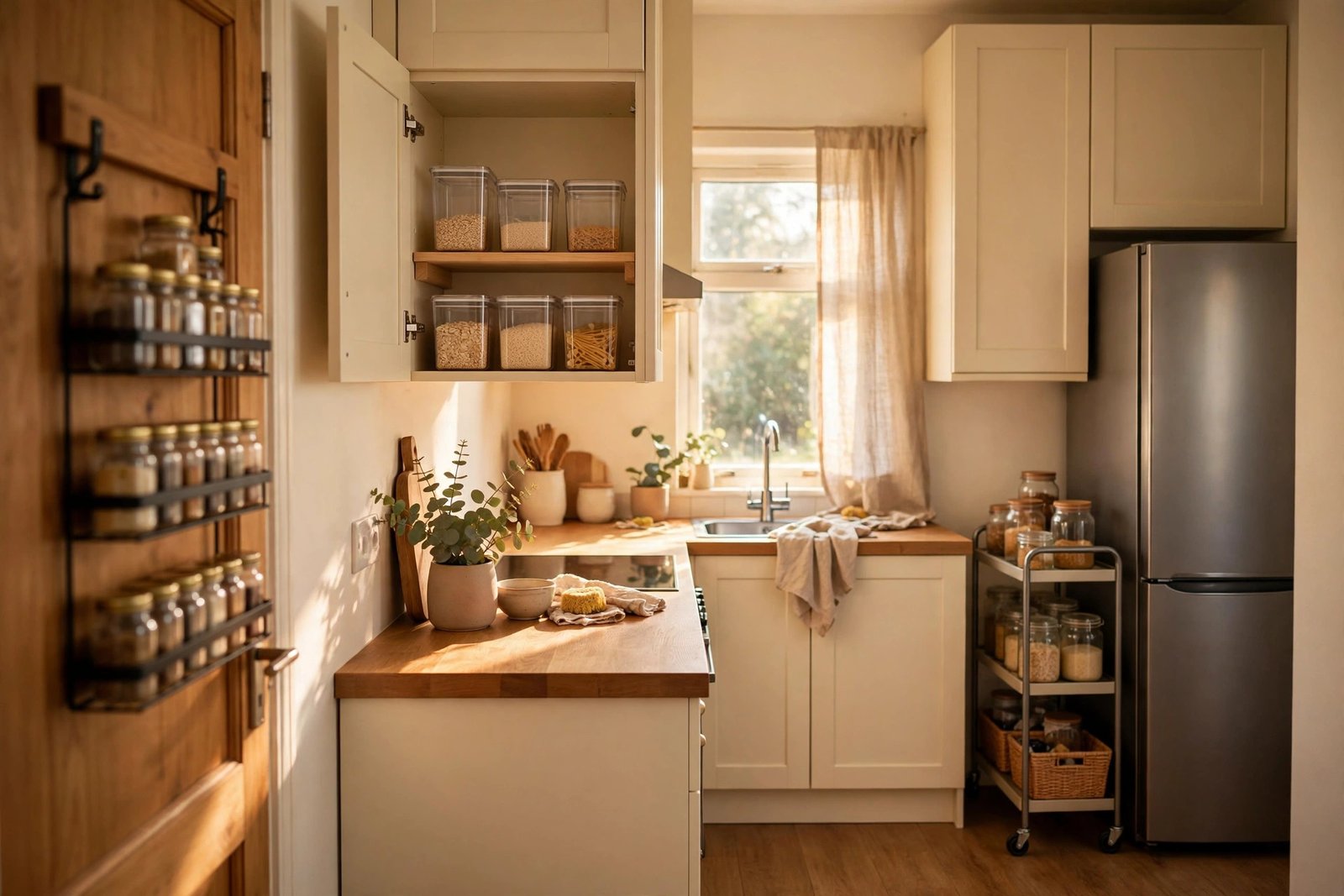
25 Small Pantry Organization Ideas for Kitchens With No Pantry at All
Introduction
If your kitchen has no pantry, you know the daily shuffle. Cereal boxes live on the counter, cans hide behind the blender, and every grocery trip ends with you staring into an open cabinet, wondering where anything should go. It is not a tidiness problem. It is a storage problem — small kitchens simply were not built with a pantry in mind.
The good news: a pantry is not a room. It is a system — a defined place for food, grouped by how you use it, visible at a glance. You can build it from a rolling cart, one deep cabinet, the back of a door, or a narrow gap you have been ignoring.
These 25 ideas are made for renters and small kitchens. Most need no drilling, many cost under $25, and together they can give you a working pantry this weekend.
Create a Pantry From Nothing
1. Claim One Zone and Call It the Pantry
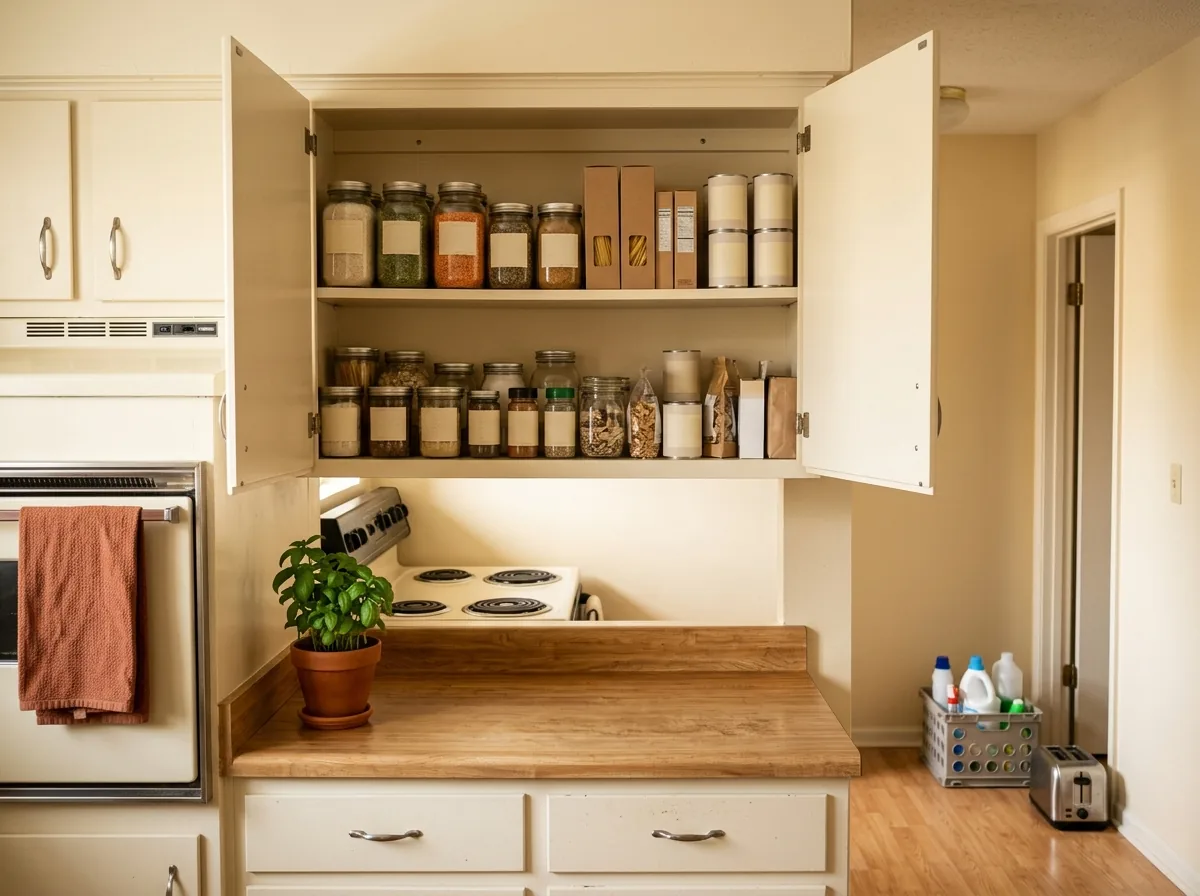
Pick one cabinet, shelf, or corner and declare it food-only. Mixed storage is why small kitchens feel chaotic: once food shares space with cleaning sprays and spare appliances, the system collapses. Moving non-food items out — even to a hallway closet — instantly makes the food zone easier to use.
2. Turn a Rolling Cart Into a Mini Pantry
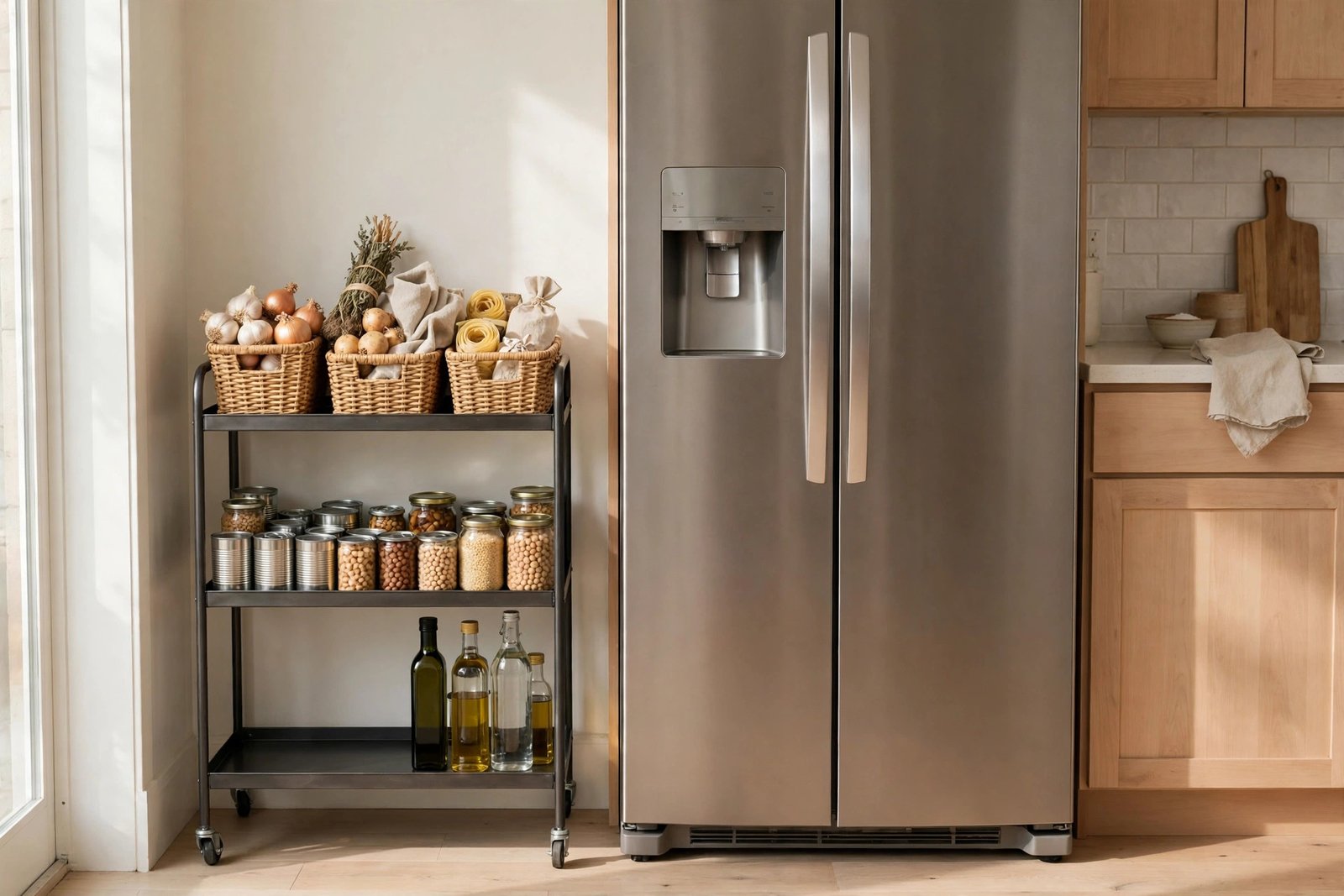
A slim three-tier rolling cart is the fastest pantry you can buy. Park it beside the fridge, load the top tier with everyday items, the middle with cans and jars, and the bottom with heavy bottles and backup stock. Budget tip: Basic carts run $20–$35, and secondhand ones work just as well with small baskets added to stop jars sliding.
3. Use a Bookshelf or Open Shelf as a Pantry Wall
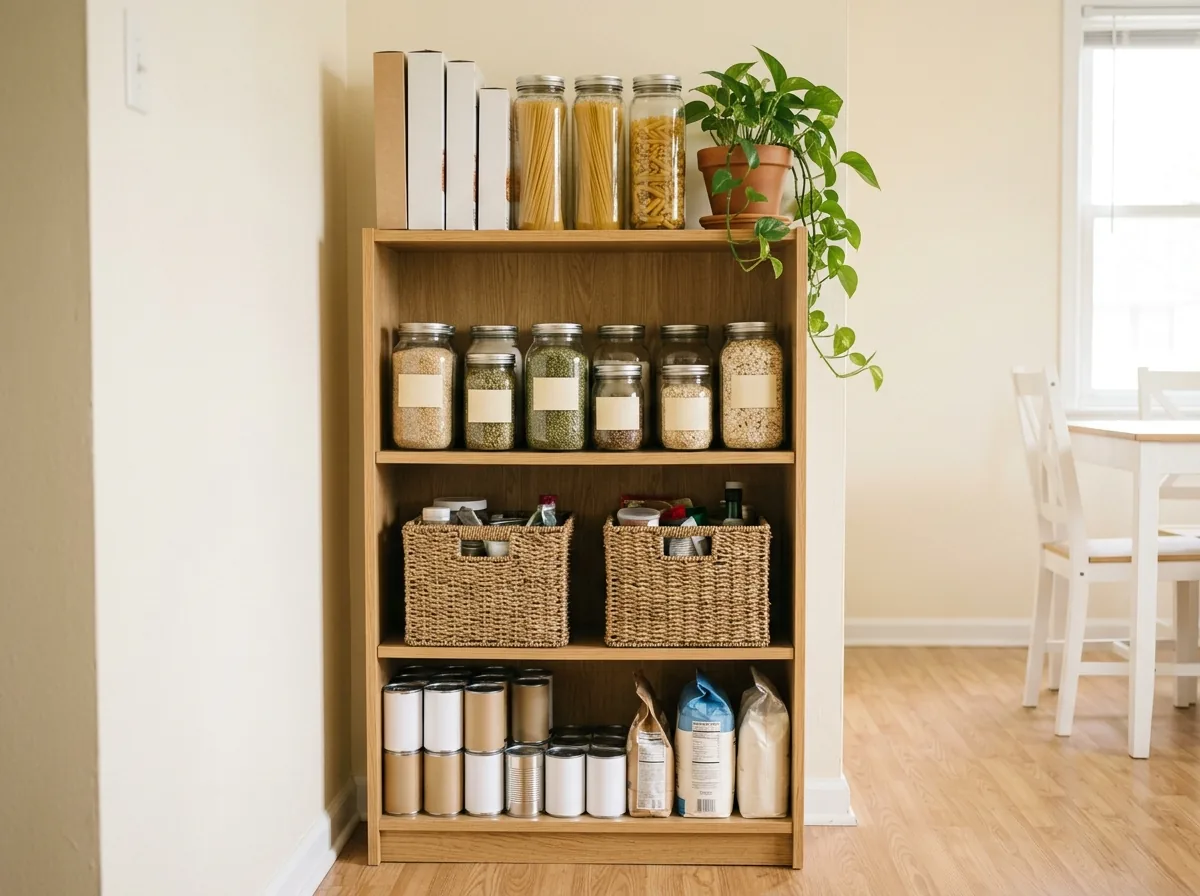
A narrow bookshelf on a kitchen or dining wall holds a surprising amount of food, and open shelving keeps you honest because everything is visible. Put daily staples at eye level, light items like pasta and cereal up high, and heavy cans on the bottom shelf. Matching baskets keep it looking intentional.
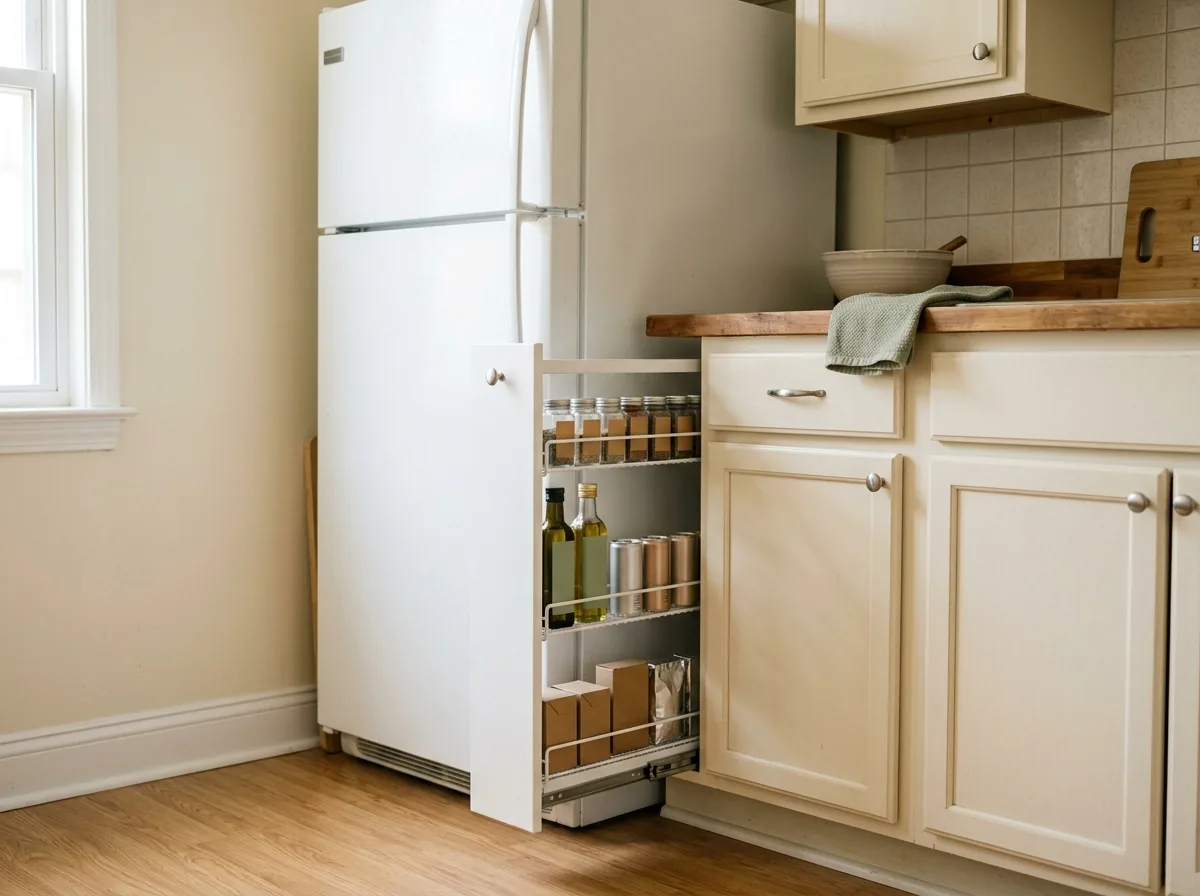
4. Steal the Gap Beside the Fridge
That awkward 4-to-6-inch gap beside the fridge is prime pantry real estate. A slim slide-out tower or narrow rolling shelf turns it into storage for spices, oils, cans, and foil boxes — thin items that are always in the way. Budget tip: A tall narrow crate on small caster wheels does the same job for a few dollars.
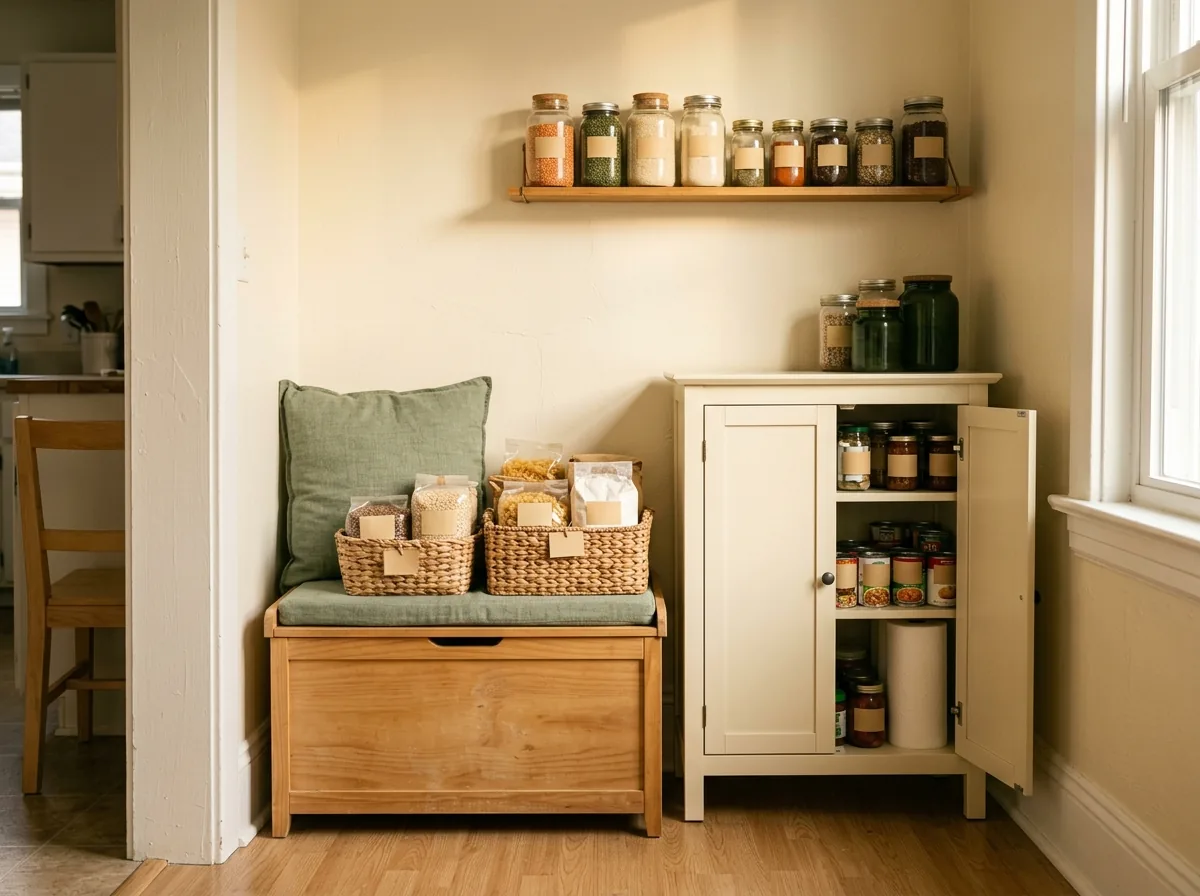
5. Build a Pantry in a Hallway or Dining Corner
If the kitchen has no spare inch, move the pantry five steps away. A lidded bench, small cabinet, or baskets on a hallway shelf can hold backup stock and bulk buys, while only a week’s worth of food stays in the kitchen.
Cabinet Space Multipliers
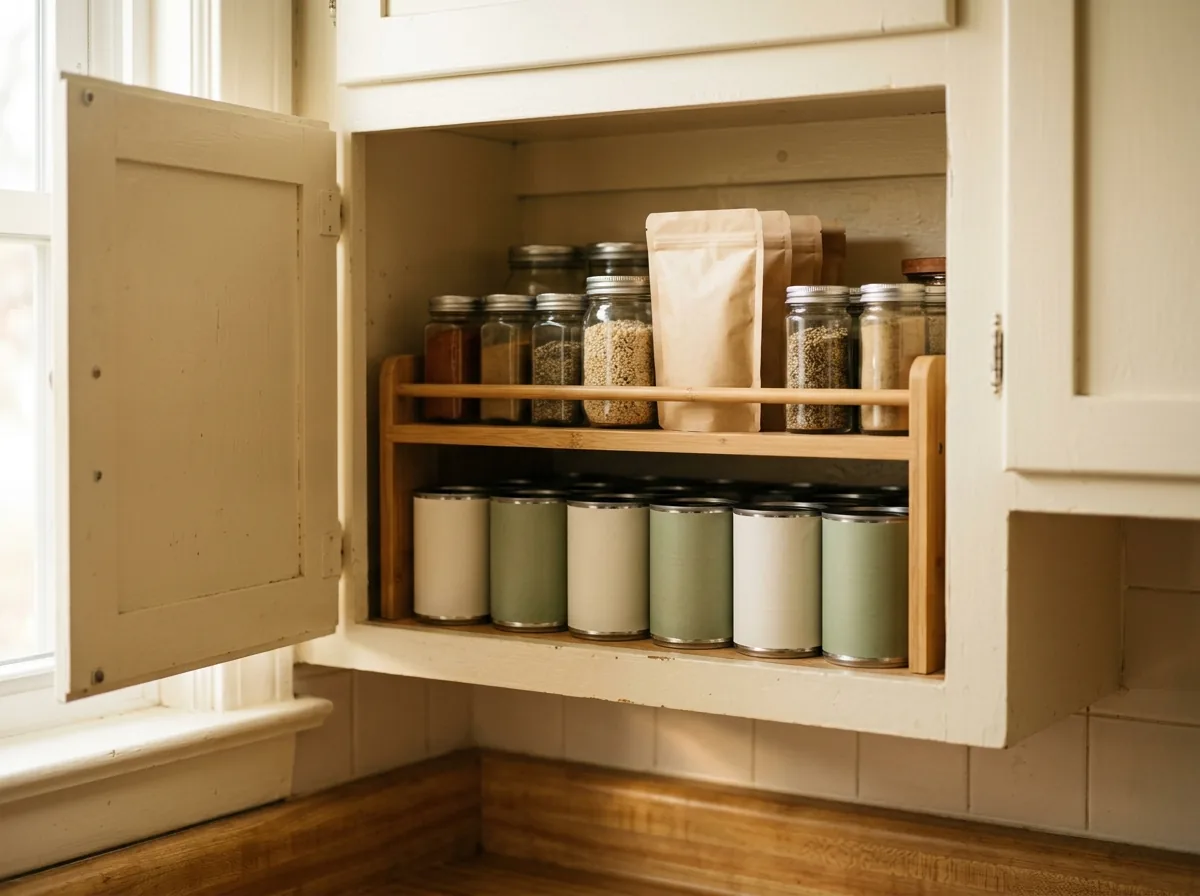
6. Add Shelf Risers to Double a Cabinet Shelf
Most cabinets waste the top half of every shelf. A wire or bamboo riser creates a second level, so cans sit below and packets or jars sit above without a wobbly tower. Measure your cabinet depth first and leave a finger’s width in front for gripping. Risers are a renter’s dream: they lift out in seconds and leave no mark.
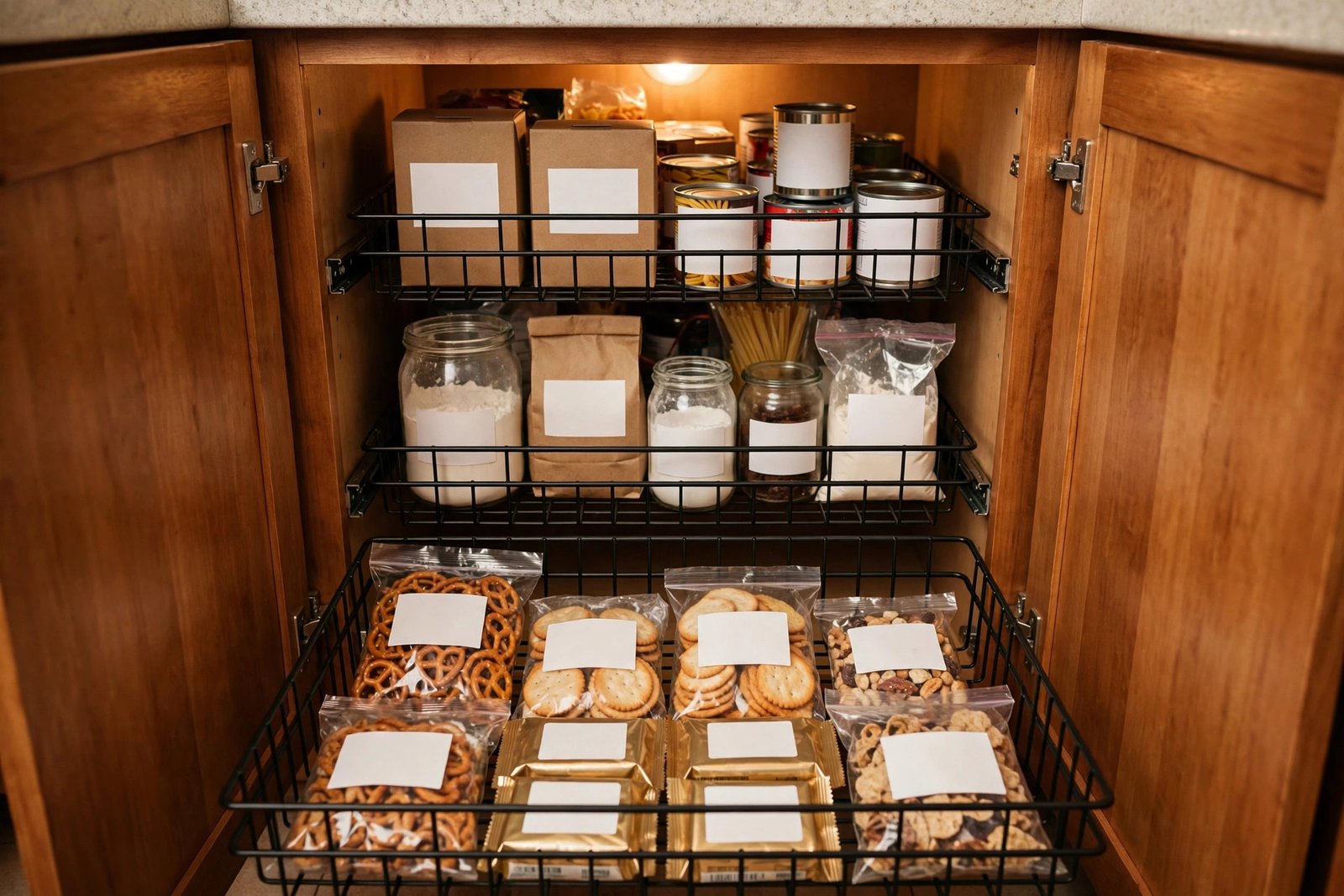
7. Turn One Deep Cabinet Into a Pantry With Pull-Out Bins
Deep cabinets are where food goes to be forgotten. Slide in two or three open bins and treat each like a drawer: snacks in one, baking in another, dinner staples in the third. You pull the whole category out, take what you need, and push it back.
8. Use Turntables for Corners and Deep Shelves
A turntable makes the back of a shelf as reachable as the front. Use one for oils and sauces in a base cabinet, another for spices in an upper cabinet. Choose one with a small lip so bottles stay put, and do not overload it. Budget tip: Dollar-store turntables are genuinely fine for light items like spice jars.
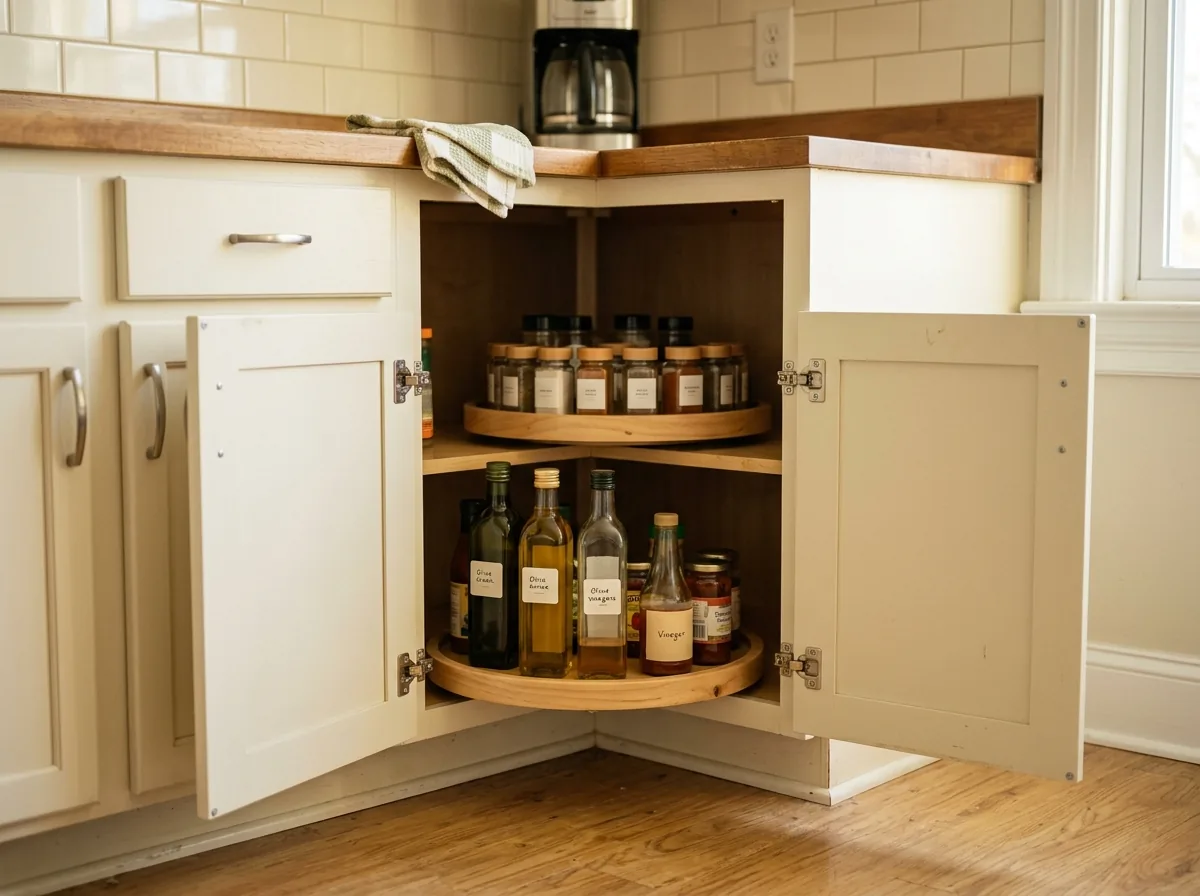
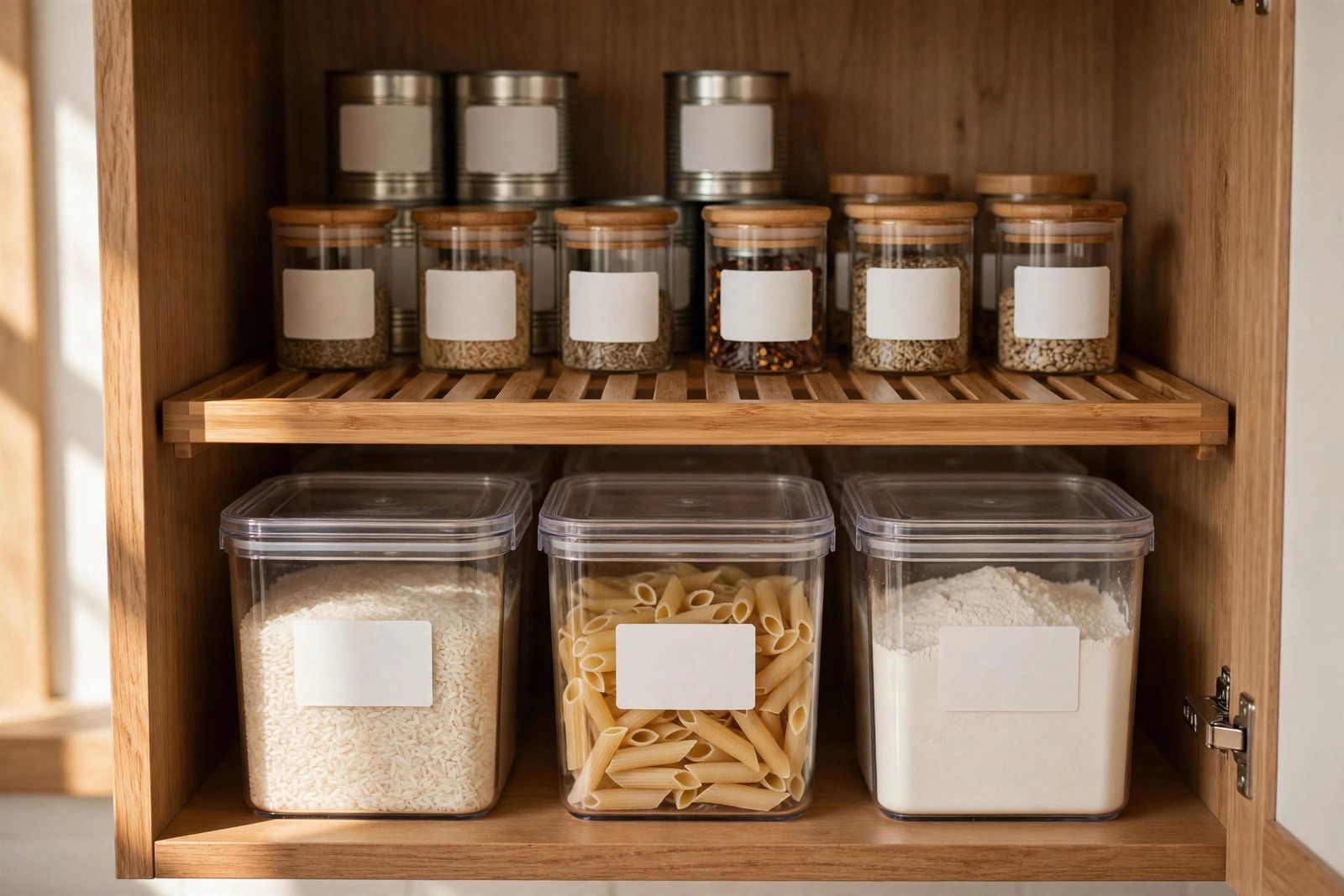
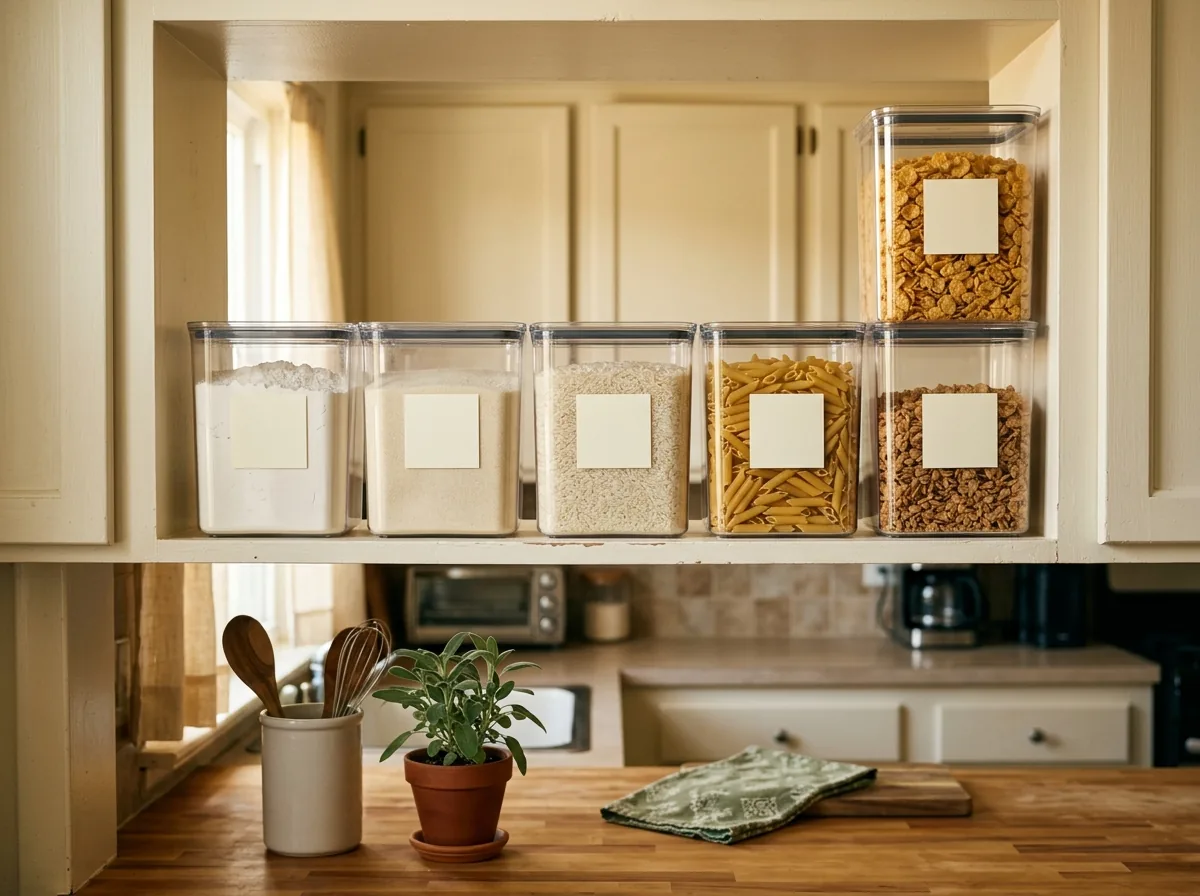
9. Stack With Clear, Square Containers
Round containers waste every corner. Clear, square containers line up edge to edge, stack safely, and show levels at a glance, so you stop buying a third bag of rice while two hide in the back. Start with the foods you buy most — flour, rice, pasta, oats, sugar — rather than decanting everything on day one.
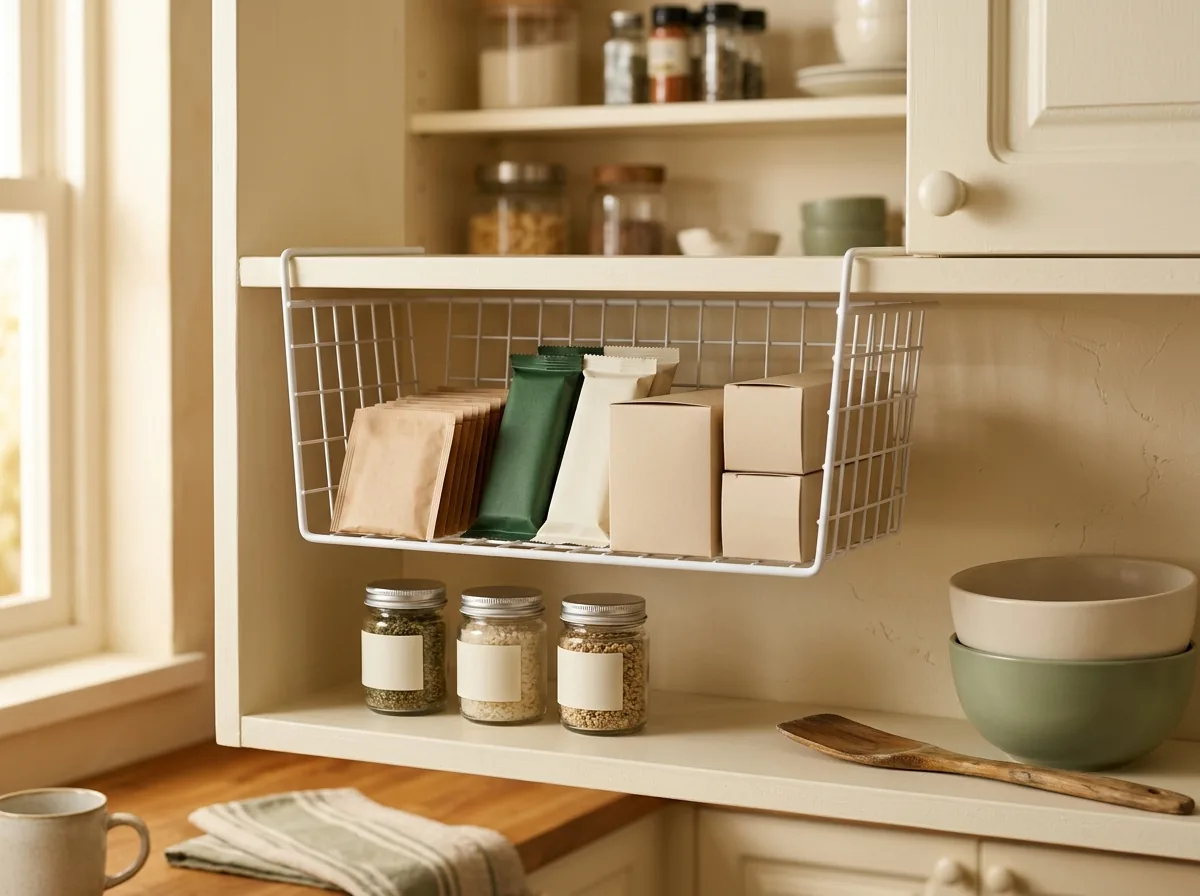
10. Add an Under-Shelf Basket
Under-shelf baskets hook onto an existing shelf and hang below it, creating a slim extra level for packets, wraps, tea, and snack bars. They fill the dead air above short jars and simply slide on — no drilling, no adhesive — making them one of the safest renter-friendly small kitchen storage ideas here.
Doors, Walls & Gaps
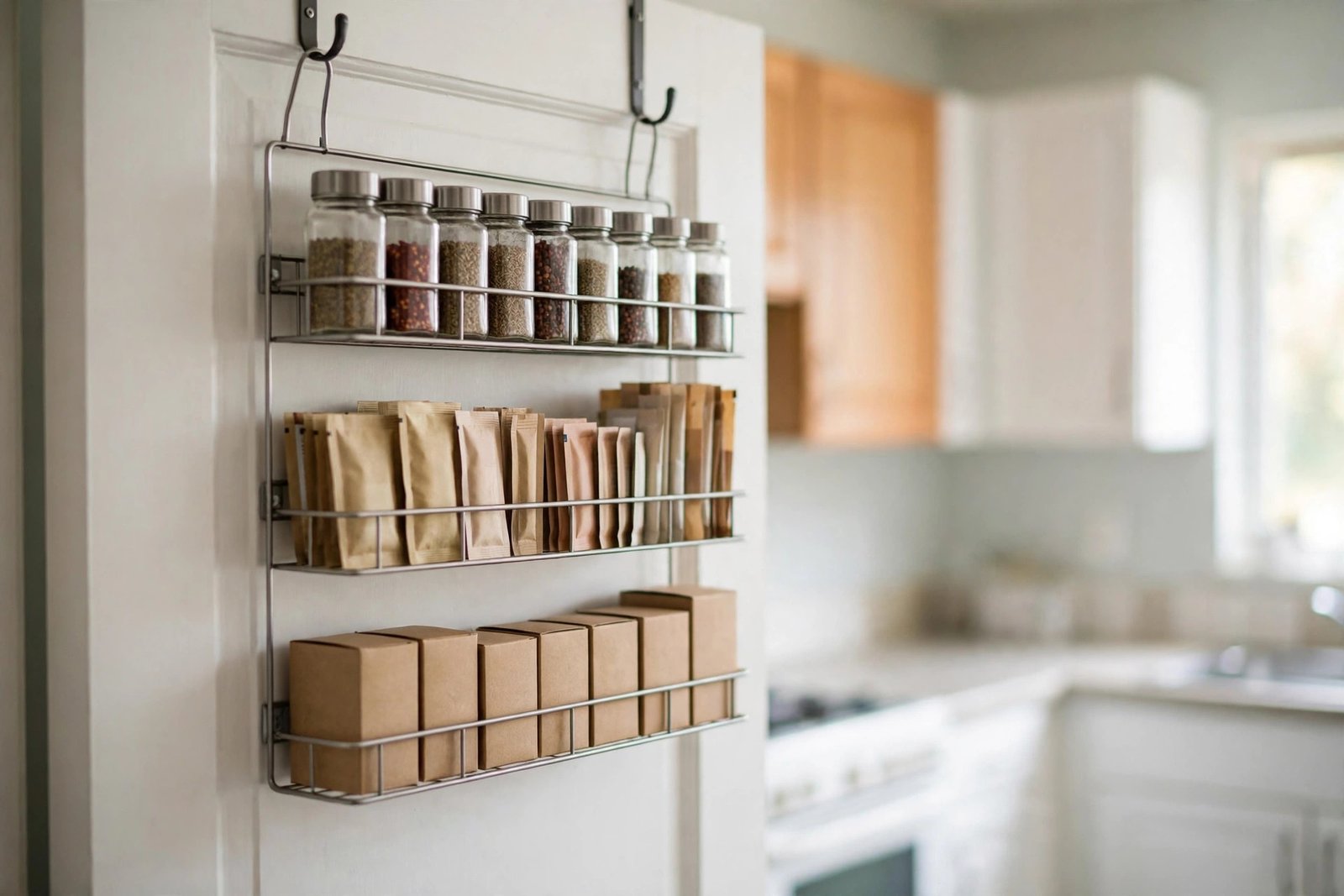
11. Put the Back of a Door to Work
An over-door rack on a cabinet or nearby closet door can hold spices, packets, wraps, and snacks in clear view. Measure the clearance so the door still closes, and add a strip of felt where hooks touch the frame to prevent rubbing.
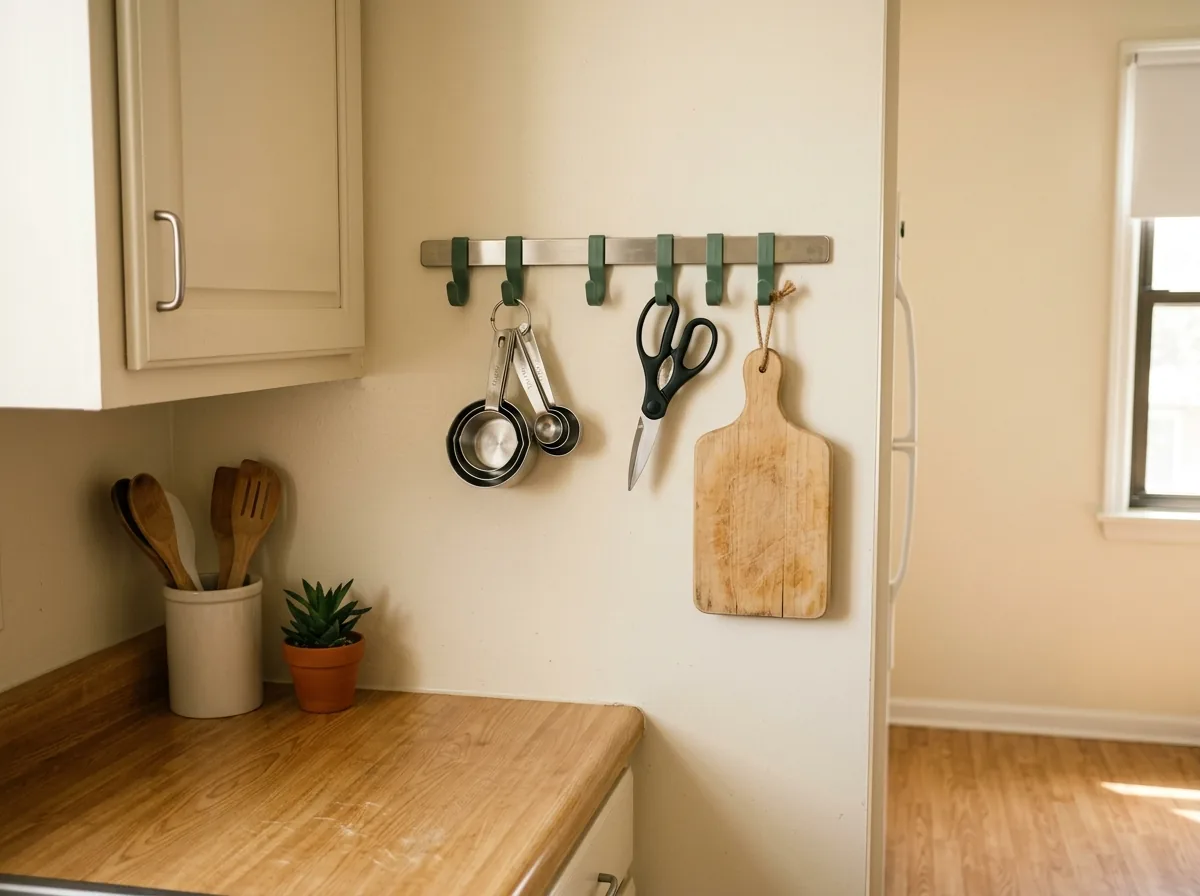
12. Hang a Rail or Hooks for Daily Tools
Free cabinet space by moving daily tools onto the wall. A removable-adhesive rail or row of hooks can hold measuring cups, scissors, and a small cutting board near where you cook. Budget tip: Adhesive hooks rated for kitchen humidity cost a few dollars and remove cleanly.
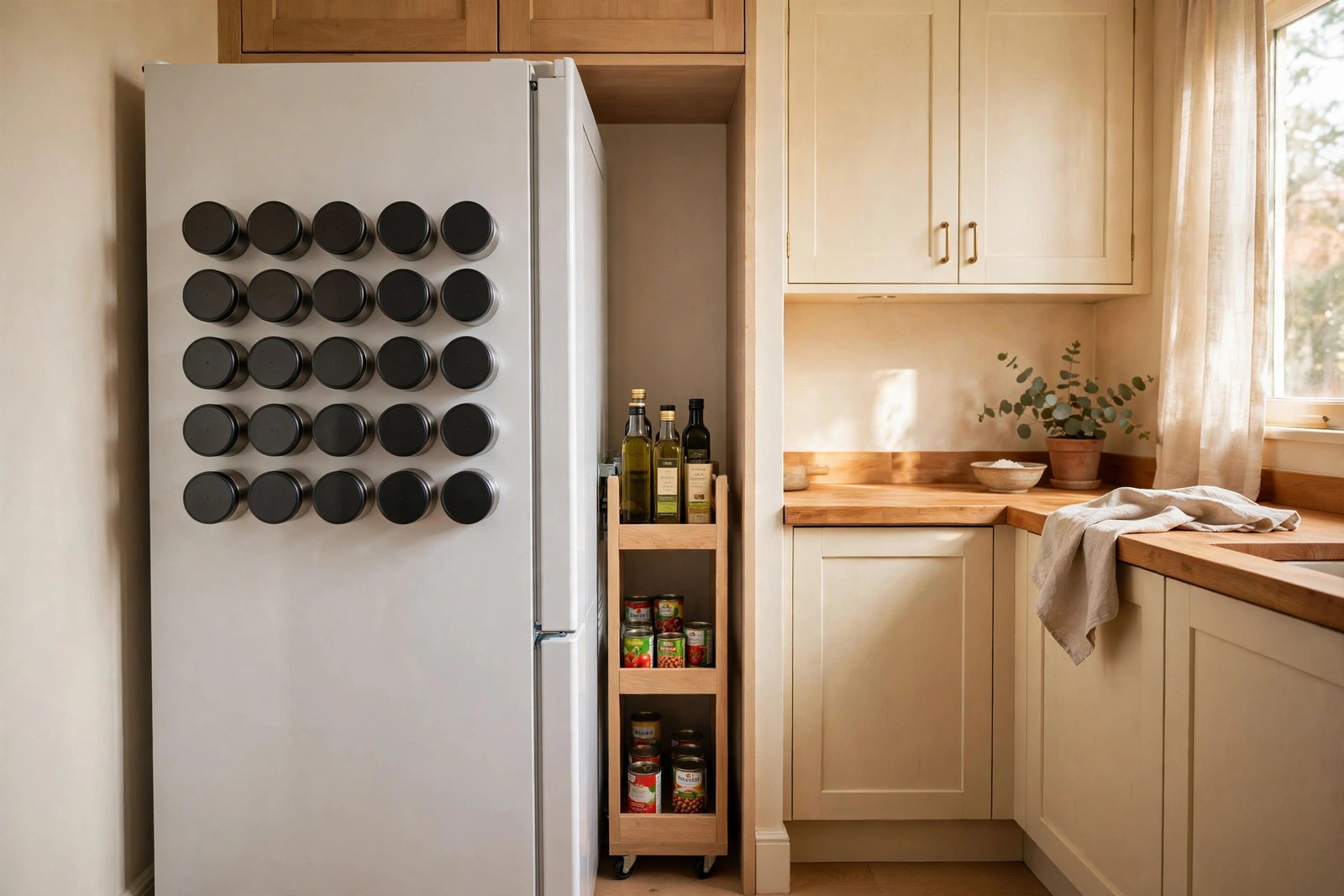
13. Use Magnetic Storage on the Fridge Side
The side of your fridge is a blank steel wall you already own. Magnetic spice tins, a paper-towel holder, or a basket for wraps turn it into pantry storage with zero installation. Spices stored here also free cabinet room, because their original jars and boxes are bulky.
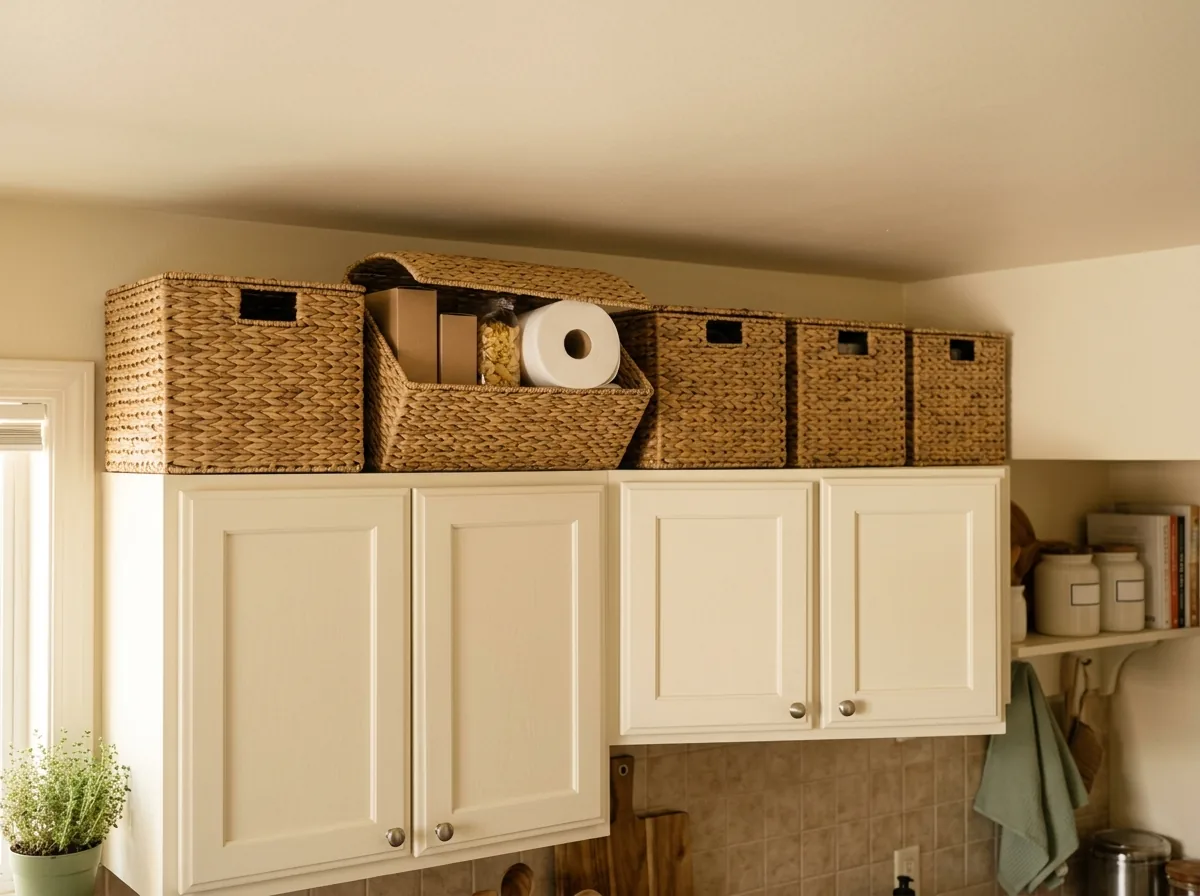
14. Fill the Space Above Cabinets
The gap between top cabinets and the ceiling holds a row of matching baskets beautifully. Use it for true back stock only: bulk pasta, extra paper towels, and seasonal baking supplies you need monthly, not daily. Matching baskets keep it looking calm instead of dusty and random.
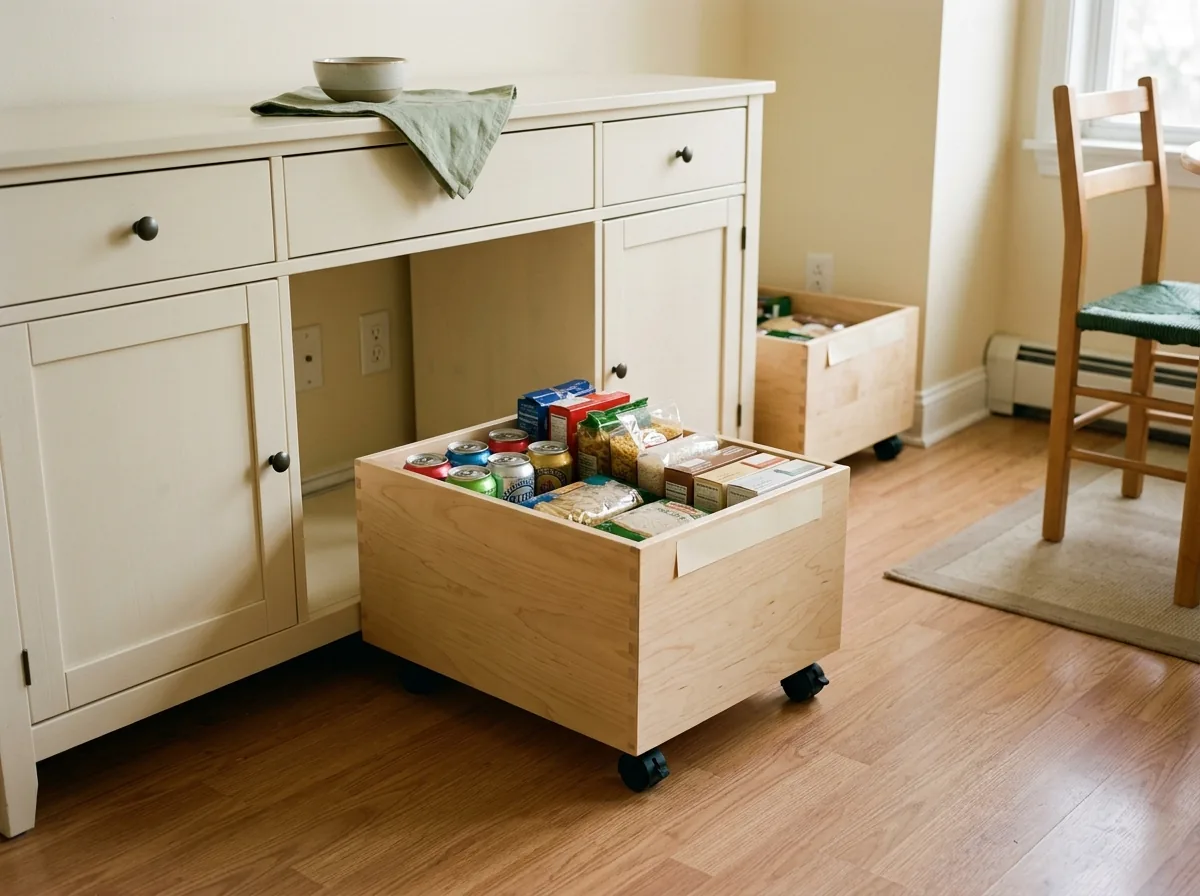
15. Slide Storage Under Cabinets and Furniture
Low, flat bins on small wheels can slide under a kitchen cart or dining sideboard to hold canned drinks, pet food, or sealed backup dry goods. Label the front edge, because out of sight means out of mind in a small kitchen. Treat this as bonus overflow storage, not home for everyday staples you reach for while cooking.
Containers & Labels System
16. Decant the Bulky Five First
You do not need to decant everything — start with the five bulkiest staples: flour, sugar, rice, pasta, and cereal. Their original packaging is oversized, half air, and impossible to stack, so moving just these usually frees a full shelf. Tape a cut-out of the cooking instructions to the back of each container.
17. Label Everything, Simply
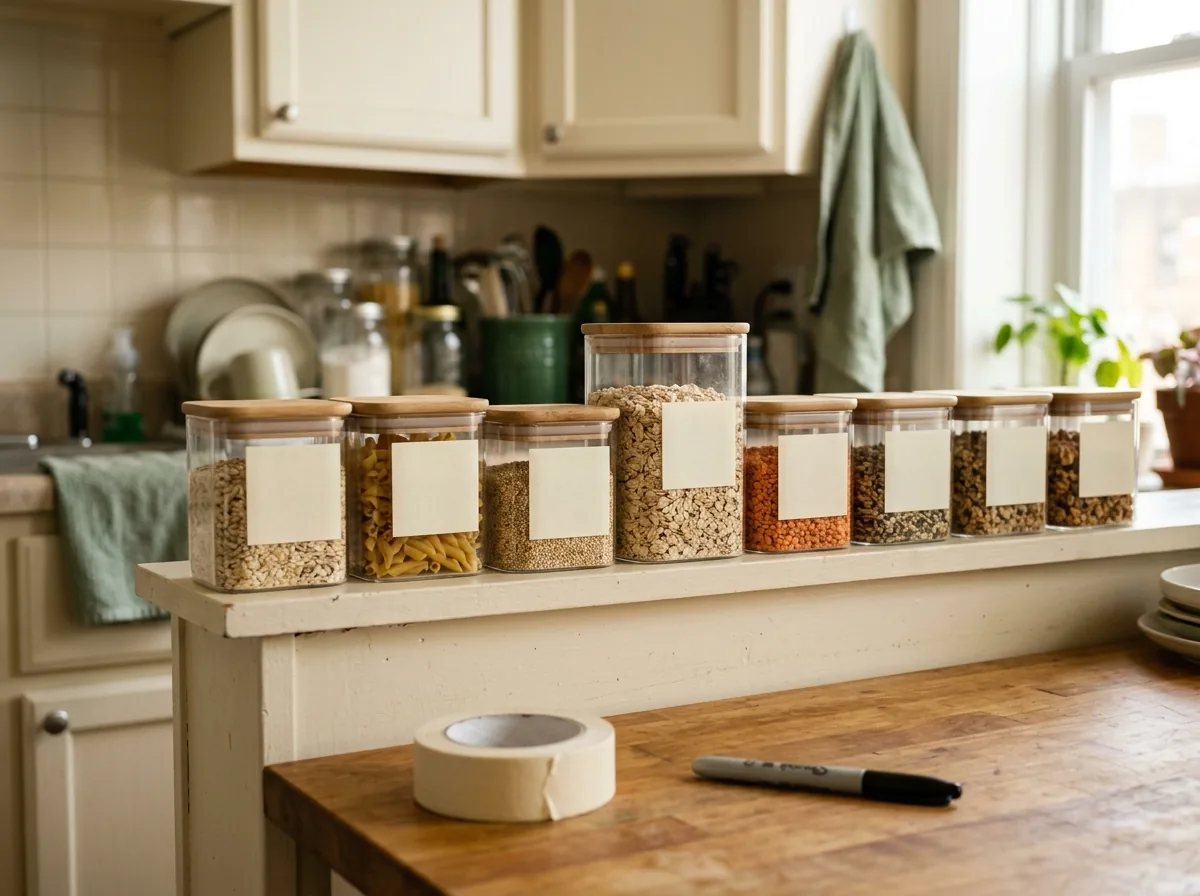
Labels are not decoration; they are how a small pantry survives past the first week. Masking tape and a marker work, but simple labels on the front — not the lid — are what you actually read when containers line up. Add the month you opened it for baking supplies.
18. Group by Meal, Not Just by Food Type
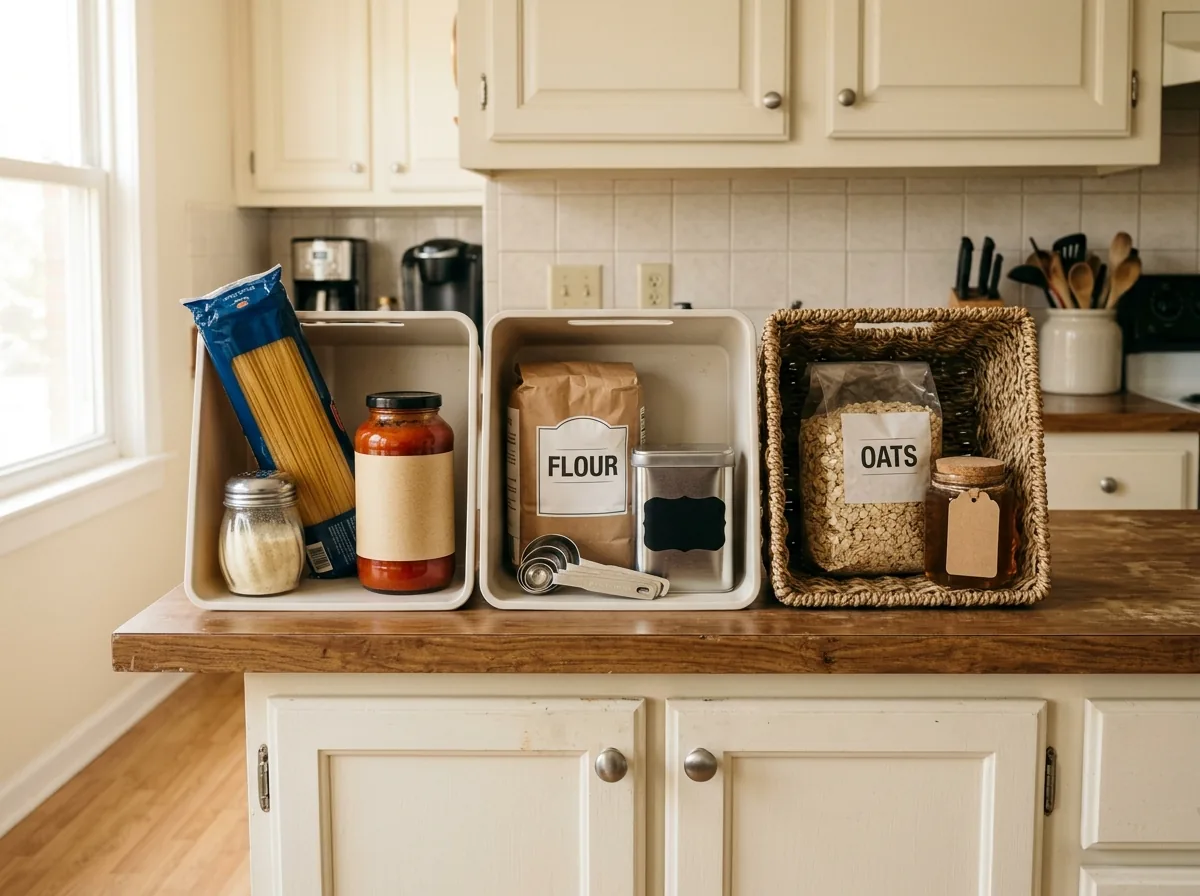
Try grouping by how you cook: a pasta-night bin with pasta, sauce, and parmesan; a baking bin with flour, sugar, and cocoa; a breakfast basket with oats and honey. Meal groups mean you pull one container instead of opening four cabinets, and restocking is obvious when a group looks thin.
19. Make Snacks a Grab-and-Go Basket
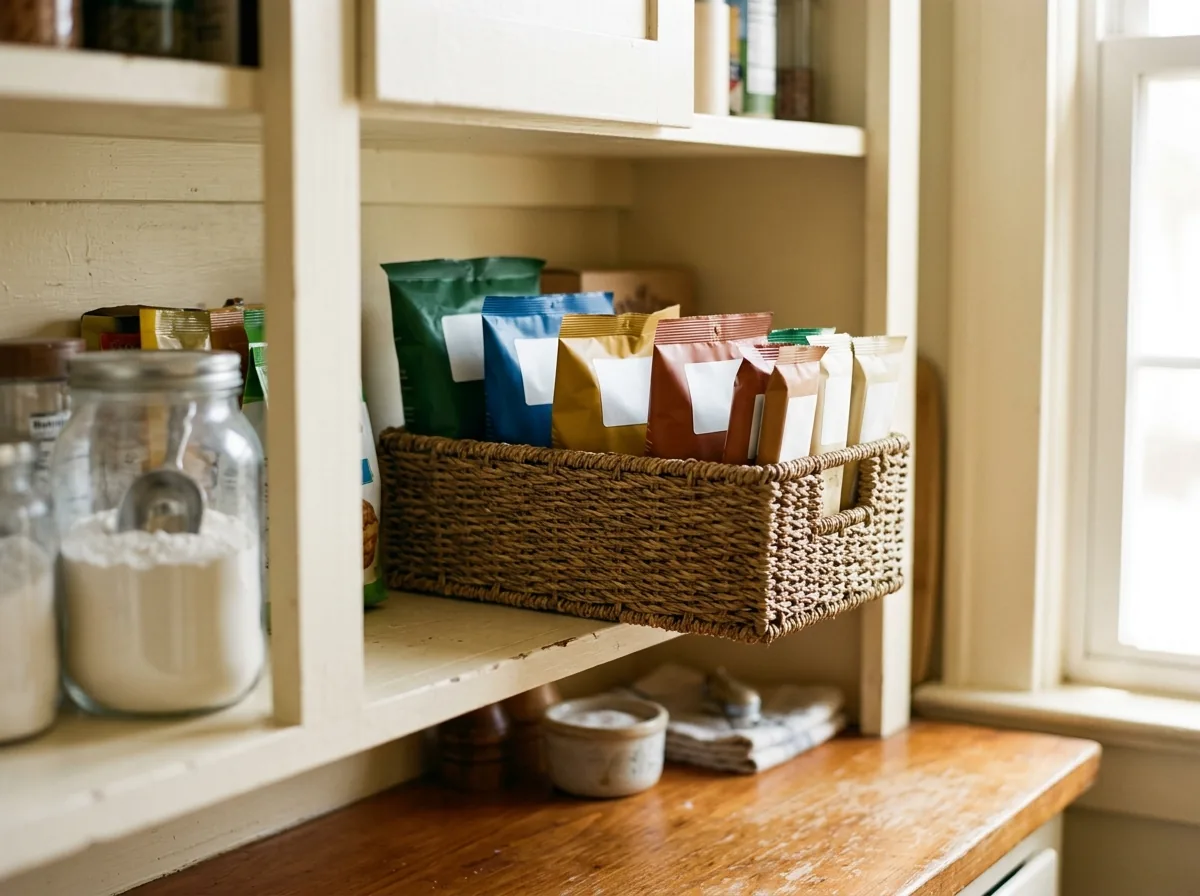
Loose snack packets are the number-one pantry mess-maker. Corral them into one open basket at easy reach, standing upright like files so you can flip through them. Budget tip: A $3 basket saves real money — visible snacks mean you stop rebuying the box hidden behind the flour.
20. Store Baking Supplies in One Lidded Bin
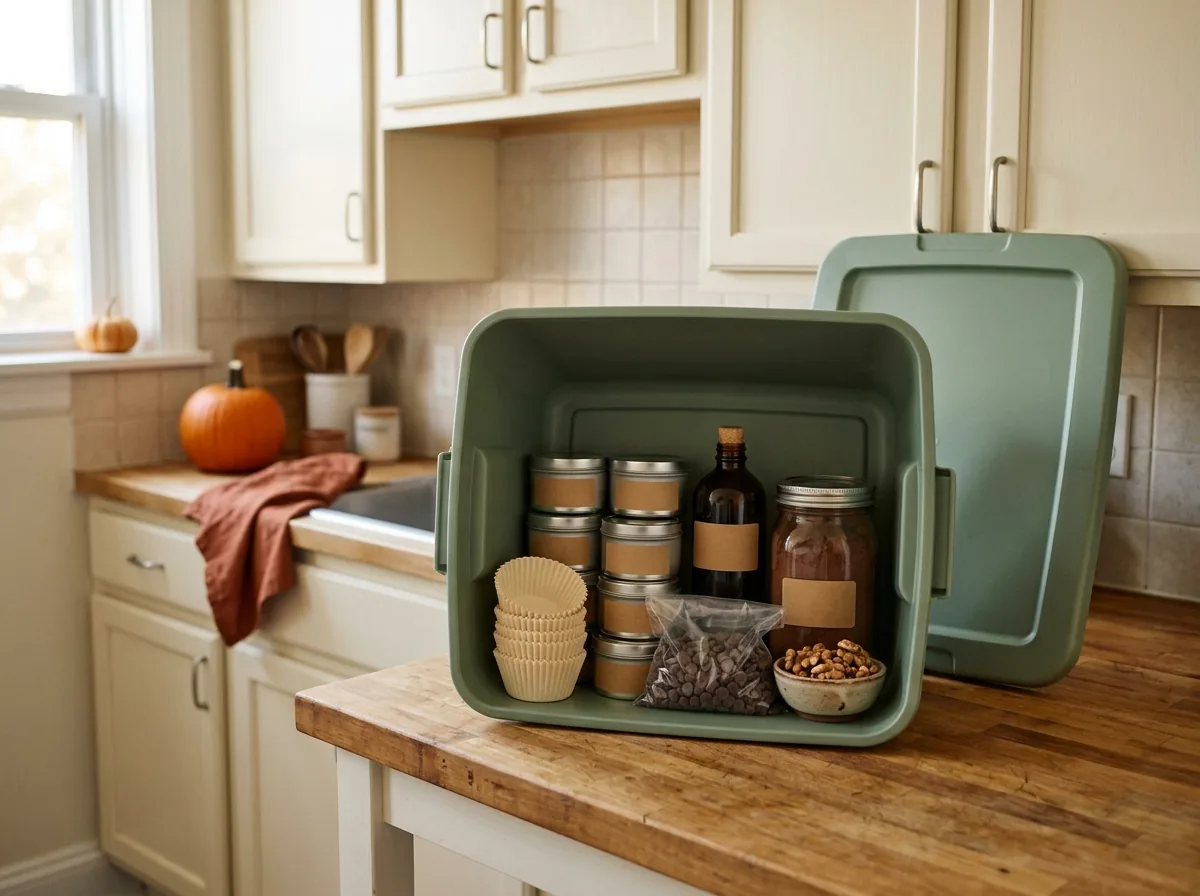
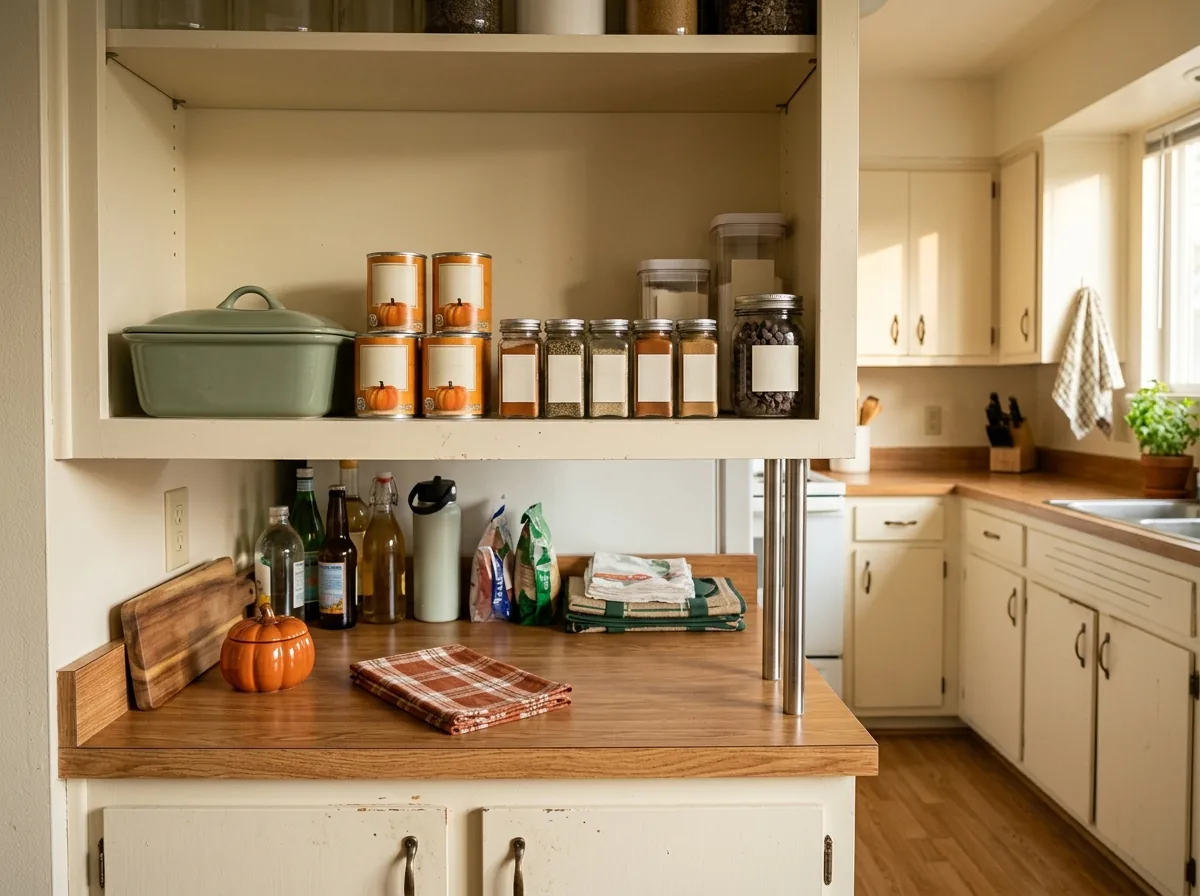
Baking ingredients are bought together, used together, and somehow scattered everywhere. One lidded bin holding baking powder, soda, vanilla, cocoa, and liners ends the scatter. In fall it becomes your holiday stock-up base — add chocolate chips, nuts, and dried fruit — then rotate it back to basics in January. A lid also protects small packets from humidity.
Habits That Keep It Working
21. Shop Your Pantry Before You Shop the Store
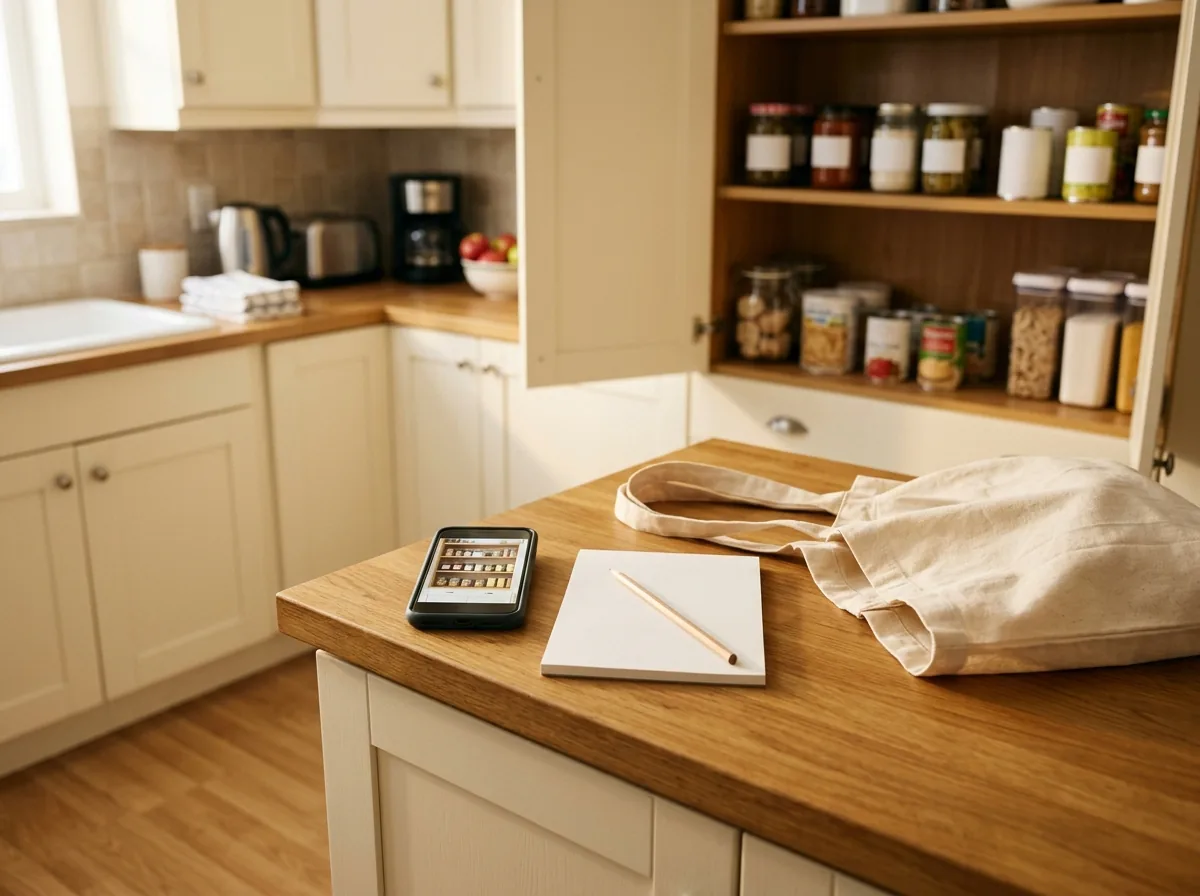
Two minutes before a grocery trip, snap a photo of your pantry zone. In a no-pantry kitchen, every duplicate is not just wasted money, it is wasted space you do not have. Build your list from the photo, buy only what has a home waiting, and cabinets stop overflowing after every shop.
22. Follow First In, First Out
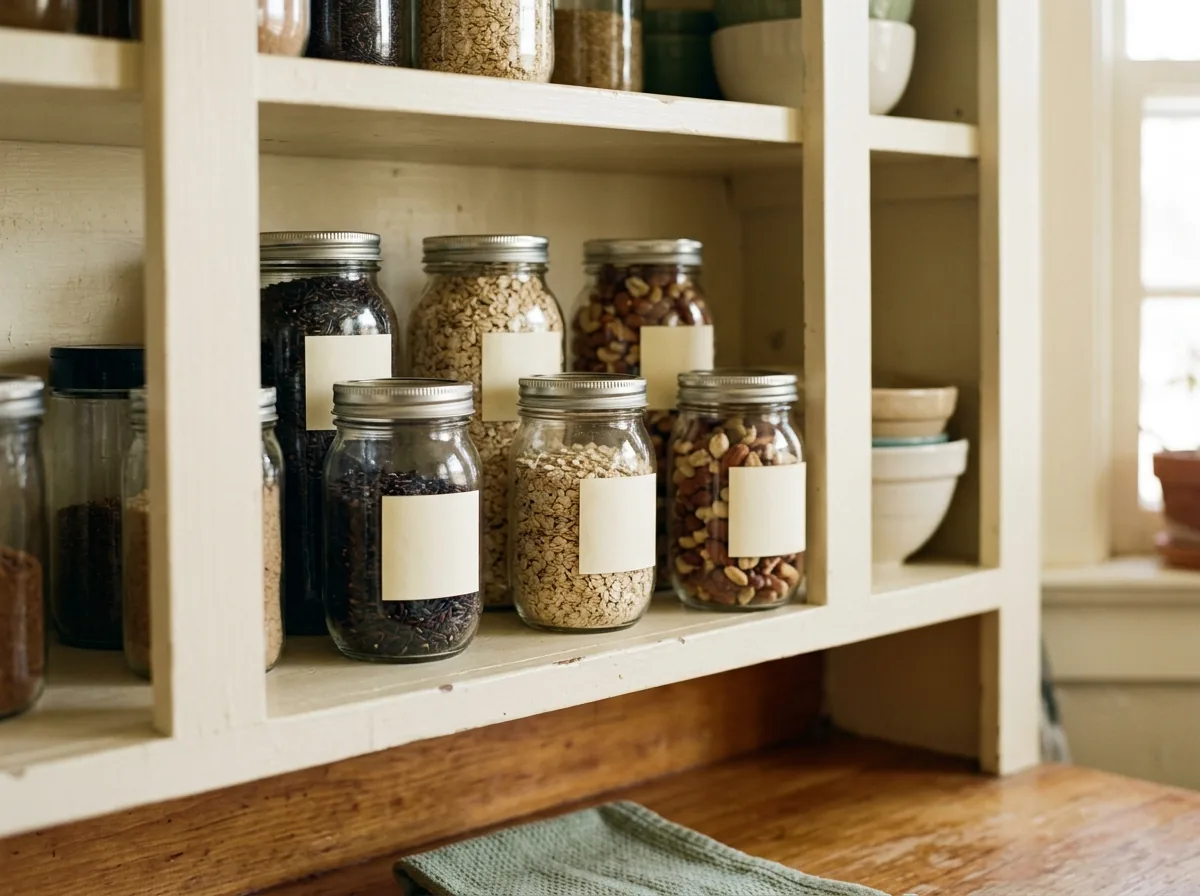
When groceries come home, move older items to the front and put new ones behind. It takes seconds per item and stops the classic small-pantry waste: three open bags of the same thing, two of them stale. It matters most for grains, nuts, and baking supplies.
23. Do a 10-Minute Weekly Reset
Small pantries do not need a big clean-out; they need a tiny regular one. Once a week — grocery day works well — spend ten minutes returning strays to their zones, wiping the cart or shelf, and checking the “use first” basket.
24. Keep Counter Food to a Pretty Minimum
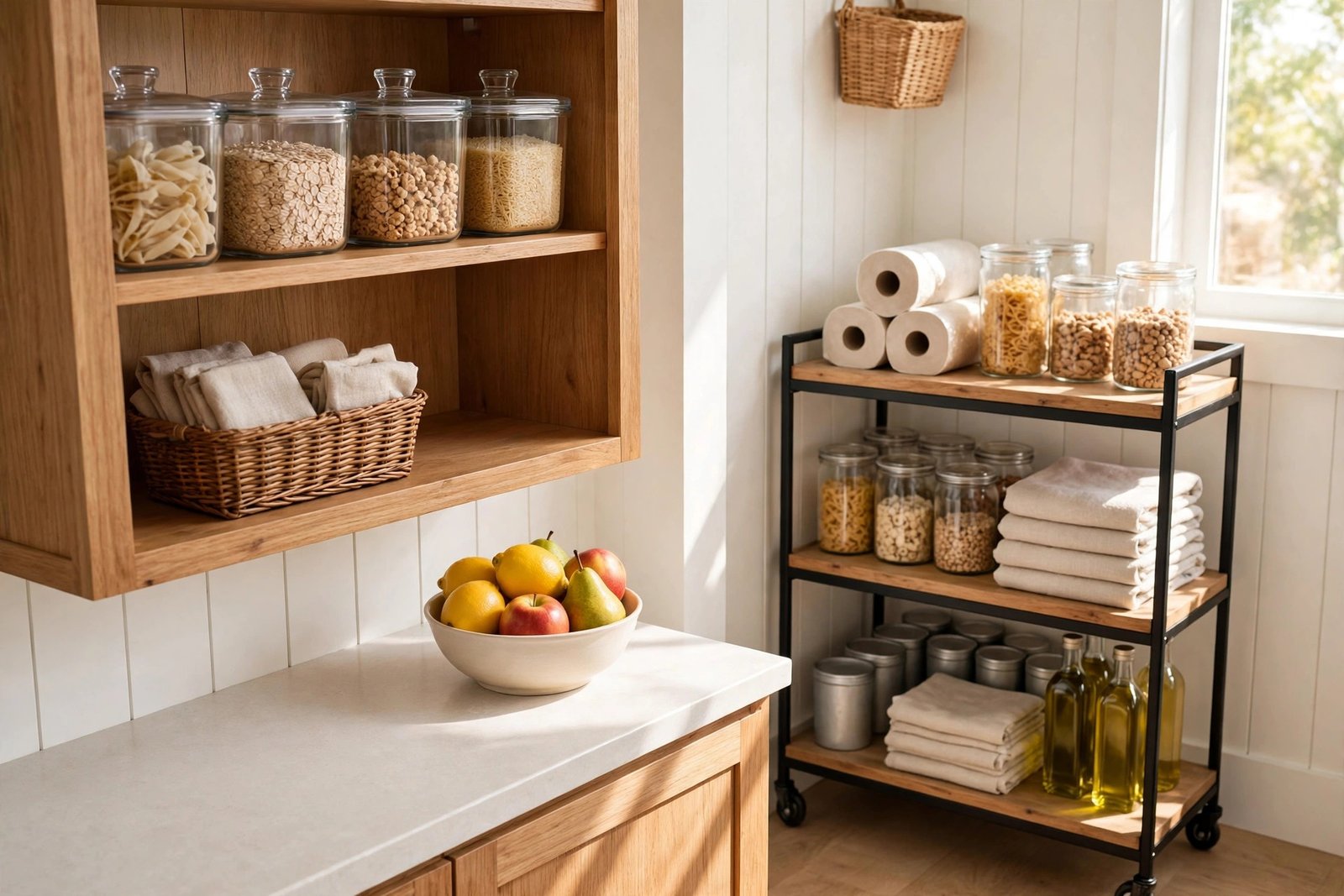
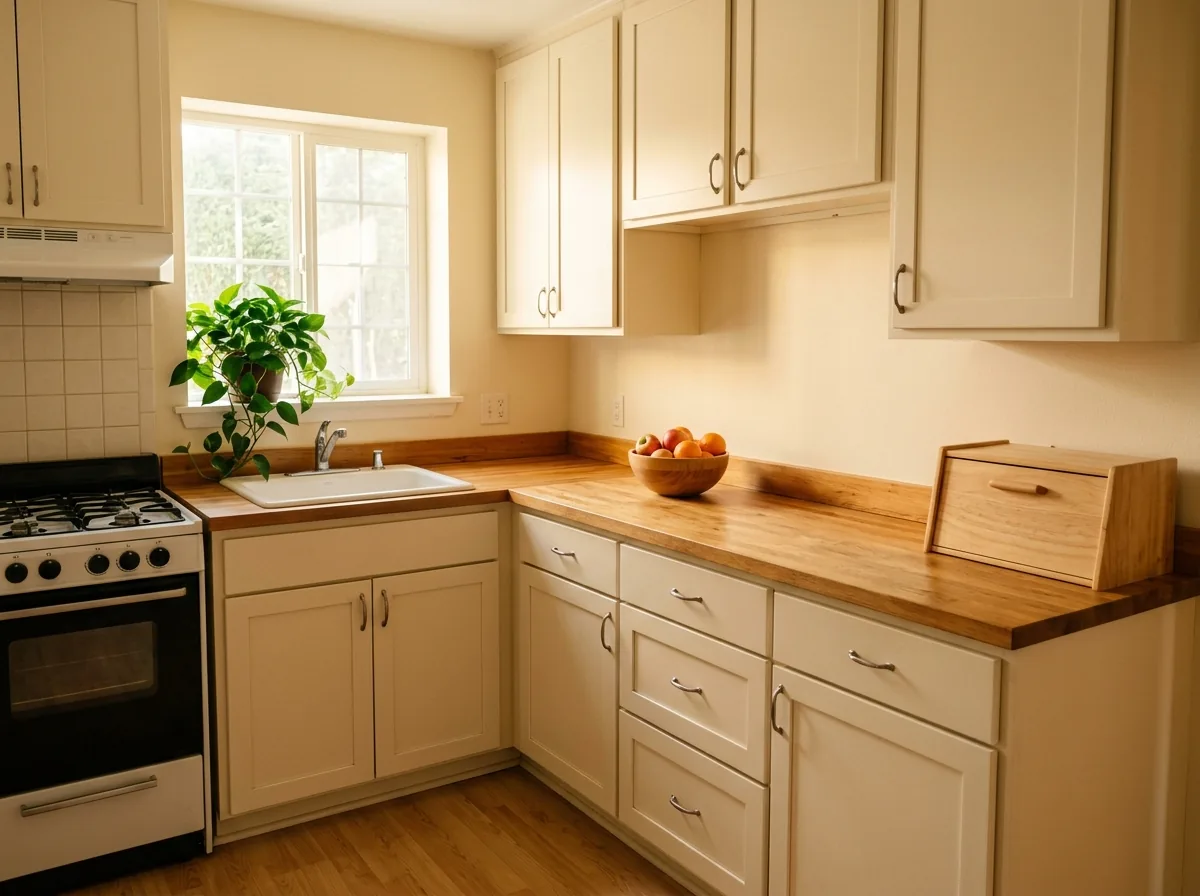
When storage is short, counters quietly become the pantry — and a small kitchen with full counters feels half its size. Keep only a fruit bowl and maybe a bread box on display, and give everything else a cabinet, cart, or door home from the ideas above.
25. Re-Zone Once a Season
How you cook changes with the seasons, so your zones should too. In fall and the holidays, baking and stock-up items deserve the easy-reach shelf; in summer, drinks and picnic supplies can take that spot. A seasonal re-zone takes fifteen minutes, keeps your most-used food at the front, and is the perfect moment to clear anything expired.
No-Pantry Quick-Start Checklist
Do these five steps this weekend, in order:
- Claim one food-only zone and move non-food items out
- Add one storage piece you do not have yet: a cart, a riser, or an over-door rack
- Decant the bulky five (flour, sugar, rice, pasta, cereal) into clear containers
- Label containers on the front and create a “use first” basket
- Take a pantry photo for your next grocery shop, and set a weekly 10-minute reset
Frequently Asked Questions
How do I organize a kitchen with no pantry?
Create one defined food zone — a cabinet, cart, or shelf — for food only. Multiply it with shelf risers, pull-out bins, and door racks, decant bulky staples into clear square containers, and label everything. Grouping by meal and a quick weekly reset keep it working without a pantry room.
What is the cheapest way to add pantry storage?
A shelf riser, an under-shelf basket, and an over-door rack — each usually under $15 — plus dollar-store bins for grouping. A secondhand rolling cart or bookshelf is the best-value larger piece. None of these need drilling, so they suit renters perfectly.
Where should I put food if I have no pantry and no spare cabinet?
Look beyond cabinets: a rolling cart in a corner, the gap beside the fridge, the fridge side itself, the back of a closet door, and the space above cabinets. Back stock can live in a hallway or dining corner, keeping only a week’s worth of everyday food in the kitchen.
Should I decant all my food into containers?
No — start with the bulky five: flour, sugar, rice, pasta, and cereal. They free the most space and make the biggest visual difference. Add containers gradually for other staples you buy often, choosing square, clear styles that stack, with simple front labels.
How do I keep a small pantry organized long term?
Three habits do most of the work: shop from a pantry photo to avoid duplicates, put new items behind old ones so nothing expires unseen, and spend ten minutes a week returning things to their zones. A seasonal re-zone keeps the food you use most easiest to reach.
Conclusion
A kitchen with no pantry is not a kitchen without storage — it is a kitchen whose storage has not been claimed yet. A cart in the corner, risers in a cabinet, hooks on a door, and five clear containers quietly add up to a real, working pantry that fits a renter’s budget and a small kitchen’s footprint.
Start with the checklist this weekend, then add one idea at a time. When your entryway needs the same treatment, see the same no-drill approach at the front door: 27 Fall Entryway Organization Ideas for Small Apartments With No Mudroom. And for the whole home, start here: 31 Small Space Organization Ideas That Make Every Room Feel Bigger.
Save this on Pinterest — so these ideas are waiting next time a cabinet overflows. Follow HomiBloom for simple ideas to make your home bloom.
2 Comments