
27 Fall Entryway Organization Ideas for Small Apartments With No Mudroom
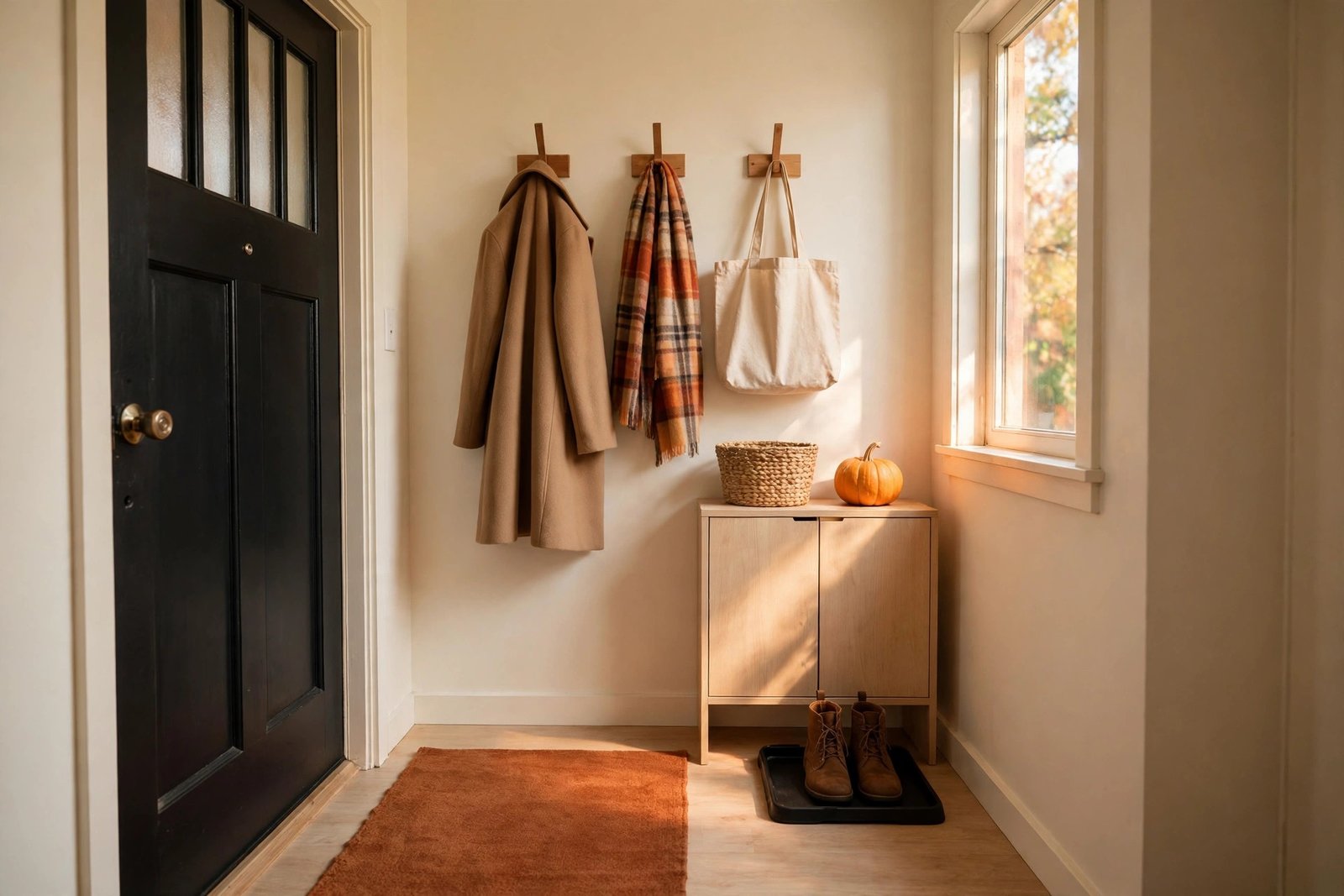
No mudroom? Same here — and fall is exactly when that hurts most. Coats get thicker, boots come home damp, scarves multiply overnight, and suddenly your front door opens straight into a pile-up. If your “entryway” is really just one small wall or the few feet behind the door, you are not doing it wrong. You just need a system built for a tiny entry, not a big house.
These 27 fall entryway organization ideas for small apartments were made for renters: no-drill where possible, budget-aware throughout, and honest about what actually fits. Pick three or four to start, and your door will feel calmer every time you come home. That’s the HomiBloom way — Simple Ideas to Make Your Home Bloom.
Hooks & Walls: Use the Wall You Already Have
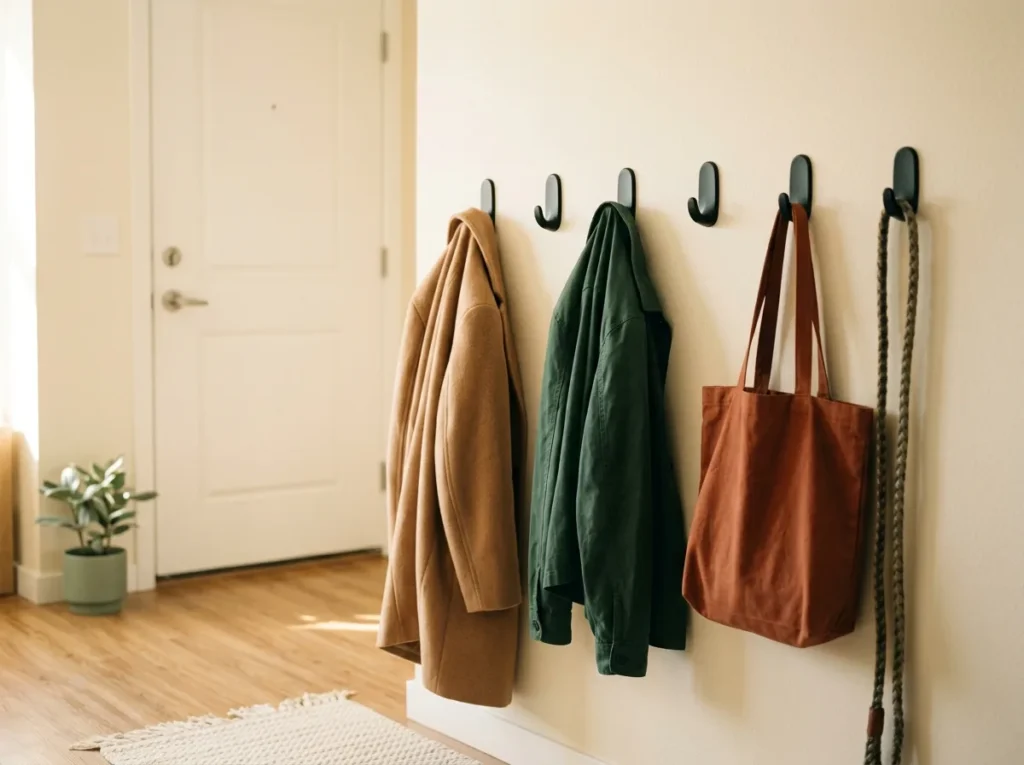
1. A Row of Removable Adhesive Hooks
Stick a row of large removable adhesive hooks at shoulder height for coats, totes, and dog leashes. They hold impressive weight, need zero drilling, and come off clean when you move. Budget tip: a multi-pack costs less than one wall-mounted rack, and you can add hooks as fall layers pile up.
2. An Over-the-Door Hook Rack
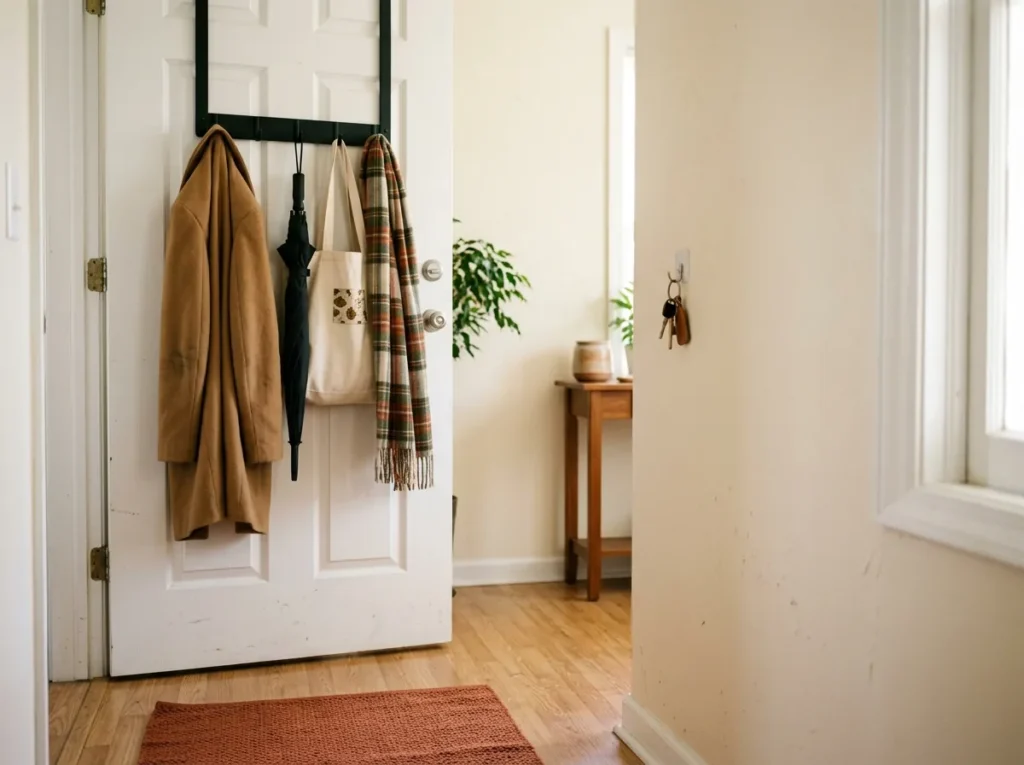
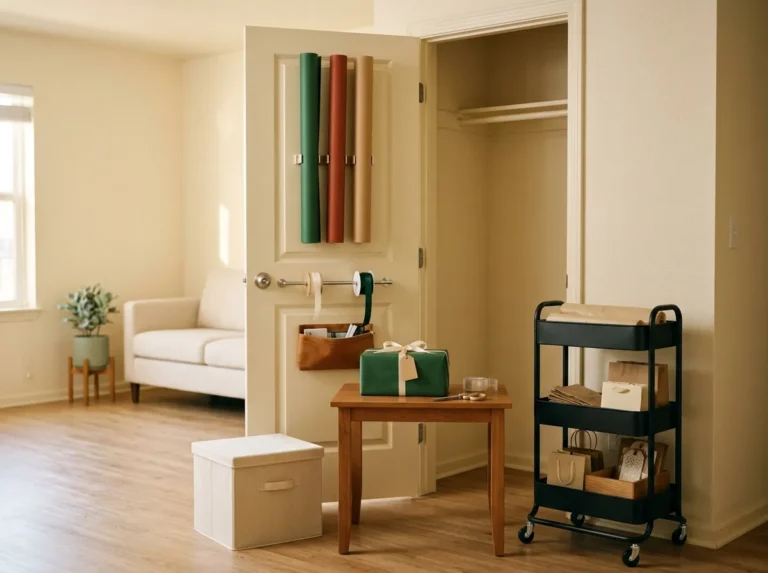
Slide an over-the-door rack onto your entry or closet door and you instantly gain five to seven hooks without touching a wall. Use it for guest coats, umbrellas, and the bag you grab daily. Choose a padded version so it does not rattle or scratch — most renter-friendly styles are under $15.
3. A Slim Peg Rail With Removable Strips
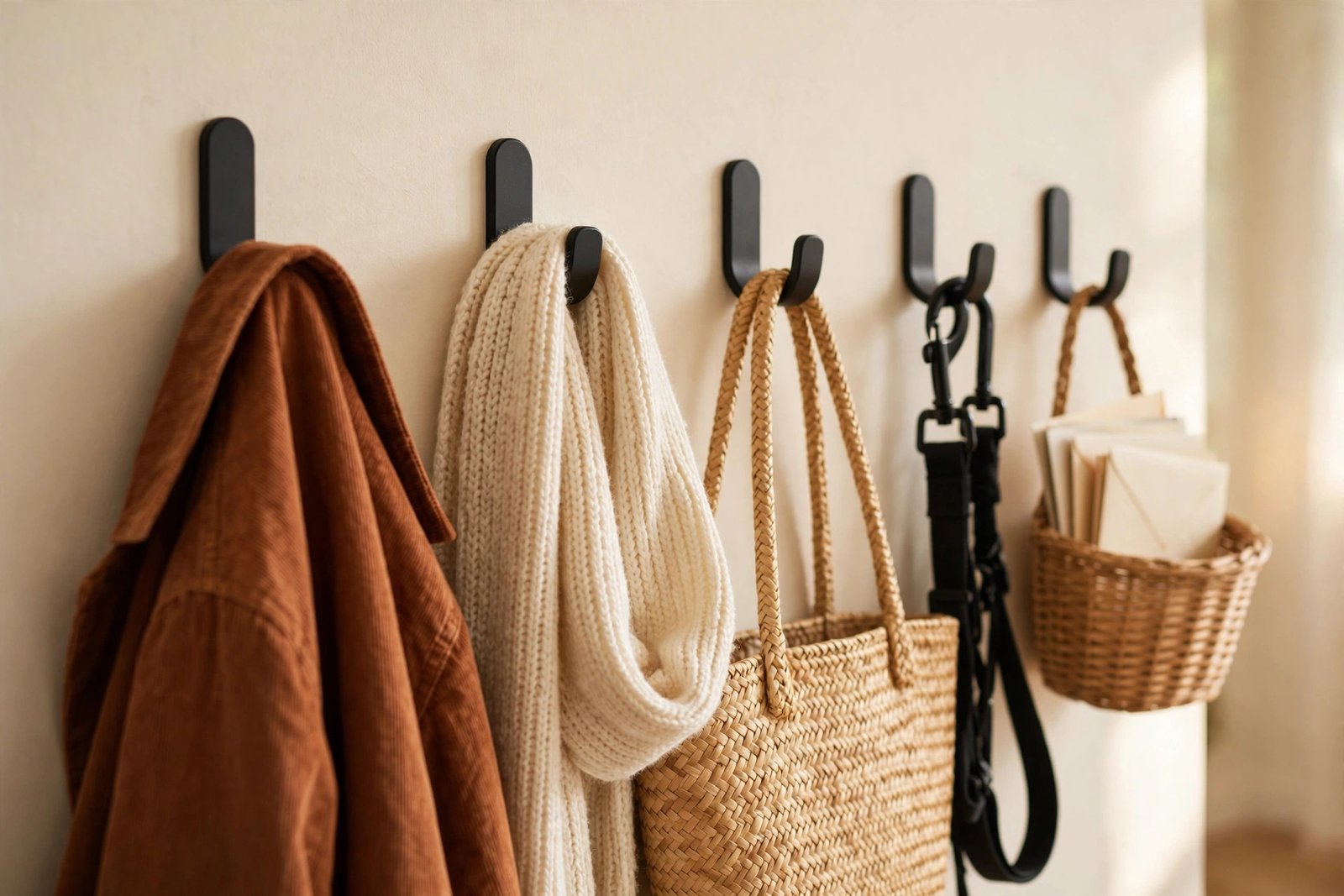
A lightweight wooden peg rail gives that cozy, built-in mudroom look without the built-in commitment. Mount it with heavy-duty removable strips rated for its weight, then hang hats, scarves, and baskets. If your lease allows two small screws, note that drilling makes it sturdier for heavy winter coats.
4. One Hook Per Person — and One for Guests
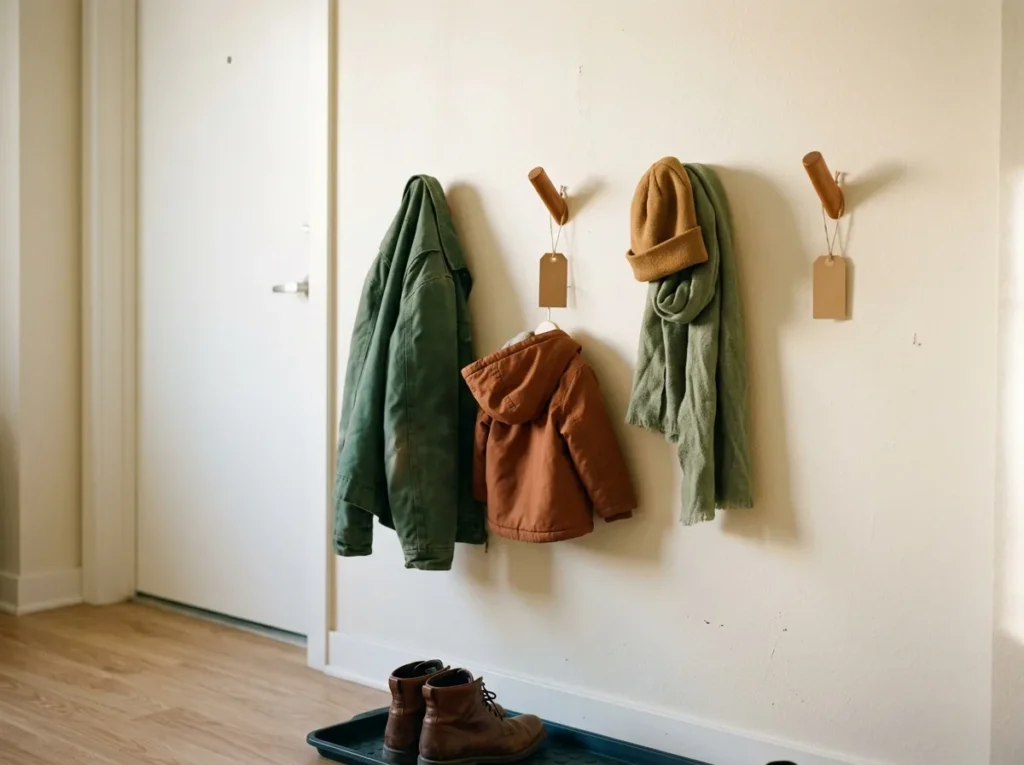
Assign each person in the home their own hook, plus one spare for visitors. This tiny rule stops the “everyone piles on the same hook” problem and makes tidying a ten-second job. Label them with small tags if kids are learning the system — it genuinely helps.
5. Hang a Small Wall Basket for Mail and Keys
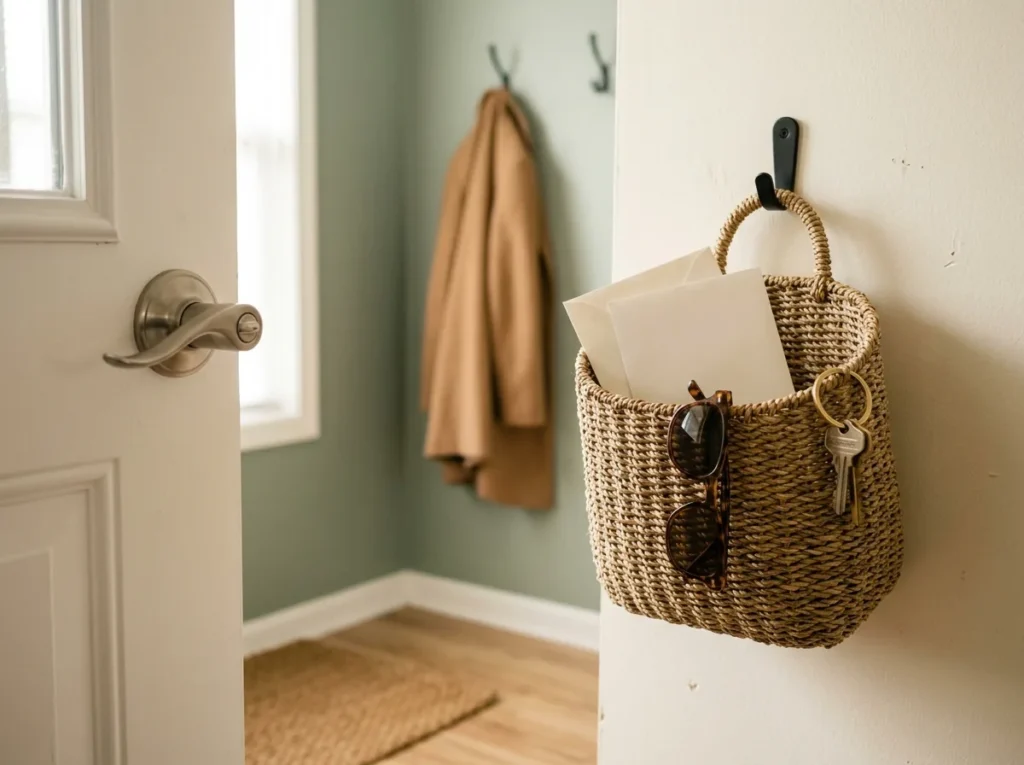
A wire or woven basket hung from a hook catches mail, sunglasses, and keys before they land on your kitchen counter. Hang it at hand height right beside the door so using it is automatic. Thrift stores are full of perfect baskets for $3–$5.
6. Use the Back of the Door for Scarves and Hats
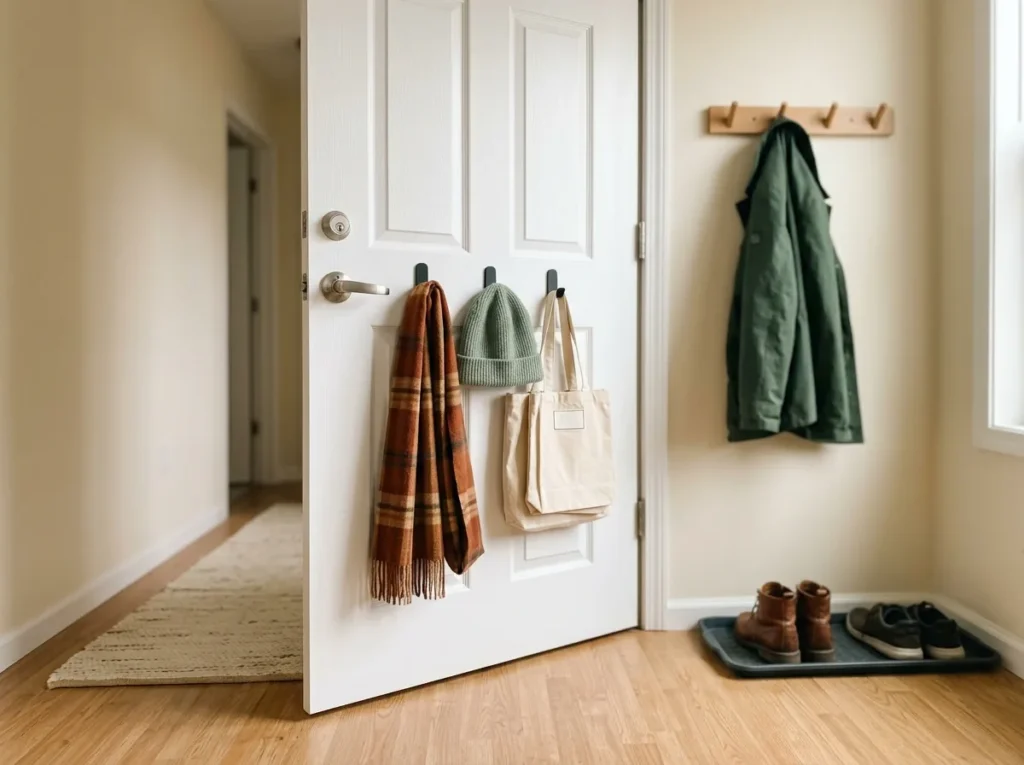
Add two or three small adhesive hooks low on the back of the door for scarves, caps, and reusable shopping bags. This hidden zone is prime real estate in a small entryway organization no mudroom setup. It keeps soft, bulky fall accessories visible, aired out, and off the floor.
Shoe Storage That Actually Fits
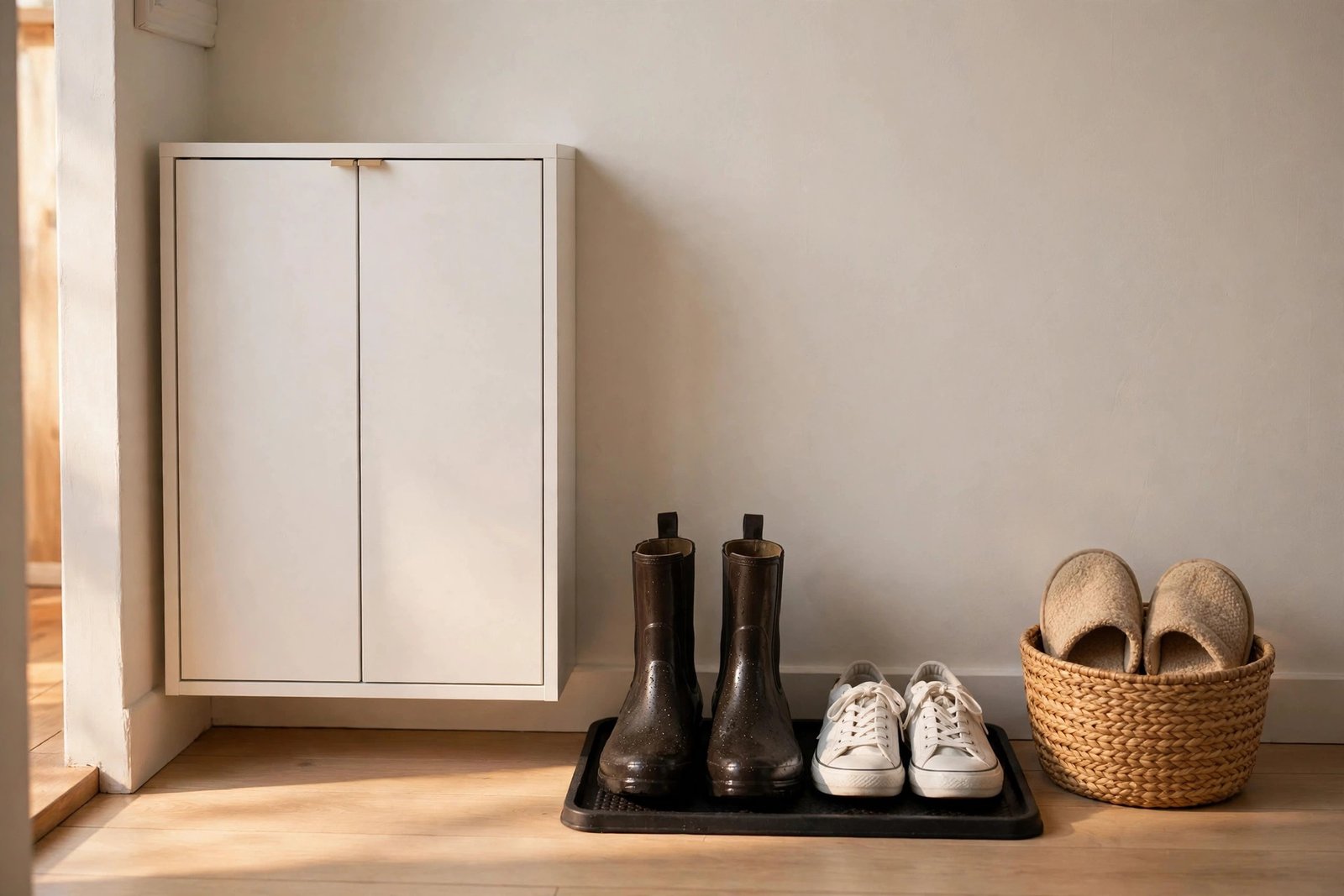
7. A $25 Boot Tray to Save Your Floors
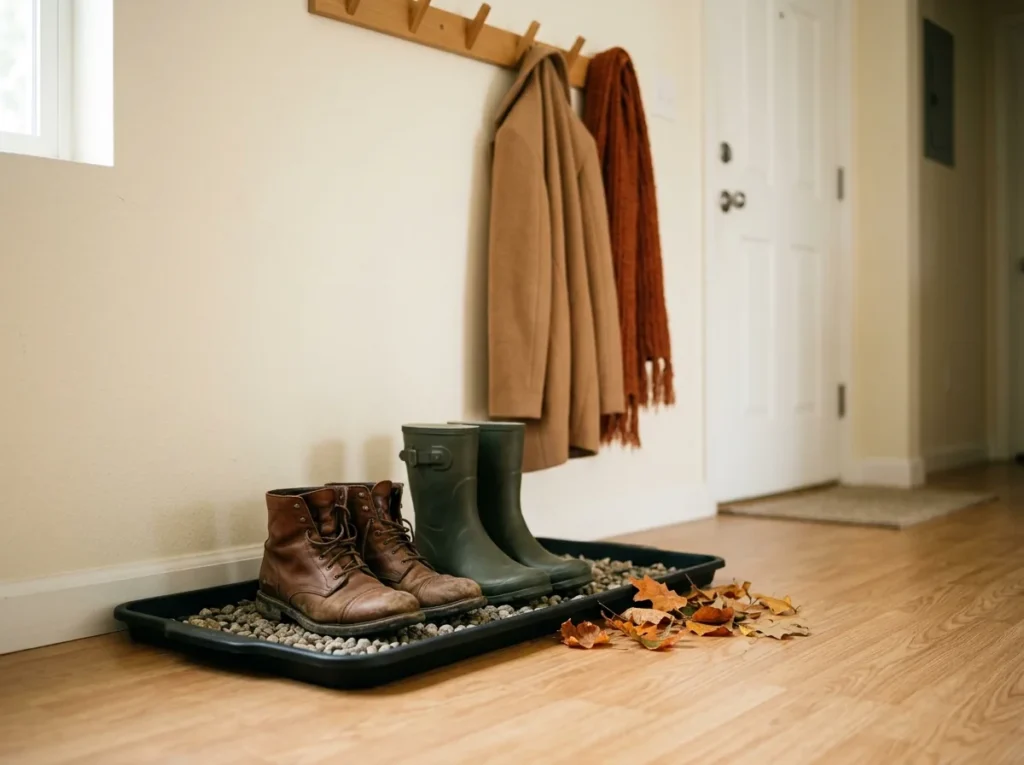
Fall means wet leaves and muddy soles. A simple boot tray with a raised lip — most are around $15–$25 — corrals two to three pairs and protects your floors. Slide it against the wall under your hooks and your entry suddenly looks intentional, not improvised.
8. A Slim, Closed Shoe Cabinet
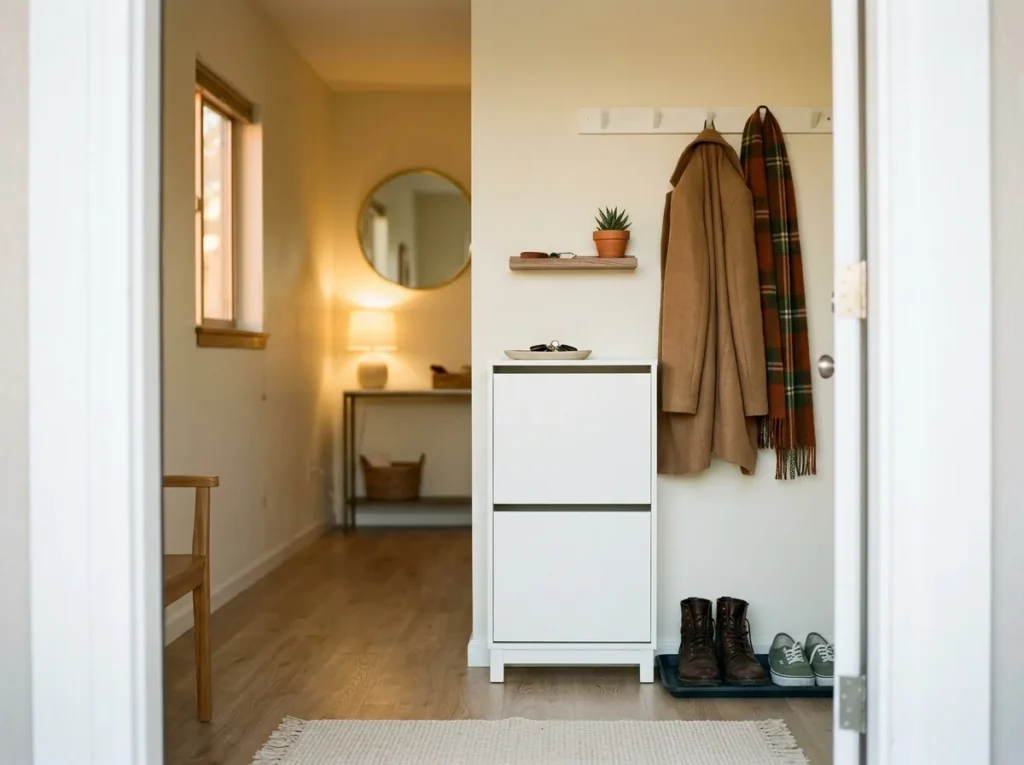
A narrow shoe cabinet only 6–8 inches deep holds more than an open rack and hides visual clutter behind doors. Measure your wall first; many small apartment entryways can fit one beside the door. Budget tip: big-box and secondhand options are plentiful, and closed storage photographs — and feels — much calmer.
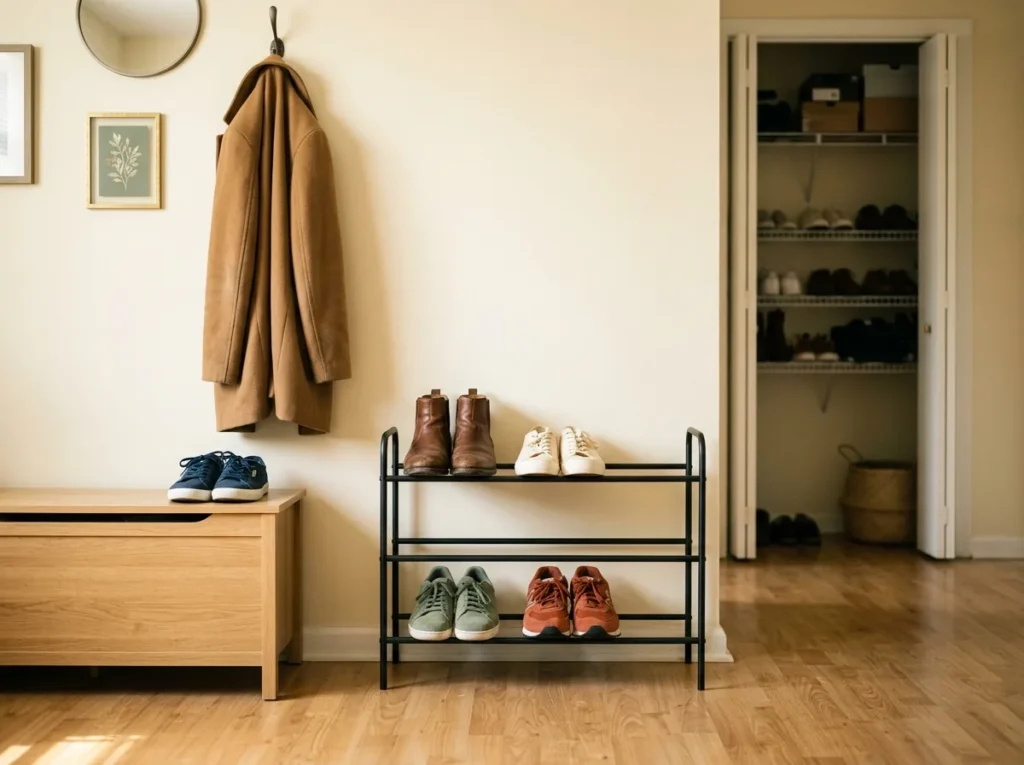
9. A Two-Tier Rack That Goes Vertical
If floor space is tight, go up. A compact two- or three-tier rack uses vertical space while leaving room for a tray or basket alongside it. Keep daily shoes on the rack and move rarely worn pairs to a closet so the entry never becomes a shoe store.
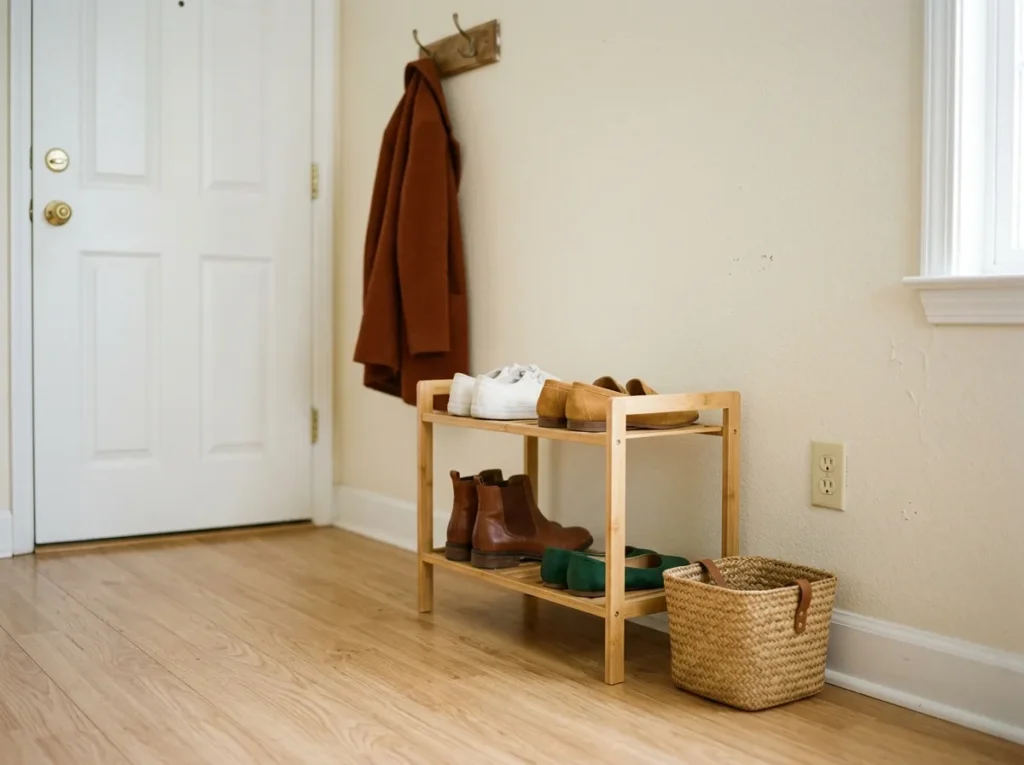
10. One In, One Out Shoe Rule
Set a household limit: only two pairs per person live at the door. Everything else goes in a bedroom closet or under-bed box. This is the cheapest idea on this list — it costs nothing — and it is the one that keeps every other shoe solution from overflowing by November.
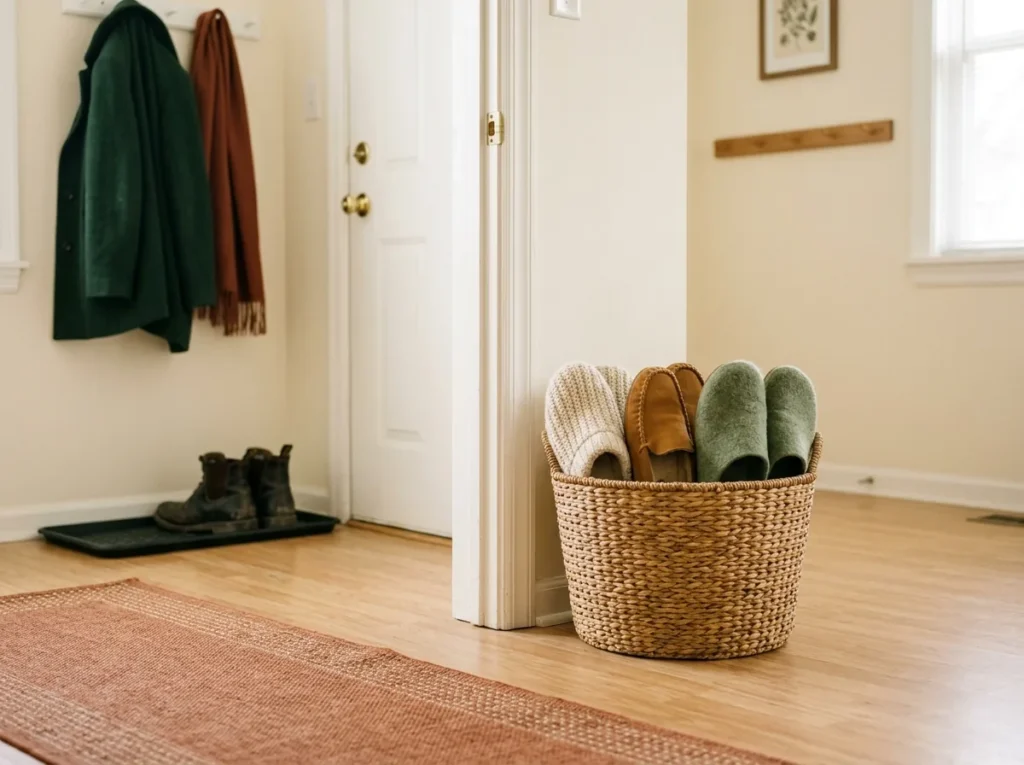
11. A Basket for Slippers and House Shoes
Place a soft basket by the door for slippers so the shoe swap becomes a cozy fall ritual instead of a mess. Guests instantly understand the system, too. A woven basket adds fall texture while it works — a nice bonus in a rental.
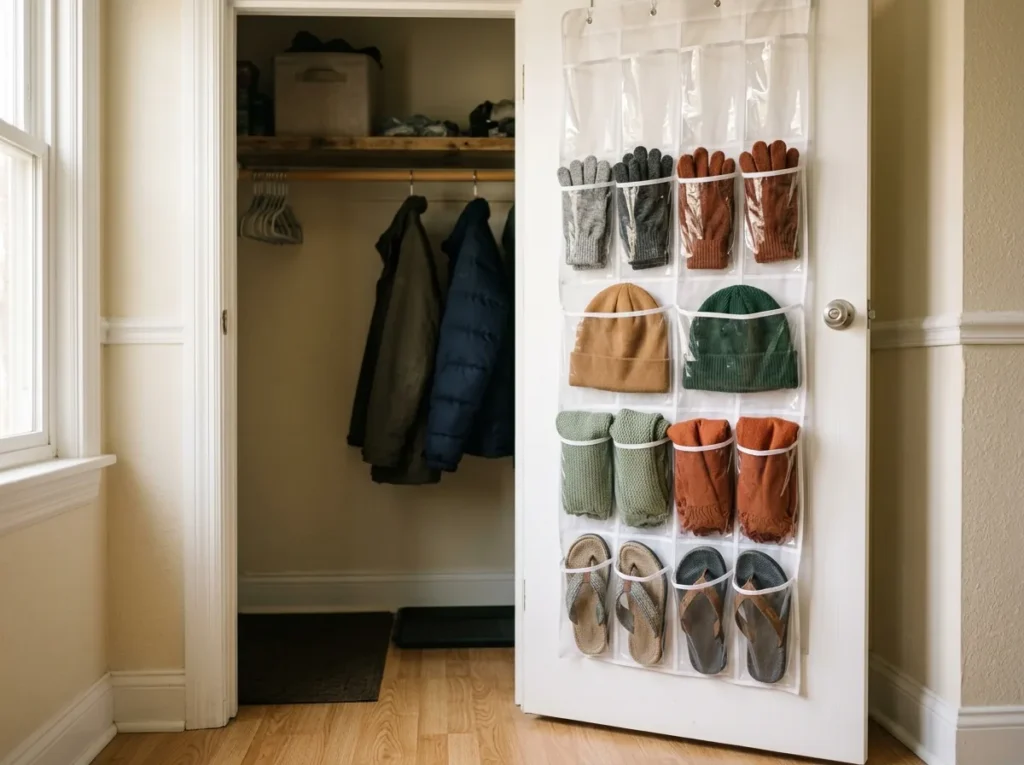
12. Clear Over-Door Shoe Pockets Inside a Closet
If you have even a small coat closet, hang clear shoe pockets inside its door for gloves, hats, and off-season shoes. You will see everything at a glance and free up shelf space. Dollar-store versions work just as well as branded ones for light accessories.
Create a Drop Zone (Even If It’s Just One Shelf)
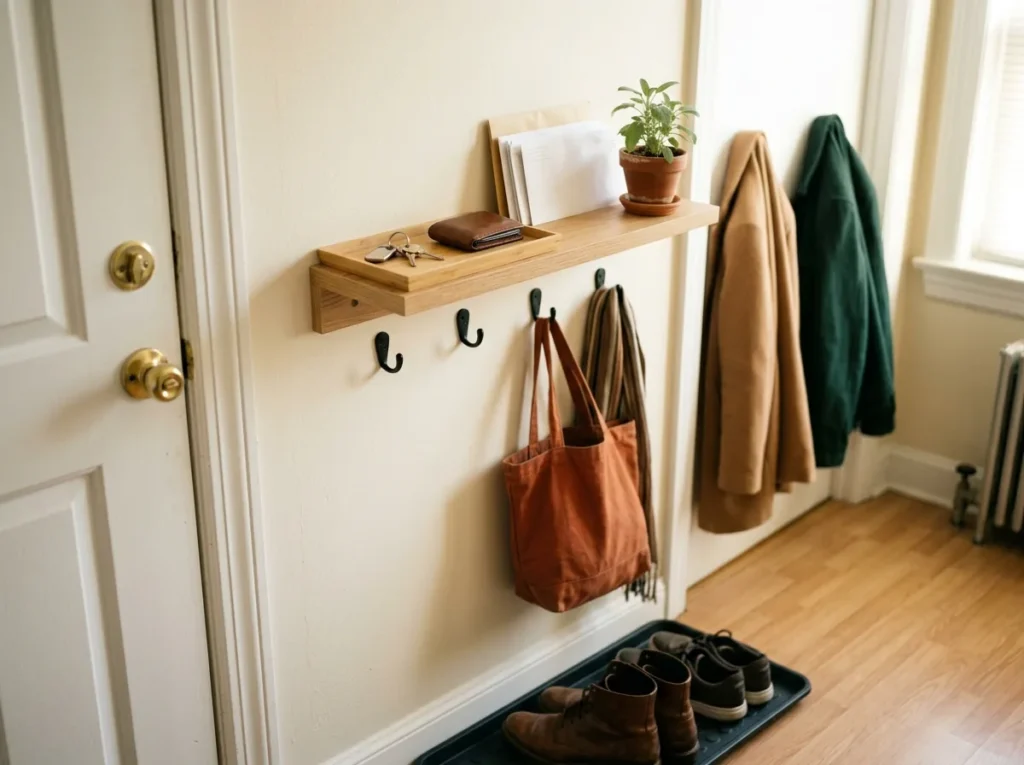
13. A Floating Shelf — or a No-Drill Alternative
A small shelf above your hooks becomes a landing strip for keys, wallets, and mail. Renters: a sturdy adhesive picture ledge or a freestanding narrow console gives the same result without drilling. If you do drill, note it here — patching two holes at move-out is simple with filler.
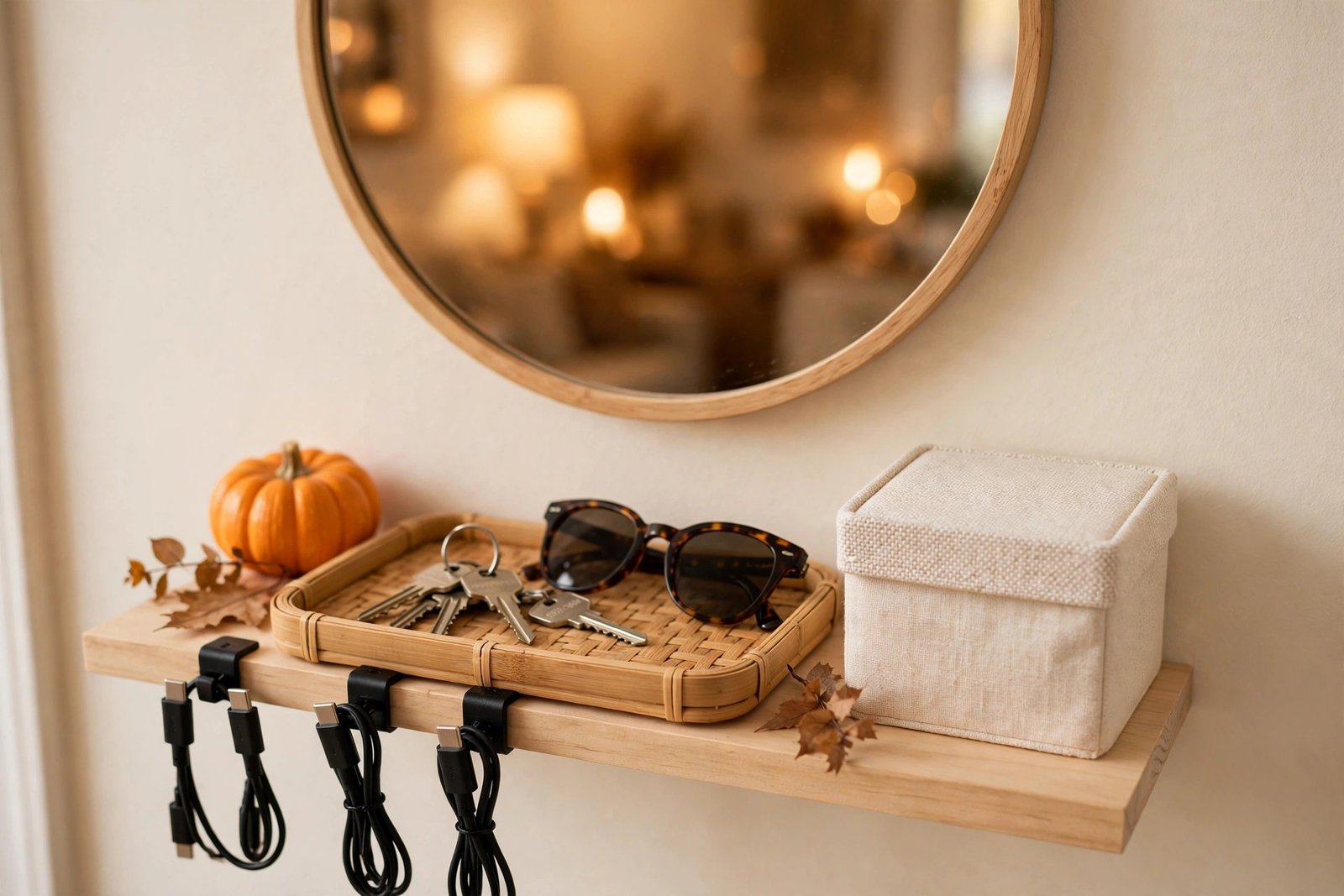
14. A Tiny Tray That Defines the Drop Zone
A single tray on a shelf, stool, or cabinet top tells everyone, “keys live here.” Without a defined spot, small items spread; with one, they stay contained. Use a thrifted wooden tray, a ceramic dish, or a $5 bamboo organizer — shape matters less than consistency.
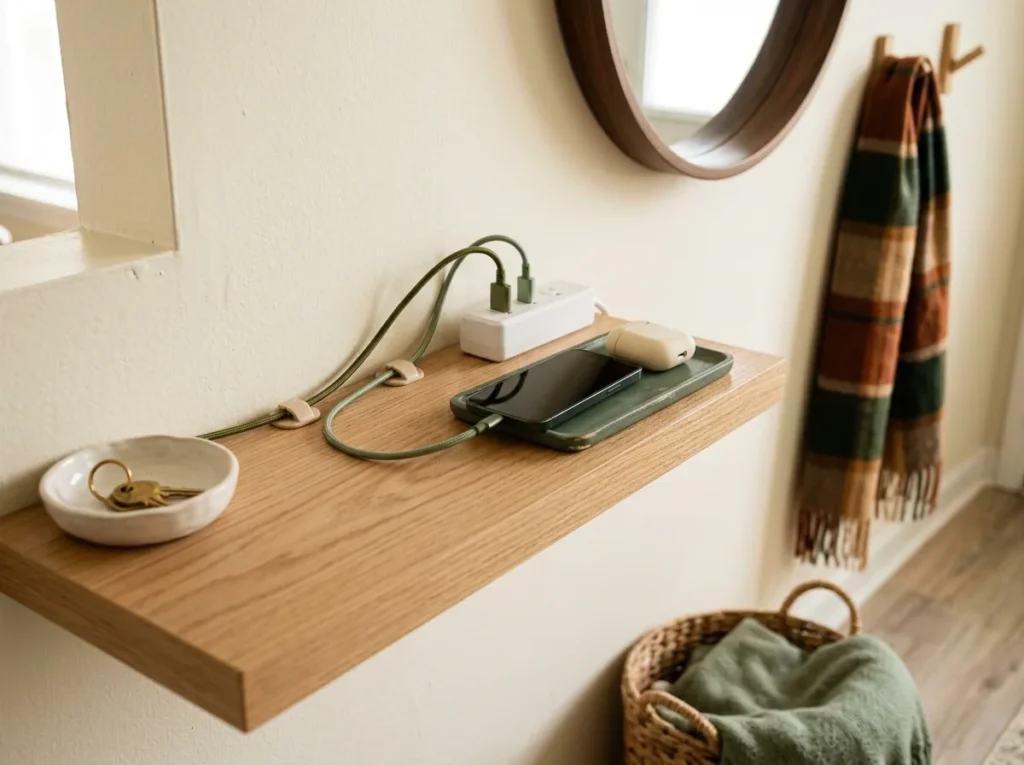
15. A Charging Spot by the Door
Tuck a small power strip with short cables into your drop zone so phones and earbuds charge where you drop them. Use adhesive cable clips (no drilling) to keep cords tidy and off the floor. You will leave home with a full battery and stop hunting for chargers in the morning.
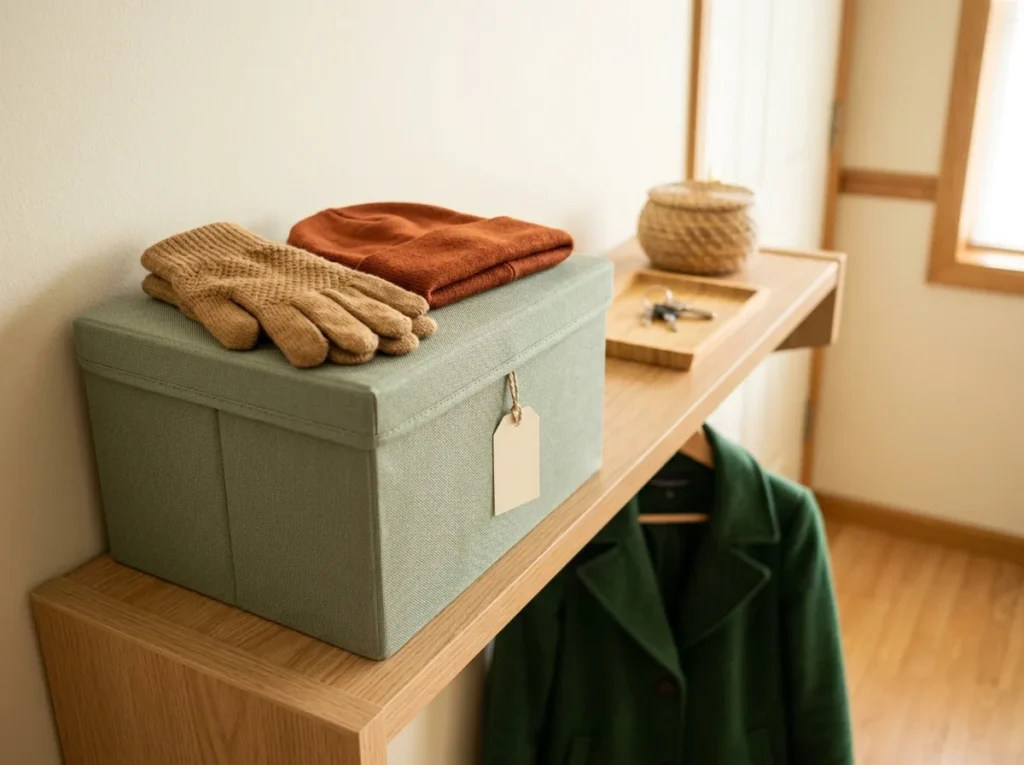
16. A Lidded Box for Gloves, Hats, and Masks
Fall accessories are small, soft, and endlessly losable. One lidded box or fabric bin on your shelf keeps matching pairs together and dust off. Label it simply “Fall” and rotate the contents each season — in spring it becomes sunglasses and sunscreen storage.
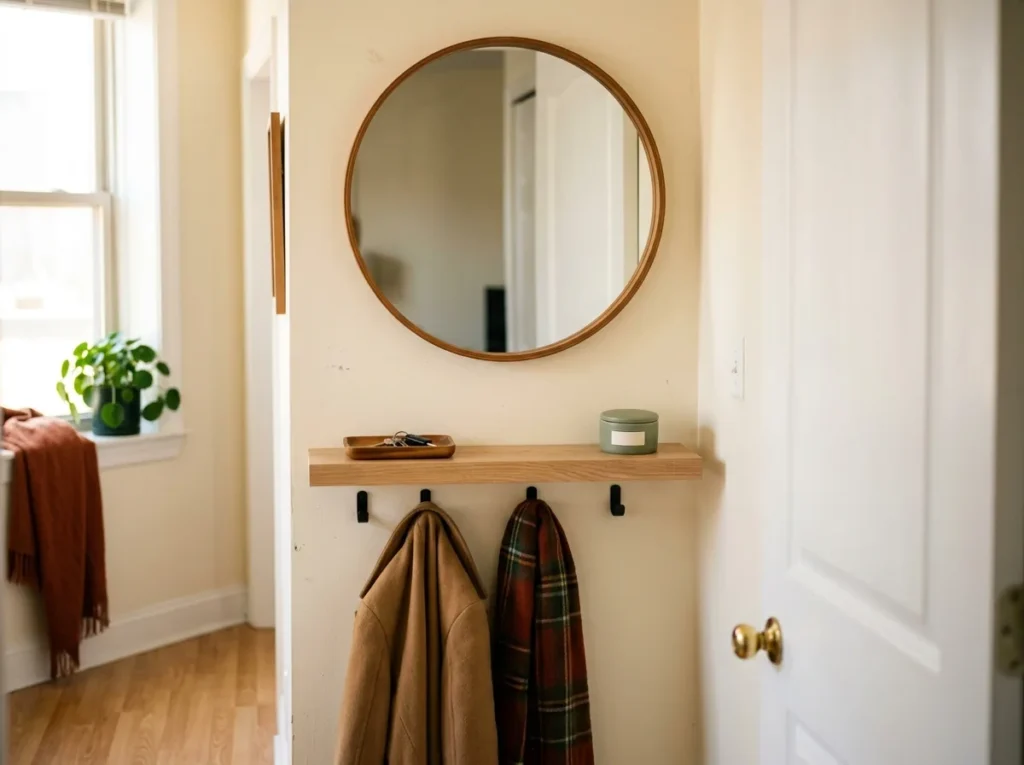
17. A Small Mirror That Earns Its Place
Hang a mirror with removable strips above your drop zone for a last check on the way out. It also bounces light around a dark hallway, making a tiny entry feel bigger. Mirrors under $20 are everywhere secondhand, and a round shape softens a narrow space.
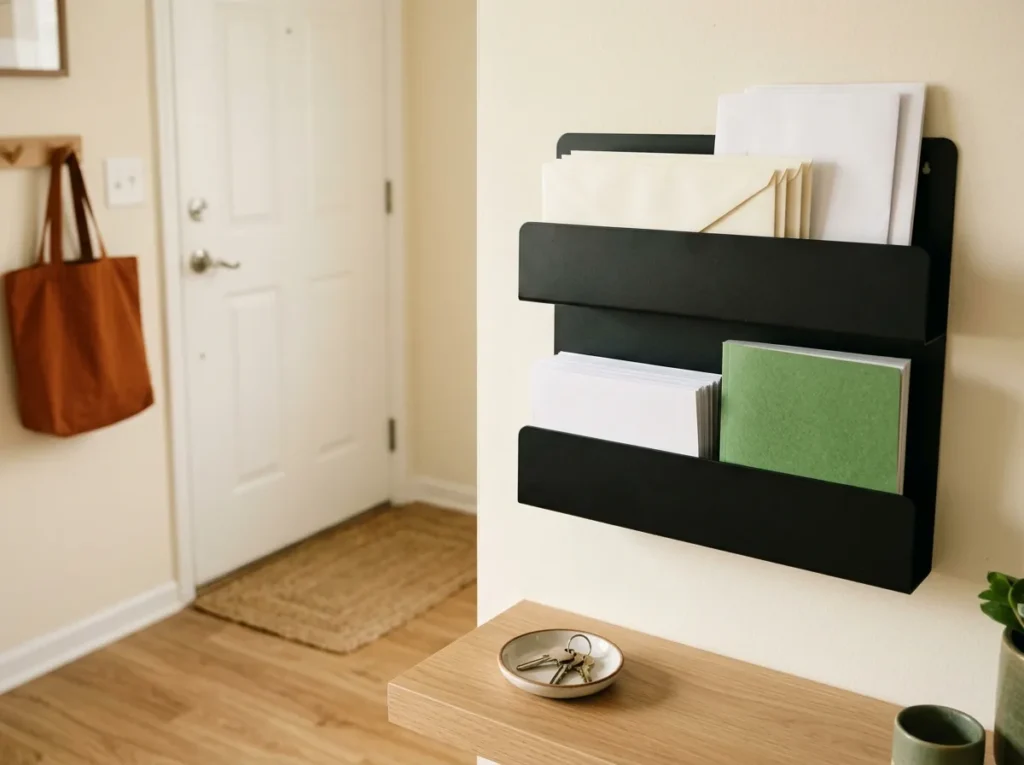
18. A Wall-Mounted Mail Sorter
Two slots are enough: “In” for new mail and “Deal With” for bills and forms. A slim sorter keeps paper off every flat surface and takes ten minutes to install with strips or two screws (drilling note: screws are sturdier for heavy catalogs). Empty the second slot every Sunday and it will never overflow.
The Seasonal Fall Layer: Cozy Without Clutter
19. One Fall Wreath or Swag on the Door
A single wreath on an over-door hanger says fall the moment you arrive — no nails needed. Keep it to one statement piece so a small entry does not feel crowded. Budget tip: a grapevine wreath plus a $4 ribbon can be restyled for winter.
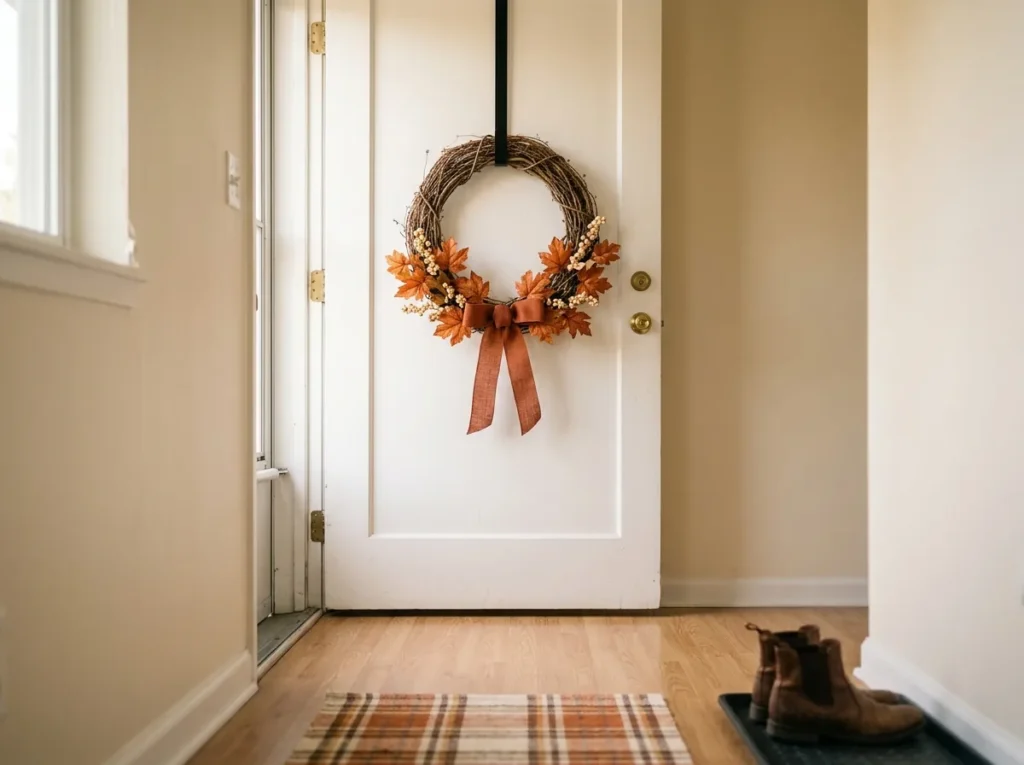
20. Swap in a Warm, Washable Runner
A low-pile, washable runner in a warm rust, plaid, or deep green protects floors from wet boots and defines your entry zone visually. Measure so the door still swings freely — that is the mistake most people make. Machine-washable runners made for renters start around $20 and earn it by October.
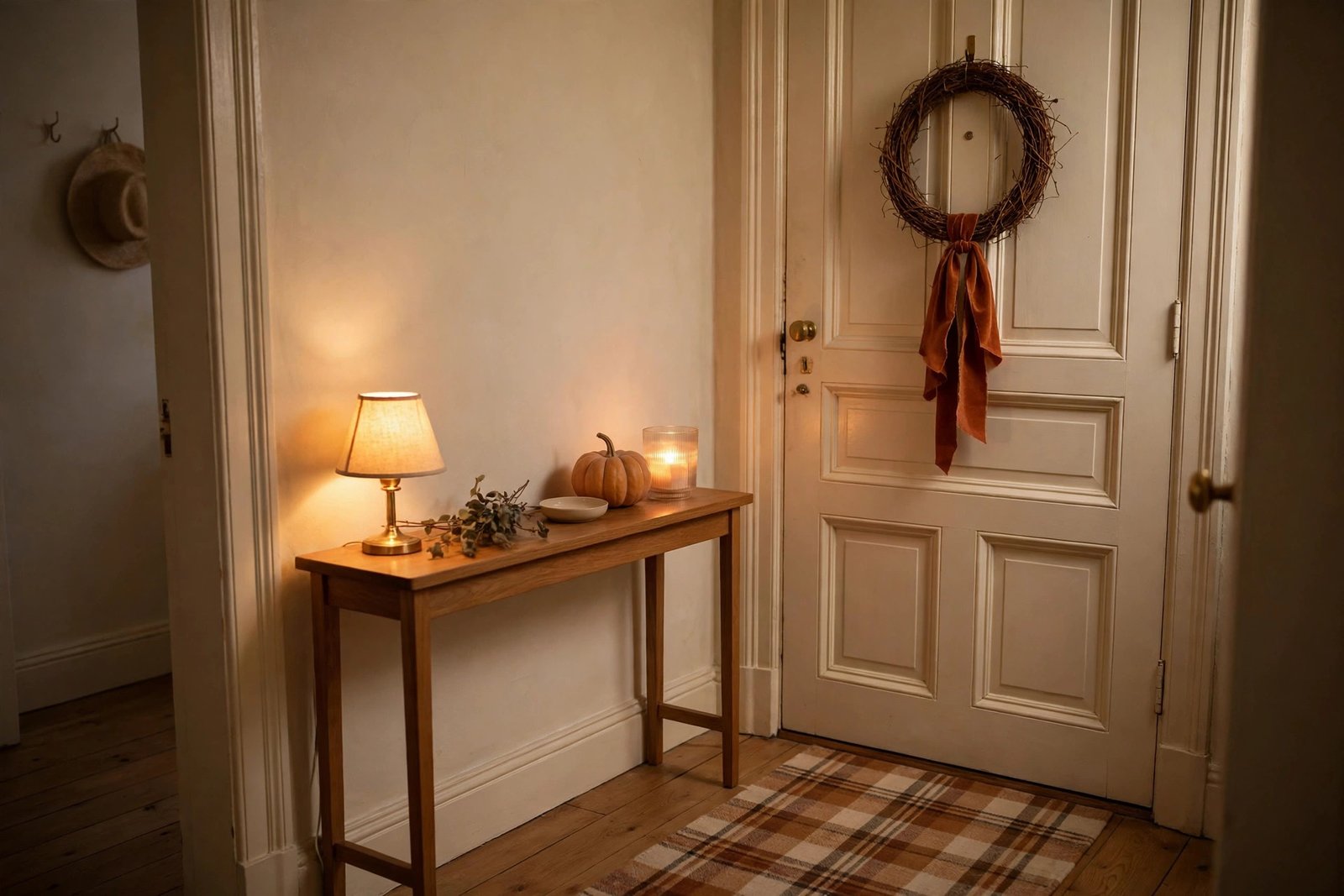
21. A Pumpkin, Done Simply
One real pumpkin or a couple of faux ones on your shelf or boot tray shelf is plenty for a tiny entry. Group them in odd numbers with a candle or small plant for a styled look. Skip the sprawling display; in a small space, restraint is what looks expensive.
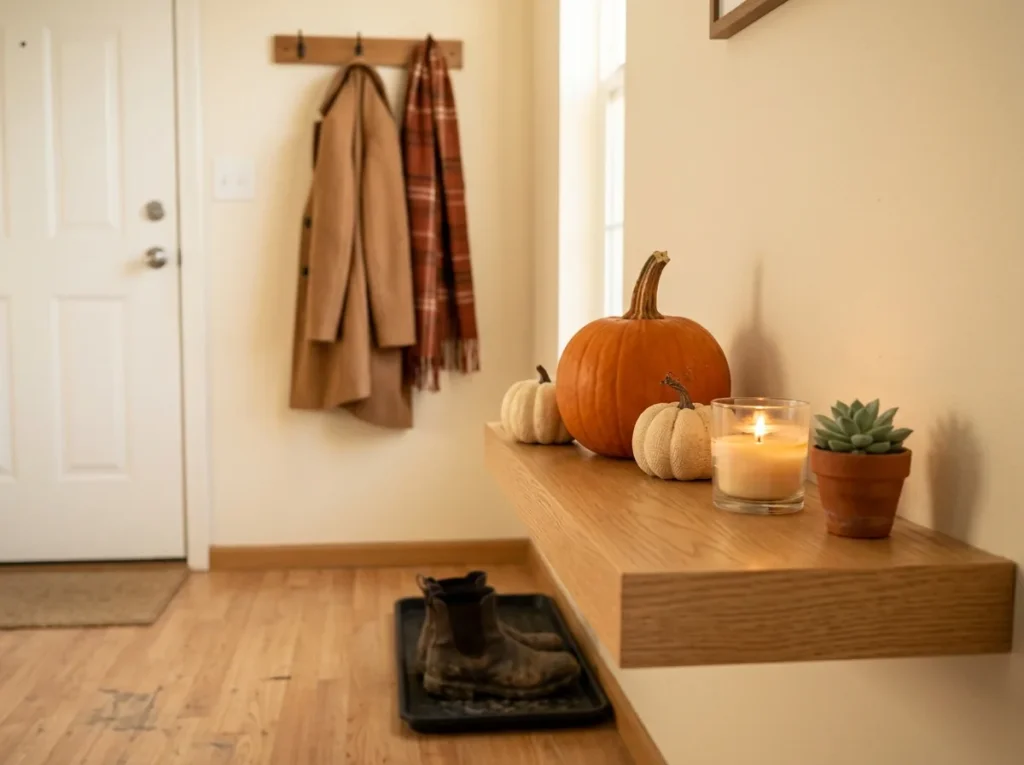
22. Warm Light at Eye Level
Swap a harsh bulb for a warm-toned one, or add a small plug-in sconce or battery puck light with adhesive backing — no wiring, no drilling. Warm light makes fall evenings feel welcoming and helps you actually see which coat is yours. This is the fastest five-minute upgrade on the whole list.
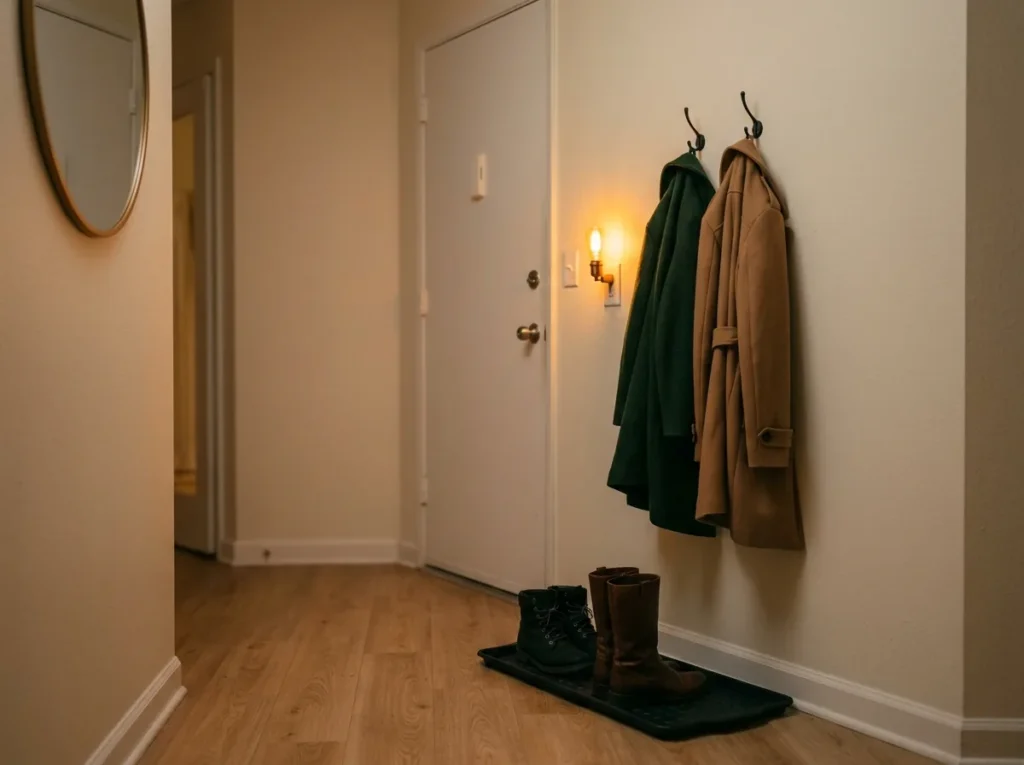
23. A Fall-Scented Touch by the Door
A reed diffuser, a small bowl of cinnamon sticks, or a plug-in warmer by the entry makes coming home feel like fall. Keep scents light in a small apartment, because a tiny space amplifies fragrance quickly. This little ritual costs under $10 and changes how the whole entry feels.
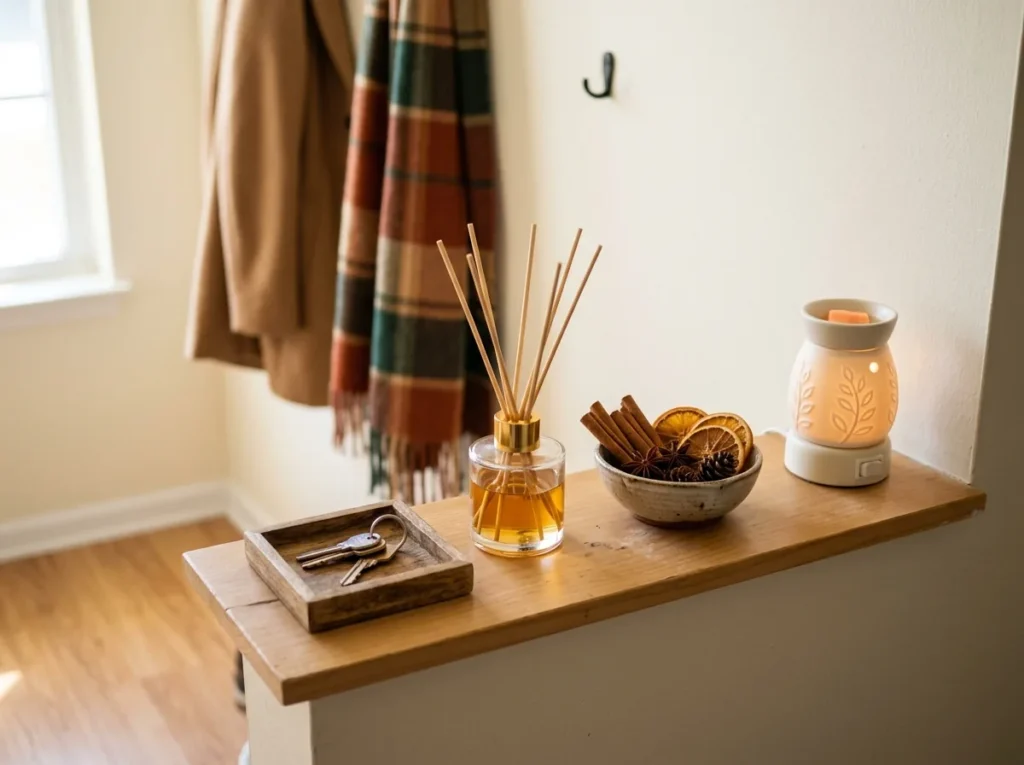
Tiny Entry Tricks That Make It Feel Bigger
24. Keep the Palette to Three Colors
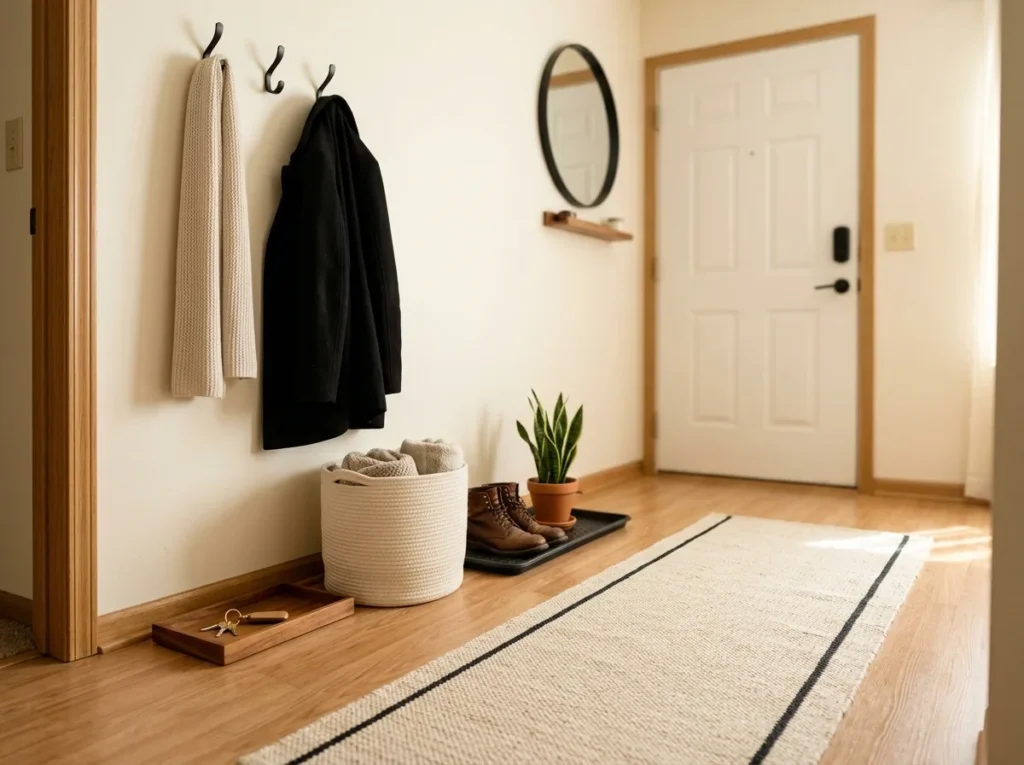
Choose three colors for everything at your entry — say, warm wood, black, and cream — and let baskets, hooks, and trays match. Visual sameness reads as calm, even when the space is working hard. It also makes shopping easy: if it is not in the palette, it does not come home.
25. Leave the Floor 80% Visible
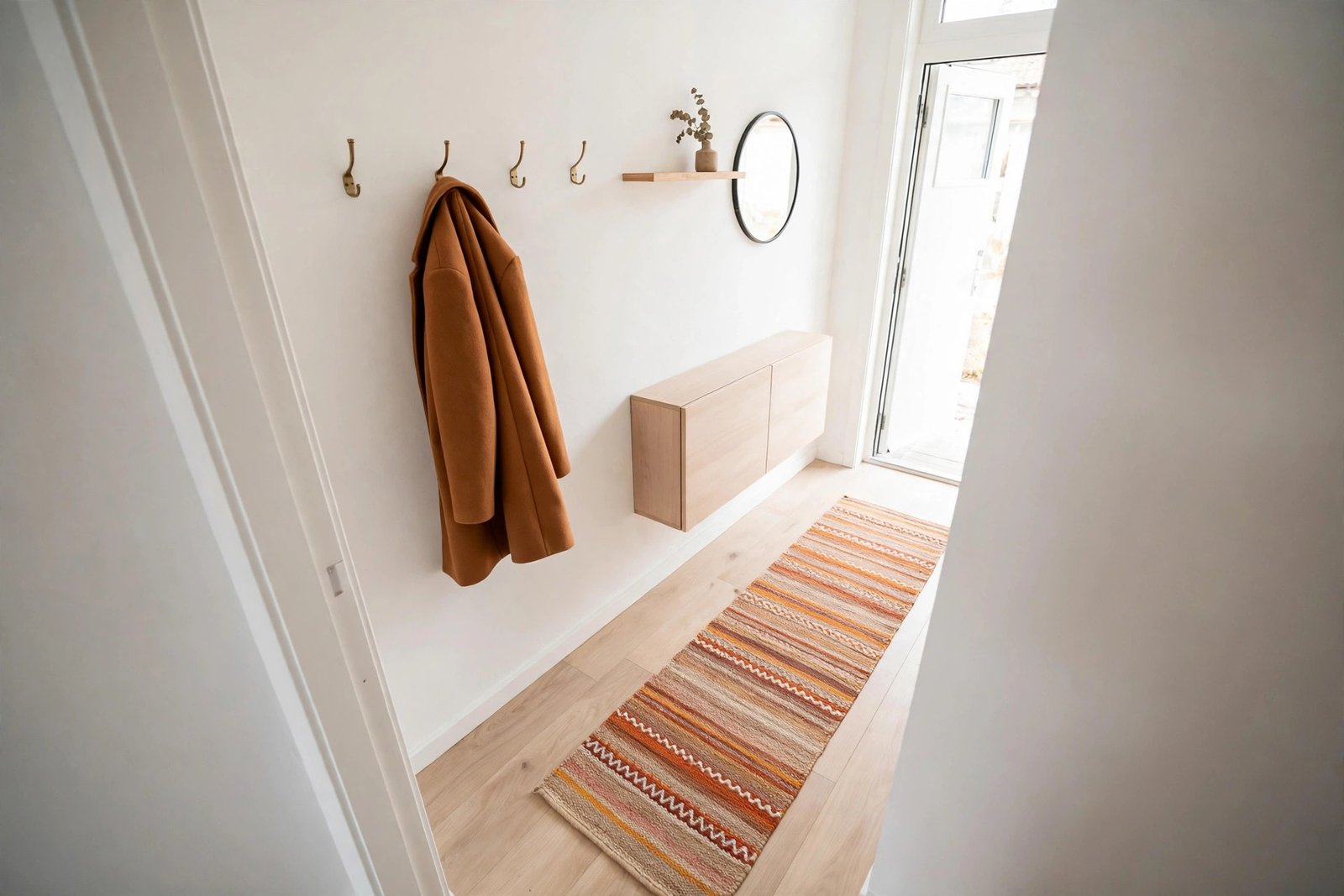
The single best trick for small entryway organization no mudroom homes: keep most of the floor clear. Wall hooks, a slim cabinet, and one tray beat a floor full of “storage” every time. When you can see the floor, the entry feels bigger, cleaner, and easier to sweep on muddy days.
26. Do a 2-Minute Nightly Reset
Set a timer after dinner and return everything at the door to its hook, tray, or basket. Two minutes nightly prevents the weekend-long clean-up no one wants. Pair it with checking tomorrow’s weather, and lay out the right coat and shoes.
27. Photograph Your Entry and Edit Like a Guest
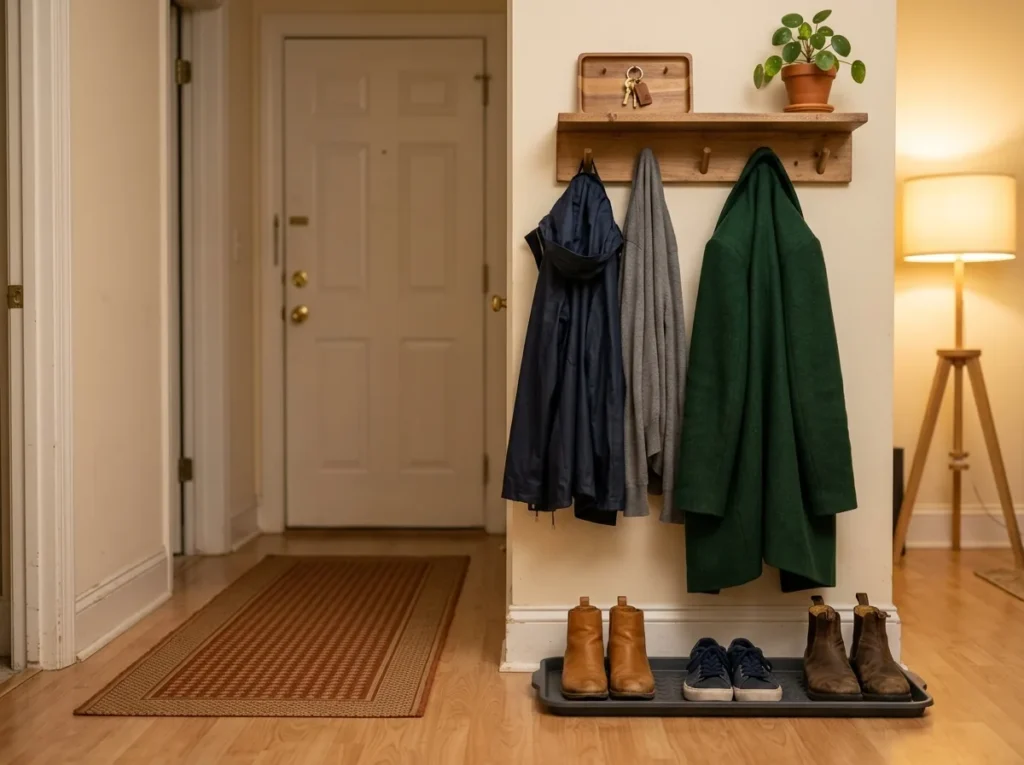
Take a phone photo of your entryway and look at it fresh. You will spot the extra chair or tired mat your eyes skip in real life. Remove one thing, retake the photo, and stop when it looks like a place you would happily welcome someone into.
Fall Entryway in 30 Minutes: The Quick Checklist
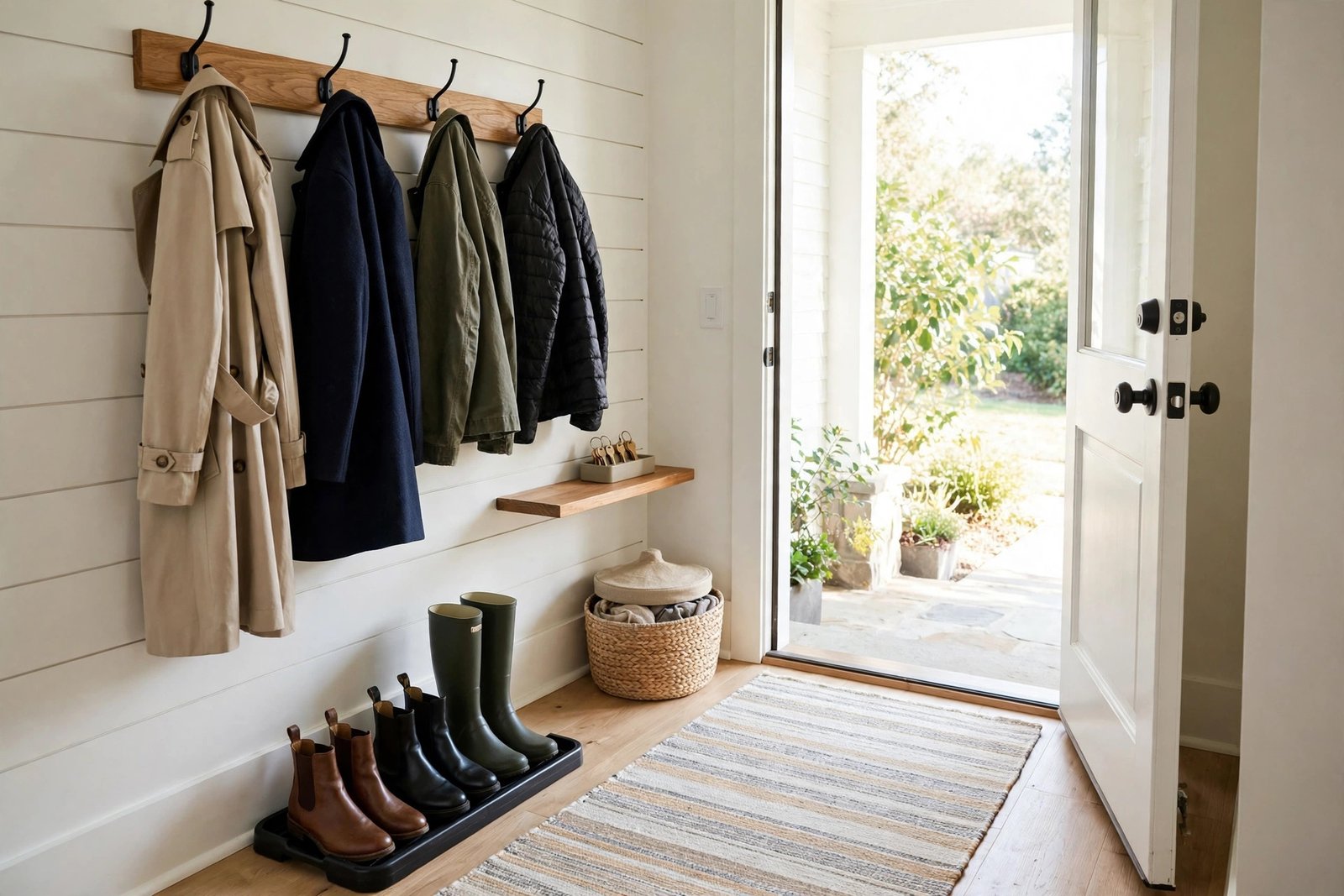
Short on time? Do just this, in order, and your entry will work tonight:
- Clear everything out of the entry — yes, everything (5 minutes)
- Put a boot tray by the door and line up only daily shoes (5 minutes)
- Hang or stick up one hook per person, plus one spare (7 minutes)
- Place one tray or dish for keys and mail where your hand naturally lands (3 minutes)
- Add one lidded box or basket for gloves and scarves (3 minutes)
- Lay a washable runner and check the door still opens fully (4 minutes)
- Add one fall touch: a pumpkin, a wreath, or warm light (3 minutes)
- Stand back, take the photo, remove one thing
Frequently Asked Questions
How do I organize an entryway with no mudroom in a small apartment?
Create a mudroom in miniature: hooks on the wall, a boot tray underneath, one defined drop zone for keys and mail, and a closed box for accessories. Use vertical space instead of floor space, limit shoes to two pairs per person, and keep everything renter-friendly with removable hooks and trays.
What are the best no-drill entryway storage ideas for renters?
Over-the-door hook racks, large adhesive hooks, adhesive picture ledges, boot trays, and slim freestanding shoe cabinets are the strongest no-drill options. They install in minutes, hold everyday coats and shoes well, and remove cleanly at move-out so you protect your deposit.
How do I store shoes in a tiny entryway without it looking messy?
Choose closed or vertical storage: a slim shoe cabinet, a two-tier rack, or a boot tray for wet pairs only. Keep out-of-season shoes elsewhere, enforce a two-pairs-per-person limit at the door, and use a basket for slippers so soft footwear does not mix with boots.
How much does a small fall entryway makeover cost?
A functional setup can cost $25–$50 total: a boot tray, a pack of adhesive hooks, and a thrifted tray and basket. Add a washable runner and a mirror over time and you will still likely spend under $100 — far less than built-in mudroom furniture, with almost the same daily benefit.
How do I make a small entryway feel cozy for fall without clutter?
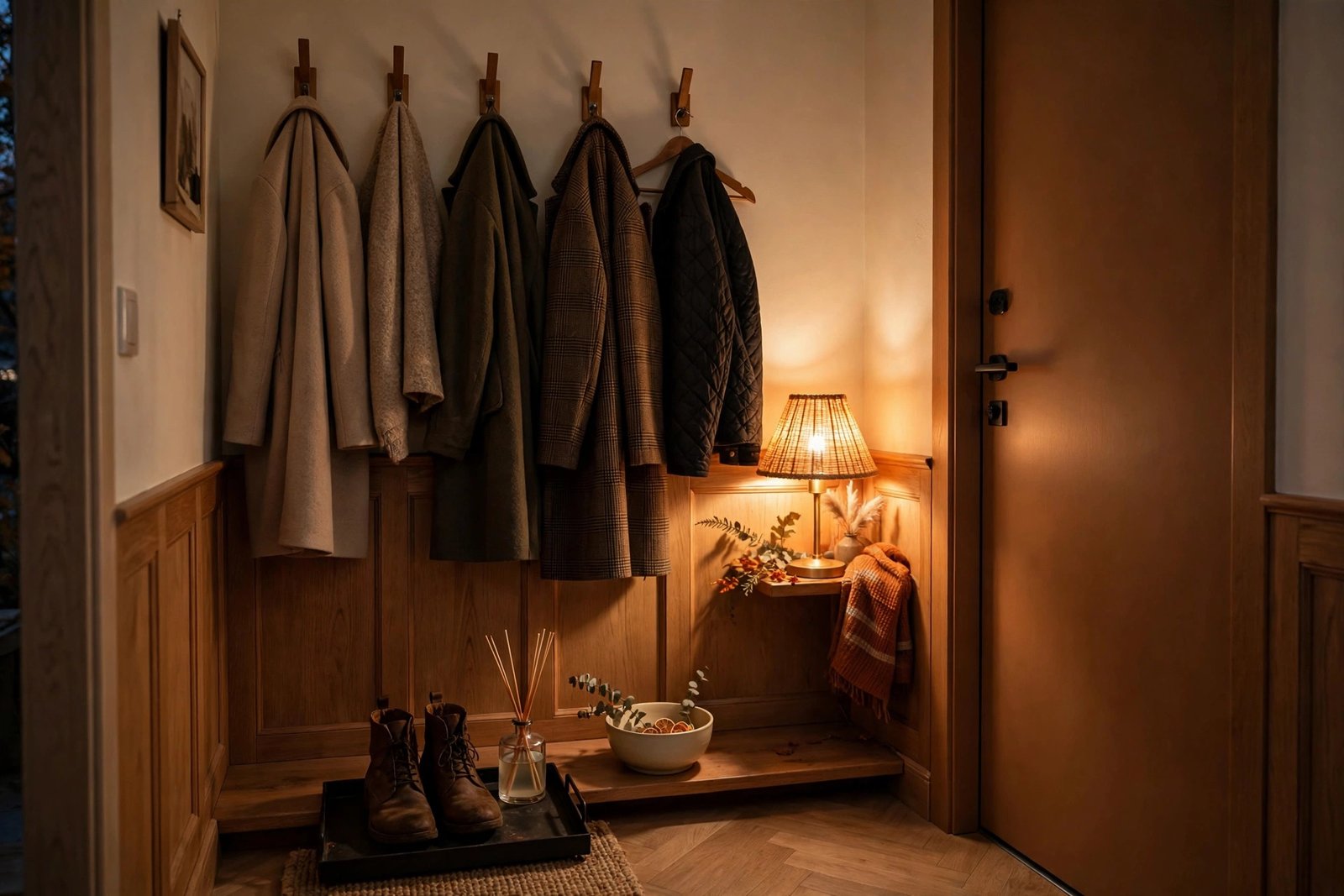
Add fall in layers you can remove: one wreath, a warm washable runner, one simple pumpkin grouping, and warmer light. Keep the color palette tight and the floor mostly visible. Cozy comes from texture and light, not from quantity — especially in a tiny entry.
Conclusion
You do not need a mudroom, a renovation, or a big budget to have an entryway that works in fall. You need hooks where your hand expects them, a tray that catches the wet and muddy, one honest drop zone, and just enough fall warmth to make coming home feel good. Start with the 30-minute checklist, then add the ideas that solve the problems you actually have.
If this helped, save it on Pinterest for your next organizing afternoon. Then keep going with our pillar guide: 31 Small Space Organization Ideas That Make Every Room Feel Bigger. Simple ideas, one small corner at a time — that’s how a home blooms.
— HomiBloom | Simple Ideas to Make Your Home Bloom
5 Comments