
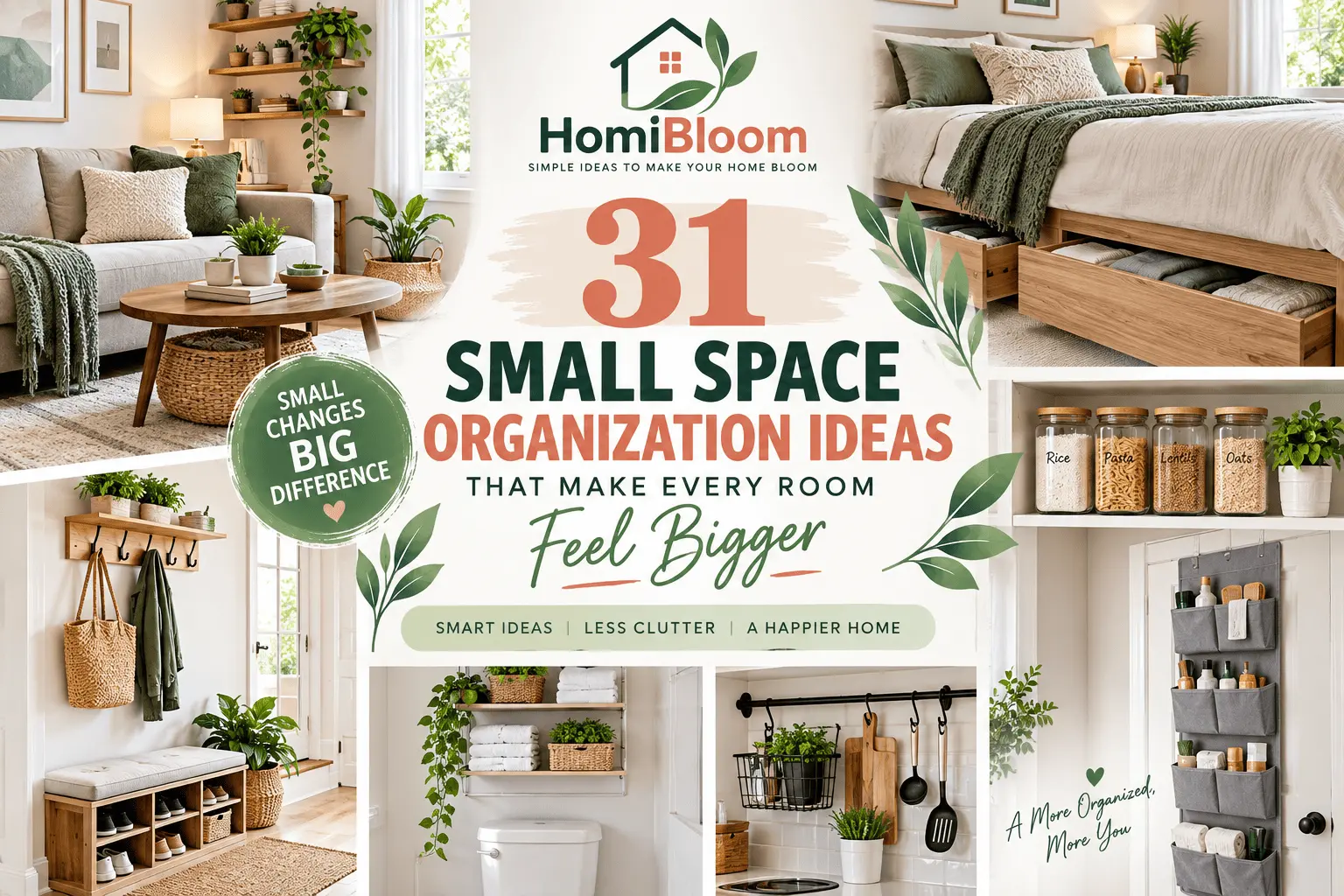
31 Small Space Organization Ideas That Make Every Room Feel Bigger
Living in a small home doesn’t mean you have to live with constant clutter.
With the right small space organization ideas, even a tiny apartment, compact bedroom, or small house can feel surprisingly spacious, comfortable, and easy to maintain. The secret isn’t simply adding more storage. It’s making better use of the space you already have.
Think about the areas that are usually overlooked: the wall above your desk, the space underneath your bed, the back of a door, the corner beside the refrigerator, or the few inches between furniture and the wall. These small areas can become valuable storage when they’re organized intentionally.
Whether you’re organizing a studio apartment or simply trying to make a small room work harder, these 31 small space organization ideas can help you reduce visual clutter and create a home that feels bigger without a major renovation.
1. Use Vertical Wall Space
When floor space is limited, look up.
Walls are some of the most underused storage areas in a small home. Install floating shelves, narrow bookcases, pegboards, or wall-mounted organizers to keep everyday items off the floor and furniture surfaces.
Vertical storage draws the eye upward while giving you additional places to store books, baskets, kitchen supplies, decorative items, and everyday essentials.
For a cohesive look, use matching baskets or containers instead of displaying dozens of unrelated items.
2. Choose Furniture With Built-In Storage
One of the smartest ways to organize a small space is to make your furniture work twice as hard.
Look for:
- Storage ottomans
- Beds with drawers
- Benches with hidden compartments
- Coffee tables with shelves
- TV consoles with cabinets
- Storage benches
- Nightstands with multiple drawers
Instead of adding a separate storage unit, choose furniture that already includes storage.
This is especially useful in small living rooms and bedrooms where every square foot matters.
3. Make Use of Under-Bed Storage
The space underneath your bed can hold a surprising amount of stuff.
Use low-profile storage boxes, rolling containers, or zippered organizers for items you don’t need every day. Seasonal clothing, extra bedding, shoes, luggage, and keepsakes are all good candidates.
Label each container so you don’t have to pull everything out when you’re looking for one item.
If your bed doesn’t have enough clearance, consider using bed risers to create additional storage space—but make sure the setup remains stable and safe.
4. Install Floating Shelves
Floating shelves provide storage without taking up valuable floor space.
Use them in:
- Small bedrooms
- Bathrooms
- Kitchens
- Entryways
- Home offices
- Living rooms
In a bedroom, a floating shelf can replace a bulky nightstand. In a bathroom, it can hold toiletries and folded towels. In a kitchen, it can provide space for frequently used dishes or spices.
Keep the number of items on each shelf limited. Overloaded shelves can make a small room feel even more crowded.
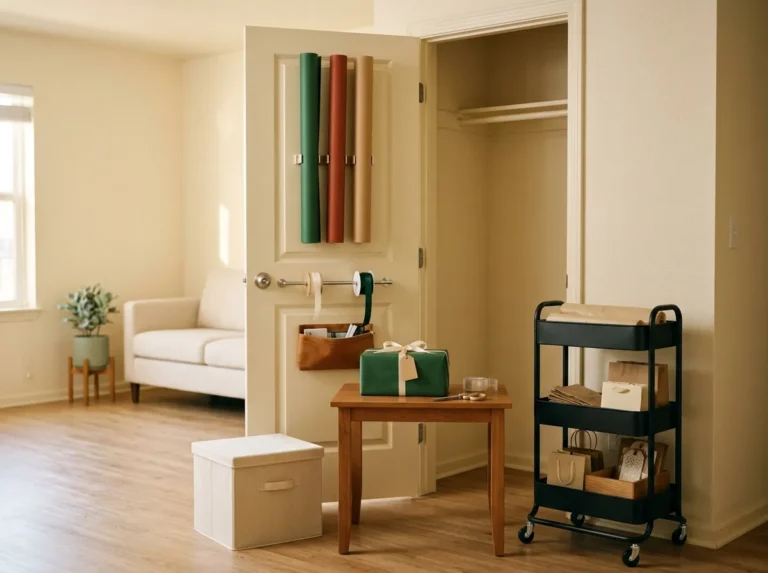
5. Organize the Back of Every Door
The back of a door is essentially unused wall space.
An over-the-door organizer can create instant storage in rooms where floor space is scarce.
Try one in:
- Bedroom closets
- Bathroom doors
- Pantry doors
- Laundry rooms
- Home offices
Depending on the organizer, you can store shoes, cleaning supplies, toiletries, accessories, craft supplies, or pantry items.
This is one of the easiest space-saving storage ideas because it doesn’t require permanent installation.
6. Use the Space Above Cabinets
Small kitchens often have valuable space between the top of the cabinets and the ceiling.
Instead of allowing that area to become a dust collector, use attractive baskets or storage boxes for items you don’t use frequently.
Keep the containers consistent in color and style so the area looks intentional rather than cluttered.
For everyday kitchen organization, however, keep frequently used items within easy reach.
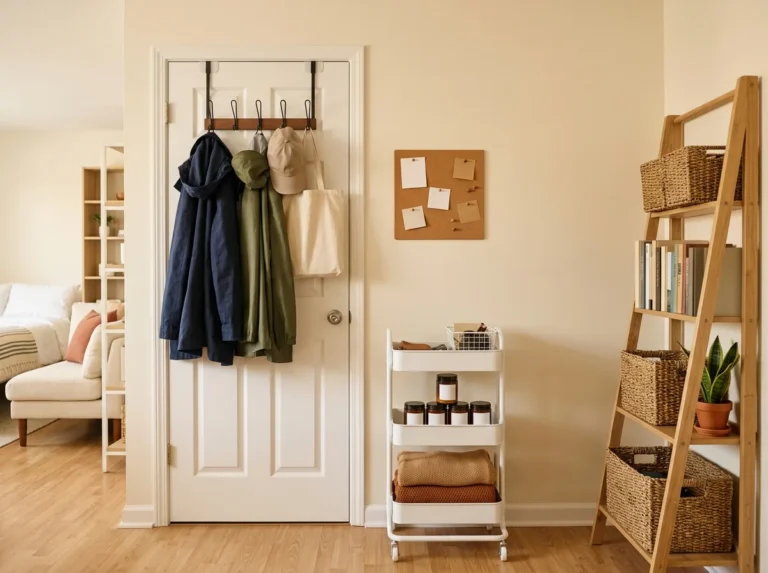
7. Add Hooks to Empty Walls
Hooks are inexpensive, versatile, and incredibly useful in small homes.
A few strategically placed hooks can turn an empty wall into functional storage for:
- Coats
- Handbags
- Hats
- Towels
- Kitchen utensils
- Cleaning tools
- Keys
In a small entryway, a row of hooks can eliminate the need for a large coat rack.
8. Create a Functional Entryway
A tiny entryway can become cluttered quickly because it’s where everyone drops shoes, bags, jackets, mail, and keys.
Create a simple landing zone using a combination of:
- Wall hooks
- A narrow bench
- Shoe storage
- A small basket
- A wall-mounted key holder
If your entryway is extremely narrow, skip bulky furniture and use vertical storage instead.
The goal is to give every frequently used item a designated home.
9. Use Narrow Furniture in Tight Spaces
Small rooms don’t always need less furniture. They often need better-proportioned furniture.
A narrow console table can provide useful storage without blocking a walkway. A slim bookshelf can fit into an unused corner. A narrow rolling cart can add storage to a kitchen or bathroom.
Before buying furniture, measure the available area—including door swings and walking space.
A piece that technically fits may still make a room feel cramped if it interrupts the natural flow.
10. Try a Rolling Storage Cart
A small rolling cart can provide flexible storage in almost any room.
Use one for:
- Bathroom supplies
- Pantry overflow
- Craft materials
- Office supplies
- Beauty products
- Cleaning supplies
- Kids’ activities
The biggest advantage is flexibility. You can move the cart when you need the space and roll it into another room when necessary.
11. Declutter Before Buying More Storage
This might be the most important rule for organizing small spaces:
Don’t organize things you don’t need.
Before buying storage containers, go through your belongings and remove items you no longer use, need, or enjoy.
Sort things into four categories:
- Keep
- Donate
- Sell
- Recycle or discard
Once you’ve reduced the amount of stuff you own, you’ll have a much better idea of what kind of storage you actually need.
More containers won’t solve a clutter problem if the underlying issue is simply having too many things.
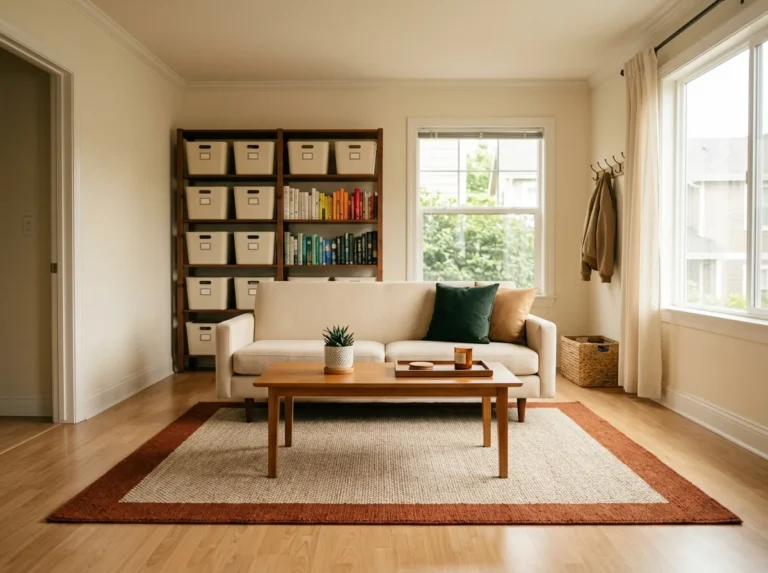
12. Use Matching Storage Baskets
Open shelves can quickly look messy when they’re filled with lots of small objects.
Matching baskets create visual consistency while hiding clutter.
Use baskets for:
- Blankets
- Toys
- Electronics
- Accessories
- Towels
- Office supplies
- Pet items
Choose baskets that fit your shelves before purchasing them. Measure the width, depth, and height of the available space.
13. Take Advantage of Corner Space
Corners are often wasted in small rooms.
A corner shelf, triangular shelving unit, narrow cabinet, or tall plant stand can transform an awkward corner into useful space.
In a bedroom, consider a corner wardrobe or shelving unit. In a kitchen, a corner shelf can hold frequently used ingredients or dishes.
Don’t automatically assume an awkward corner has to stay empty.
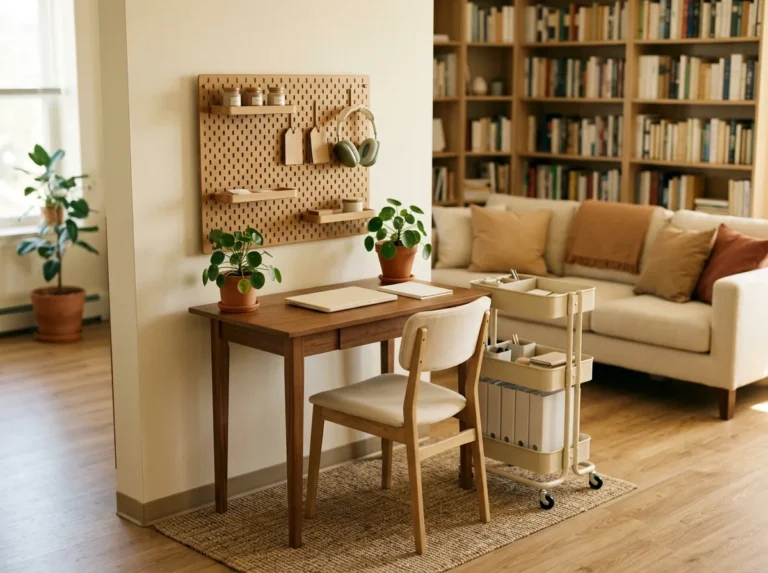
14. Install a Pegboard
Pegboards aren’t only for garages.
A well-designed pegboard can become a highly flexible organization system for a home office, craft room, kitchen, laundry area, or entryway.
Because hooks and shelves can be rearranged, you can change the configuration as your storage needs change.
Paint the pegboard to coordinate with the room for a more polished look.
15. Use Drawer Dividers
Drawers often contain more wasted space than we realize.
Without dividers, small items slide around and eventually create one large mess.
Drawer dividers can separate:
- Socks
- Underwear
- Accessories
- Kitchen utensils
- Office supplies
- Makeup
- Small tools
The key is to divide drawers according to how you actually use them rather than creating unnecessary categories.
16. Organize the Space Under the Kitchen Sink
The cabinet beneath the kitchen sink is notorious for becoming a cluttered storage black hole.
Make it easier to use by adding:
- Stackable bins
- Pull-out organizers
- Small shelves
- Door-mounted racks
- Labeled containers
Keep cleaning products together and leave enough open space to reach the plumbing easily.
Don’t pack the cabinet so tightly that removing one item requires taking everything else out.
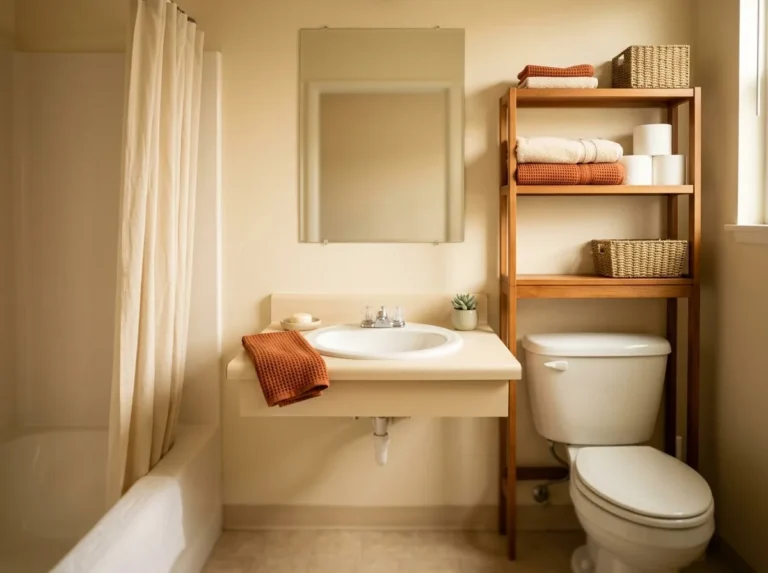
17. Use the Space Above the Toilet
In a small bathroom, the wall above the toilet can become valuable storage.
A slim shelving unit or wall-mounted shelves can hold towels, toilet paper, toiletries, and decorative items.
Choose a narrow design that doesn’t make the bathroom feel closed in.
Baskets are particularly useful because they hide small items and keep the shelves visually tidy.
18. Create a Small Home Office Nook
You don’t need an entire room to create a functional workspace.
A small desk tucked against a wall can become a practical home office. Add a wall shelf above it for notebooks, office supplies, and electronics.
Use vertical organization to keep the desktop clear.
When you’re working with limited space, keeping the work surface visually clean can make the entire area feel larger.
19. Use a Folding Desk
If you only need a workspace occasionally, a folding or wall-mounted desk can be an excellent solution.
When you’re finished working, fold it away and reclaim the floor.
This works especially well in:
- Studio apartments
- Guest rooms
- Small bedrooms
- Multi-purpose living rooms
Choose a design that provides enough workspace for your actual needs without becoming unnecessarily large.
20. Store Shoes Vertically
Shoes can consume a surprising amount of entryway and closet space.
Instead of leaving them scattered on the floor, use vertical shoe racks, narrow shoe cabinets, stackable boxes, or over-the-door organizers.
Keep everyday shoes easily accessible and move seasonal footwear to less convenient storage.
A simple shoe system can make a small entryway feel dramatically more organized.
21. Use Clear Containers Strategically
Clear containers make it easier to see what’s inside without opening every box.
They’re especially useful for:
- Pantry ingredients
- Craft supplies
- Small accessories
- Bathroom products
- Office supplies
However, don’t feel like everything needs to be transferred into matching clear containers.
Use them where visibility genuinely makes your routine easier.
22. Install Cabinet Door Organizers
The inside of cabinet doors provides hidden storage that doesn’t require additional floor space.
Small racks and adhesive organizers can hold:
- Spices
- Cutting boards
- Cleaning supplies
- Hair tools
- Measuring cups
- Pot lids
Always check the available clearance before installing an organizer. The door needs to close properly with the items inside.
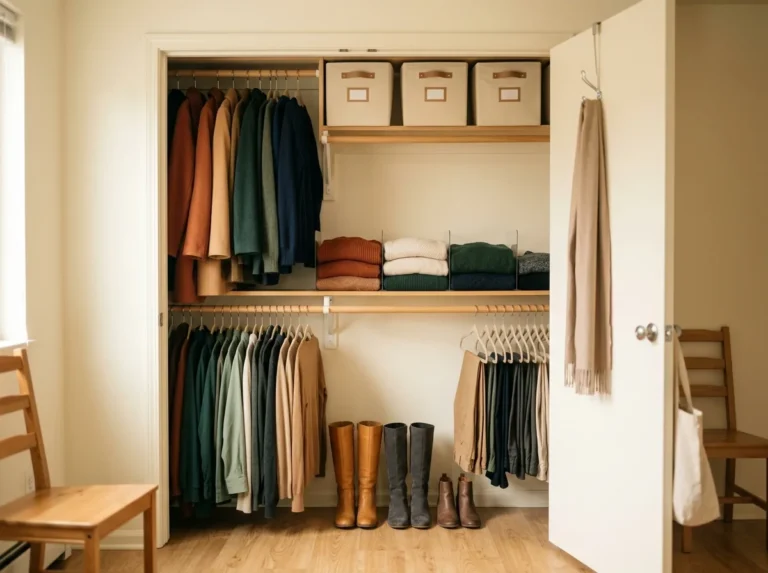
23. Make Your Closet Work Harder
A small closet can often hold much more than you think when it’s organized vertically.
Try:
- Slim hangers
- Shelf dividers
- Hanging organizers
- Double hanging rods
- Shoe racks
- Storage boxes
- Hooks
Group similar clothing together and keep frequently worn pieces within easy reach.
If possible, rotate seasonal clothing so the items you currently use aren’t competing for space with things you won’t wear for months.
24. Use a Small Nightstand With Drawers
A tiny bedroom doesn’t necessarily need a large nightstand.
Choose a compact nightstand with drawers or shelves so the furniture serves as both a surface and storage.
Keep only essentials on top—such as a lamp, book, or small decorative item.
A clear nightstand instantly makes a small bedroom feel calmer.
25. Turn Dead Space Into Storage
Look around your home for narrow spaces that are currently doing nothing.
You might find useful storage opportunities:
- Between the refrigerator and cabinet
- Beside the washing machine
- Under stairs
- Behind furniture
- Between a desk and wall
- Above doors
A slim rolling shelf can be particularly useful for narrow gaps.
These overlooked areas can provide surprisingly effective storage without changing the layout of your home.
26. Use Multi-Purpose Furniture
In a small home, every piece of furniture should earn its floor space.
Consider furniture that serves multiple purposes:
- Sofa beds
- Storage ottomans
- Extendable dining tables
- Benches with storage
- Drop-leaf desks
- Nesting tables
Multi-purpose furniture is especially valuable in studio apartments and rooms that serve more than one function.
27. Keep Frequently Used Items Accessible
Organization shouldn’t make everyday life harder.
Items you use daily should be easy to reach. Items you use occasionally can go higher, deeper, or farther away.
For example:
- Everyday dishes → accessible kitchen cabinets
- Holiday dishes → upper storage
- Daily clothing → main closet
- Seasonal clothing → under-bed storage
- Daily toiletries → bathroom drawer
- Backup toiletries → higher shelf
Good organization isn’t just about making things look neat. It’s about making your home easier to use.
28. Use One Basket for Everyday Clutter
Even well-organized homes accumulate random items during the day.
Keep one attractive basket in a central location for things that need to be returned to their proper rooms.
At the end of the day, empty the basket and put everything away.
This simple habit can prevent small amounts of clutter from spreading throughout the house.
29. Create a “One In, One Out” Rule
Small homes have limited capacity.
A useful way to control clutter is to adopt a simple one in, one out rule.
When you bring in a new item, consider whether something similar can leave.
Buy a new sweater? Donate one you no longer wear.
Buy a new kitchen gadget? Look at whether an older one has become unnecessary.
This prevents your storage needs from continuously growing.
30. Leave Some Empty Space
One of the biggest mistakes when organizing a small home is trying to fill every available inch.
You don’t need every shelf, drawer, and corner to be completely full.
Leaving some empty space makes storage easier to maintain and reduces visual clutter.
It also gives you room when you inevitably acquire something new.
A well-organized home should feel functional and breathable, not packed to the ceiling with storage containers.
31. Give Everything a Permanent Home
The ultimate goal of small-space organization isn’t to make your home look perfect for one afternoon.
It’s to make tidying up easy enough that you can maintain it.
Every frequently used item should have a logical place to return to.
When something doesn’t have a home, it tends to migrate from the counter to the table, from the table to the floor, and eventually into a pile of clutter.
Give your keys a hook. Give your shoes a designated spot. Give paperwork a basket. Give cleaning supplies a cabinet.
The easier it is to put something away, the more likely you are to actually do it.
How to Make a Small Space Feel Bigger
Organization and visual design work together.
Once you’ve reduced clutter, a few simple choices can make the room feel even more spacious.
Keep surfaces mostly clear
Kitchen counters, desks, coffee tables, and nightstands can make a room feel crowded when they’re covered with objects.
Choose a few useful or decorative pieces and store the rest.
Use furniture that fits the room
Oversized furniture can overwhelm a small space. Look for pieces with proportions that leave enough room to walk comfortably.
Use vertical storage
Tall shelves and wall-mounted storage help move belongings upward instead of outward.
Avoid visual clutter
Too many colors, patterns, containers, and decorative objects can make a small room feel chaotic.
A simpler visual palette can make the space feel calmer.
Let natural light in
Avoid blocking windows with large furniture whenever possible. Natural light helps small rooms feel brighter and more open.
Small Space Organization: Where Should You Start?
If your entire home feels cluttered, don’t try to organize everything in one weekend.
Start with the room causing the biggest daily frustration.
Then follow this simple process:
1. Remove everything that doesn’t belong.
Take items back to their proper rooms.
2. Declutter.
Donate, sell, recycle, or discard things you no longer need.
3. Group similar items.
Put similar belongings together so you can see what you actually own.
4. Measure the space.
Before purchasing storage, measure shelves, cabinets, closets, and available floor space.
5. Choose storage based on your belongings.
Don’t buy containers first and figure out what to put in them later.
6. Label where helpful.
Labels are especially useful for storage boxes and less frequently used items.
7. Maintain the system.
Spend a few minutes each day returning things to their designated homes.
Final Thoughts
The best small space organization ideas aren’t necessarily expensive or complicated. Often, the biggest difference comes from using overlooked areas, reducing unnecessary belongings, and giving everything a logical place.
Start with one room. Declutter first, then add storage where you actually need it. Use walls, doors, corners, and hidden spaces before adding more bulky furniture.
And remember: the goal isn’t to fit more stuff into your home. It’s to make the things you actually use easier to live with.
Save this guide for your next home organization project, and revisit it room by room as you create a home that feels more spacious, functional, and comfortable.
Quick Small Space Organization Checklist
Before you finish, ask yourself:
- Do I use everything I’m storing?
- Can I use vertical space more effectively?
- Is there unused space behind doors?
- Can furniture provide additional storage?
- Are my frequently used items easy to reach?
- Are my surfaces unnecessarily cluttered?
- Have I measured before buying storage?
- Does everything have a designated home?
- Can I remove anything instead of organizing it?
- Is the system simple enough to maintain?
If you can answer yes to most of these questions, you’re well on your way to creating a small home that feels much bigger.
3 Comments