
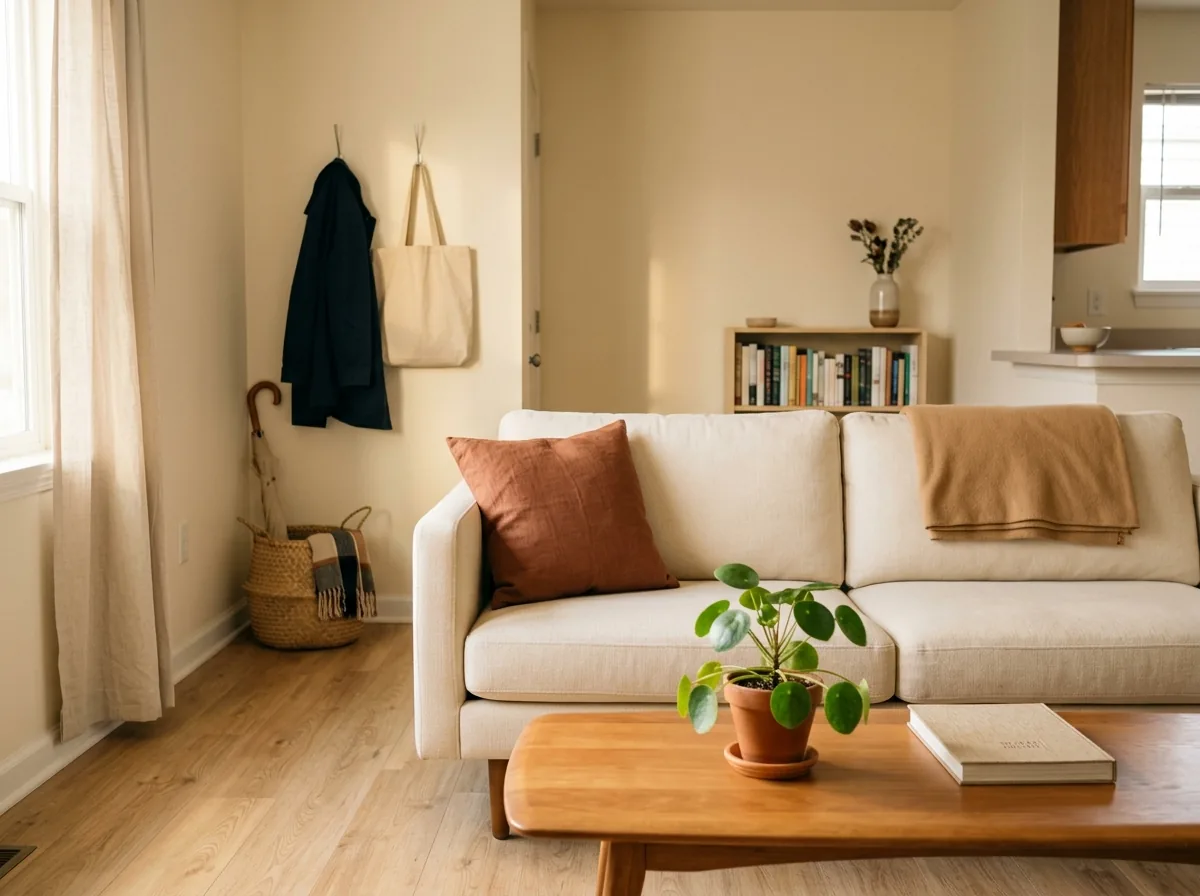
The 30-Day Declutter Challenge for Small Homes (Free Printable Checklist)
Introduction
A small home does not get cluttered in one big disaster. It gets cluttered in small landings: the keys and post on the entryway console, the drawer that swallows everything, the paperwork pile that quietly becomes furniture. And because every zone touches another, a weekend blitz never lasts.
This challenge fixes the order instead of the effort. Thirty days, fifteen minutes a day, one small zone at a time: surfaces first, then the storage behind them, then the hidden piles, then whole-room resets — and only at the very end, the systems that keep it gone. By Day 30 the whole home has been touched exactly once, in an order that makes each day easier.
How the Challenge Works
Three rules run the whole month. Tape them to the fridge next to the printable and do not negotiate with them.
Rule 1: Fifteen minutes a day, timer on. When the timer ends, you stop — mid-pile if you must — and put back only what has earned its place. Fifteen honest minutes daily beats one heroic Saturday, because the Saturday never comes and the timer always fits. A bigger zone (the wardrobe, Day 15) gets worked one section per round — the rest waits for its scheduled return.
Rule 2: The three-box method, every single day. Before the timer starts, set out three containers: Keep (stays in this zone), Move (belongs somewhere else in the home), Out (donate, recycle, bin). Everything you touch lands in one of the three — no fourth “decide later” pile, because “later” is where clutter is born. It is the same three-pile sort that powers our seasonal wardrobe swap system, shrunk to fifteen minutes: when the timer ends, the Move box is carried to its rooms, the Out box goes to the door, and only the Keep box stays.
Rule 3: No buying storage until Day 30. No baskets, bins, drawer dividers or “solutions” for the first twenty-nine days. Storage bought for clutter just organises the clutter. Declutter with boxes and bags you already own; by Day 30 you will know exactly what survived — the only honest moment to buy a container for it.
The order is the strategy. Week 1 clears the surfaces you see daily — starting with the entryway drop zone on Day 1 — for calm within the week. Week 2 opens the zones behind the surfaces. Week 3 hunts the hidden piles. Week 4 resets whole rooms — including the kitchen, where Days 2 and 22 lean on the zone system from our small kitchen counter organization guide. Two finale days move donations out and install the keeping habits.
Get the Free Printable Checklist
The whole challenge fits on one page. Print The 30-Day Declutter Challenge — Free Printable Checklist, stick it on the fridge or inside a cupboard door, and tick each day off as you finish it. One page, thirty boxes, no app, no guessing. Save this post on Pinterest so the checklist is always one tap away — and send it to the friend who never knows where to start.
Download the free printable checklist (PDF)
Week 1 — Surfaces & Entry (Days 1–7)
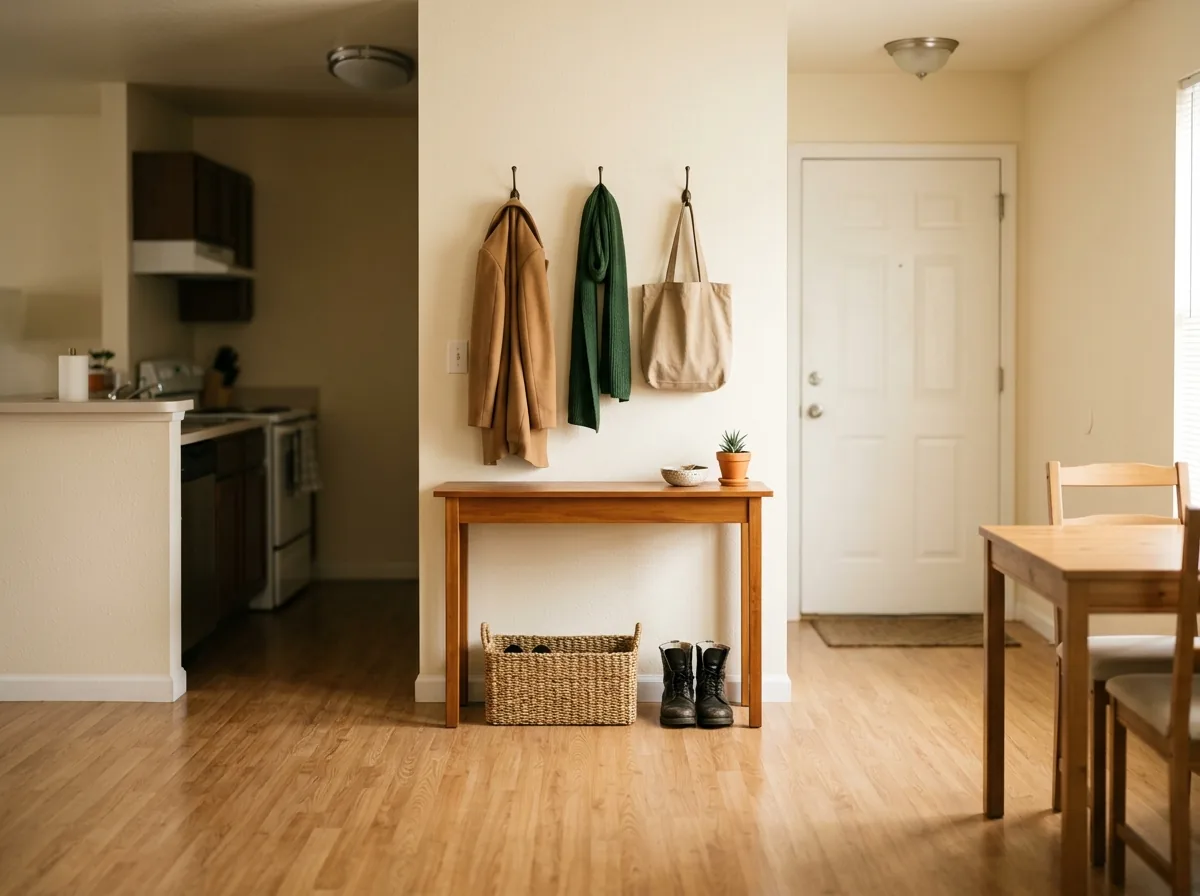
Week 1 is all visible wins: the flat surfaces every eye lands on, and one question — does this live on a surface at all? In a small home, mostly, it does not.
Day 1: The Entryway Drop Zone
Everything that enters the home lands here first, so the month starts here. Empty the console, hooks and floor corner completely, three-box the lot — keys, post, bags, shoes, the mystery cable — and put back only what a proper small entryway system would hold. Done looks like: clear surfaces, one pair of shoes per person.
Day 2: Kitchen Counters
Counters are prep space, not storage. Clear one counter run, scrub it, and return only what earns daily use — the rest goes to a cupboard, the Move box, or out. Our small kitchen counter system shows exactly what stays out and what never should. Done looks like: one full run you could cook on tonight, moving nothing first.
Day 3: The Coffee Table
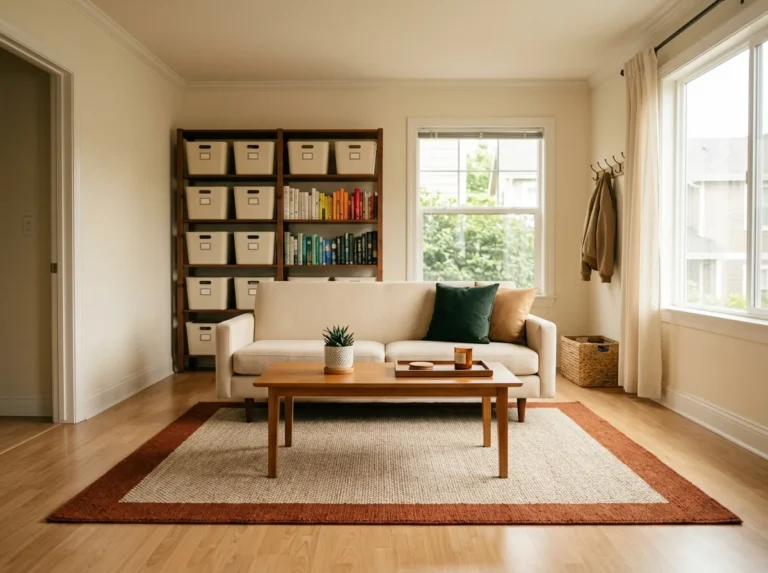
The coffee table is allowed three things: the remote, one book or magazine, and something green. Everything else — chargers, paperwork drift, homeless small objects — gets three-boxed, and the shelf or drawer beneath it gets the same treatment. Wipe it down to the wood. Done looks like: a table you could set a cup on anywhere.
Day 4: The Nightstand
The nightstand serves the last ten minutes of the day, nothing more. Keep: lamp, current book, water, one small dish for glasses or jewellery. Out goes the archaeology — finished books, dead chargers, receipts, the third lip balm. A drawer, if there is one, holds sleep things only. Done looks like: a surface you can wipe in one pass.
Day 5: The Bathroom Counter
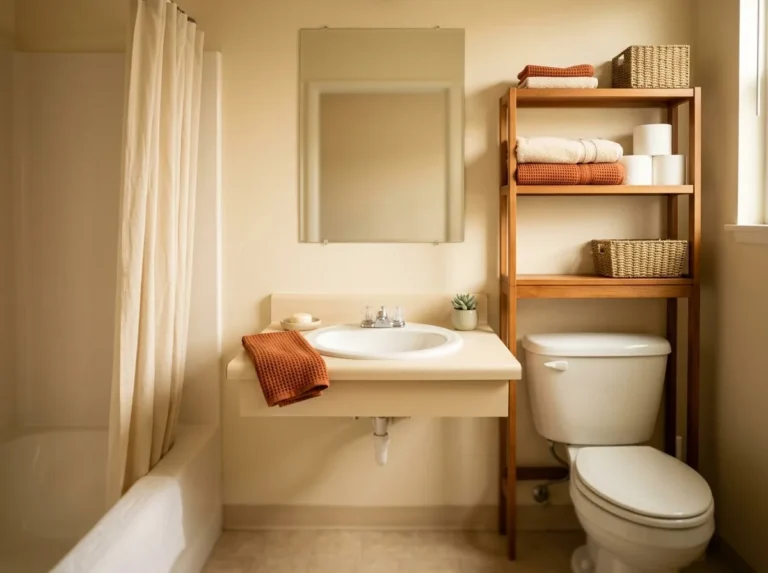
One person’s daily products earn counter space; the rest is a collection. Gather everything, bin the empties and the expired, choose your daily five, and move the rest into a cabinet, a drawer or one small tray — duplicates exiled to a backup spot. Wipe the counter to the porcelain. Done looks like: a counter a guest could share without an apology.
Day 6: The Fridge Door and Top
The fridge door is a noticeboard that became a landslide. Take everything off — magnets, menus, old notes, the photo buried under five others — and re-pin only what is current and loved, one layer deep at most. The top of the fridge gets emptied and stays empty, or holds exactly one lidded box. Done looks like: a door you can read at a glance.
Day 7: The Dining Table
For many small homes the dining table is secretly a desk and a post room; today it goes back to being a table. Three-box everything on it — most will be Move and Out — and give repeat offenders like post and paperwork a real home elsewhere. Done looks like: dinner tonight without clearing a space first.
Week 2 — Storage Zones (Days 8–14)
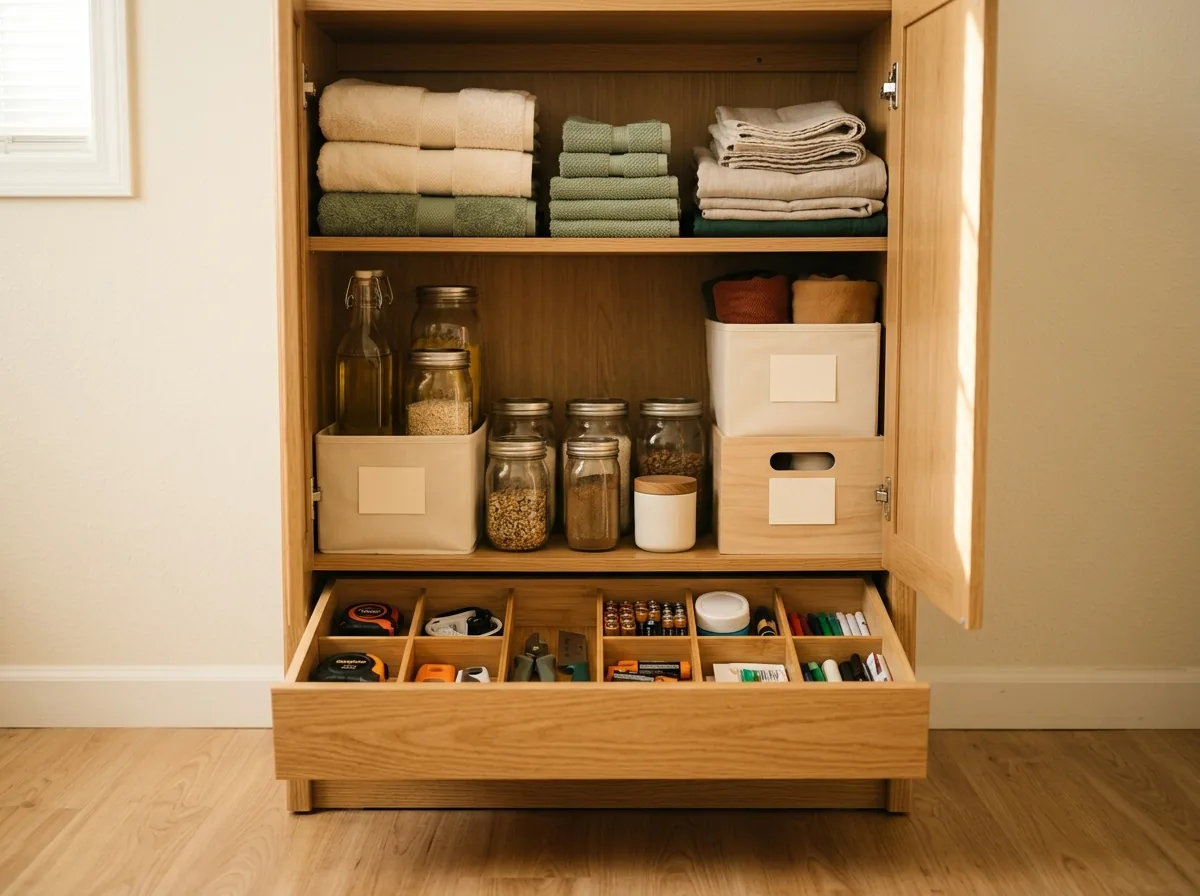
Surfaces stay clear only when the storage behind them works. Week 2 opens one closed zone a day — drawer, cupboard, shelf — everything out, honest boxes, only the keep-worthy return.
Day 8: The Junk Drawer
Yes, you may keep a junk drawer — a small one, on purpose. Empty it fully (it will contain something nobody can identify), bin the true junk, and return only the genuinely useful: tape, batteries, a torch, scissors, spare keys, sorted loosely enough to find in the dark. Done looks like: a drawer that opens, closes, and answers questions.
Day 9: Pantry Shelves
Work shelf by shelf, one per timer if needed. Out go the expired, the stale and the fourth backup of anything; skip decanting today — just group what survives, breakfast with breakfast, tins with tins, labels facing out. Done looks like: every item visible in one glance, oldest at the front.
Day 10: The Under-Sink Cabinet
The cabinet of brave bottles. Pull everything out, bin the empties and the fossilised sponges, and check for leaks or damp while it stands empty. Return only the products you actually use, corralled in one caddy that lifts out whole. Done looks like: half the bottles, and the stopcock reachable without an excavation.
Day 11: The Linen Cupboard
Towels and bedding multiply in the dark. Pull the whole cupboard, refold everything, and set honest limits: two towel sets per person and two bedding sets per bed is generous for a small home. The worn and scratchy beyond that go out — animal shelters take old towels. Done looks like: stacks with air around them; a door that closes without leaning.
Day 12: One Closet Shelf
Not the whole closet — that has its own day coming — just the worst shelf. Lift the folded piles, shake them out, re-stack them short, and send anything unworn since last season straight to the Out box. For wardrobe overflow, the full method in our small closet organization guide turns it into a system. Done looks like: stacks that survive a pull from the middle.
Day 13: The Under-Bed Zone
What lives under the bed should be a decision, not a sediment. Pull everything out — everything — vacuum the archaeological layer, then curate: off-season clothes in flat boxes, spare bedding, the suitcase. Random dust-collectors get three-boxed without mercy; what returns goes back in closed, labelled containers only. Done looks like: you could name every item under your bed without looking.
Day 14: The Coat and Shoe Corner
The entryway’s storage half gets its turn. Every coat off the hooks, every shoe out of the corner: out-of-season and never-worn pairs go to the Out box, and match what remains honestly to the space — daily shoes low and reachable, occasional pairs up high. Hooks hold one layer only. Done looks like: a corner fitted to the household’s actual week, not its imaginary one.
Week 3 — The Hidden Piles (Days 15–21)
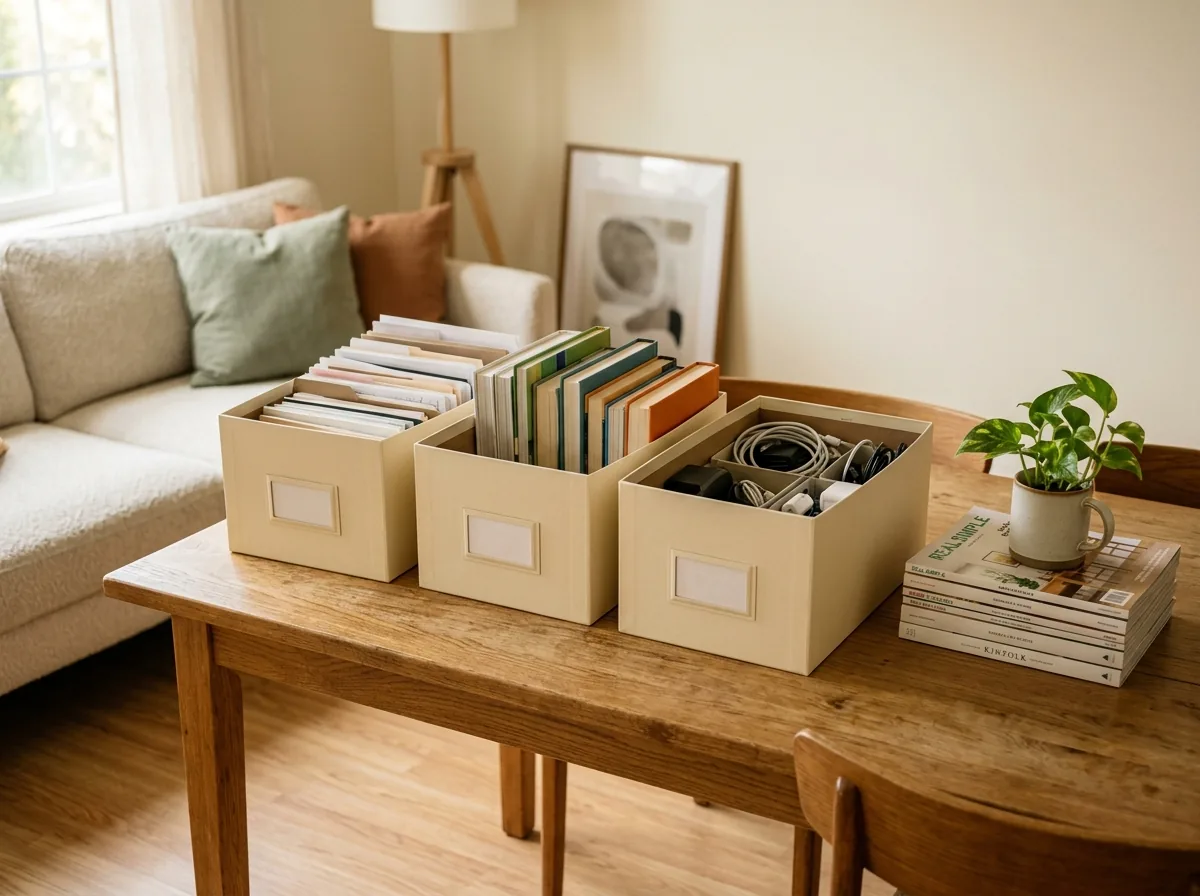
Two weeks in, the visible home is calm — now we go hunting. Week 3 is the piles with no surface: the wardrobe’s deep end, the paper drift, the cables for long-gone devices. Slower decisions, which is why they get their own week.
Day 15: The Wardrobe Edit
The big one — keep it simple: rail and drawers, one section per timer, three questions per piece — does it fit, do I wear it, would I buy it again? Two noes means the Out box, no ceremony. Keep the seasonal wardrobe swap rule: one season present, the other stored flat and labelled. Done looks like: air between the hangers.
Day 16: The Paperwork Pile
Gather every paper in the home into one honest pile — post, forms, receipts, the “to file” stack — then sort into four fates: act, file, scan, recycle. Anything dated gets acted on or diarised today, not re-piled, and personal details get shredded on the way out. Done looks like: no pile, one file, a recycling bag gone today.
Day 17: Books and Magazines
Books earn shelf space by being loved, re-read or genuinely beautiful; the rest are heavy, dusty promises. One shelf or stack per timer: keep the favourites, box the “someday” reads for donation, and recycle the magazine drift entirely — the articles live online; the pile is not a library. Done looks like: shelves with breathing room, holding only books you would press on a friend.
Day 18: Kids’ and Pet Clutter
No kids or pets? Use your hobby or gear pile instead — same method. Gather the whole category into one place (yes, all of it) and sort: broken, outgrown and duplicated goes out; what stays gets one box, basket or shelf as a border it may not cross. Done looks like: toys and gear that fit their container with the lid on.
Day 19: The Cables and Chargers Drawer
Every home has one: a nest of cables for devices long gone. Untangle the whole drawer onto a table and match each cable to a living device — no match, no mercy, it goes to e-waste recycling. The survivors — usually a third — get coiled, labelled with tape, and stored in one small box. Done looks like: every cable identified, zero mystery leads.
Day 20: The Medicine and First-Aid Expiry Check
A safety day disguised as a declutter. Empty the medicine cabinet or box completely and check every date: expired medicines go to a pharmacy take-back, never the bin or the sink; dried-out plasters and crusty tubes go out. What is in date returns in groups — pain relief, dressings, daily prescriptions, first aid. Done looks like: a kit you could trust at 3 a.m. with one eye open.
Day 21: The Storage Corner — or the Suitcase
Every small home has one last frontier: the garage corner, the top of the wardrobe, or the suitcase that became a cupboard. Open it with the three boxes ready — if you forgot you owned it, you have your answer. Keepsakes get one defined box with a limit; everything else is decided today. Done looks like: a corner you can inventory from memory.
Week 4 — Rooms Reset (Days 22–28)
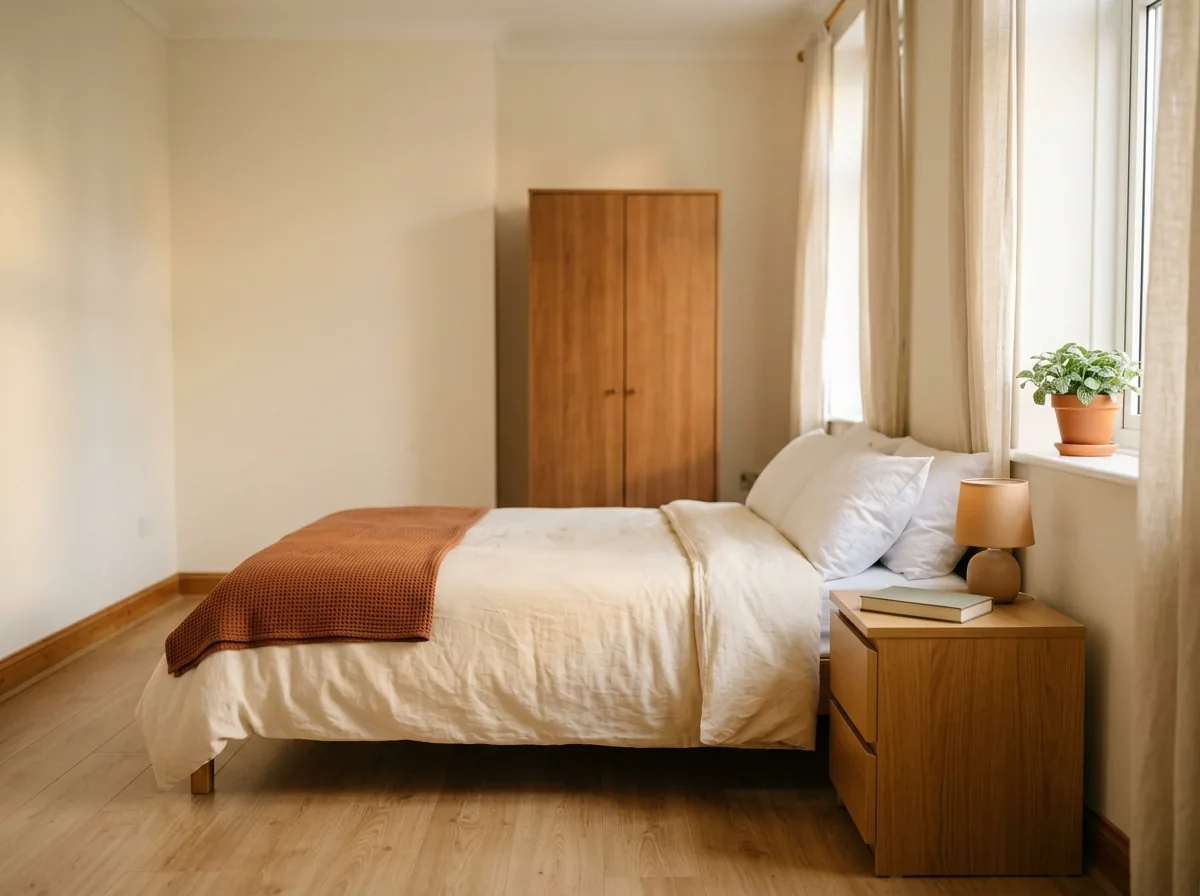
The zones are done; now each room gets one full reset day — surfaces, storage and floor together. Keep the timer honest: two rounds maximum, and the room is done when it matches its Week 1–3 standards again.
Day 22: The Kitchen Deep Reset
The kitchen gets the full pass: counters back to Day 2 standard, one cupboard shelf re-zoned, the fridge edited shelf by shelf, oldest forward. Your counter zones should now hold without thinking — if one keeps failing, it is a placement problem, not a tidiness one, so move the category. Done looks like: a full meal cookable tonight.
Day 23: The Bathroom Deep Reset
Counter back to Day 5, then cabinets and shower caddy: empties out, duplicates merged, cleaning products corralled, towels checked against the Day 11 limits. Wipe everything to a shine — cleaner, not just emptier. Apply the guest test: a visitor in ten minutes, no flinching. Done looks like: spa-calm surfaces, cabinets that close on the first try.
Day 24: The Bedroom Reset
Nightstand back to Day 4, wardrobe doors closing on the Day 15 edit, under-bed holding only its labelled boxes. Then the soft layer: bedding changed, the chair — every bedroom has the chair — cleared back to being furniture, floors visible edge to edge. A bedroom’s only job is rest. Done looks like: a room that lowers your heart rate when you walk in.
Day 25: The Living Room Reset
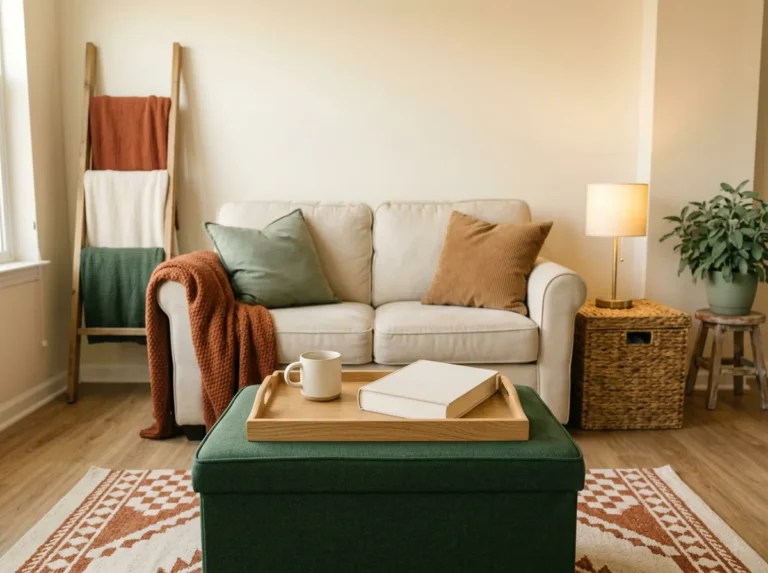
Coffee table back to Day 3, then the media zone and soft furnishings: remotes to their one home, blankets folded to the basket or sofa arm, the flat, dead cushions out. Check the room’s hidden pockets — side tables, inside the ottoman, behind the sofa. Reset for the real evening, not a showroom. Done looks like: a room ready for an unexpected guest, right now.
Day 26: The Home Office and Desk Reset
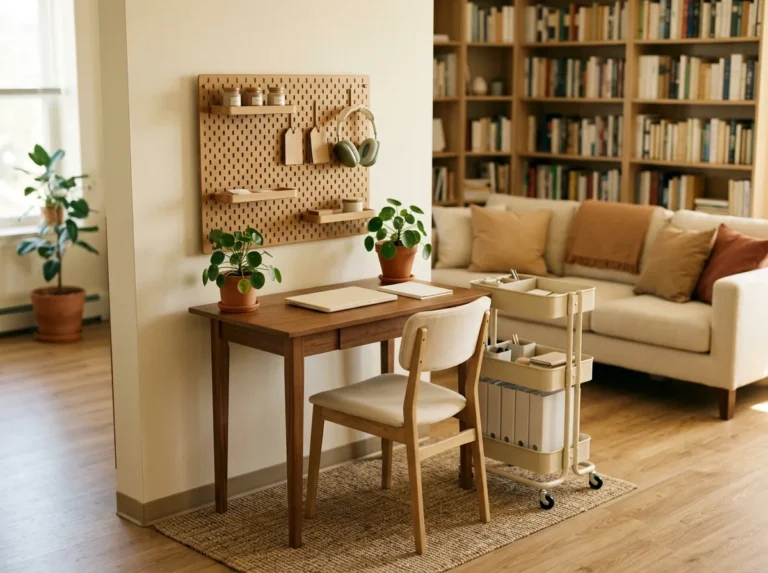
Desk surface to zero, then back with only the working set: laptop, one notebook, pen, lamp. Paper gets the Day 16 fates, cables get the Day 19 treatment, and drawers hold office supplies in one layer. No desk? Today belongs to wherever the laptop and post actually live. Done looks like: a workspace ready for a focused hour, now.
Day 27: The Laundry Zone
Small homes rarely have a laundry room — they have a corner, a basket and a machine top, and today all three get reset. Sort the backlog into loads, run the machines while you work, and clear the machine top to two things: detergent and one basket. Folded laundry leaves the zone the day it dries. Done looks like: no mystery piles — laundry as a flow, not a landscape.
Day 28: The Digital Declutter
The last pile is invisible. Fifteen minutes, timer on: delete the screenshot drift and blurry duplicates from your phone photos, empty the computer’s downloads folder, and unsubscribe from five mailing lists. Back up what matters while you are there — a declutter that loses the family photos is no favour. Done looks like: a camera roll you can scroll with pleasure.
The Finale (Days 29–30)
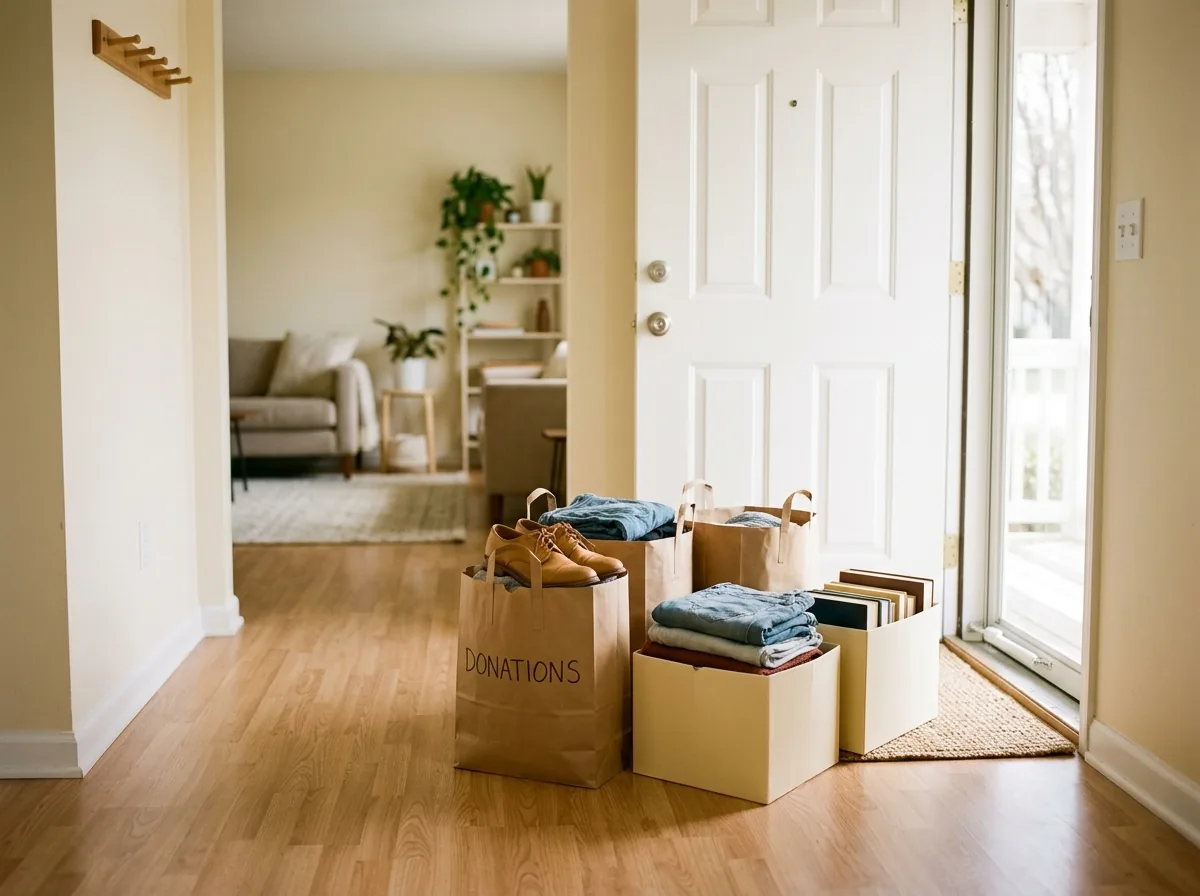
Day 29: The Donation Drop
Thirty days of Out boxes have been quietly filling — today they leave. Bag everything, load it in one trip, and actually drop it: charity shop, donation bin, recycling point, the pharmacy bag from Day 20. Items promised to friends get delivered or posted today, not “next time.” Take nothing back out of the bags at the door — a calmer you made those decisions. Done looks like: an empty hallway and a home measurably lighter.
Day 30: The Keep-It-Gone Systems Day
Three habits protect everything you have done. One-in-one-out: nothing enters a category — clothes, books, kitchen gear — without its equal leaving. Landing strips: the Day 1 entryway home plus one small tray per busy room, emptied nightly. The 10-minute nightly reset: one timer, every evening, surfaces back to their challenge standard. And now — only now — buy the one or two containers what survived genuinely needs. Done looks like: a calm home, a short shopping list, and a system that runs itself.
Frequently Asked Questions
Do I have to start the challenge in January?
No — the challenge works in any month, and a random Tuesday start beats a perfect January plan that never begins. January is simply its natural home: new-year energy, quiet weekends, and a home still carrying holiday overflow. The order of the days matters far more than the date on Day 1.
What happens if I miss a day?
Nothing breaks. Do not double up and do not restart — slide the calendar: the missed zone becomes tomorrow’s day. The sequence (surfaces, storage, piles, rooms) is what makes the challenge work, not the exact dates. Missed several? Pick up the next unfinished day — the unticked boxes are a map, not a judgement.
What if my family or housemates will not join in?
Run the challenge on your own zones and the shared surfaces, and let the results recruit them. Nobody argues with a junk drawer that suddenly works. Give each person one owned surface — nightstand, shelf — and leave it alone; most households adopt the nightly reset within a week of clear surfaces.
What if my home is bigger — or even smaller — than a small apartment?
Bigger home: keep the order and either take two zones a day, or run two passes — declutter, then systems. Smaller home or studio: merge the room days in Week 4 (bedroom and living room may be the same room; kitchen and dining share a reset) and let the zone days carry the weight. The challenge scales because it is built on zones and timers, not room counts.
Do I need to buy any storage or supplies before starting?
No — and Rule 3 forbids it. You need three boxes or bags you already own (keep, move, out), a timer, and bin bags. That is the entire kit. Buying containers before decluttering just gives the clutter nicer housing, and sizes bought in advance are always guesses. Day 30 is the shopping day — and most readers spend very little, often nothing.
Conclusion
Thirty days ago this was a home where every surface was a landing strip. Now the entryway has a system, the drawers answer questions, the piles are gone for good, and a ten-minute evening reset holds it all in place. That is what fifteen minutes a day, in the right order, buys a small home.
Keep the momentum where it matters most: the wardrobe stays swapped with 19 Small Closet Organization Ideas for a Seasonal Wardrobe Swap, the counters stay defended with 29 Small Kitchen Counter Organization Ideas Before Holiday Cooking Starts, seasonal overflow stores in one closet with 21 Christmas Decor Storage Ideas for Apartments With One Closet, the front door stays calm with 27 Fall Entryway Organization Ideas for Small Apartments With No Mudroom, and the whole-home plan lives here: 31 Small Space Organization Ideas That Make Every Room Feel Bigger.
Save this on Pinterest — and save the free printable checklist with it, so your next reset starts at Day 1 instead of at “where do I even begin.” Follow HomiBloom for simple ideas to make your home bloom.

3 Comments