
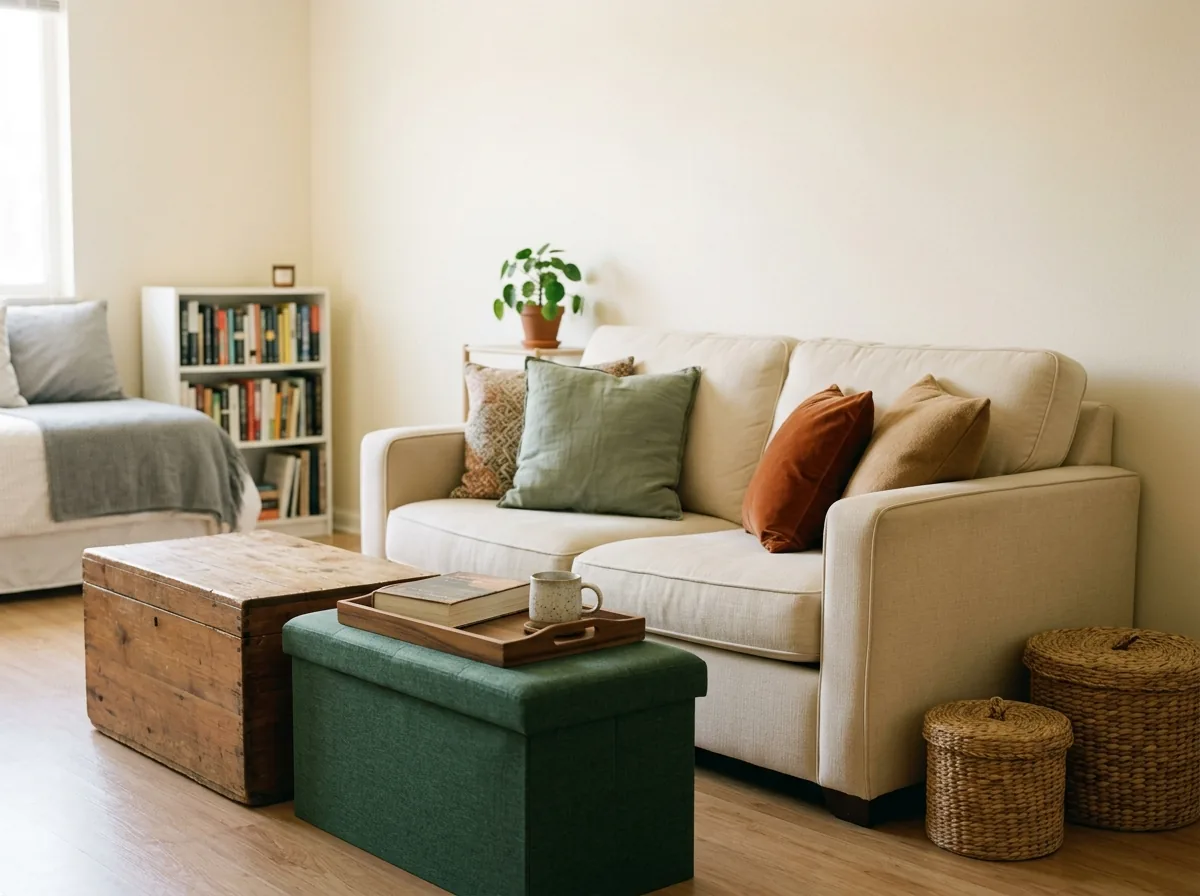
19 Hidden Storage Ideas: Under-Bed, Behind-Door & Dead-Space Storage
Introduction
Here is the small-home paradox: you need more storage than ever, and every storage product you buy makes the room look smaller. Bins announce themselves. Shelves fill up and shout. The room ends up organized — and somehow more crowded than before.
Hidden storage breaks the trade. These 19 ideas store everything a small home holds — blankets, shoes, cleaning supplies, chargers, the Christmas decor — inside furniture, behind doors, under beds and in the dead space you walk past daily, so a guest sees a calm room and nothing else. The test for every idea here: nobody can tell it is storage. If your clutter needs editing before it earns a hiding place, start with our 30-Day Declutter Challenge for Small Homes.
Storage Hiding Inside the Furniture
The hardest-working storage in a small home never looks like storage at all — it looks like the furniture you were going to buy anyway.
1. Let the Ottoman Swallow the Living Room
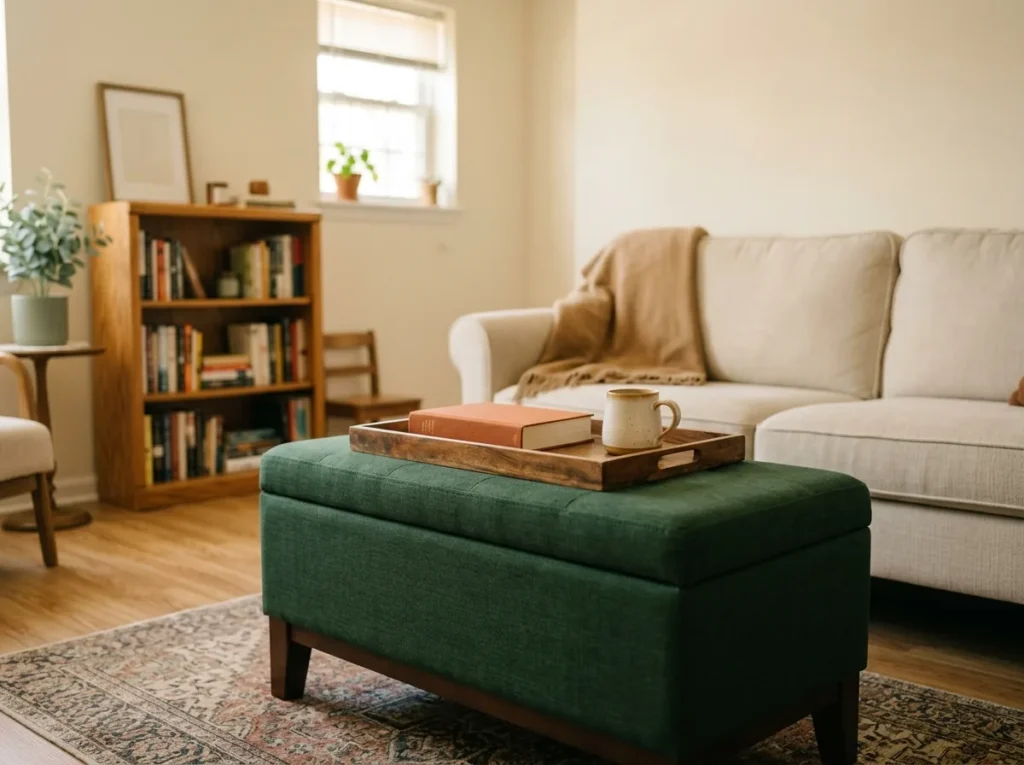
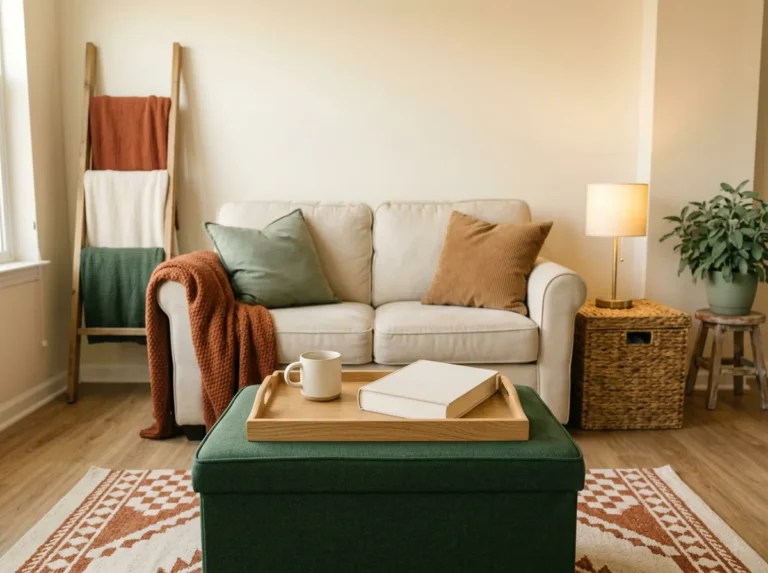
A storage ottoman is a footrest with a secret: lift the lid and there is a whole cupboard of throws, board games and the good blankets. In Article #3 ours held guest bedding; here it earns its keep daily, parked in front of the sofa where clutter used to land. Choose a firm, flat lid — it doubles as a coffee table with a tray on top. Closed, a guest sees furniture. That is the whole trick.
2. Bench at the Door, Shoes Inside It
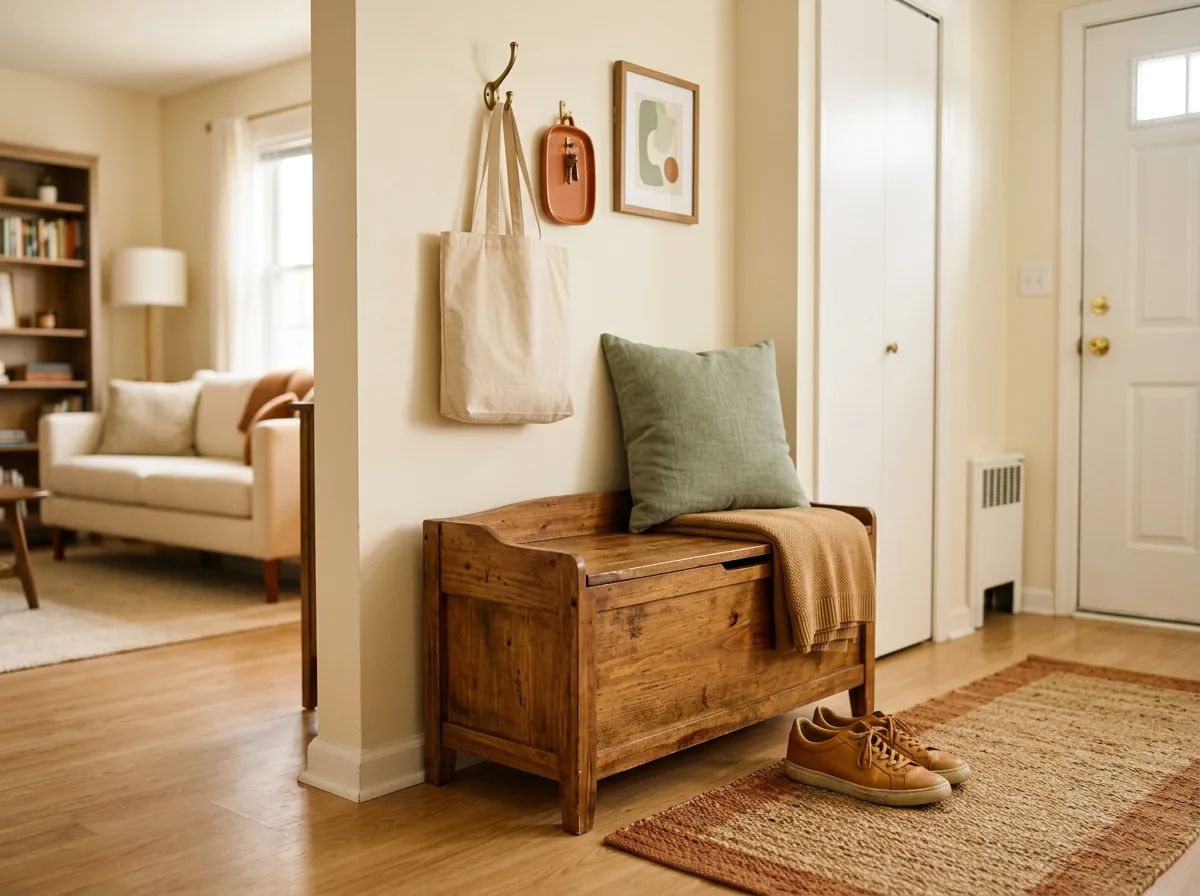
An entryway bench with a hollow seat hides the shoe pile that makes every small entry look chaotic: daily pairs inside, lids down, sitting spot on top. It replaces the shoe rack — the single most visual piece of “storage” in most homes — with something that reads as pure furniture. Measure your door swing before buying; the bench earns its place only if the door still opens flat.
3. Choose a Sofa That Stores Under Its Seats
Storage sofas hide a drawer or a lift-up compartment under the chaise or seats — dead air in an ordinary sofa, a home for remotes, chargers, throws and the board games here. Nobody has ever looked at a sofa and thought “cupboard”. On a budget, a slim basket slid under a raised-leg sofa does the same job.

4. Sleep on Top of Your Storage
A bed with drawers underneath — or a lift-up base — turns the biggest footprint in the bedroom into its biggest cupboard: everyday clothes, spare bedding and the suitcase live in the drawers, the bedroom gains a dresser it never has to look at. Drawers beat boxes here because they open from the side — no hauling the bed around. Check the drawers clear your skirting boards and rug before ordering.

5. Hide the Nightstand Inside the Headboard
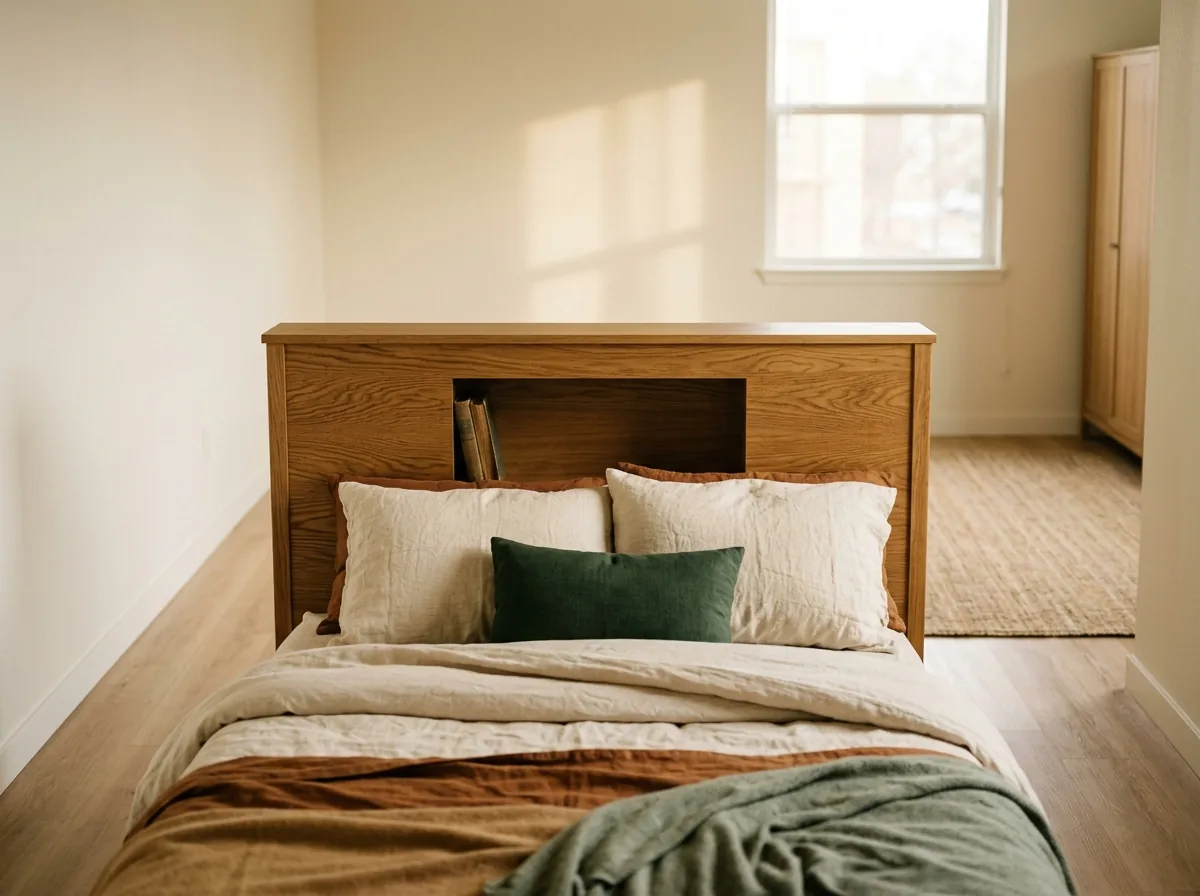
A headboard with a shallow shelf niche — or a sliding panel — holds the book, glasses, phone and water glass that turn nightstands into clutter magnets. Everything sits behind the pillows, inside the bed’s own outline, and the floor beside the bed stays completely clear. No room for a niche headboard? A slim pocket organiser hung over the headboard’s back edge disappears the same way.
Behind, Under and Out of Sight
If it cannot hide inside furniture, hide it behind or beneath it — the zones the eye never visits.
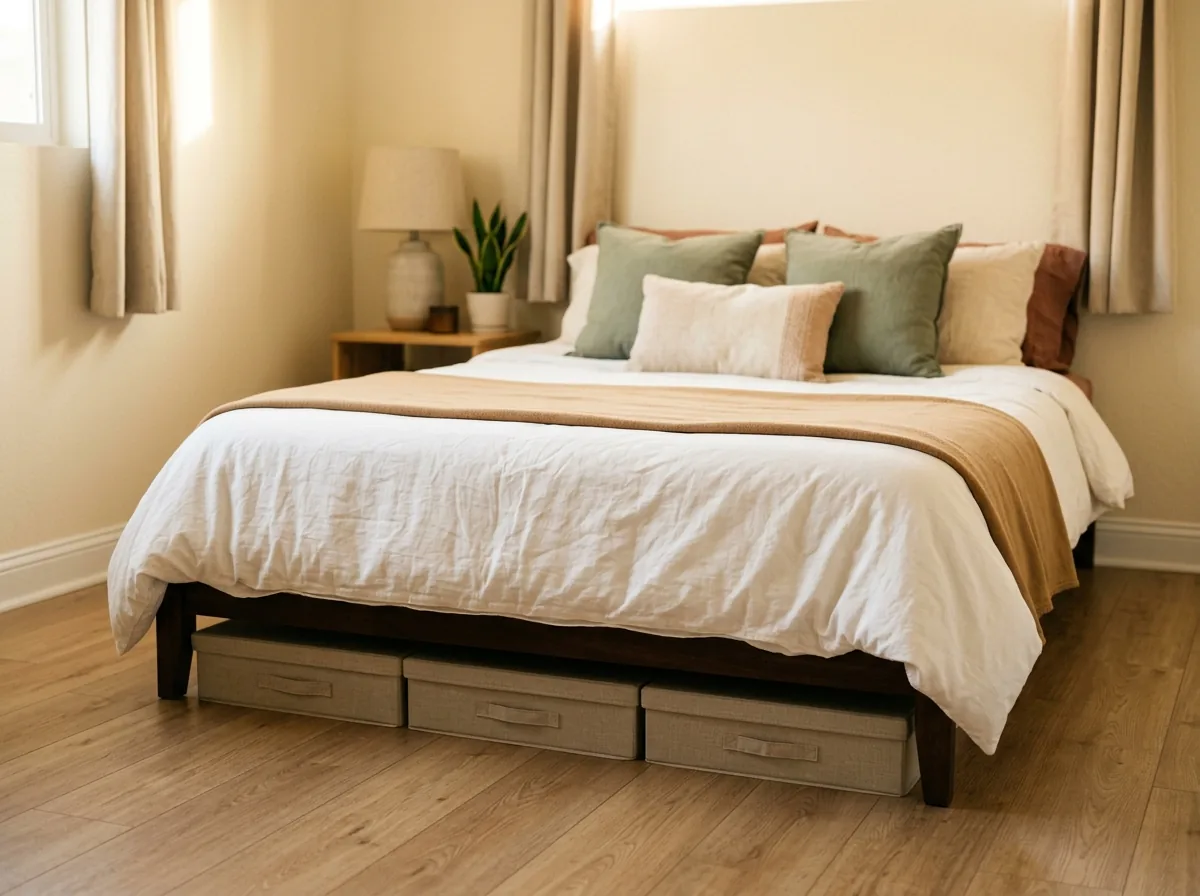
6. Run Flat Boxes Under the Bed
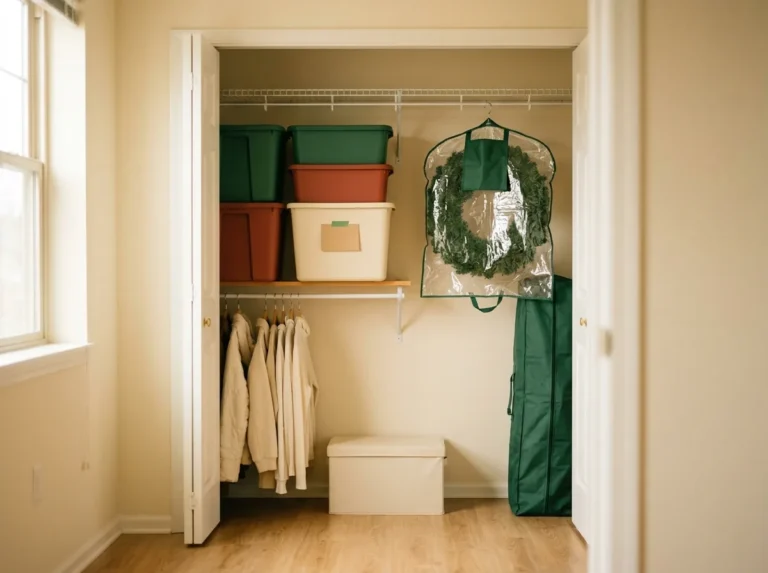
The under-bed flatlands are the largest invisible shelf in the home: low, lidded boxes slide in and the entire category vanishes — off-season clothes, spare bedding, and the decor rotation we store with this exact system in 21 Christmas Decor Storage Ideas for Apartments With One Closet. The rules that keep it working: one category per box, lids on, labels on the ends facing out. Out of sight should never mean out of memory.
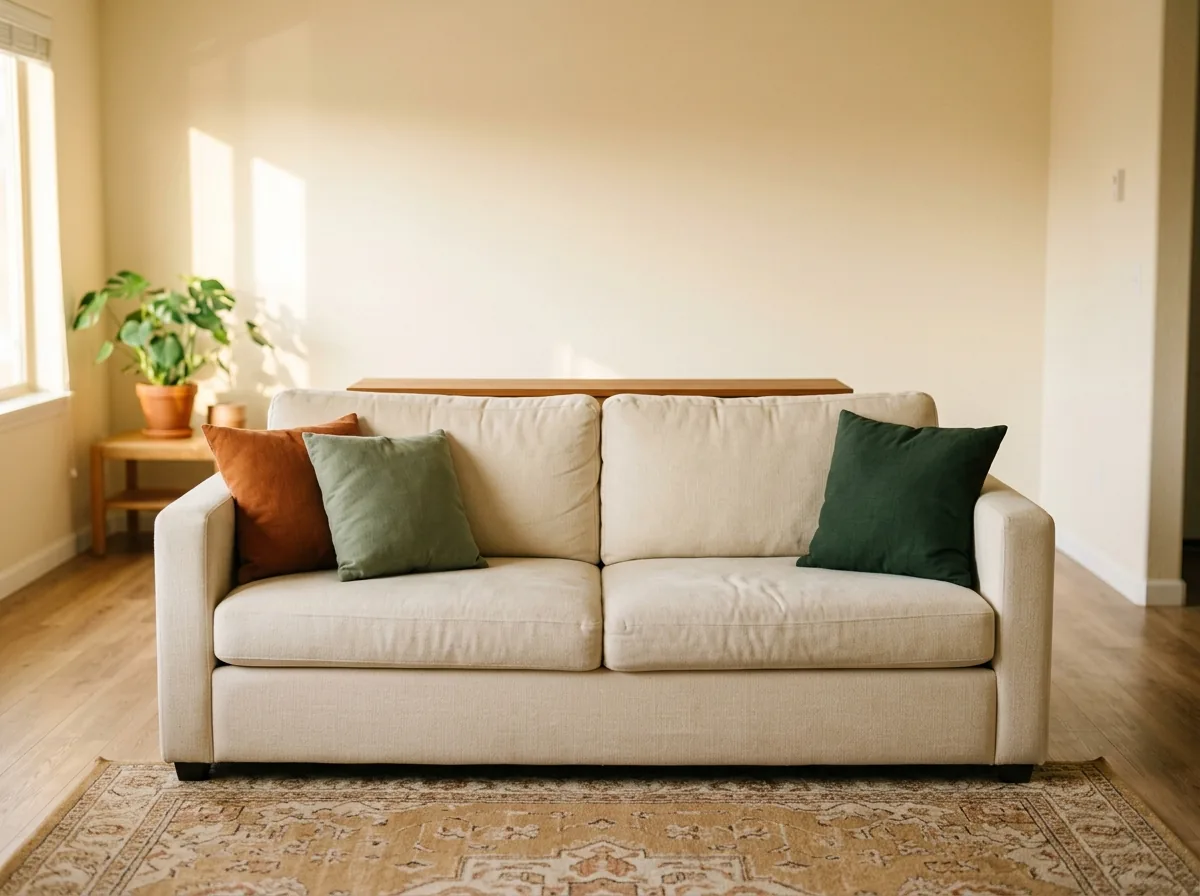
7. Use the Gap Behind the Sofa
Float the sofa a few inches off the wall and a slim console table disappears into the gap — from the front, the room looks identical; from above, there is a hidden shelf holding remotes, coasters, chargers and the throw. It is the one “shelf” in the living room nobody ever sees, and it ends the daily hunt for the remote. A narrow plank on two small brackets does the same job for almost nothing.
8. Skirt the Under-Sink Chaos
Open under-sink zones — pedestal basins, utility sinks, old kitchen cabinets with the doors long gone — show every bottle you own. A simple gathered fabric skirt on a tension rod or adhesive hooks hides the whole cleaning cupboard behind something that looks like a styling choice. Choose a washable fabric in your palette and it reads as decor; behind it, the sprays stand in a caddy, sorted and invisible.

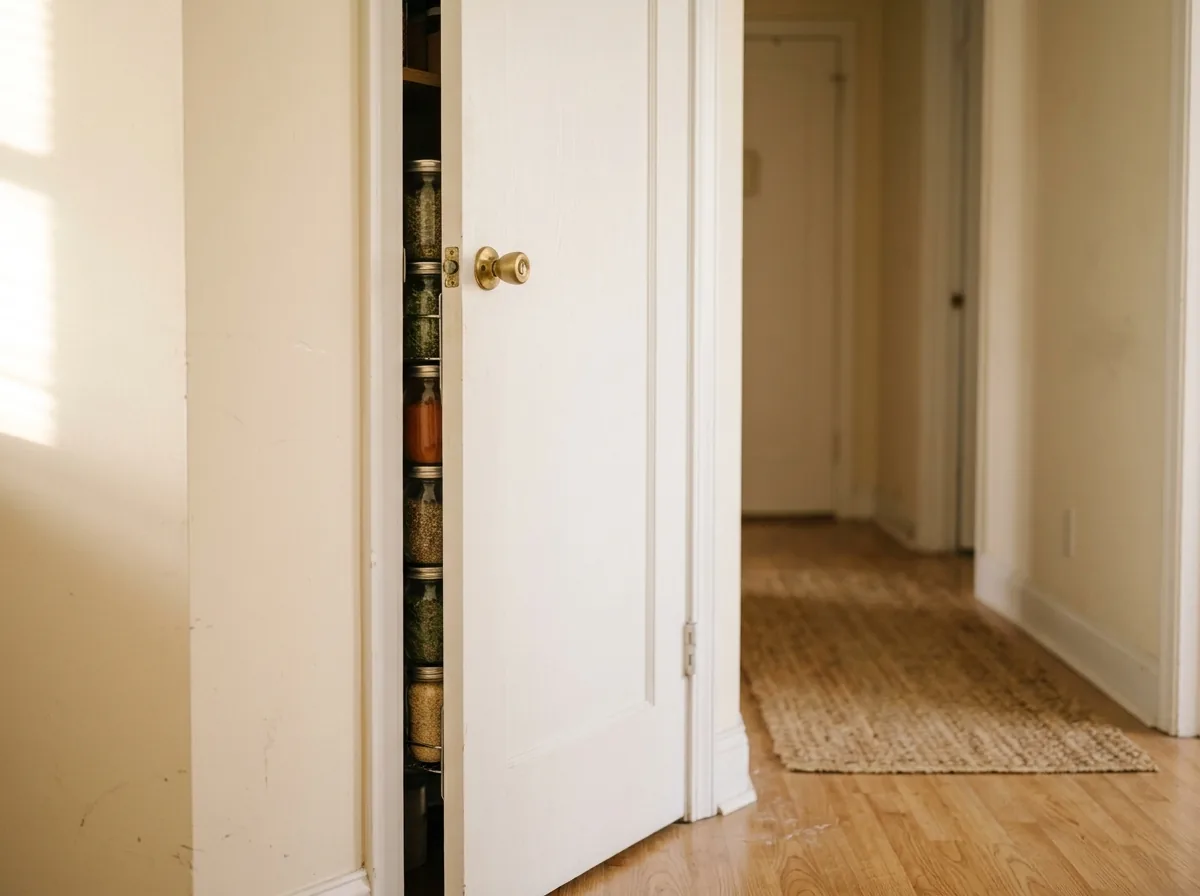
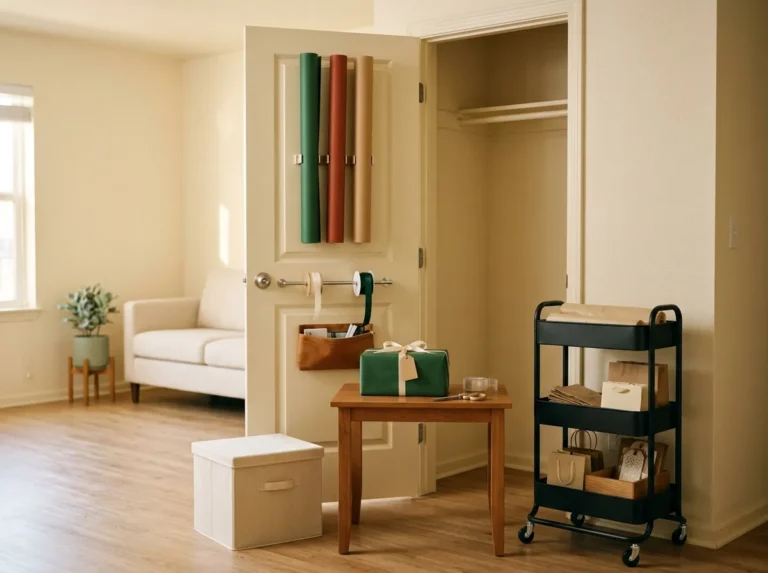
9. Put a Slim Rack Behind the Door
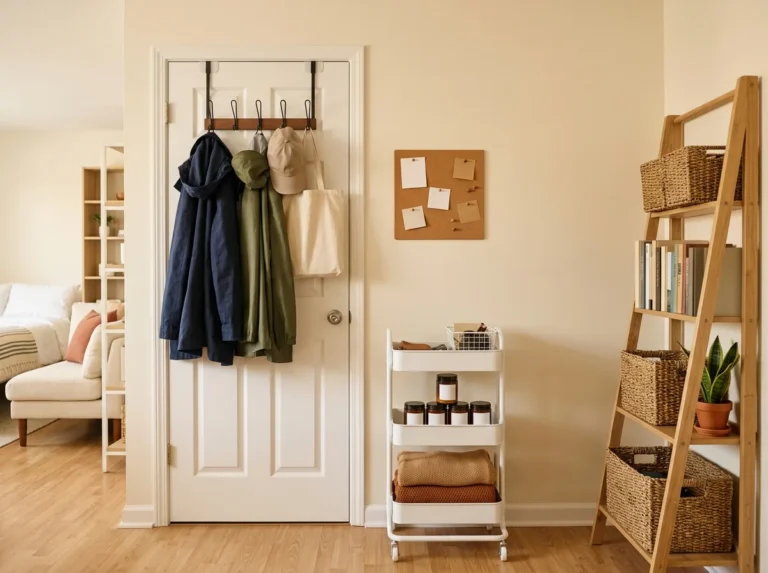
The four inches between an open door and the wall are a storage wall in disguise. A slim behind-door rack — the over-door kind needs no drilling at all, as our rental-friendly no-drilling guide shows — holds pantry jars, toiletries or cleaning supplies, and swings out of sight every time the door closes. Guests see a door. You see a second pantry.
Walls, Doors and Dead Space That Work in Secret
Every home has storage-shaped holes it never uses: inside doors, under cabinets, above the door frame. Fill them and the storage disappears into the architecture.
10. Rack the Inside of Cabinet Doors
The inside face of a cabinet door is a shelf waiting to happen: slim racks there hold lids, cling film, spice packets and measuring cups — the awkward things that rattle around drawers. The door closes and the kitchen looks exactly as it did, one whole category richer. Adhesive and over-door-hook versions install in minutes; keep heavy jars off them and on real shelves.
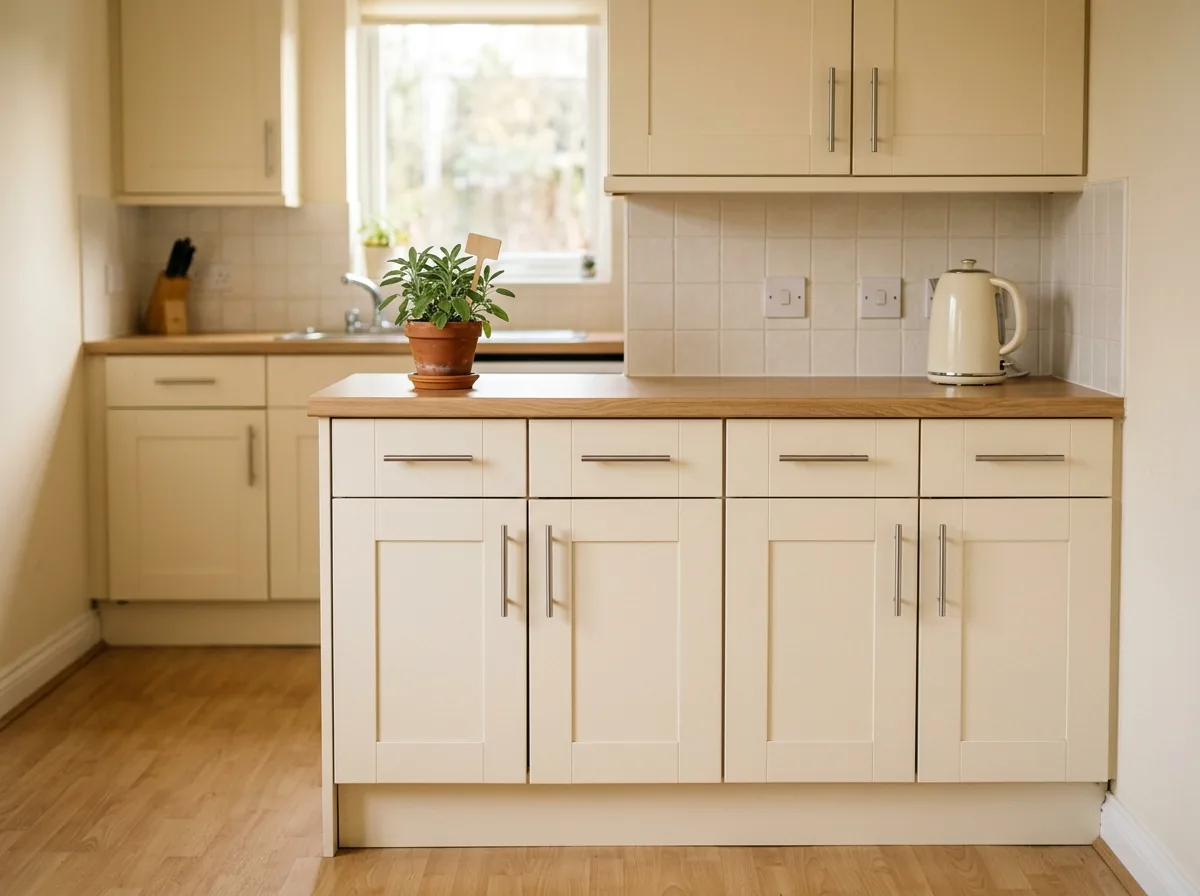
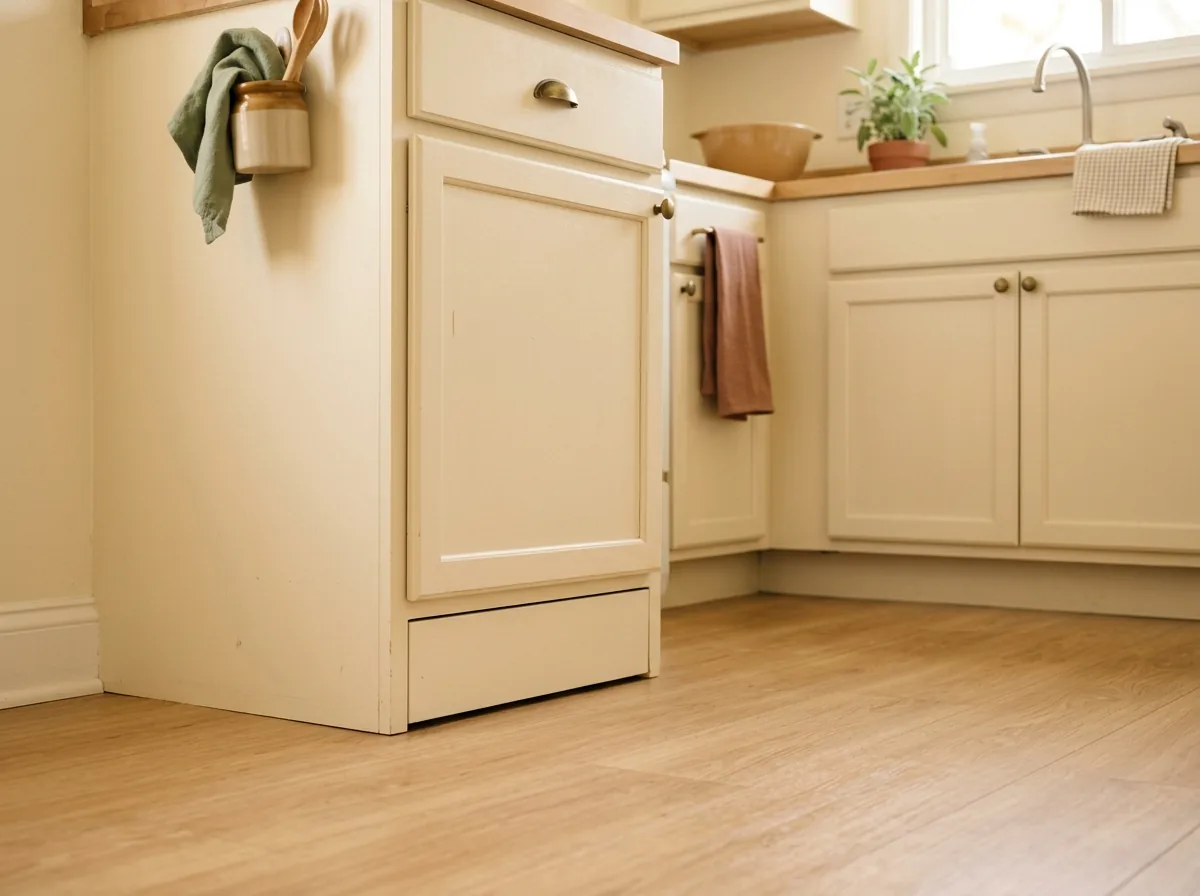
11. Claim the Toe-Kick Drawer
The recessed strip under your kitchen cabinets — the toe-kick — is four inches of dead space running the length of the room. A shallow toe-kick drawer hides baking trays, placemats, the good table linen and rarely used lids, flush with the cabinets until you nudge it open with a toe. A fitting job rather than a buy — but a whole drawer conjured from nothing.
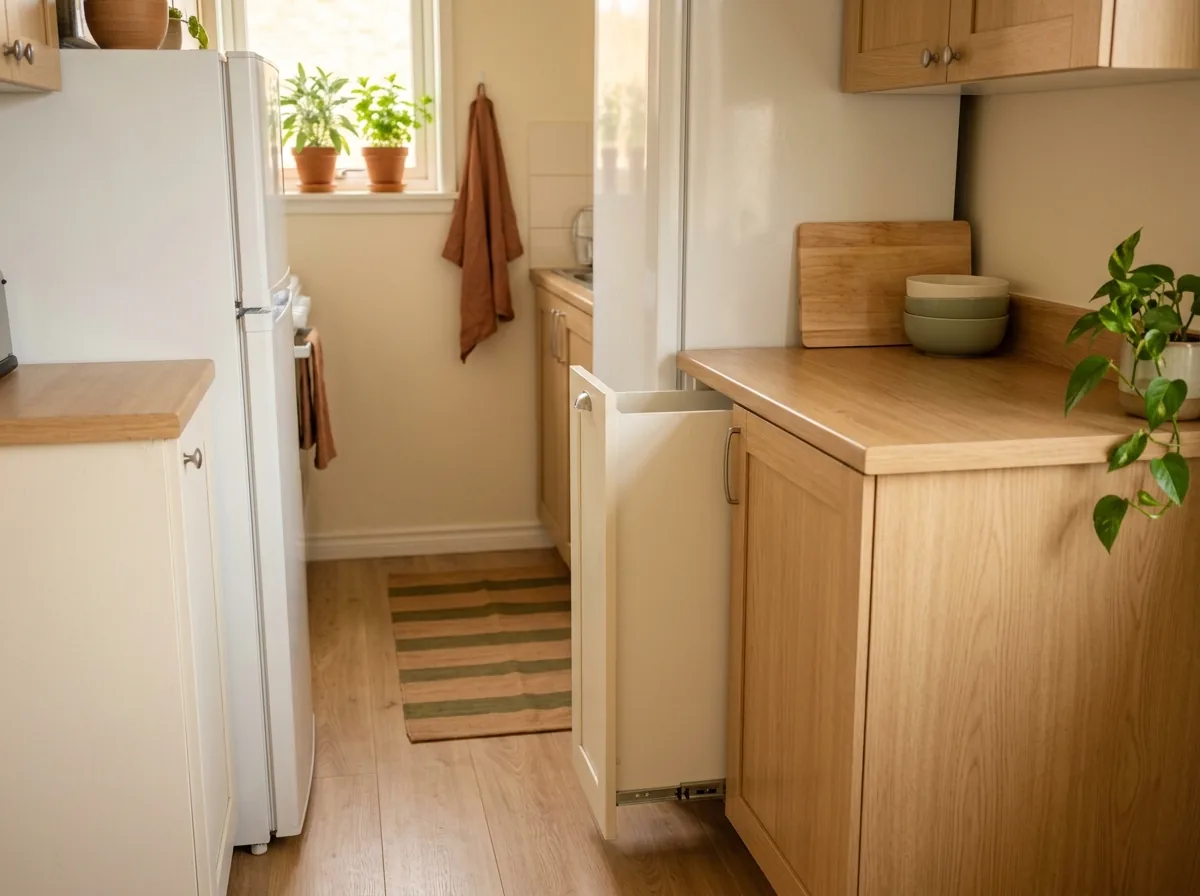
12. Slide a Slim Cabinet Into the Fridge Gap
Measure the gap between your fridge and the counter: in most kitchens it is a six-inch canyon collecting dust and dropped utensils. A slim slide-out cabinet on castors turns it into a pull-out pantry for tins, bottles and cleaning supplies — and from the front, it is just the fridge’s shadow. Renters: it stands free and rolls out with you on moving day.
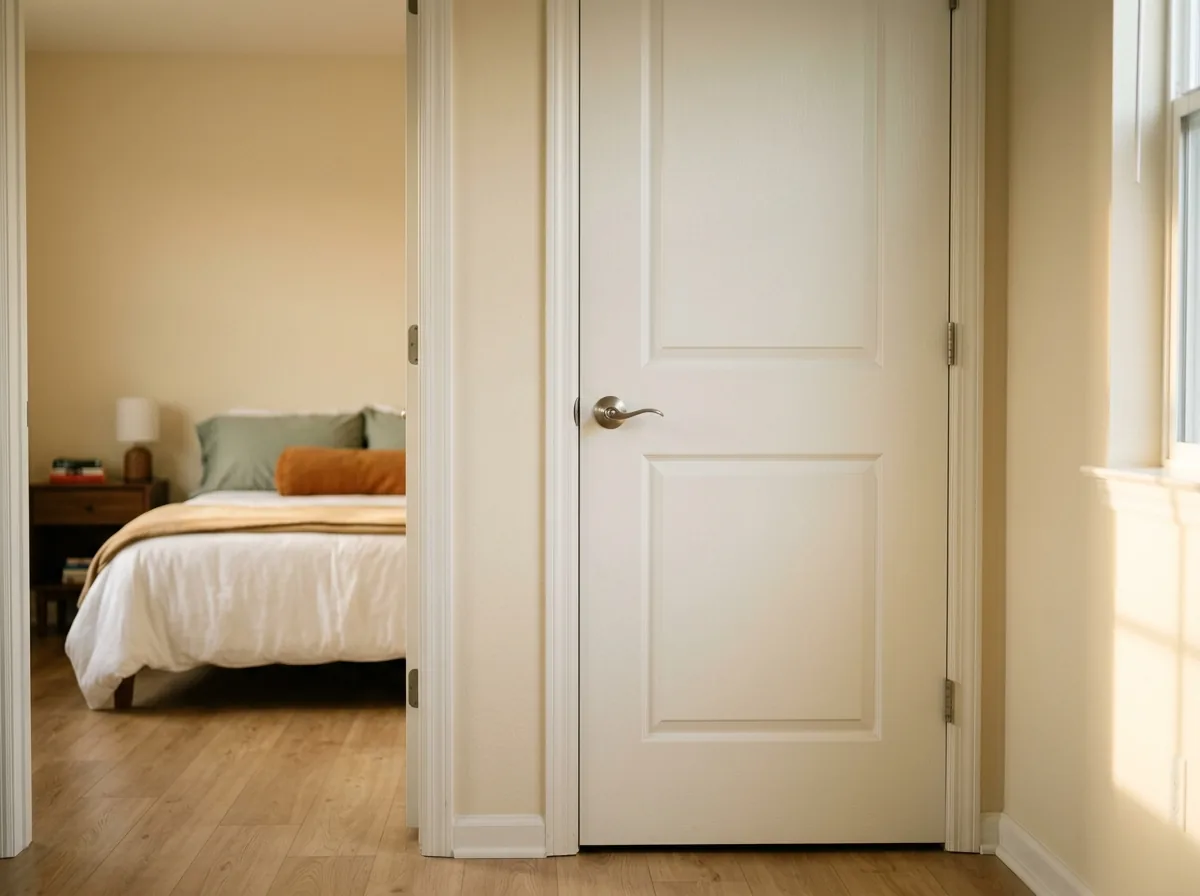
13. Store Shoes Inside the Door Itself
A hollow-core door has a secret: fit shallow shelves or a flat pocket panel to its inside face and it holds a full shoe rotation while still looking — from both sides — like an ordinary door. Bedroom and hallway doors carry shoes, scarves and belts this way without one visible bin. Keep it to light, flat things; a door hung heavy swings badly and complains at the hinges.
Storage Disguised as Decor
The final level: storage that does not just hide — it actively decorates. These pieces earn compliments, not questions.
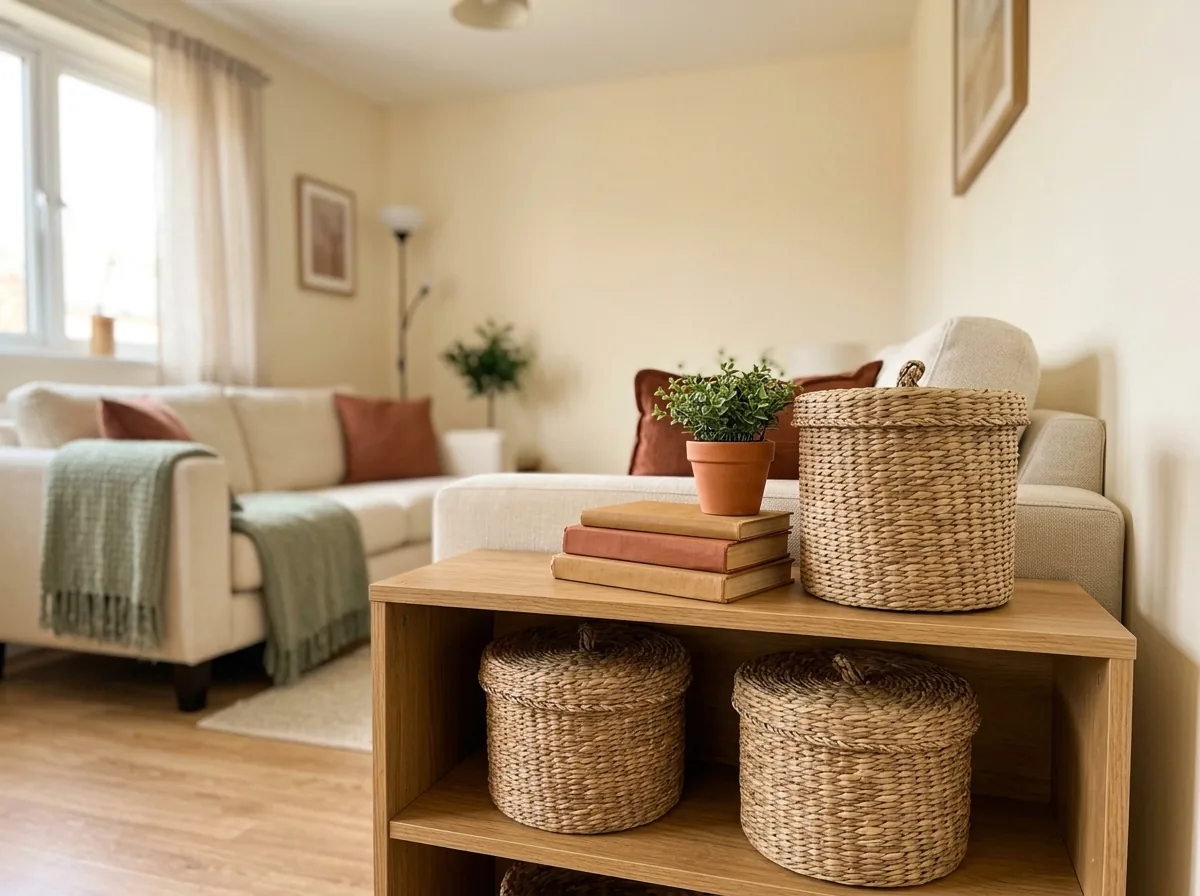
14. Let Beautiful Baskets Be the Storage
A lidded woven basket is storage wearing a disguise: on a shelf or beside the sofa it reads as texture and warmth, while inside it holds the chargers, the knitting, the dog toys. The lid is non-negotiable — an open basket shows its contents and becomes visual clutter; a closed one is pure decor. Keep one material and palette across the home so the “decor” looks deliberate, because it is.
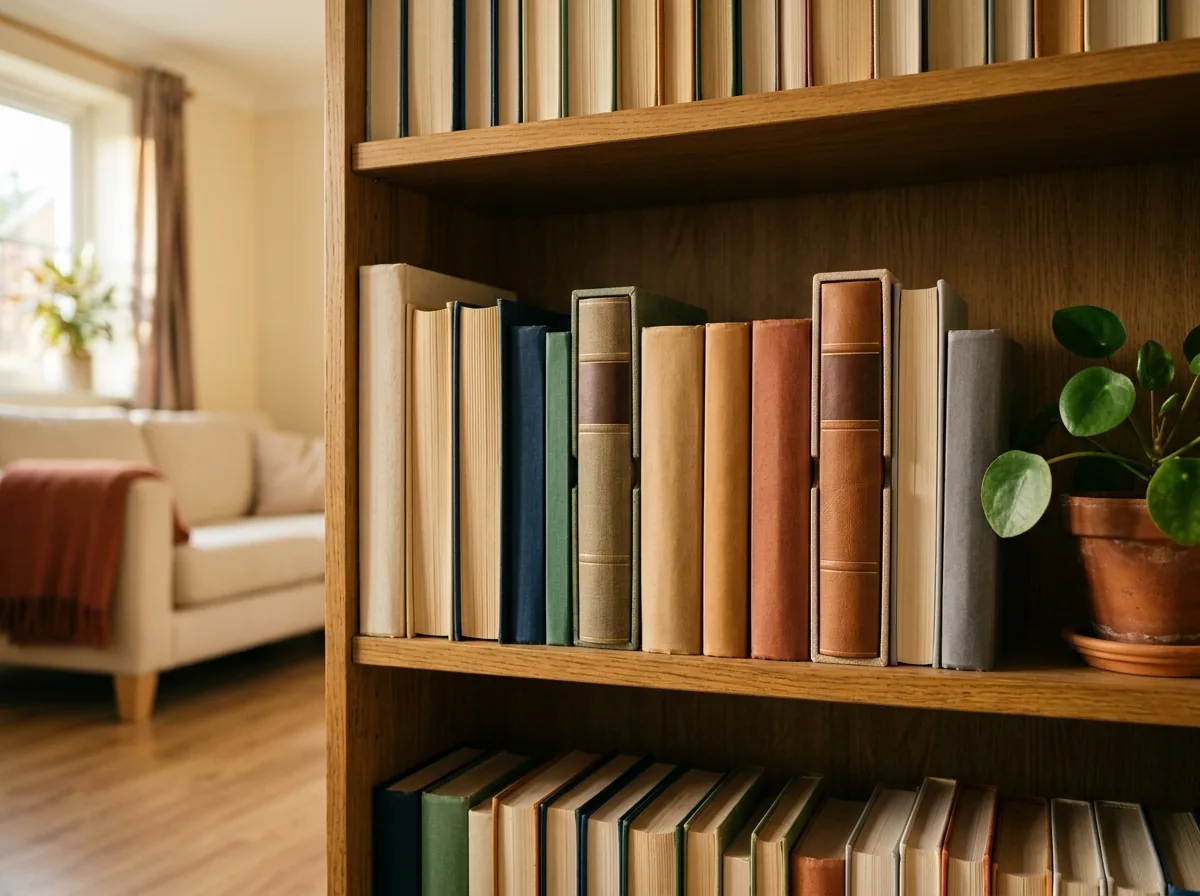
15. Hide Valuables in Hollow Book Boxes
Book boxes — hollow spines that sit among real books — hide the passport, the spare keys, the jewellery and the cash envelope in the most public place in the home: the bookshelf. Nobody browses a shelf looking for secrets. Mix two or three among genuine books of similar size, and keep a note in your phone of what lives where. It is the oldest hiding trick there is, because it works.
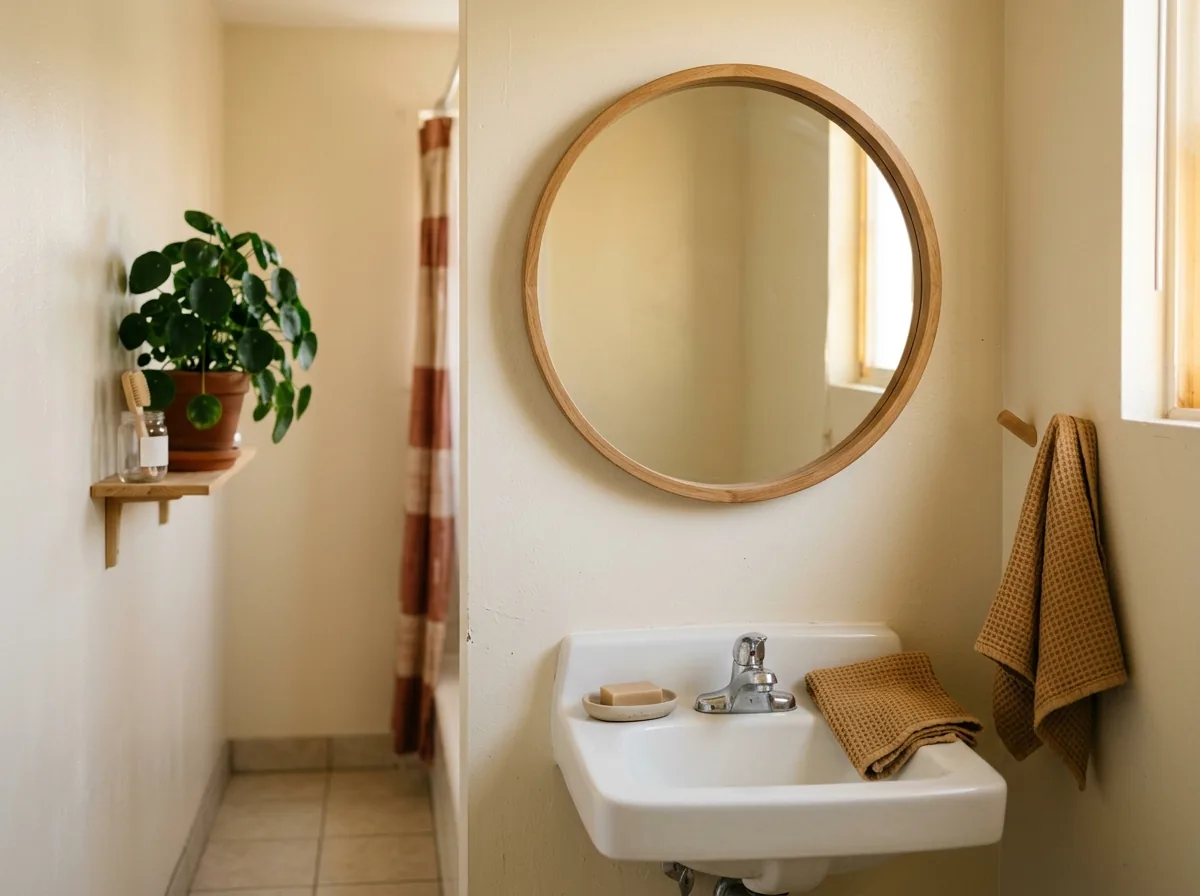
16. Make the Mirror a Cabinet
A mirror-front cabinet gives a small bathroom a mirror, a light-doubling trick and a whole medicine shelf that nobody sees — bottles, skincare and the first-aid kit behind the glass. Renter-realistic versions lean, hang over the door or stick on with heavy-duty strips; no renovation, no landlord drama. The same trick works in miniature with deep shadow-box picture frames: art on the front, keys and small essentials in the frame’s depth behind it.
Everyday Hiding Systems
Hidden storage fails when daily life defeats it — the charger sprawls, the post piles up. These three systems hide the everyday, not just the stored.
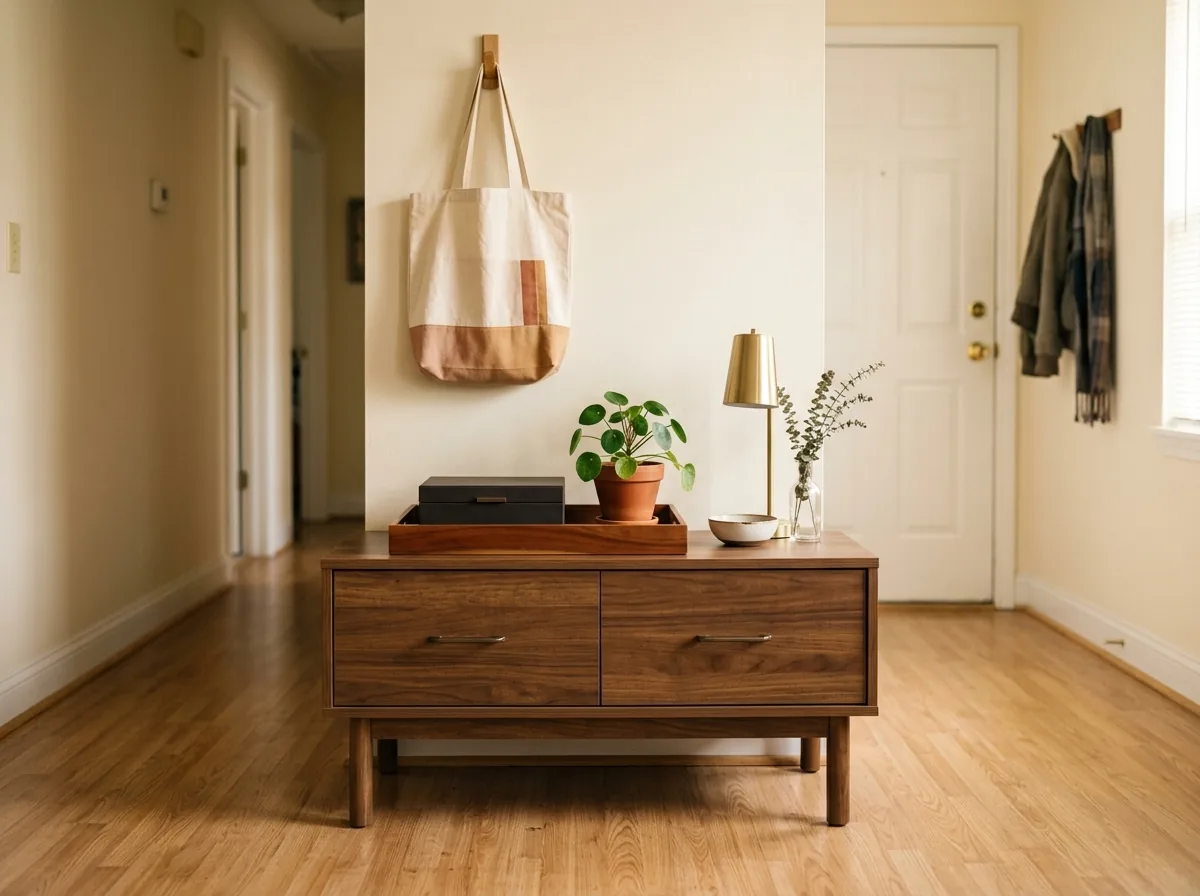
17. Give Daily Clutter a Landing-Strip Tray
Keys, post, sunglasses, the wallet: daily clutter looks messy loose and intentional corralled. A lidded box or a deep tray on the entry console — the landing strip from our 30-Day Declutter Challenge — swallows the whole handful in one motion, and a small plant pot on the same tray hides spare keys and coins inside the “decor”. Guests see a styled console. Everything you own is in it.
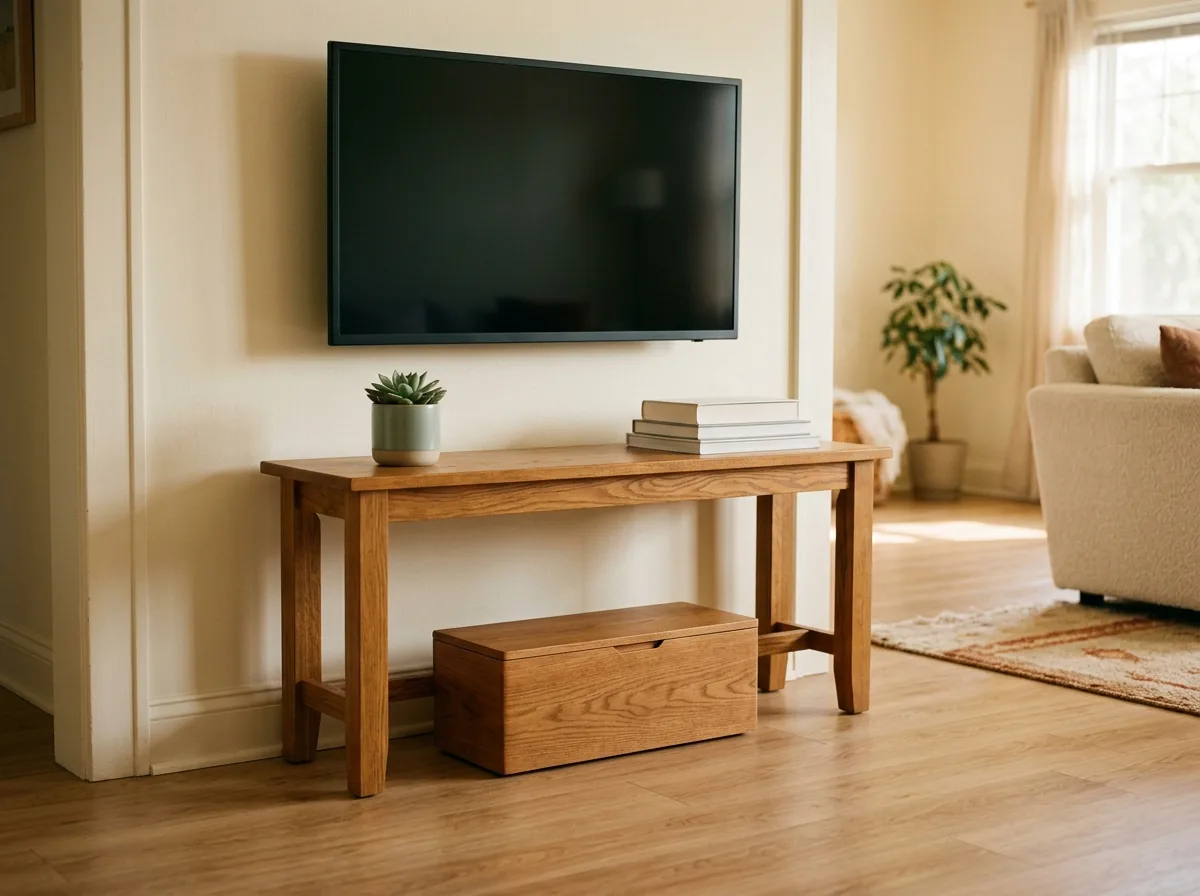
18. Box the Cables, Drawer the Chargers
Nothing makes a room look more cluttered than cords. A cable-management box hides the power strip and the whole knot behind the TV or desk — the eye sees one calm box; inside, chaos is contained. Pair it with a charging drawer: a nightstand or desk drawer with the chargers inside, phones charging out of sight overnight. Two hidden systems, and two of the busiest surfaces in the home go quiet.
19. Label Behind Doors, Go Opaque on Show
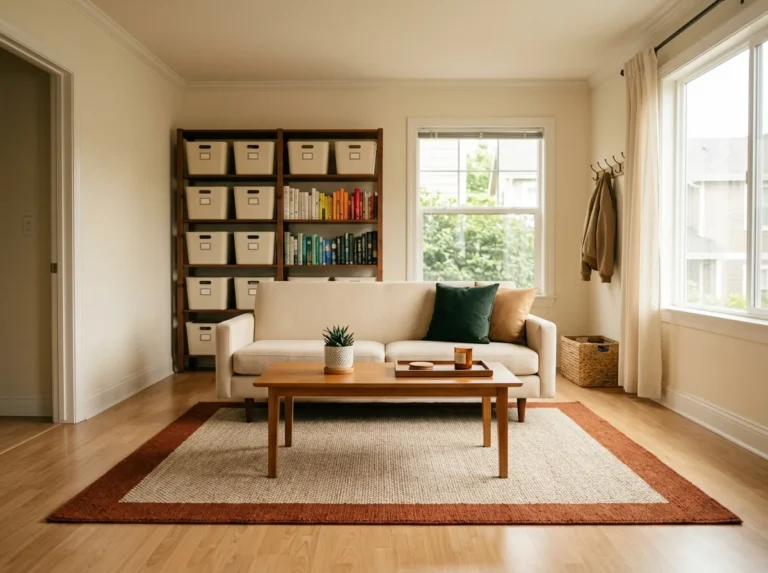
The rule that ties the whole article together: behind closed doors, use clear, labelled bins — you open the door rarely, and finding things fast matters more than looks. On open shelves and anywhere the eye rests, storage must be opaque and calm, or better, disguised as furniture and decor like everything above. It is the flip side of the clear-bin trap in our 31 organization mistakes — hidden systems are about what the eye never has to process.

The Invisible Storage Checklist
- Every room has at least one hidden home for its daily clutter — tray, basket or drawer
- Under-bed boxes: one category each, lidded, labels facing out
- Behind-door and inside-door racks fitted and loaded with light things only
- Dead space claimed: above the door, fridge gap, toe-kick, behind the sofa
- Cables boxed; chargers living inside a drawer, not on a surface
- A phone note lists what hides where — invisible to guests, never to you
- Open shelves hold only opaque or decor-disguised storage
Frequently Asked Questions
Is hidden storage actually better than normal storage?
For small homes, yes — because the eye reads visible storage as clutter even when it is tidy. Hidden storage gives you the same capacity while the room reads calm and bigger. The trade-off is access: hourly things belong in easy, visible homes; hidden storage suits everything else.
How do I remember where everything is hidden?
The golden rule: one category per hiding place, and a simple map. Keep a note in your phone — “under-bed box 2: winter jumpers; headboard: spare chargers” — and label the ends of boxes that face out. Hidden should mean invisible to guests, never lost to you. If you forget a spot exists, it was the wrong spot for that category.
What is the best hidden storage for renters?
Everything that stands, slides or hangs without fixings: under-bed boxes, behind-door over-door racks, fridge-gap cabinets on castors, storage ottomans and benches, lidded baskets and cable boxes. All of Ideas 1–3, 6, 7, 9, 12, 14, 15, 17 and 18 move out with you and leave the walls exactly as found.
Does hidden storage make a small home feel bigger?
It is one of the fastest ways. Visible storage — bins, racks, stacked boxes — tells the eye the room is full. When storage disappears into furniture, behind doors and under the bed, the same room with the same belongings reads emptier and calmer. You are not removing things; you are removing the sight of storing them.
Can hidden storage turn into forgotten clutter?
It can — that is its one real risk. Guard against it with the category rule and a seasonal audit: when the seasons swap, every hidden spot gets opened, edited and re-labelled. Our 30-Day Declutter Challenge builds that audit in. Hidden storage should hold what you use, invisibly — not bury what you should have let go.
Conclusion
You do not need a bigger home or a wall of bins. You need storage that knows how to disappear: inside the ottoman and the bed, behind the doors and the sofa, under the bed and inside the gaps the house came with — dressed, where it must show, as the decor itself.
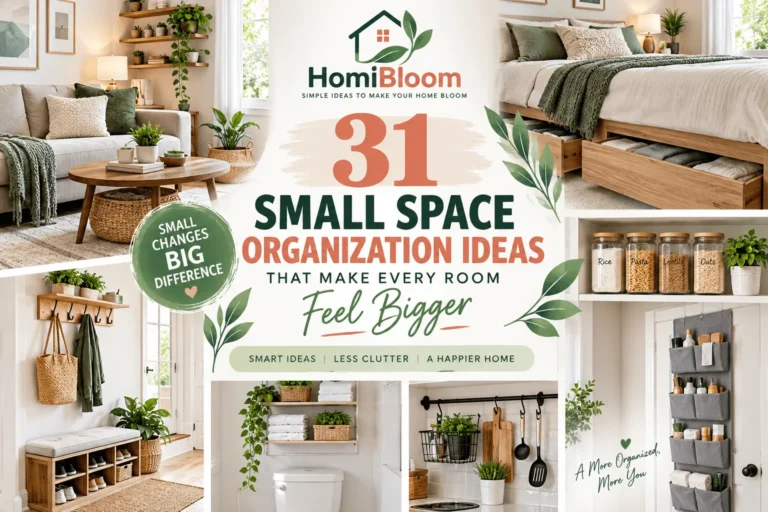
Complete the calm-room system with the pillar guide 31 Small Space Organization Ideas That Make Every Room Feel Bigger, the seasonal system in 21 Christmas Decor Storage Ideas for Apartments With One Closet, the no-drill rules in 25 Rental-Friendly Organization Ideas That Need No Drilling (Deposit-Safe), and the traps in 31 Small Space Organization Mistakes That Make Your Home Feel Smaller.
Save this on Pinterest — and enjoy the room nobody believes holds this much. Follow HomiBloom for simple ideas to make your home bloom.
One Comment