

25 Rental-Friendly Organization Ideas That Need No Drilling (Deposit-Safe)
Introduction
Renting is a built-in puzzle: a home that needs twice the storage, and a lease that allows zero holes in the walls. Every shelf ends at the same question — what will this cost me from the deposit?
These 25 rental-friendly organization ideas solve it by borrowing the home instead of piercing it. Everything here hangs over a door, sticks on with removable adhesive, wedges in with tension, stands on its own feet, or clings on with magnets and suction — and comes back off cleanly on move-out day. Two ground rules: read your lease (a few ban even adhesive strips; Ideas 6–20 are plan B), and patch-test adhesives for 24 hours first. If the clutter needs editing before storing, run our 30-Day Declutter Challenge for Small Homes first.
Doors and Walls You Borrow, Not Drill
Your doors and walls are the biggest free surfaces in the rental — you just have to hang things on them instead of through them.
1. Hang Over-Door Hook Rails for Coats, Towels and Bags
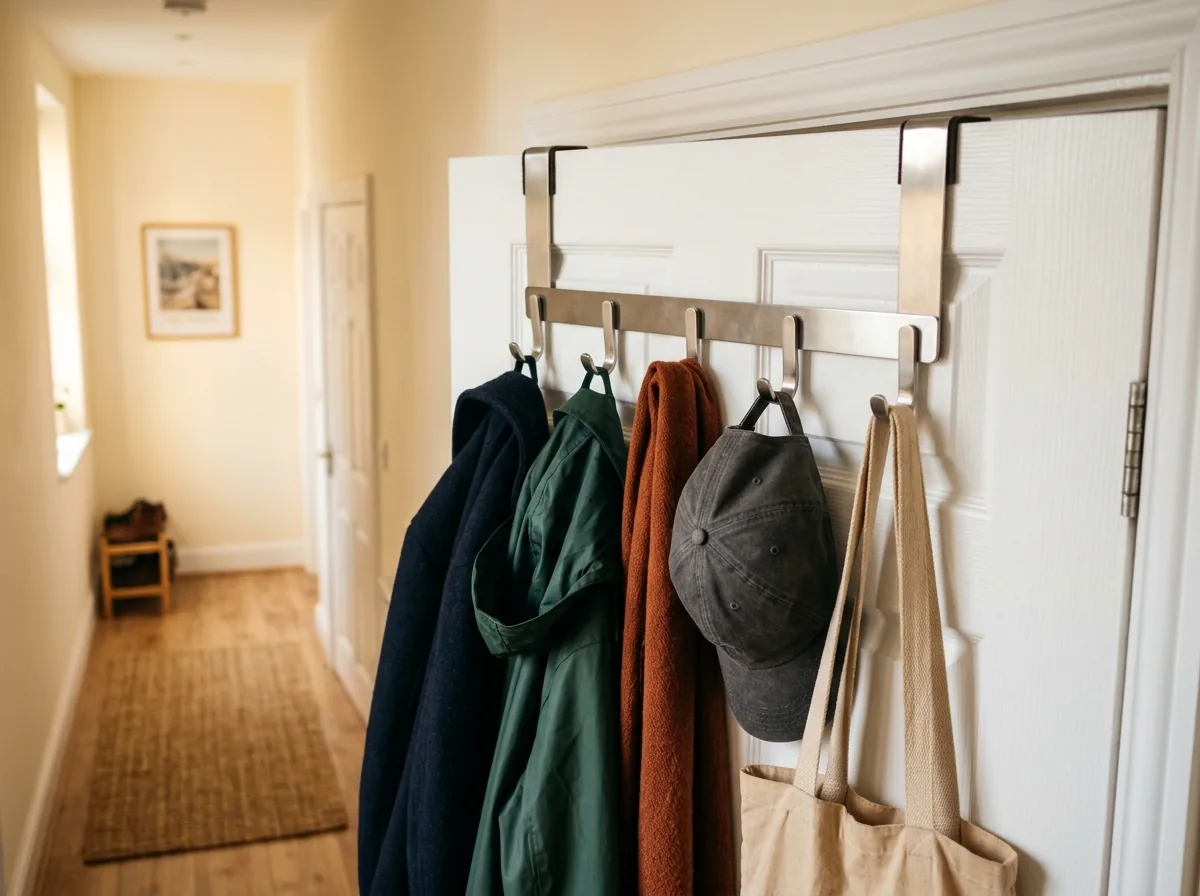
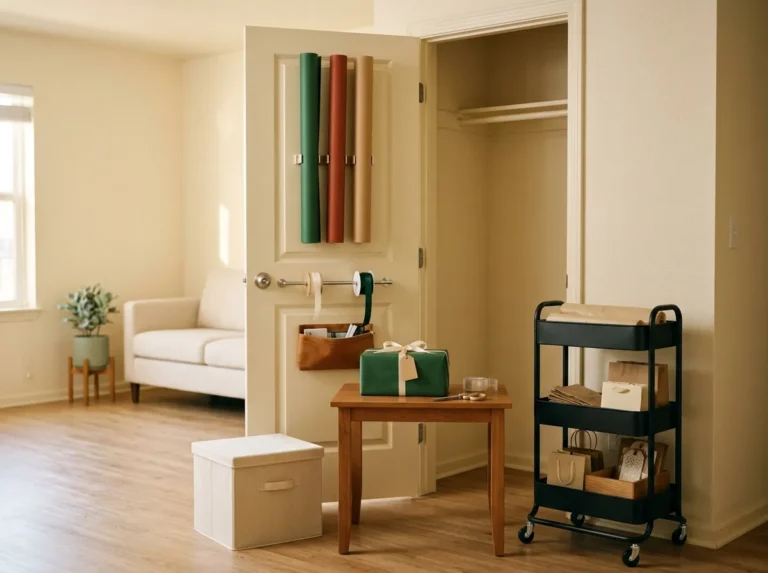
The back of every door is a storage wall you already pay rent on. An over-door hook rail hooks over the door top — no screws, no marks — and holds coats at the entry, towels in the bathroom, robes in the bedroom. Felt pads stop scuffs, and on move-out day it lifts straight off. Renter caution: test the close first; tight doors need slim hooks.
2. Add Over-Door Pocket Organizers Where Cupboards Run Out
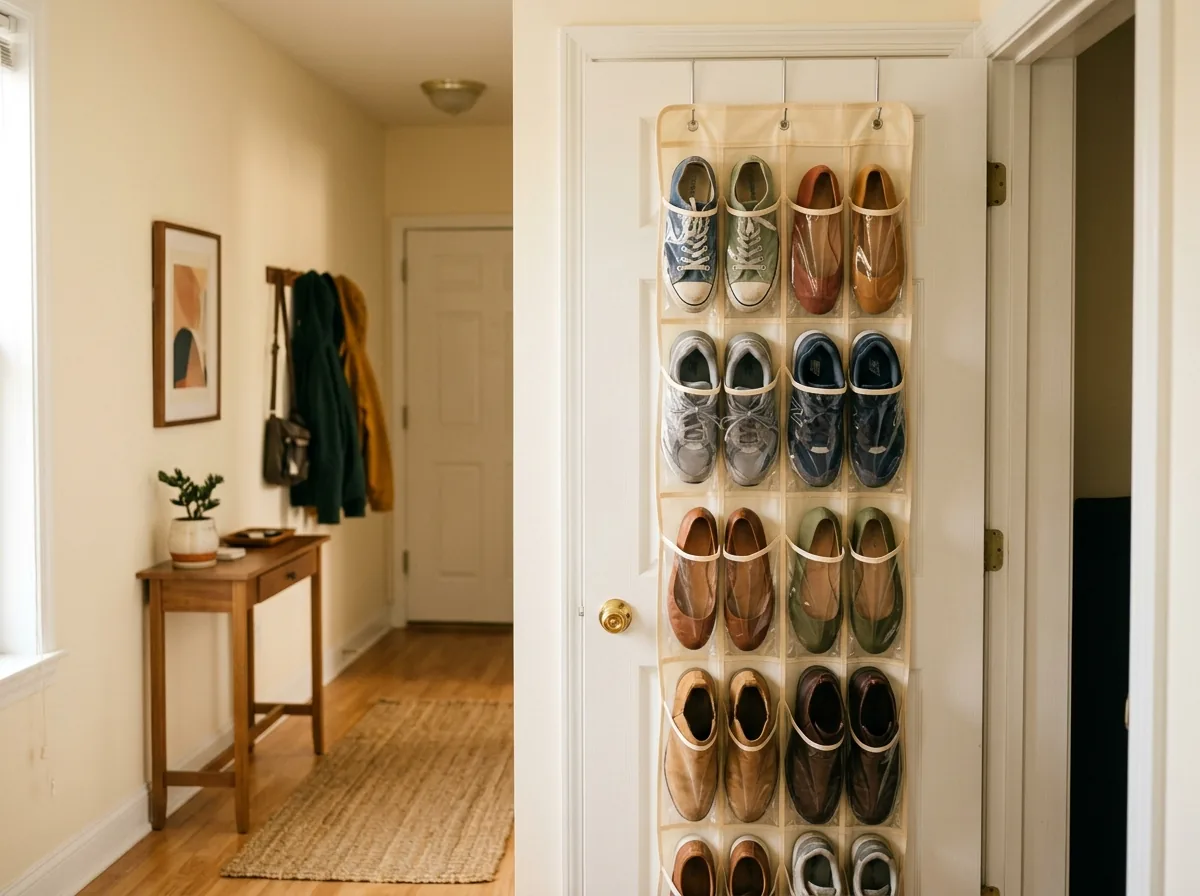
A clear pocket organizer hangs from two over-door hooks and turns one door into twenty small shelves: shoes in the hallway, toiletries in the bathroom, sprays and packets in the kitchen. Clear pockets mean nothing hides and dies at the back. It installs in seconds; on move-out day it lifts off and folds flat.
3. Put Up an Adhesive Hook Rail — Done Right
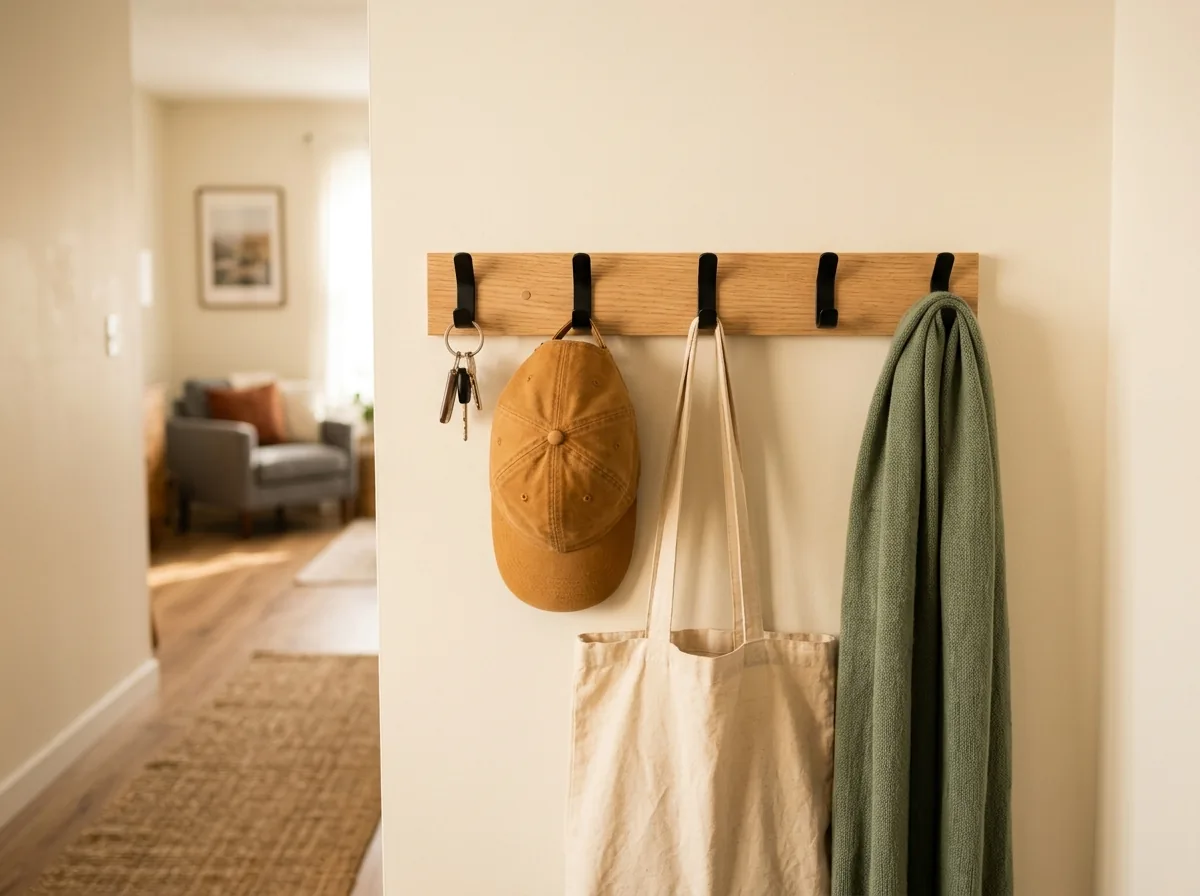
Adhesive hooks fail renters for two reasons: dirty walls and impatience. Wipe the spot with rubbing alcohol, press each strip for 30 seconds, then wait the packet’s full cure time — usually 24 hours — before loading. Most strips are rated 1 to 5 pounds per hook: believe the packet, not the product photo, and halve the load on textured or steamy walls. Removal: pull the tab slowly straight down, never out, and the strip releases without the paint.
4. Float a Picture Ledge on Heavy-Duty Hanging Strips
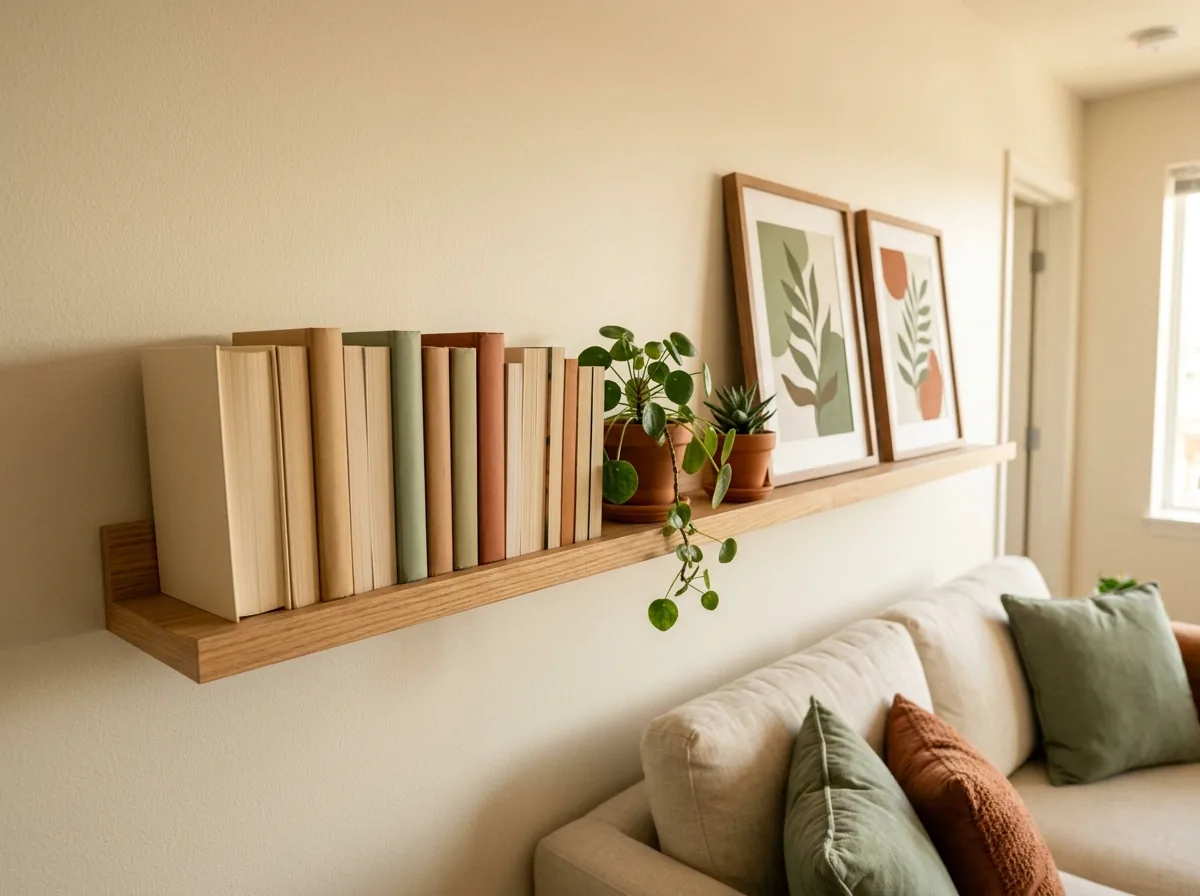
A shallow picture ledge gives a rental the styled-shelf look — books, plants, framed prints — with zero holes. Mount a lightweight ledge on paired hanging strips, counting the ledge plus its contents against the strips’ combined rating, and load paperbacks, not cast-iron bookends. Cure overnight, load gradually; the pull tabs release it cleanly when you leave.
5. Turn the Side of the Fridge Into Magnetic Storage
The fridge’s side panel is a steel wall in plain sight. Magnetic spice tins, a knife strip and strong hooks turn it into a spice rack, utensil rail and key station — nothing installs, it simply clings, and everything slides off in seconds when you move. Renter caution: spices and utensils, yes; heavy jars and cast iron, no — gravity wins.

Tension and Pressure Do the Holding
Tension is friction working in your favour: twist, wedge, and the walls themselves hold your storage — then let it go without a trace.
6. Double Your Closet Rail With a Tension Rod
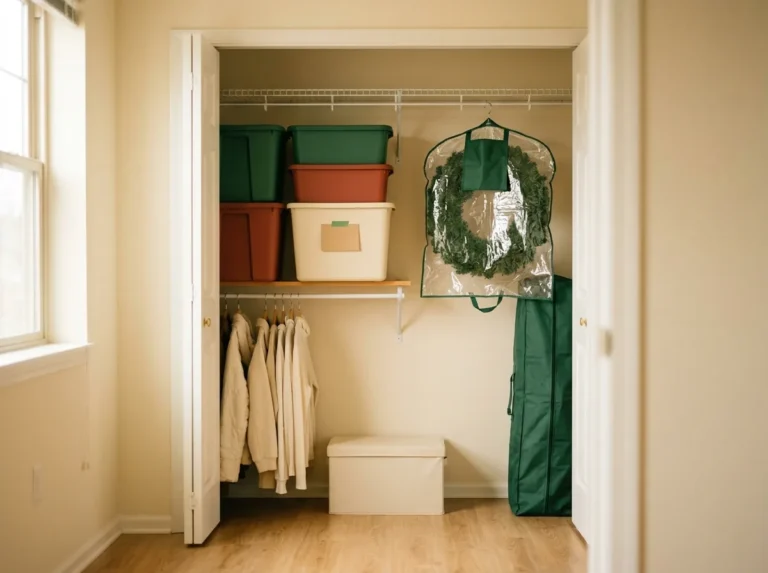
Most rental closets waste the drop below a single rail. Twist a tension rod to length inside the closet, snug it, add a quarter turn: a second rail for shirts and trousers, no screws near the landlord’s walls. It is the same rod we use in our small closet organization system. Load evenly; if it bows, lighten it. Removal: twist, shrink, ten seconds.
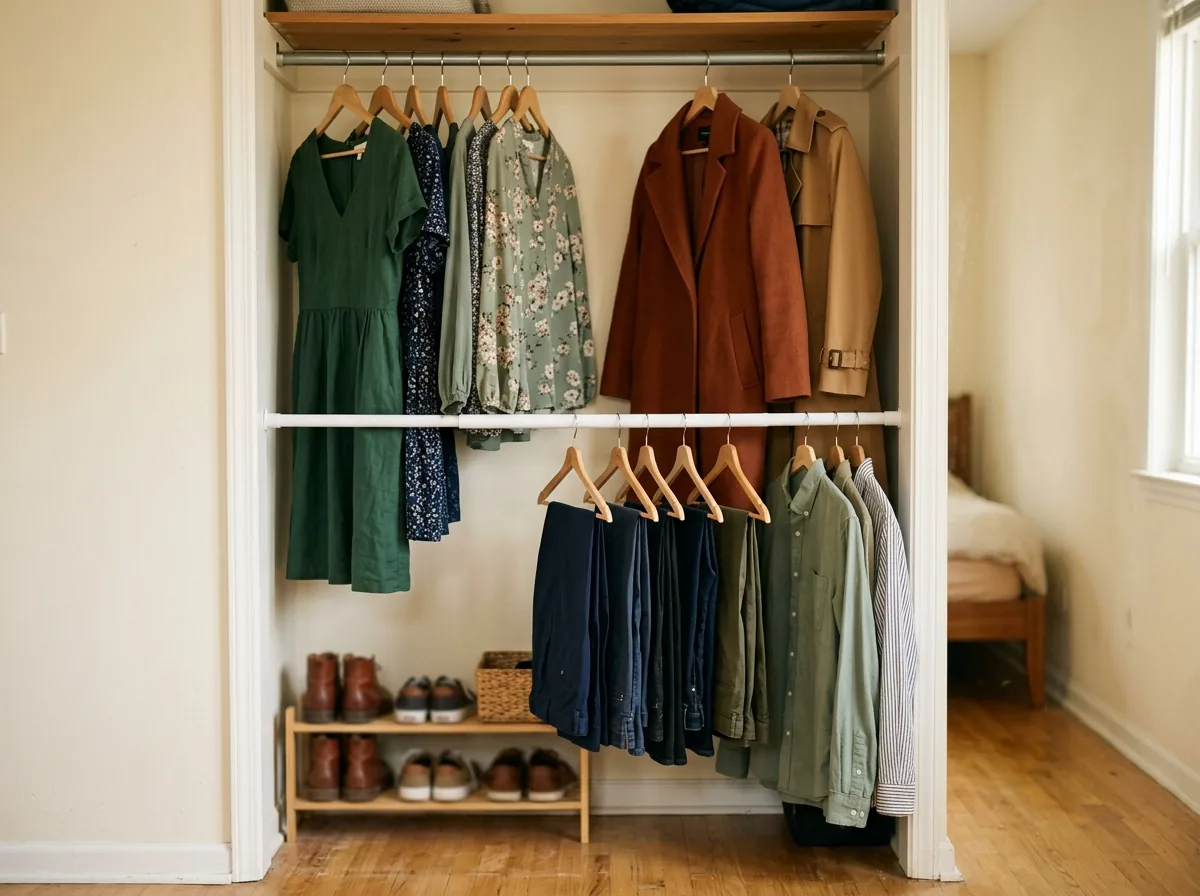
7. Wedge Tension Shelves Into an Alcove
Alcoves and airing cupboards are dead space in most rentals. Tension shelf units — poles with shelves clamped floor-to-ceiling, or spring shelves wedged wall to wall — turn them into a linen store or cleaning cupboard. Rubber feet protect floor and ceiling. Measure first, and re-snug the poles after a loaded week.
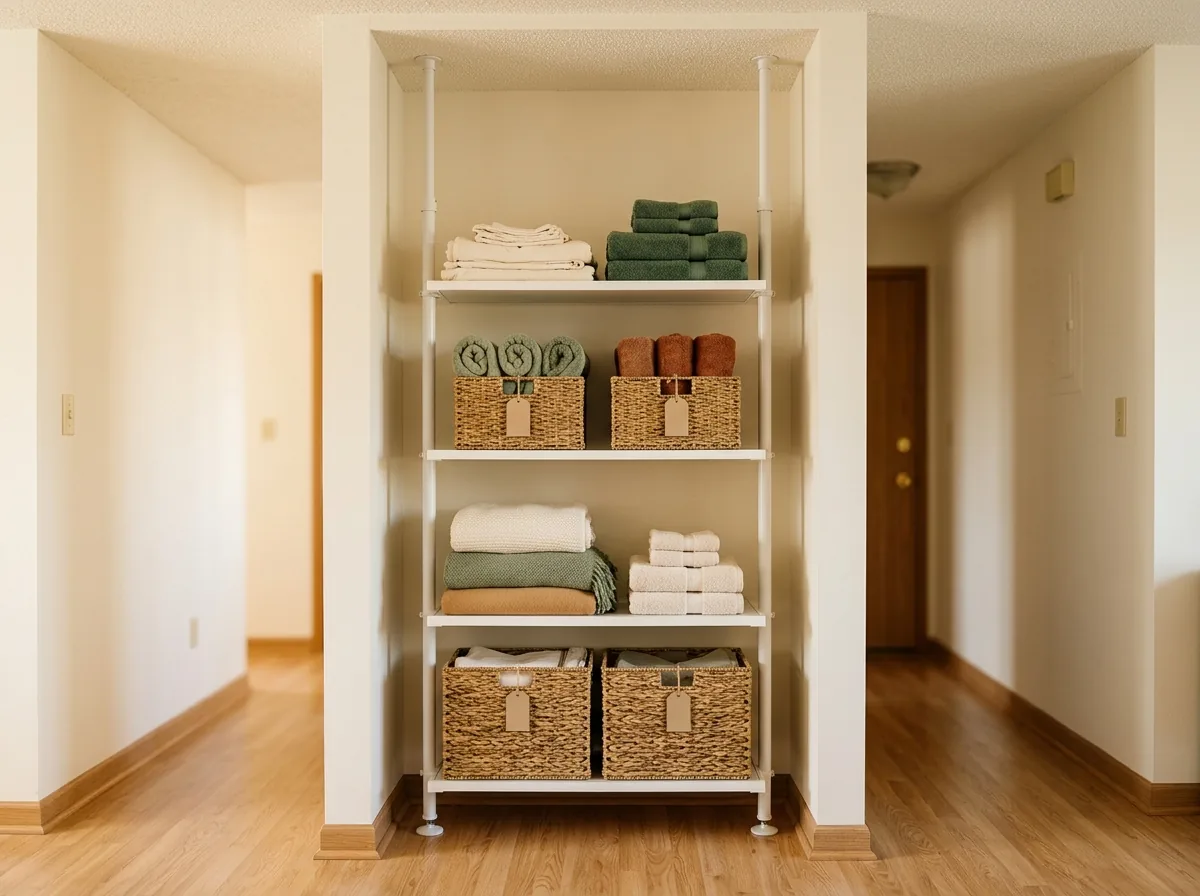
8. Stand a Tension-Pole Caddy in the Shower Corner
A tension-pole caddy stands floor-to-ceiling in the shower corner, baskets at every height — bottles off the tub rim, nothing drilled into tile you do not own. Suction-cup shelves are the lighter option on smooth tile. On move-out day, release the tension, rinse the feet, and the bathroom is exactly as found.
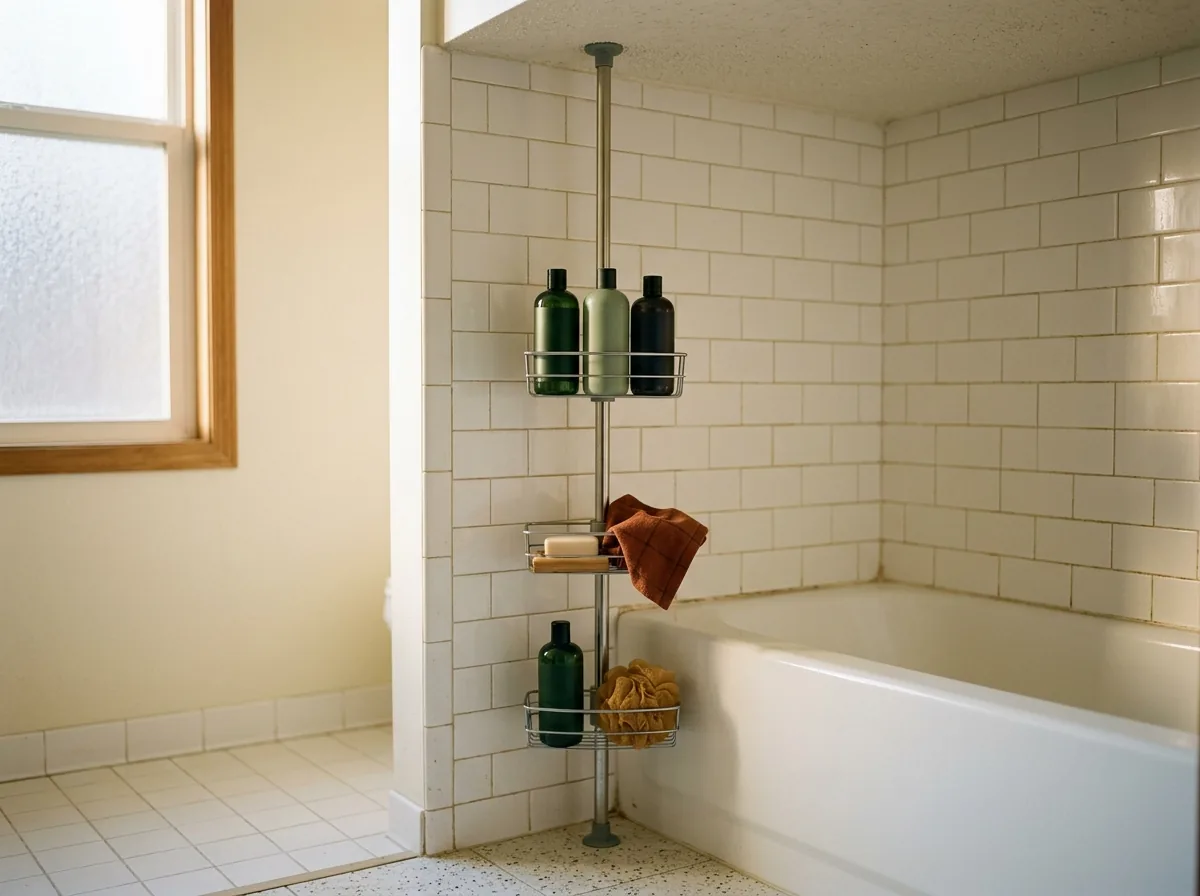
9. Span a Tension Rod Under the Sink
Under-sink cabinets are deep, dark and mostly air. Span a short tension rod across the top and hang spray bottles by their trigger handles — the cupboard floor frees up for a bin or basket. Two minutes, no fixings. Twist it down when you leave; the next tenant never knows.
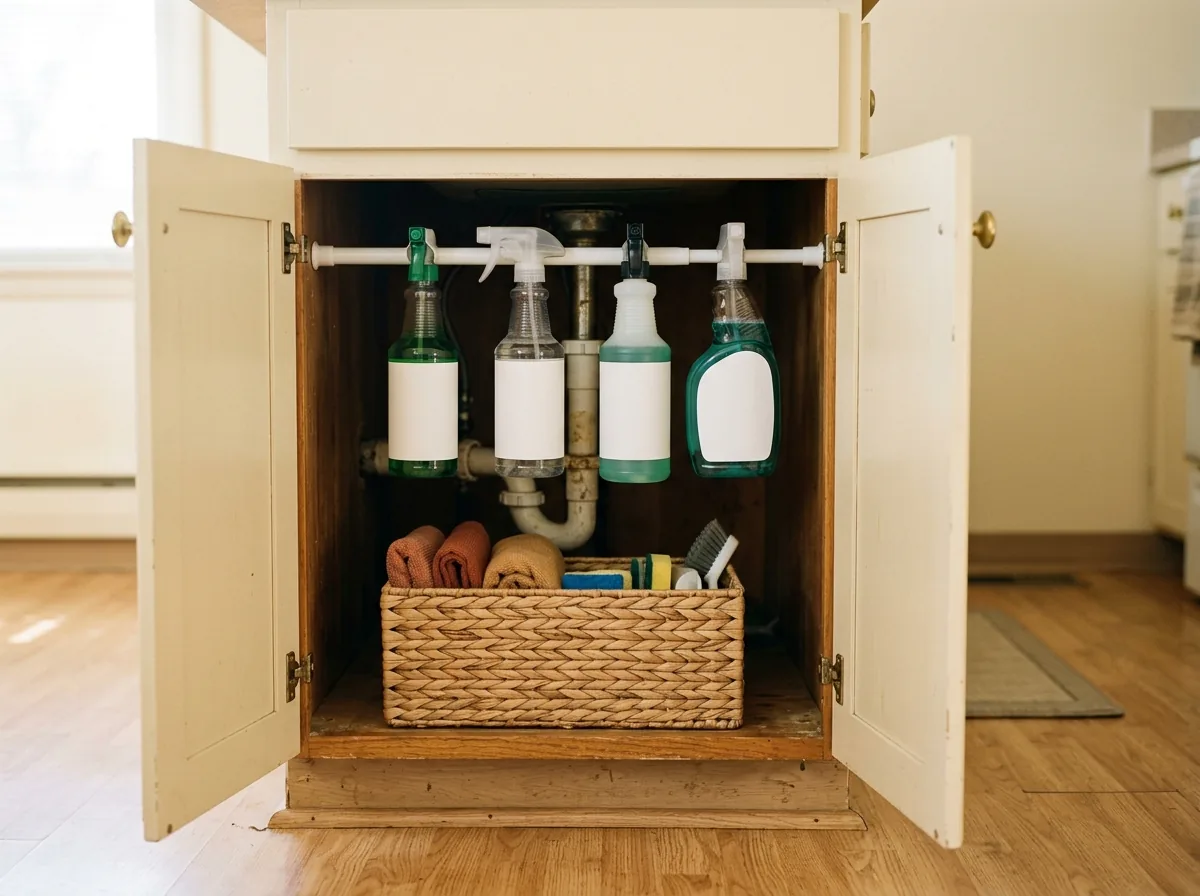
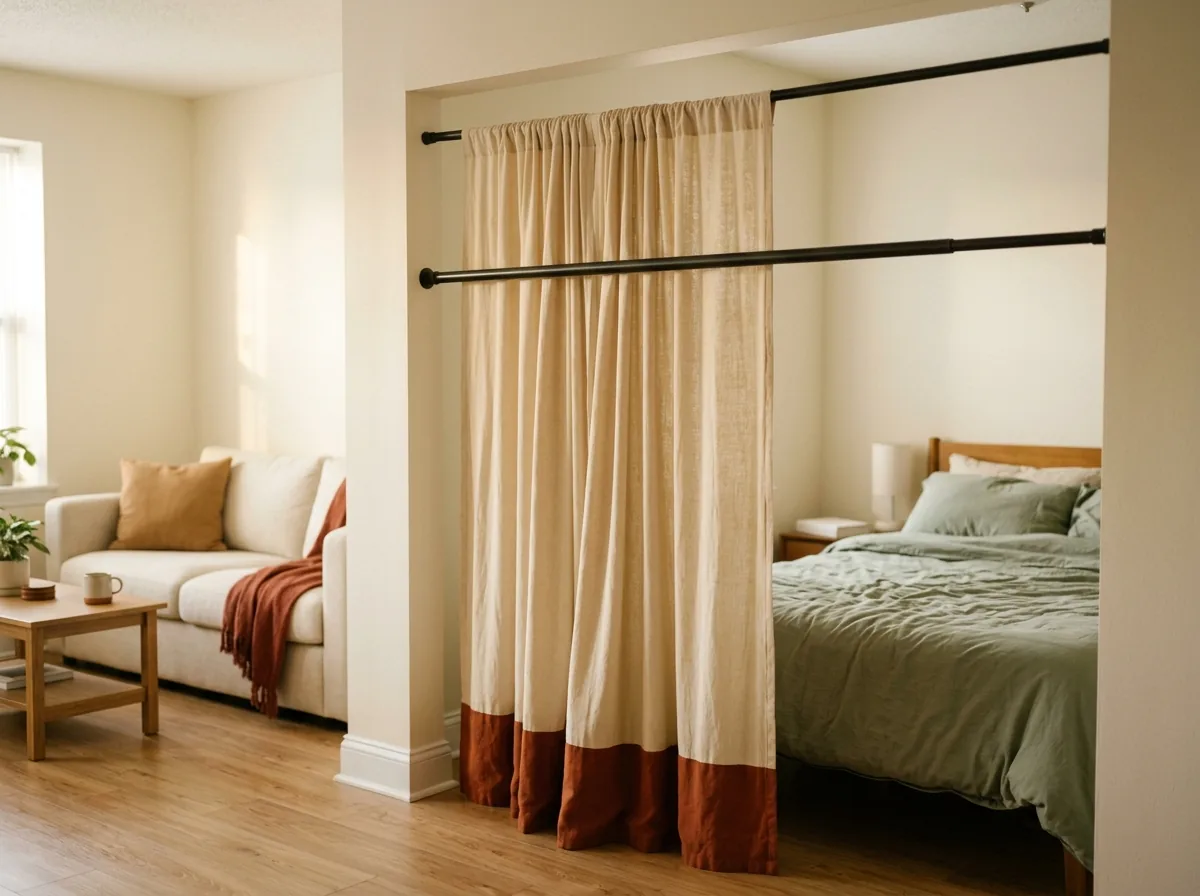
10. Hang a Curtain on a Tension Rod to Divide a Room
Studios need rooms that do not exist. A long tension rod wedged across an opening, dressed with a curtain, makes a bedroom zone or hides a doorless closet — and the “wall” moves whenever the layout does. Choose a rod rated for the span, since long spans sag, and a curtain with some weight to it.
Freestanding Storage That Stands on Its Own
The safest storage of all never touches the wall: it stands on the floor, does its job, and walks out with you on moving day.
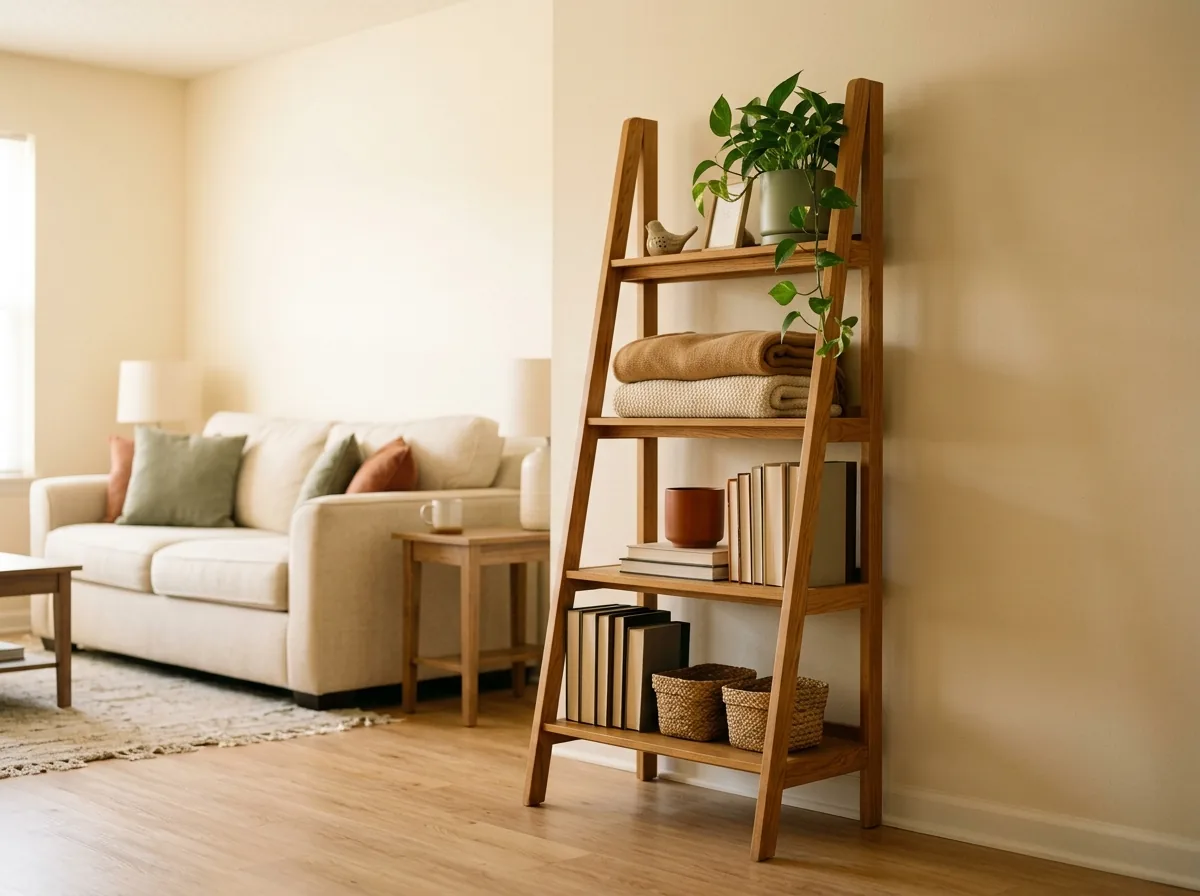
11. Lean Into a Ladder Shelf
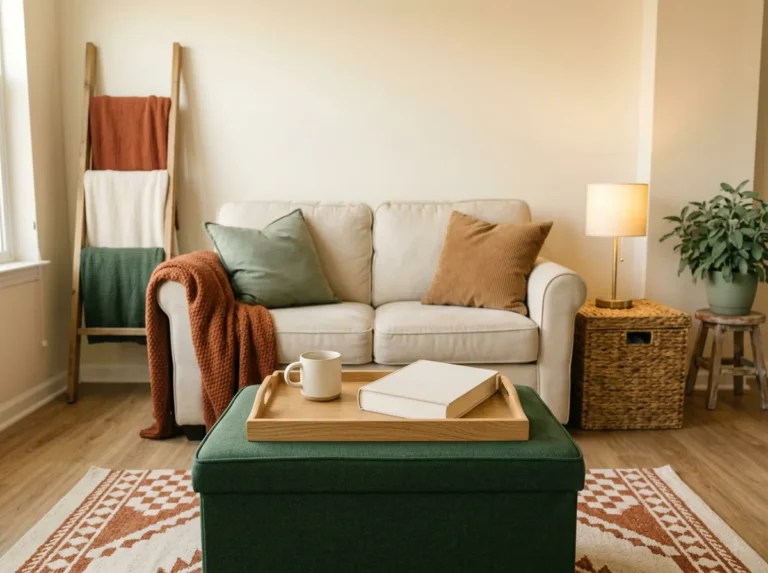
A ladder shelf gives you four or five shelves in the footprint of a doormat, and the self-supporting A-frame kind needs no fixing at all. Style heavy things low — books, baskets — light things high, felt pads under the feet. If a design must lean and strap to the wall, skip it for a freestanding frame. No deposit is worth a bookshelf.
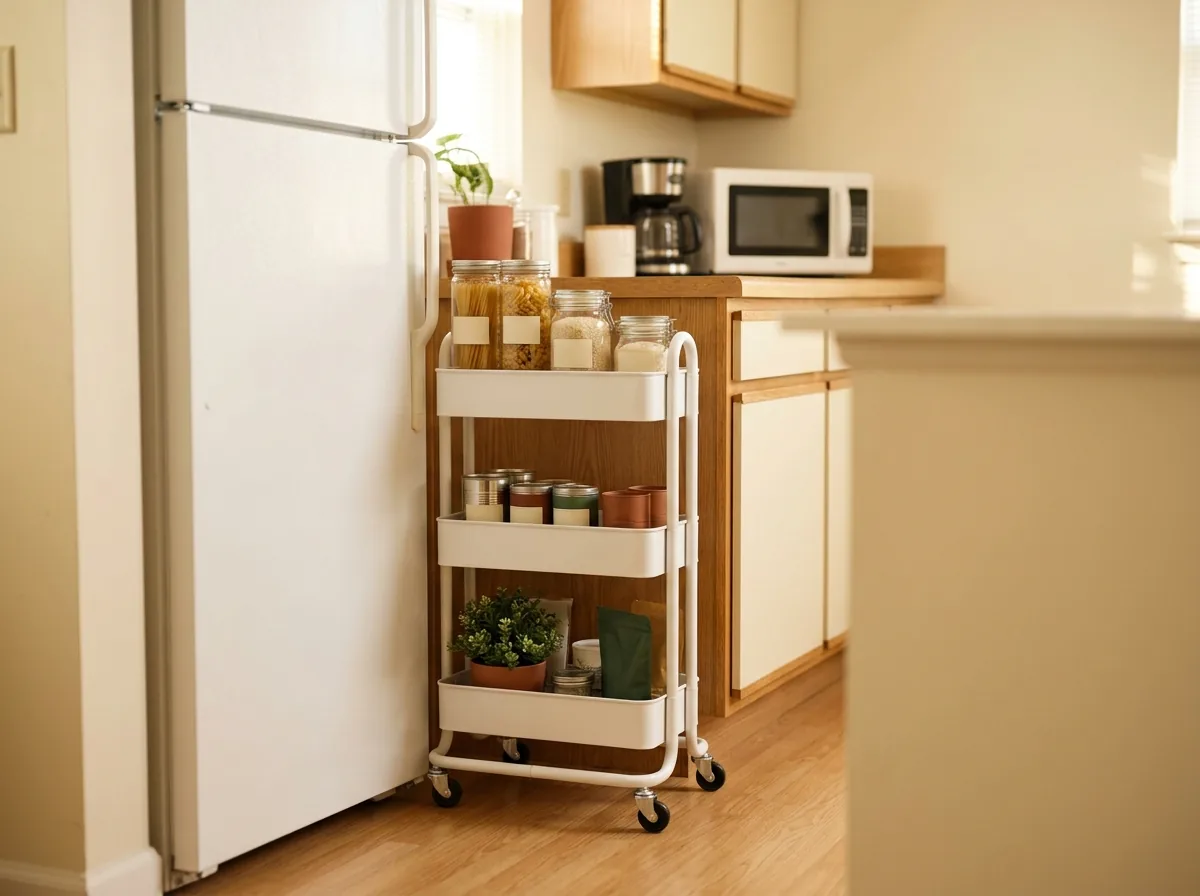
12. Roll a Slim Cart Into Every Gap
The three-tier rolling cart is the renter’s Swiss Army knife: pantry beside the fridge, bathroom caddy, desk sidecar, cleaning station. It installs nowhere — it has wheels — and on move-out day it rolls onto the truck still loaded. Measure your gaps first; slim widths fit appliance gaps. Budget tip: one good cart, moved room to room, beats three cheap ones.
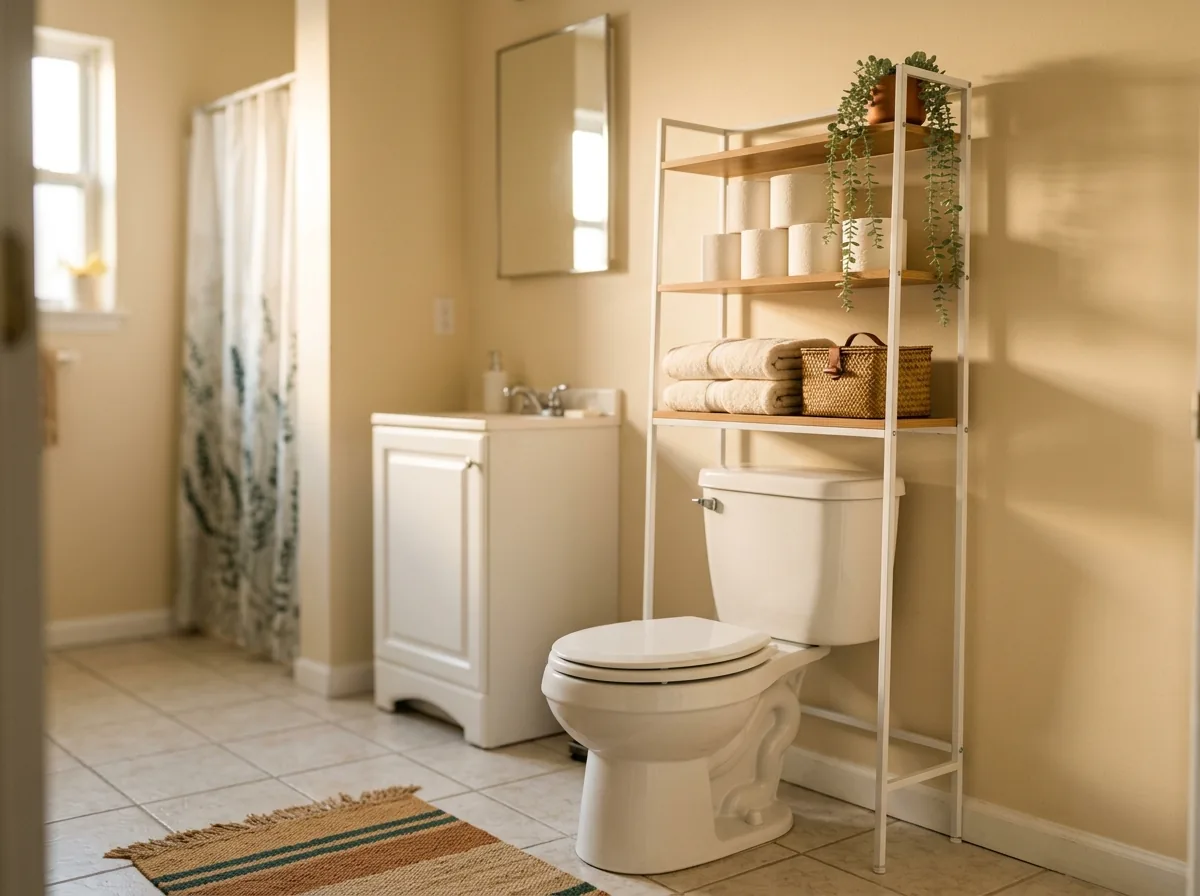
13. Frame the Toilet With a Freestanding Rack
The space above a toilet is the bathroom’s forgotten shelf, and a freestanding over-toilet rack claims it without a fixing — the frame stands around the tank, feet on the floor. Two or three shelves hold towels, baskets and spare rolls. Measure tank height and keep the flush reachable. The frame lifts out in one piece when you go.
14. Divide a Studio With a Bookcase
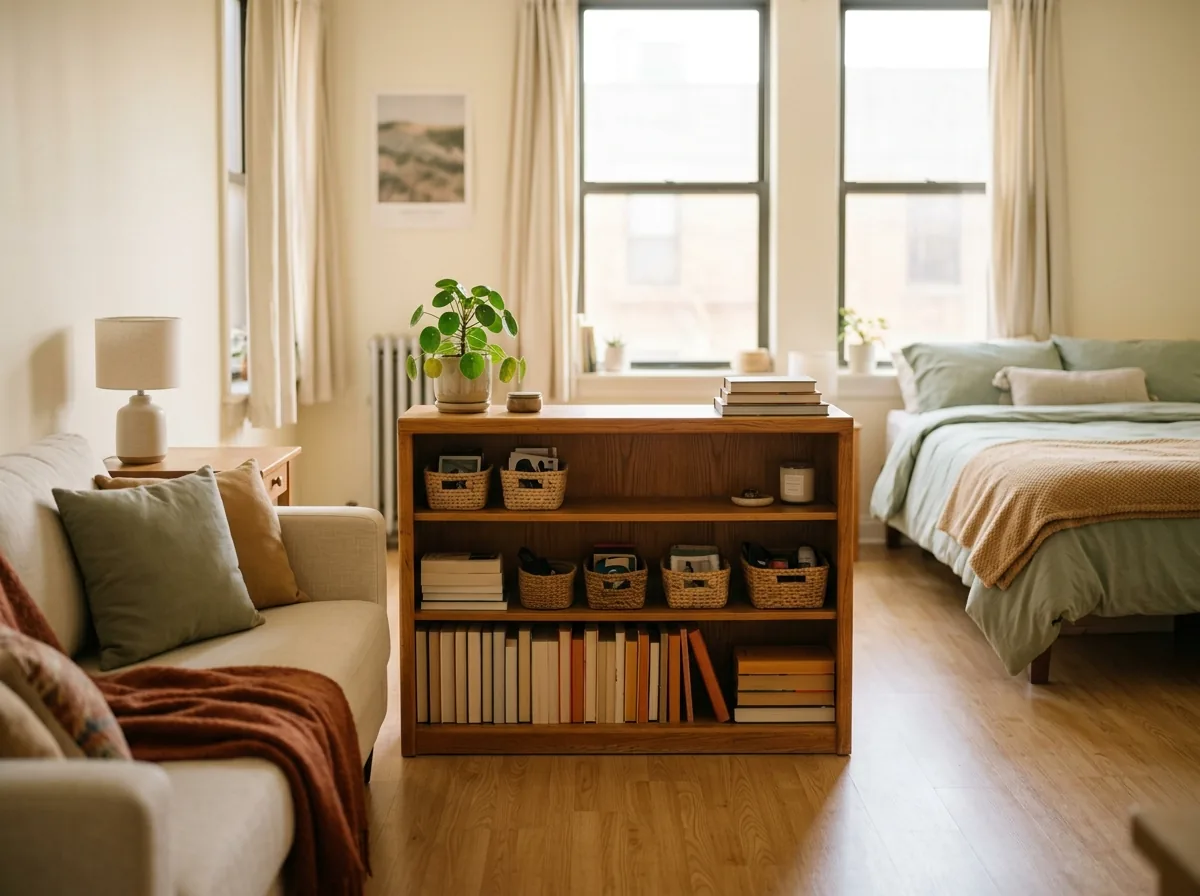
In a studio, a low bookcase placed back-to-room is a wall that stores: living space one side, bed the other, books and baskets between. Gravity and even loading do the holding. Keep heavy shelves low, leave a clear walking lane, and back the bedroom side with baskets. The biggest move in this list is just furniture.
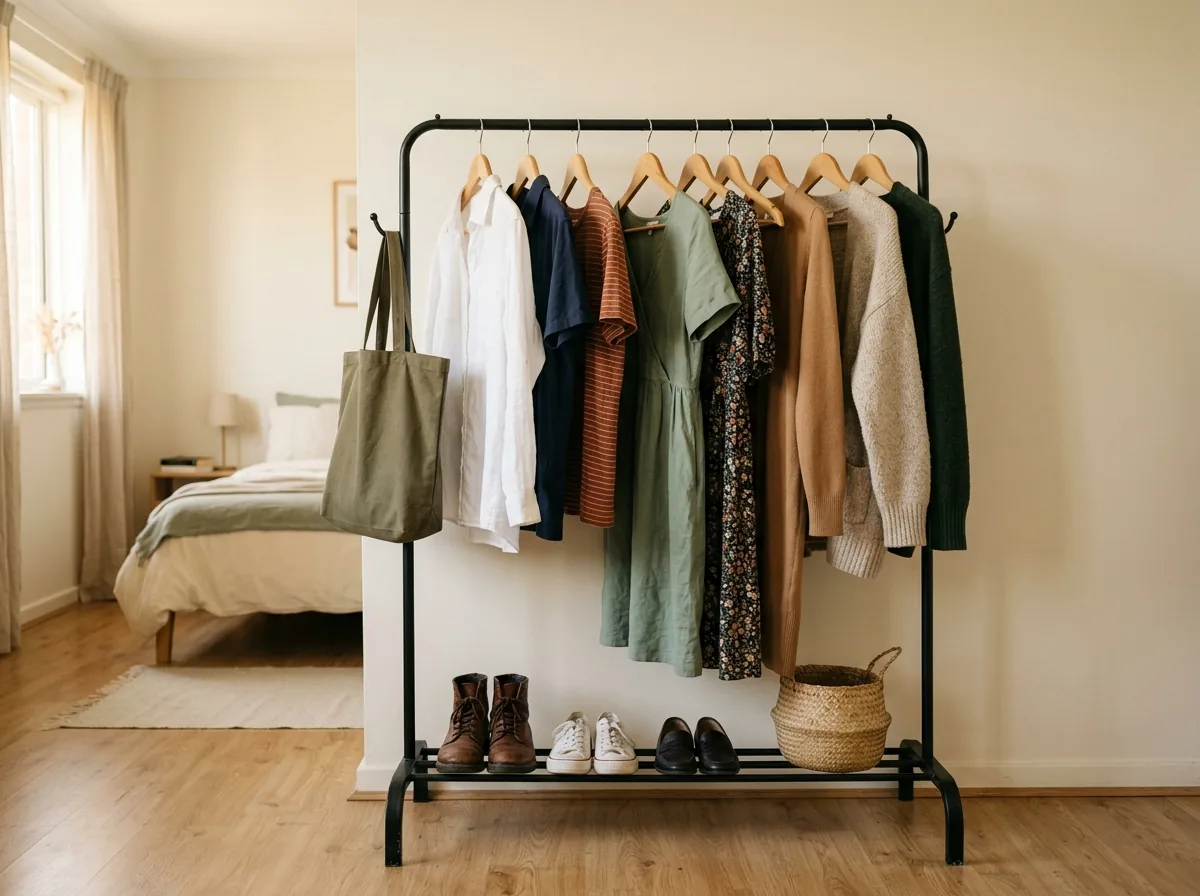
15. Set Up a Garment Rack as a Closet-Free Wardrobe
No closet, or one the size of a coffin? A garment rack is a wardrobe that clips together and screws nothing into the home: a rail for the week’s clothes, a low shelf for shoes, hooks for bags. Respect its weight rating — a sagging rail teaches minimalism the hard way.
Flat Surfaces and Furniture That Hide Storage
Look again at the furniture and doors you already own: half of them are storage waiting to be switched on.
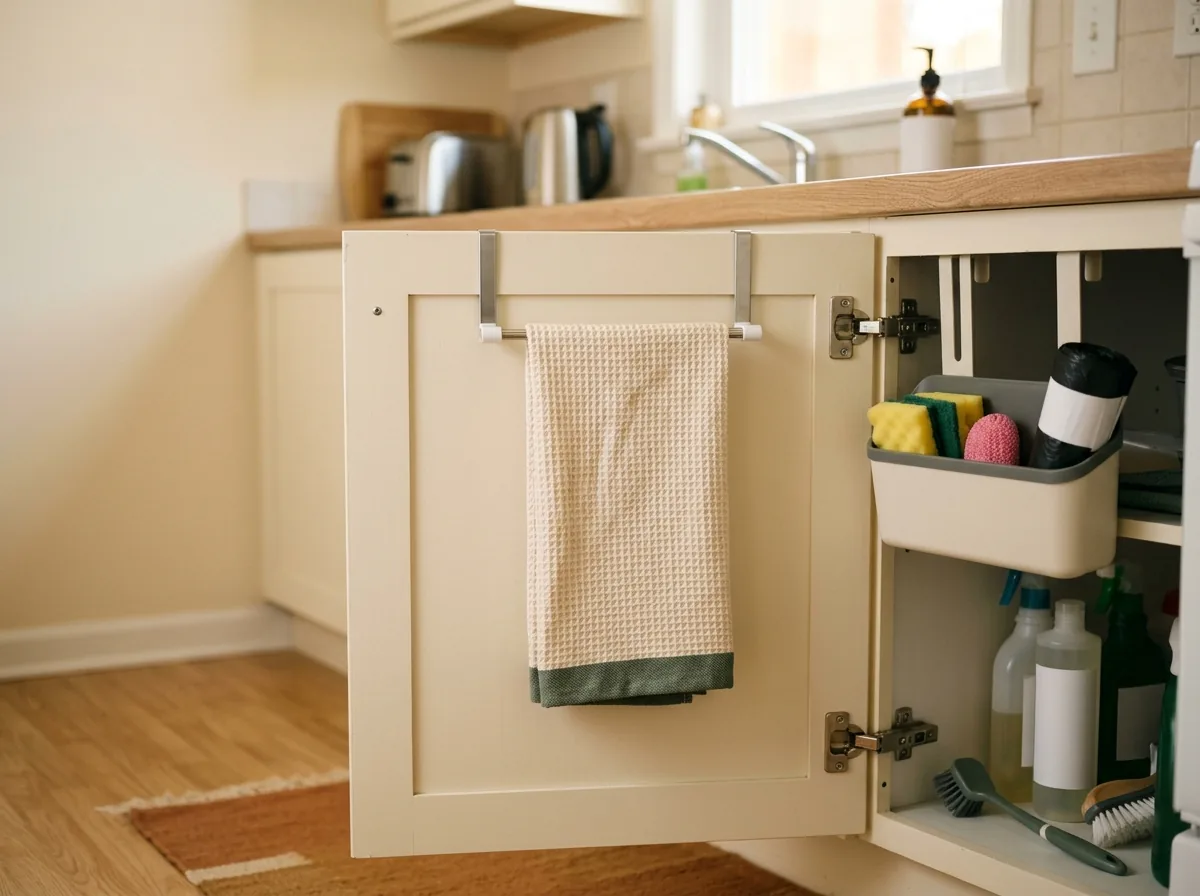
16. Hook Towel Rails and Bins Over Cabinet Doors
Cabinet doors work from both sides. An over-cabinet-door rail puts the tea towel where you use it, while the inside bin catches sponges, wraps and bin bags in the dead space behind the door. Both hook on in seconds and lift off without a mark; felt backing keeps the finish safe.
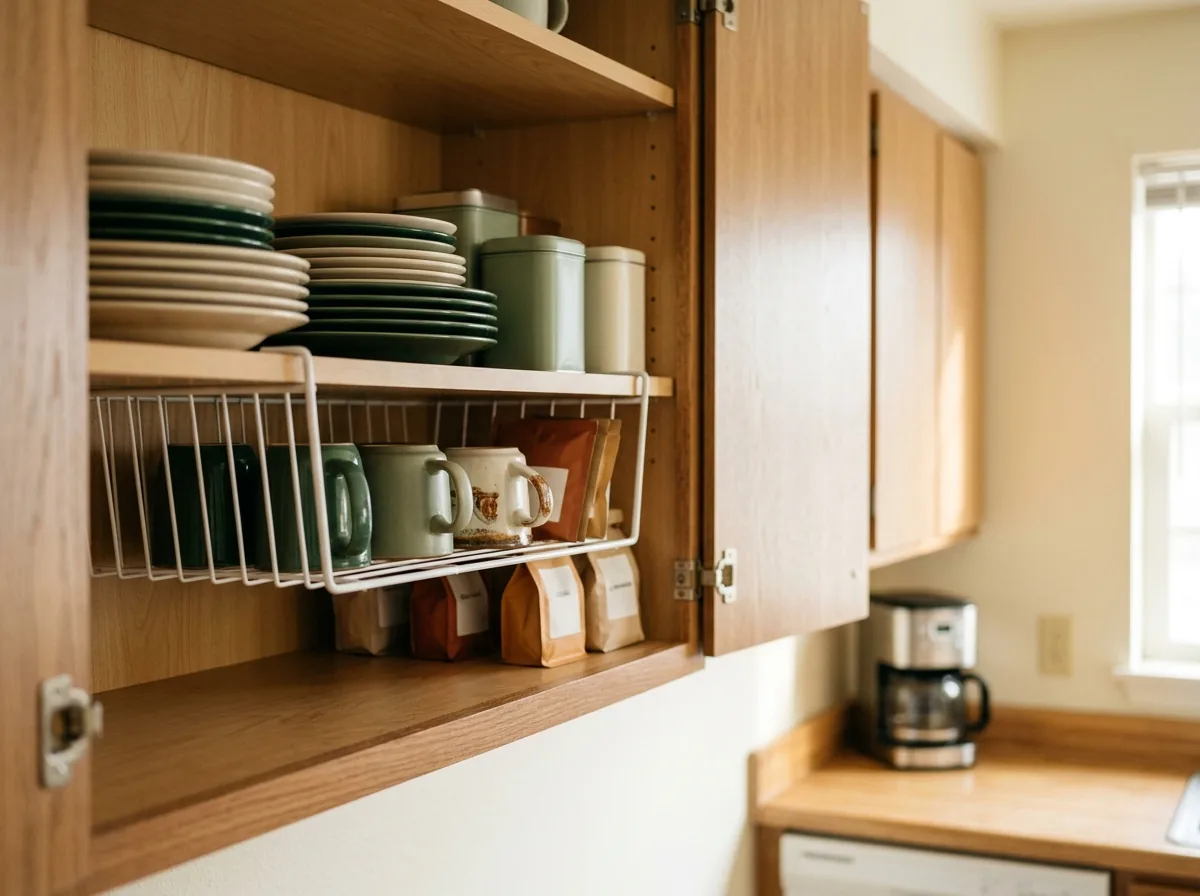
17. Clip Under-Shelf Baskets Onto Cupboard Shelves
An under-shelf basket slides onto a cupboard shelf and doubles it: mugs and wraps below, plates and tins above. No screws, no adhesive — the shelf’s edge does the holding. Check the grip width against your shelf thickness first. One shallow cupboard gains a second shelf.
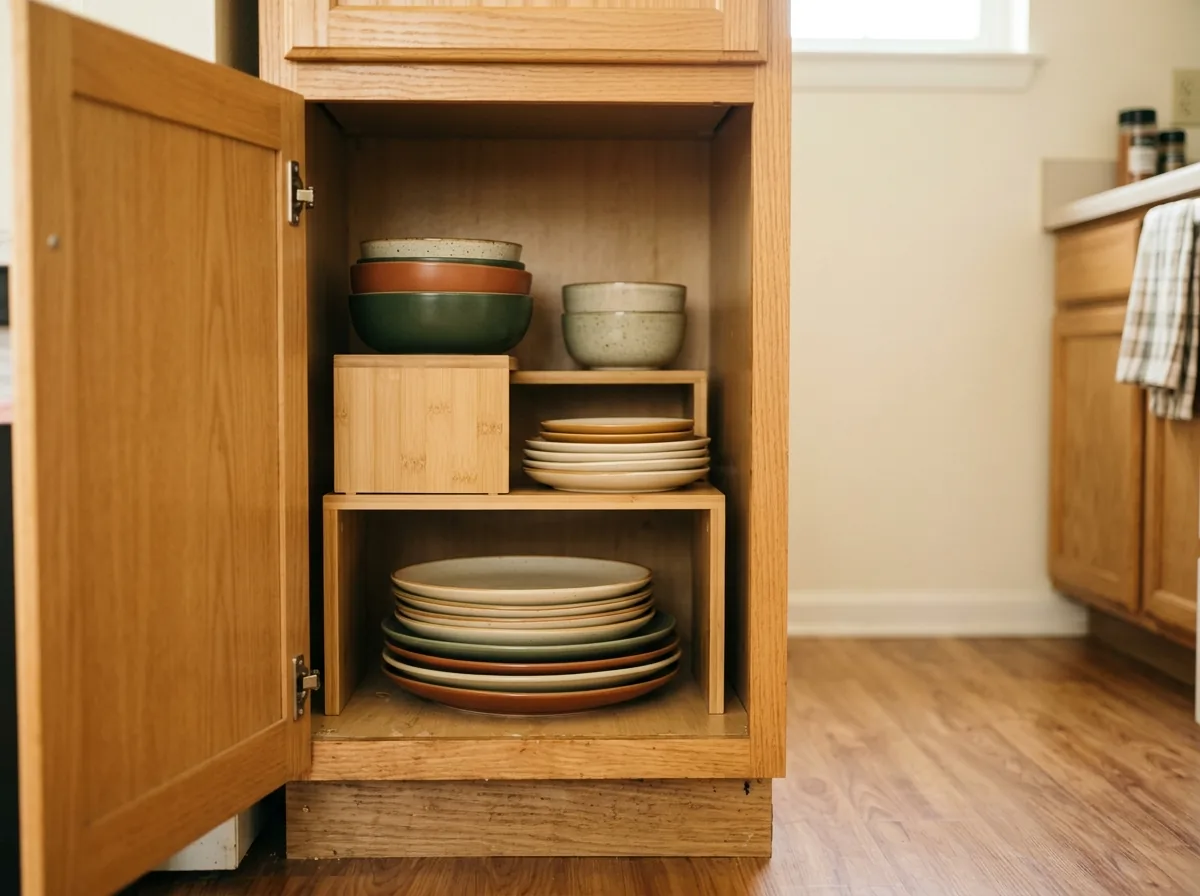
18. Stack Cupboard Risers to Make Two Levels From One
Risers — small freestanding shelves that stand inside a cupboard — turn one tall, wasted shelf into two levels: plates below, bowls above, everything visible. Tool-free, and they fold flat when you move. Measure cupboard depth and your tallest item first: a riser that does not fit is clutter with good intentions.
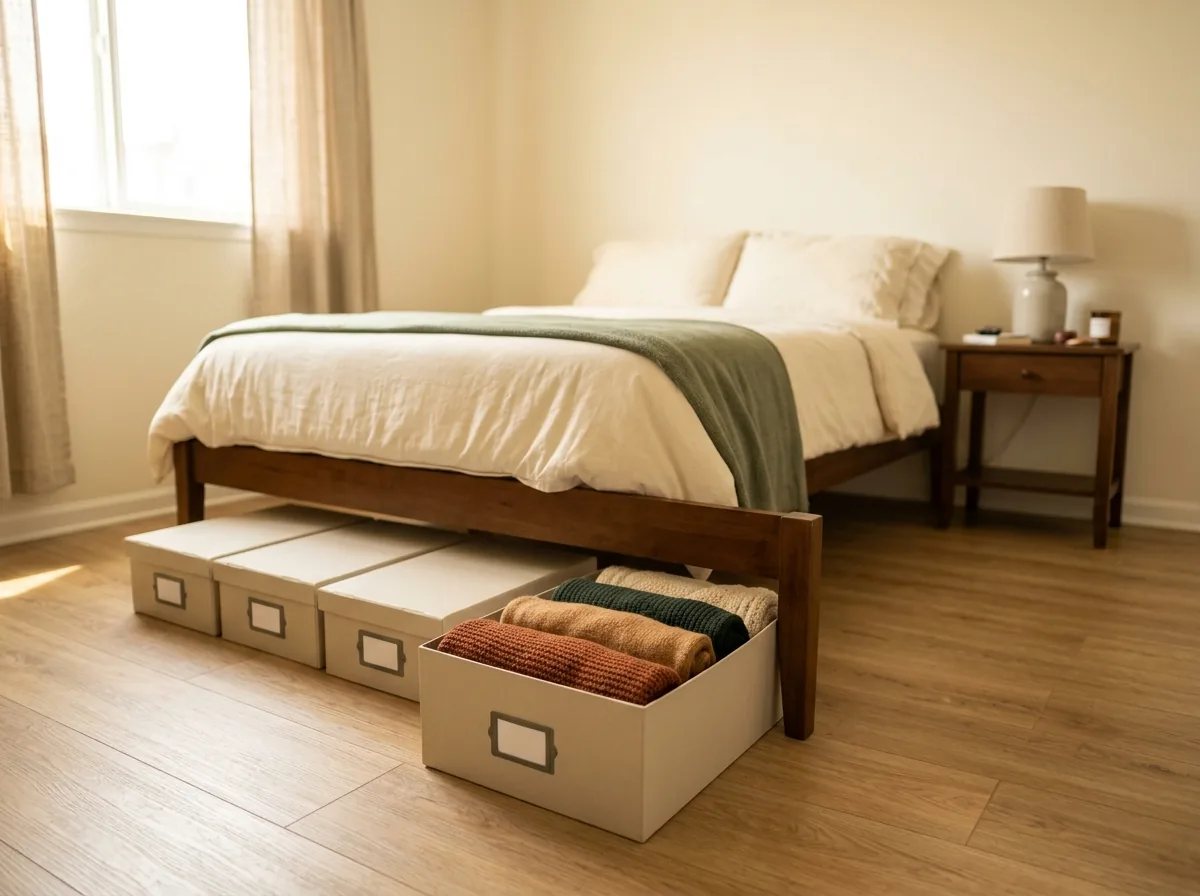
19. Claim the Under-Bed Flatlands
The space under your bed is the largest storage shelf in the rental, already paid for. Low lidded boxes slide in for off-season clothes, spare bedding and the decor rotation — the same flat, labelled system we use for Christmas decor storage in one closet. It all slides out on move-out day; label the ends facing out.
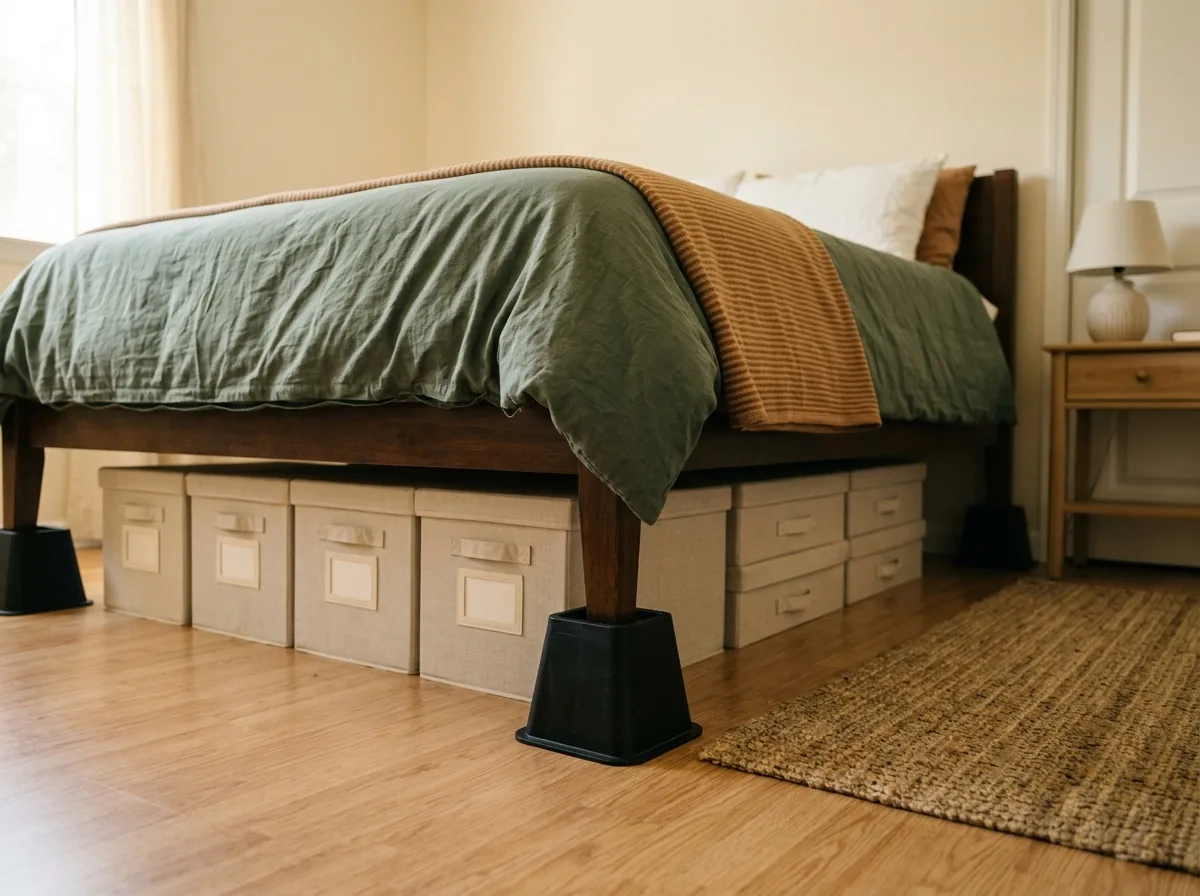
20. Lift Furniture on Risers to Create Storage Height
Bed and sofa risers add four to six inches of lift — converting “nothing fits under there” into a full row of storage boxes. Use a rated set on all four legs and check the furniture feels rock-solid. The cheapest extra cupboard a renter can buy, it leaves no mark and packs into a shoebox.
Light and Finishing Touches That Leave No Trace
The last layer makes a rental feel owned, not borrowed — and every bit of it peels, unhooks or lifts away.
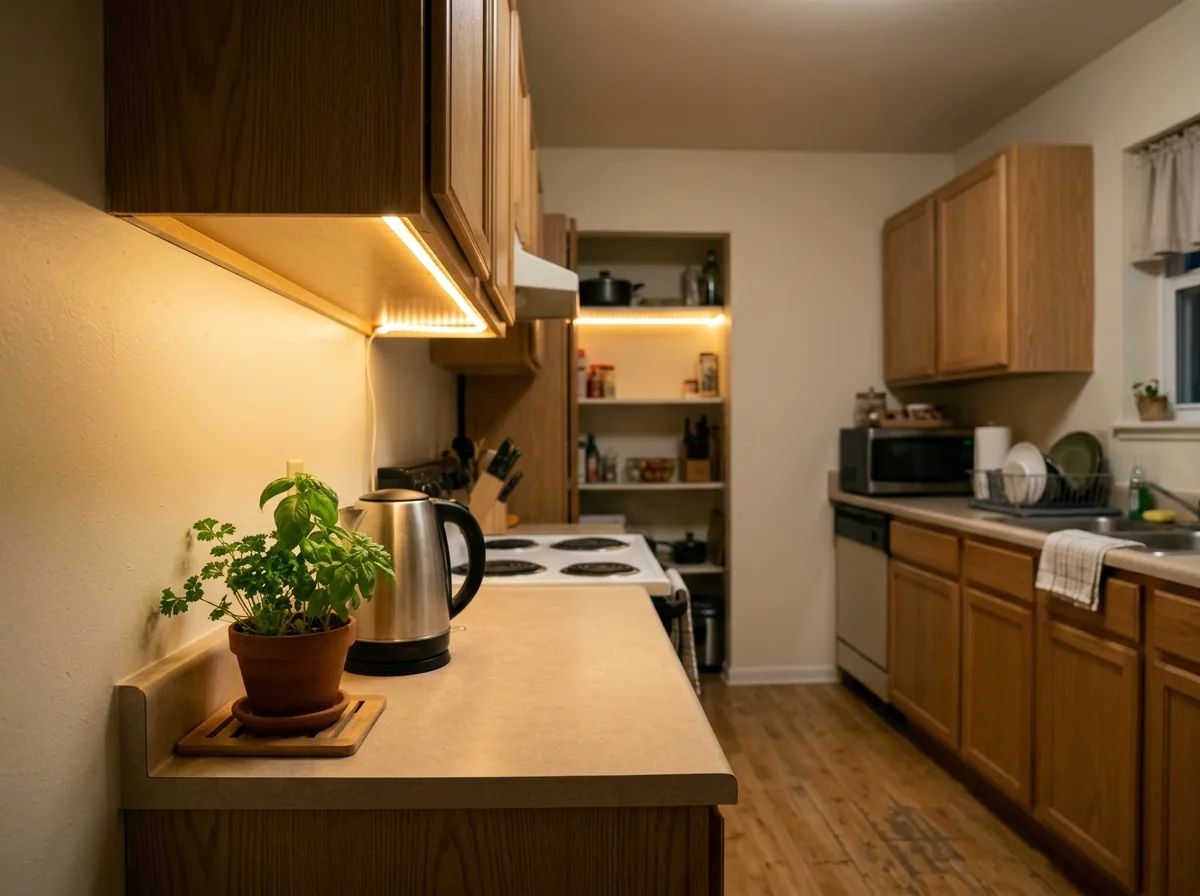
21. Run Battery LED Strips Wherever the Home Is Dark
The closet-lighting trick, scaled to the whole home: USB-rechargeable LED strips under cabinets, along shelf edges, inside the pantry and down a dark hallway. No wiring, no electrician — motion-sensor versions light up as you arrive. To protect paint, choose strips on removable tape or clip mounts, not raw adhesive foam. One charge lasts weeks; dark corners stop being dead storage.
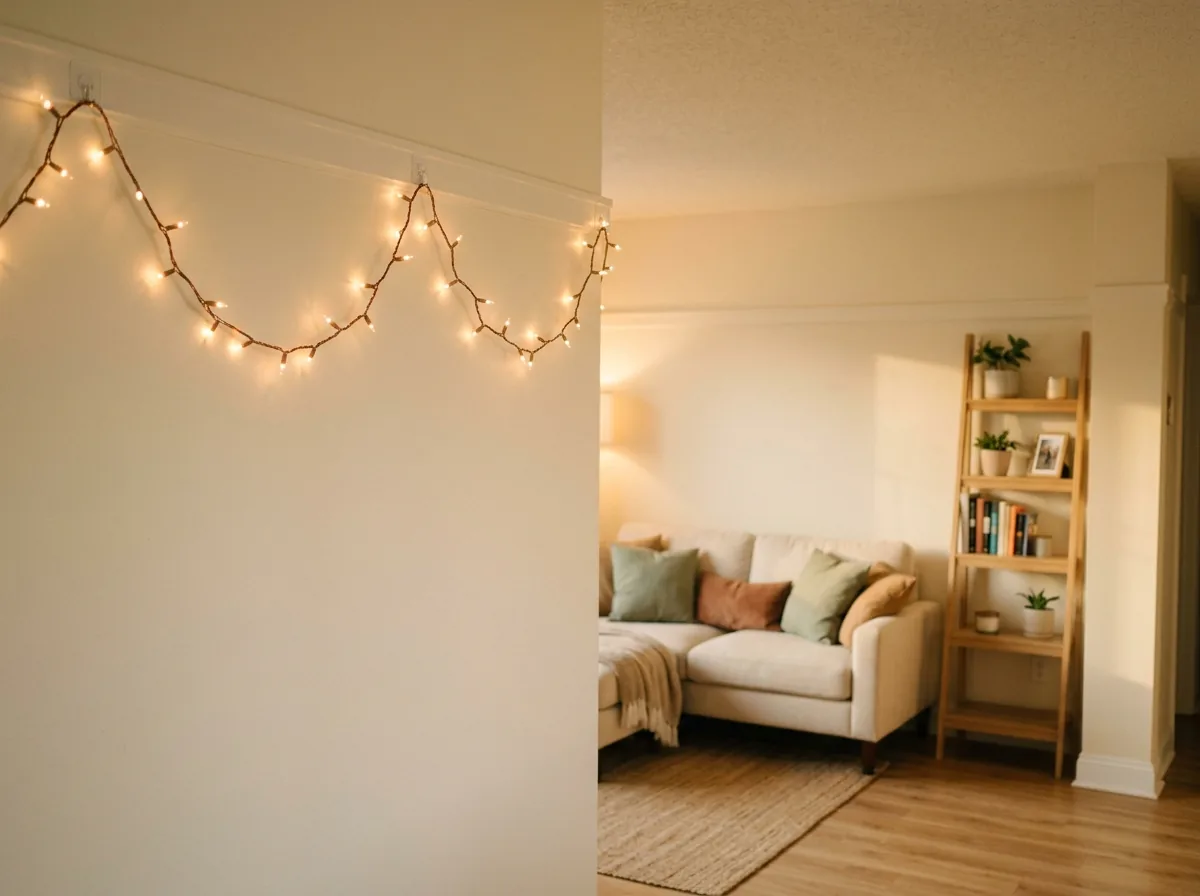
22. String Fairy Lights on Removable Mini Hooks
A rental can have the layered light of a home that is staying. Tiny clear adhesive hooks — the kind sold for holiday lights — run along a ceiling edge or shelf line, hold fairy lights and garlands, then pull-tab off without a mark. Space them about every 30 cm so cords drape in gentle swags.
23. Hang a Full-Length Mirror Over the Door
A mirror is the small rental’s best light trick — it doubles daylight and makes rooms read bigger — and the over-door version needs no wall. It hooks over the bedroom or bathroom door, sits flat on felt pads, and lifts off in seconds. Check the door closes freely, and face it toward a window for borrowed light.

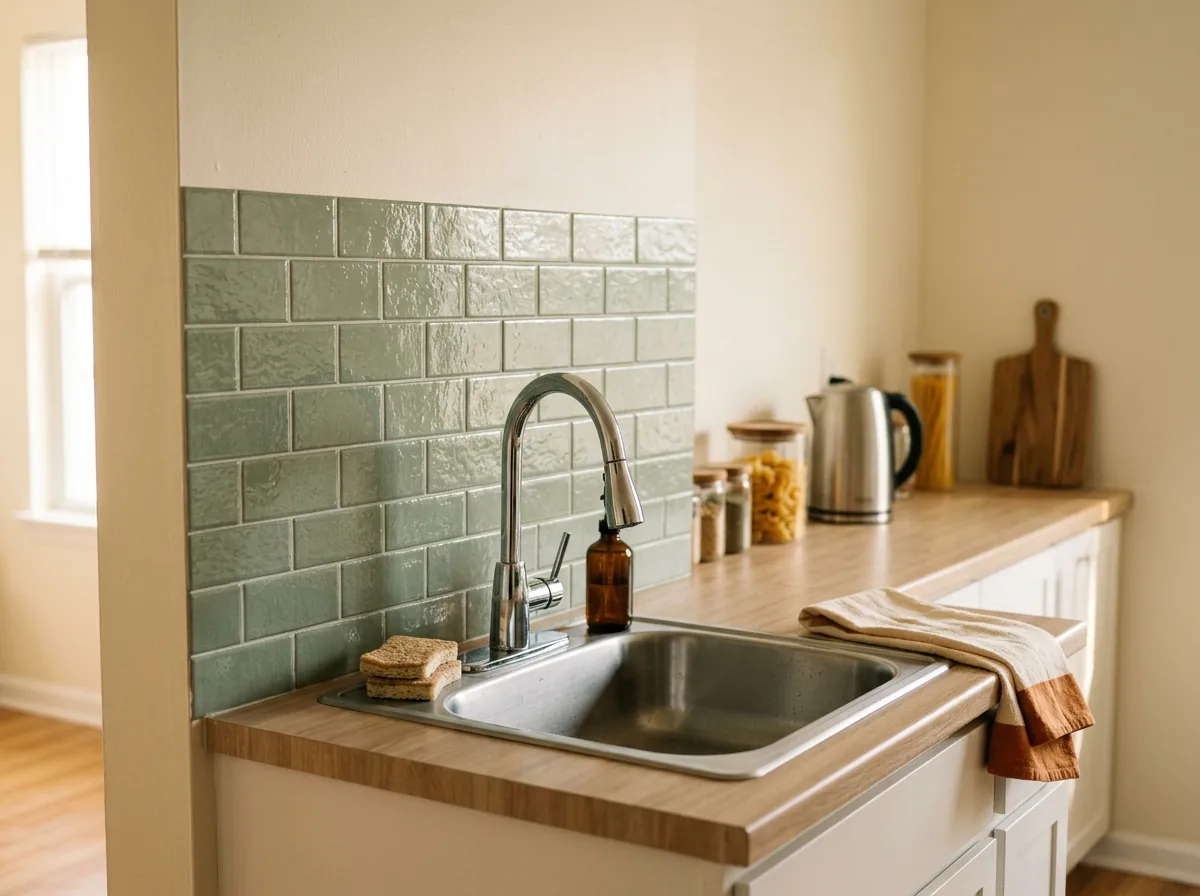
24. Lay Peel-and-Stick Tiles as a Wipeable Splashback
Rental kitchens usually ban the thing they need most: a wipeable splashback. Peel-and-stick gel tiles press onto the surface behind the sink or hob and turn a stained wall into a clean zone that looks tiled. Fit them carefully, and keep the packet’s stated distance from open flame — happiest behind sinks and induction hobs. To remove, warm each tile with a hairdryer and peel slowly.
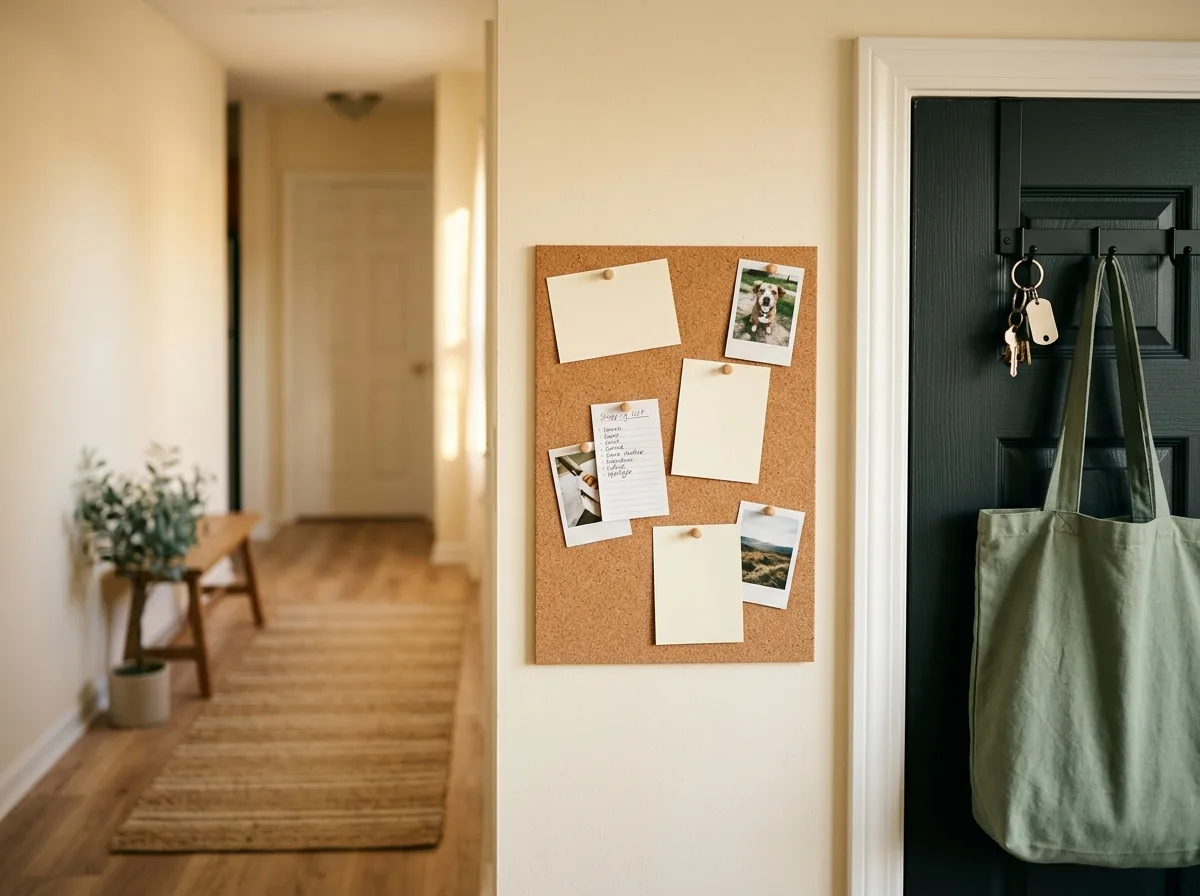
25. Stick Up a Peel-and-Stick Memo Board by the Door
Every organized rental needs a brain by the door, and a peel-and-stick cork or felt board is one that leaves no holes: lists, the week’s plan, the post that must not be forgotten. Press it up beside the entry hooks. Peel slowly from one corner when you leave — hairdryer warmth helps stubborn boards let go.
The Deposit-Safe Checklist
Tape it inside a cupboard door — and run the second half on move-out day:
- Lease checked first: adhesive, tension and freestanding only — no screws anywhere
- Every adhesive patch-tested for 24 hours and loaded within its packet rating
- Felt pads under every over-door hook and rack
- Tension rods snug, loaded evenly, re-checked after a week
- Everything labelled, so the system survives daily use
On move-out day:
- Pull tabs pulled slowly straight down, never out — strips release without paint
- Residue rolled off with a thumb or warmed and wiped — no solvents
- Tension rods twisted down, over-door gear lifted off, freestanding pieces out
- The 10-minute landlord walkthrough: scan each room’s walls from the doorway, at eye level, in daylight — if you cannot see it, neither can the landlord
Frequently Asked Questions
Will adhesive hooks really hold — and will they take the paint off?
Quality strips hold their rated weight if you prep and wait: clean with rubbing alcohol, press firmly, cure the full packet time — usually 24 hours — before loading. Damage happens at removal: pull the tab slowly straight down and it releases cleanly; pull it outwards like a nail and it can take paint. Patch-test first.
My lease bans adhesive strips too. What is left?
Plenty — most of this list. Tension (Ideas 6–10) grips between surfaces. Over-door systems (Ideas 1, 2, 16, 23) hang. Freestanding storage (Ideas 11–15) stands on the floor. Magnets and suction (Ideas 5, 8) cling to steel and tile. A strict lease rules out one install family out of five.
How much weight can tension rods and over-door hooks actually hold?
Less than the photos suggest. A closet tension rod typically carries a rail of shirts and trousers — roughly 10–15 kg spread evenly — before it bows; an over-door hook row suits coats and towels, not a week of wet laundry on one hook. Spread loads and keep heavy things low.
Can I organize a rental kitchen and bathroom with no drilling at all?
Yes. Kitchen: magnetic fridge-side storage (Idea 5), over-cabinet-door rails and bins (Idea 16), under-shelf baskets and risers (Ideas 17–18), a rolling-cart pantry (Idea 12), a peel-and-stick splashback (Idea 24). Bathroom: over-door pockets (Idea 2), a tension-pole shower caddy (Idea 8), a freestanding over-toilet rack (Idea 13), LED strips (Idea 21). Nothing drilled, everything removable.
How do I make sure I get my full deposit back?
Work backwards from the walkthrough. Photograph every wall and door on move-in day, before installing anything. On move-out day, follow the checklist order, roll off residue with a warm thumb, and do the doorway scan in daylight. If a hook lifts a paint flake, a dab of matching paint — most rentals are one standard shade — fixes it before inspection.
Conclusion
A lease can ban holes; it cannot ban systems. Hang it over the door, stick it with pull tabs, wedge it with tension, stand it on the floor, cling it to the fridge — and a rental organizes as well as a house you own, deposit untouched.
Build the rest of the renter’s toolkit too: the pillar guide 31 Small Space Organization Ideas That Make Every Room Feel Bigger, the closet system in 19 Small Closet Organization Ideas for a Seasonal Wardrobe Swap, the overflow system in 21 Christmas Decor Storage Ideas for Apartments With One Closet, and the traps in 31 Small Space Organization Mistakes That Make Your Home Feel Smaller.
Save this on Pinterest — your future self, deposit in hand, will thank you. Follow HomiBloom for simple ideas to make your home bloom.
One Comment