17 Small Home Office & Study Corner Ideas for Apartments That Work From Home
Introduction
The kitchen-table office has one fatal flaw: work has to be cleared away before dinner, and it lands in a pile that follows you everywhere. A spare room would fix it — but a spare room is what a small apartment does not have.
You do not need one. You need a claimed corner and a system: a desk that can disappear, storage that climbs the wall, and a shutdown ritual that hands the room back every evening. These 17 ideas work in corners, closets, landings and shared rooms — budget-first, renter-realistic, built so work can vanish at 5pm. Small homes are shared homes; a good office knows when to leave.
Claim the Spot
A home office starts as a land claim, not a purchase. Every home has a corner, a closet or a landing that is storing nothing but potential.
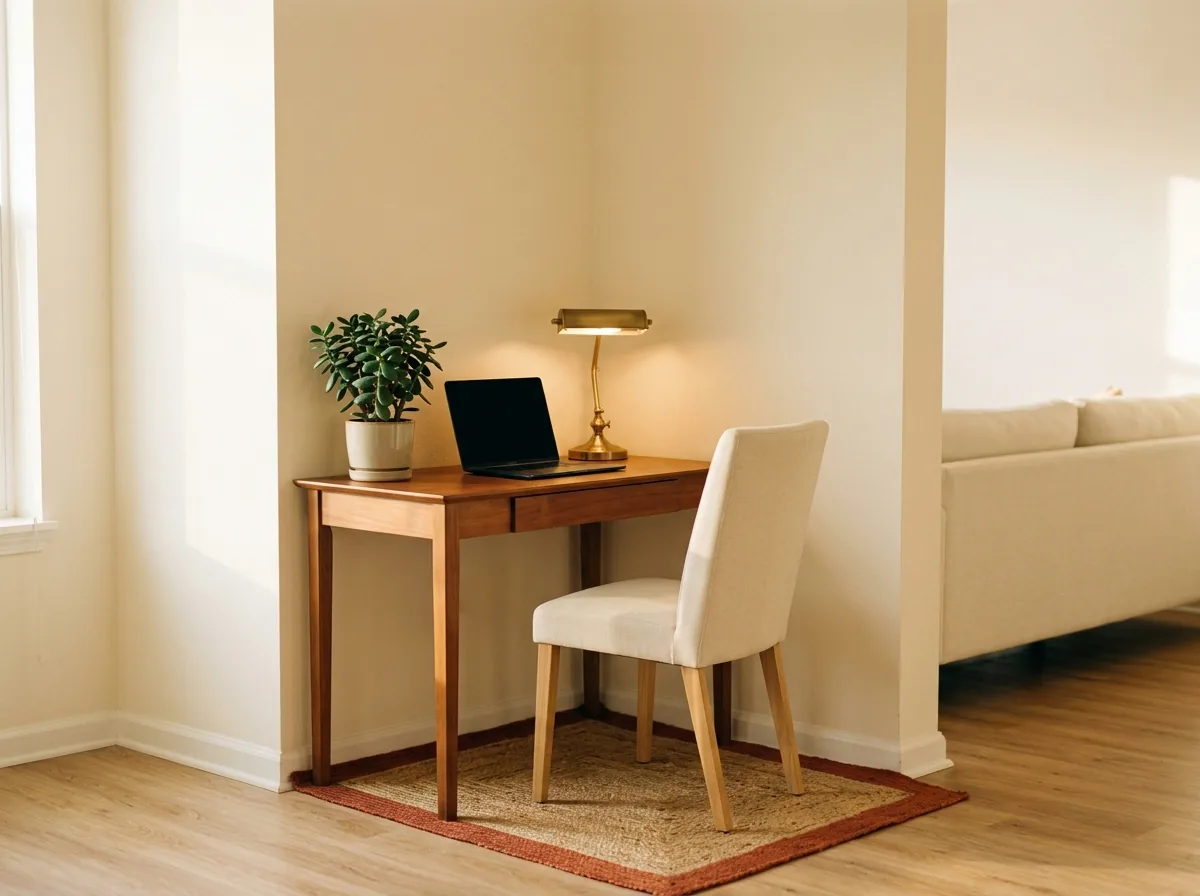
1. Start With the Living Room Corner
The corner where two walls meet is the classic small-office claim: a slim desk tucked in, back to the room, borrowing nothing from anyone. Face it into the corner for focus, or sideways to a window for light. A small rug under the chair marks the border — inside is work, outside is home — and the whole footprint stays under a metre wide.
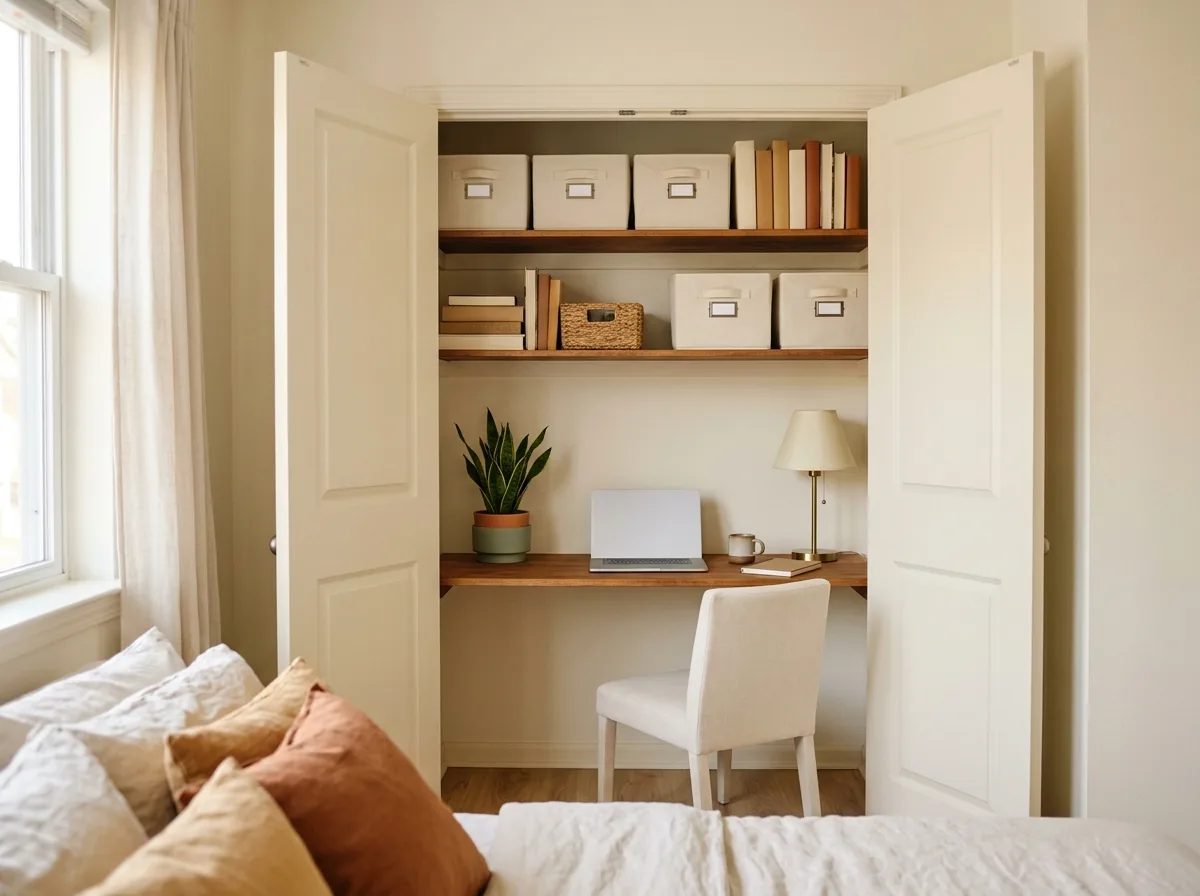
2. Turn a Closet Into a Coffice
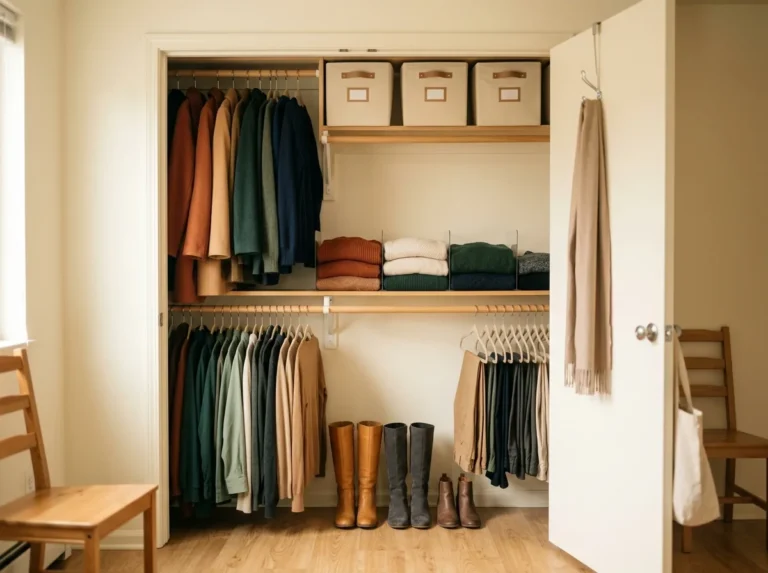
A closet is a home office in disguise. Clear it, set a desk board or slim desk at sitting height inside, run shelves up the back wall, and slide the chair in under the desk at day’s end. Then the magic trick: close the doors — or hang a curtain — and the office ceases to exist. Work stays in the closet; evenings stay in the room. No closet to spare? Idea 1’s corner runs the same system in the open.
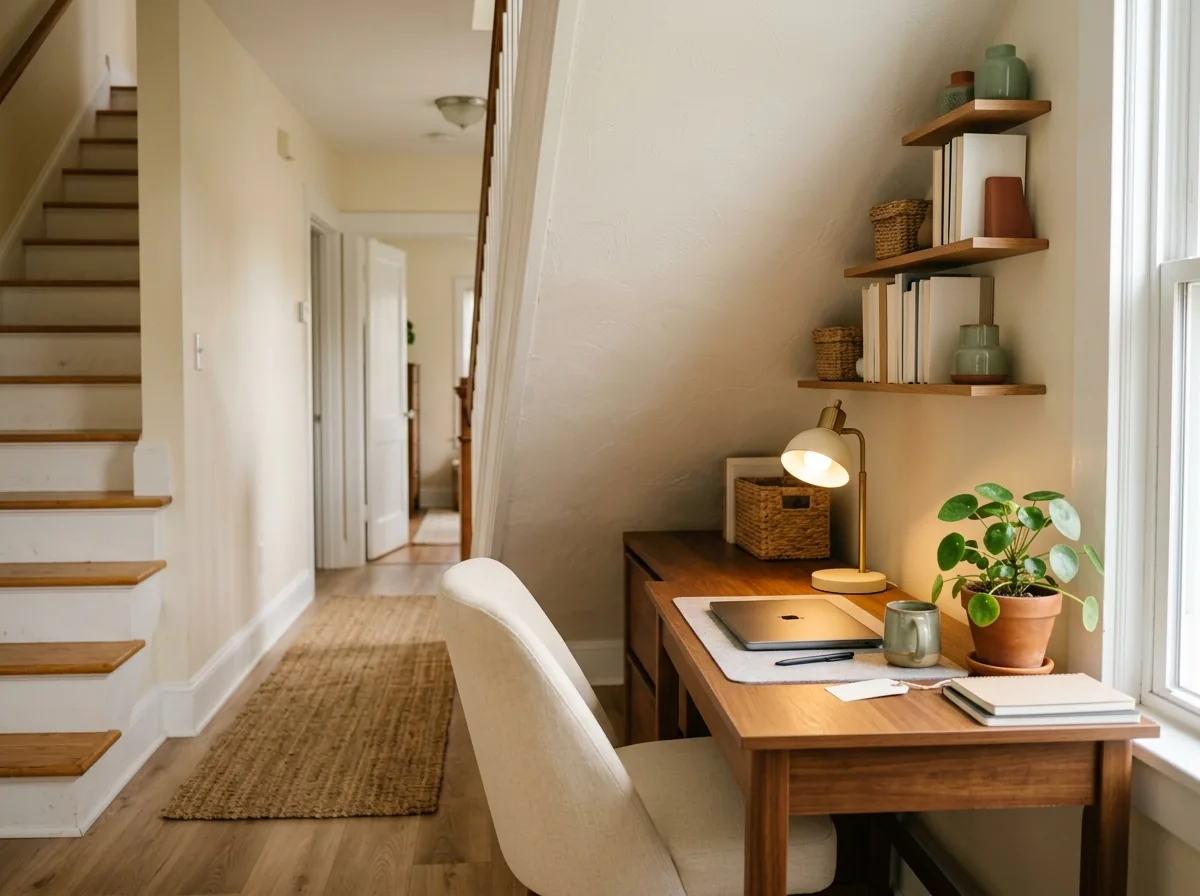
3. Work the Under-Stairs Nook
The triangle under the stairs is dead space with a desk-shaped shadow. Put the desk under the high end where you can sit tall, the chair where the slope drops, and step small shelves down the angle for books and boxes. It is the cosiest seat in the house — enclosed, quiet, out of every walkway — and it costs the home nothing: nothing else was ever going to live there.
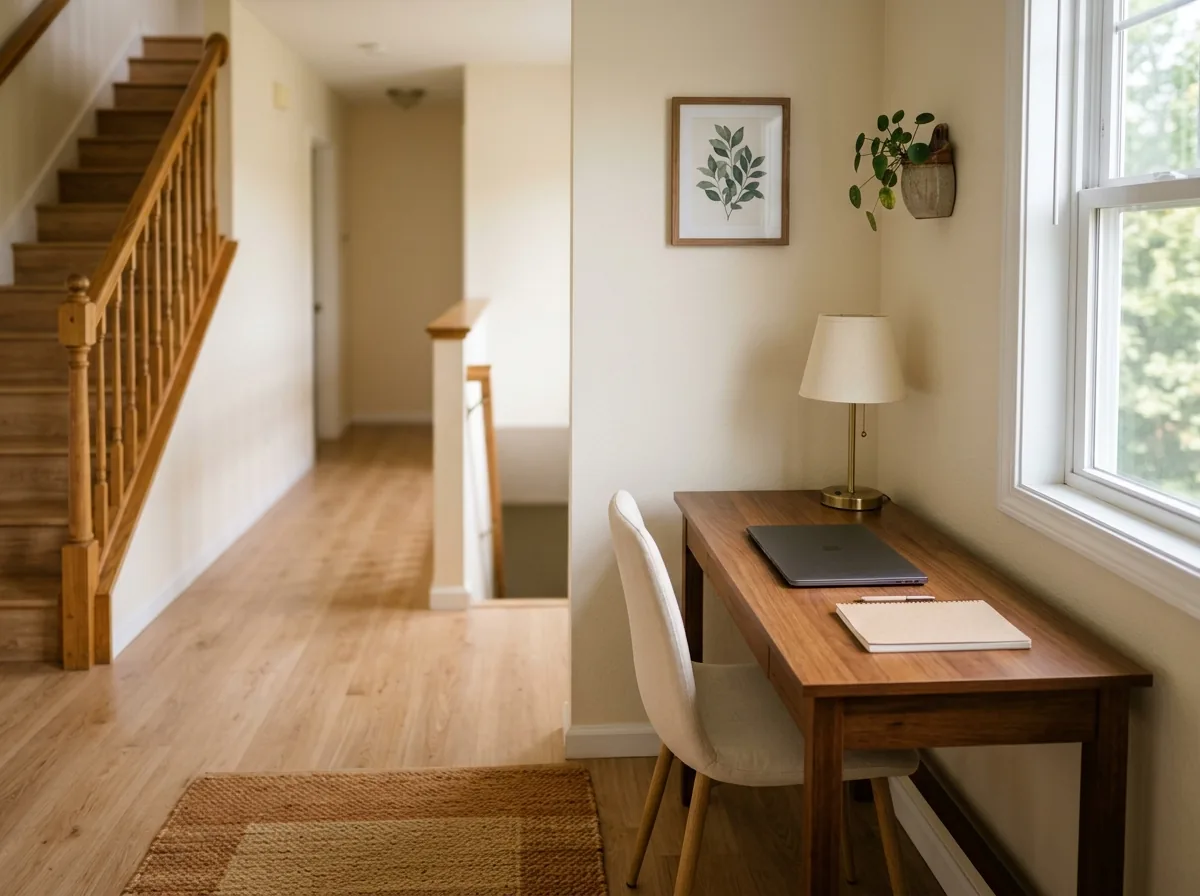
4. Set Up on the Landing
Landings and wide hallway ends are rooms nobody uses — which makes them perfect offices. A slim desk, around 40cm deep, against the landing wall, a chair, a lamp: a complete workstation in space that was only ever walked through. The one rule is the walkway: measure chair pulled out plus a person passing behind it. If both fit, claim it.
5. Give the Bedroom Corner a Curtain
The bedroom corner works — until you are trying to sleep three feet from your inbox. The fix is a boundary you can draw: a curtain on a tension rod across the corner, the same no-drill trick as in our rental-friendly organization ideas that need no drilling. Desk behind it by day; curtain drawn at night, and the office is gone — the bedroom is a bedroom again, and work stops watching you sleep.

Choose a Desk That Can Disappear
In a shared room, the best desk is the one that can stop being a desk. Half the battle is what happens to it at 5pm.
6. Mount a Fold-Down Desk
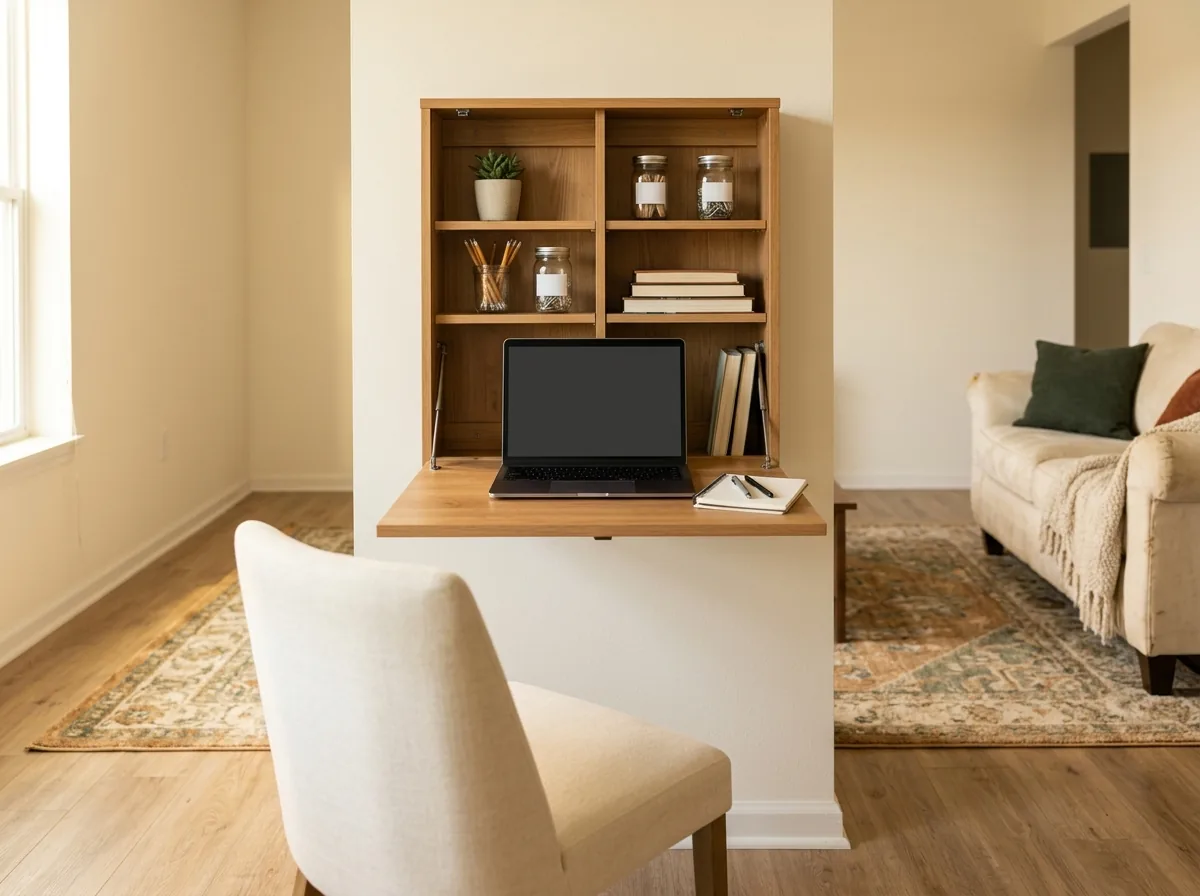
A wall-mounted fold-down desk is a shallow box on the wall until you drop the flap — then it is a full work surface with the laptop, notebook and coffee on it. At 5pm the flap goes up, the chair slides away, and the room is a living room or guest room again, at full size. Owners: fix it into studs or solid wall. Renters: get the landlord’s yes in writing, or take Idea 9 instead.
7. Lean Into a Ladder Desk
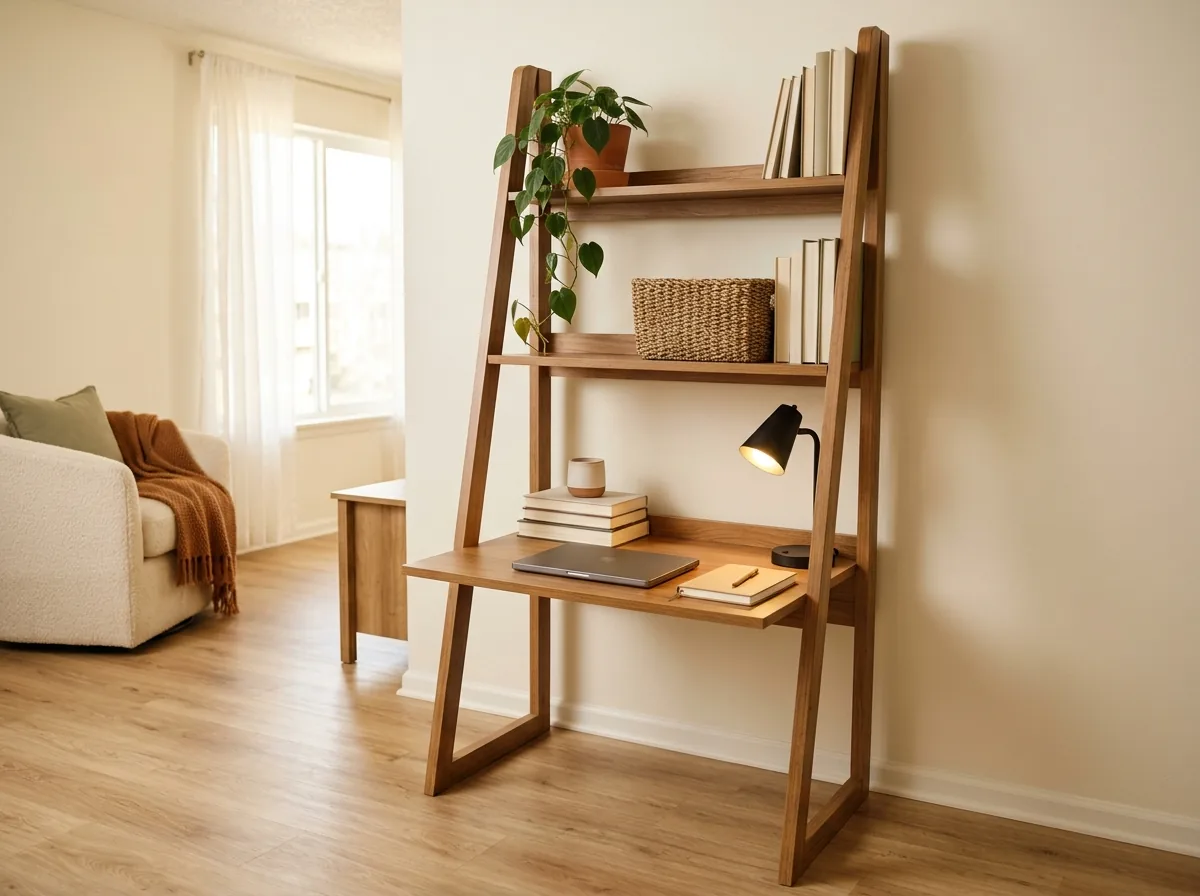
A ladder desk is a desk and a bookcase in one footprint: the work surface at the bottom, shelves climbing above it like rungs. Books, boxes and the printer live on the upper shelves, so the desk surface stays clear enough to use. The freestanding A-frame kind needs no fixing at all — lean it, load it heavy-low, and it walks out with you on moving day.
8. Press a Slim Console Into Service
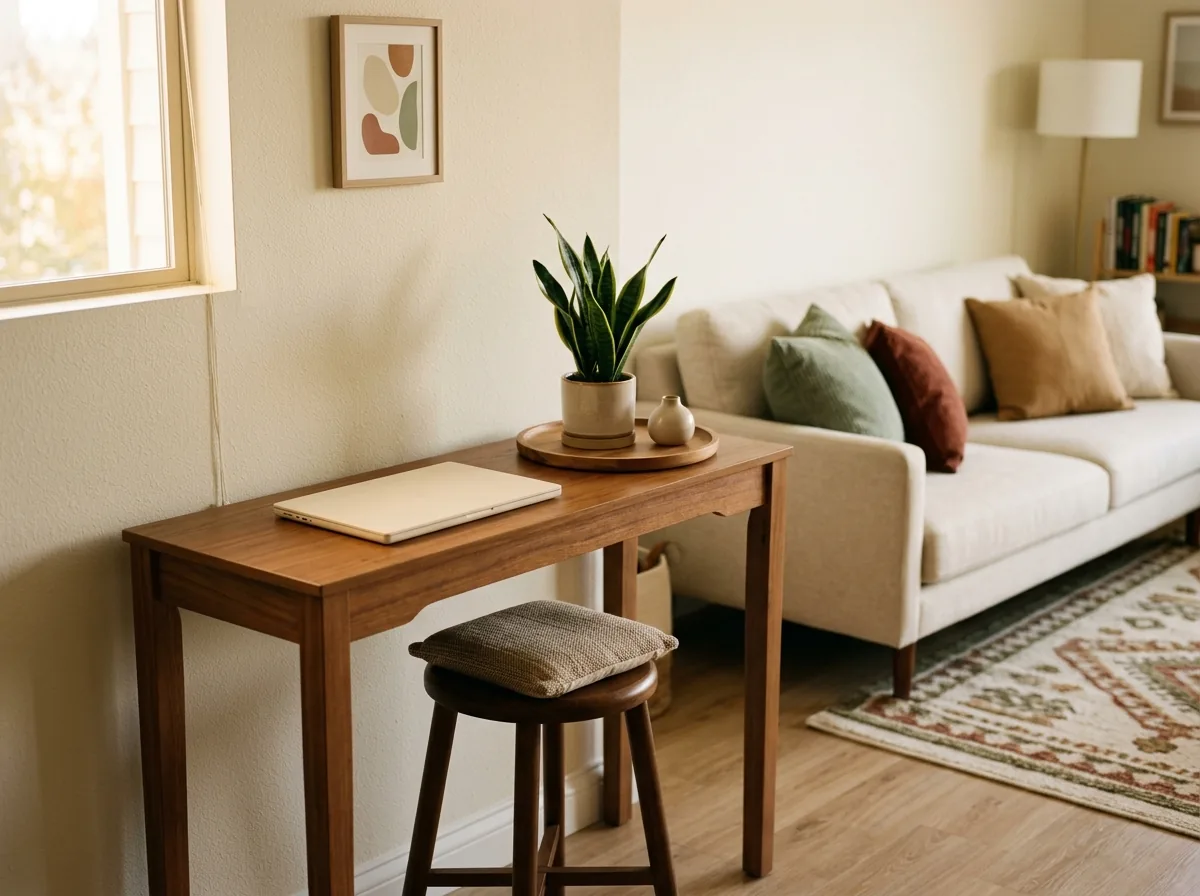
A hallway console table is a desk in disguise. Right height, narrow enough for any wall, and — the real trick — it never looks like an office. Laptop open: workstation. Laptop closed, a tray and a plant on top: pure living-room furniture. Depth is the honest limit, around 30–35cm, which suits laptop work and styles away in two minutes.
9. Close the Day Inside a Secretary Desk
The secretary desk is the original disappearing office: work all day with the flap down, then lift the flap, close the doors, and the entire mess — papers, chargers, the to-do list itself — sits inside a handsome piece of furniture. It is the cousin of our hidden storage ideas: closed, it is furniture; open, it is an office. In a shared room it is the difference between living with work and living beside it.

Send the Storage Up the Wall
A small desk cannot spare surface for storage. Everything work needs has to live on the wall, beside the desk, or under it.
10. Hang a Pegboard or Rail Above the Desk
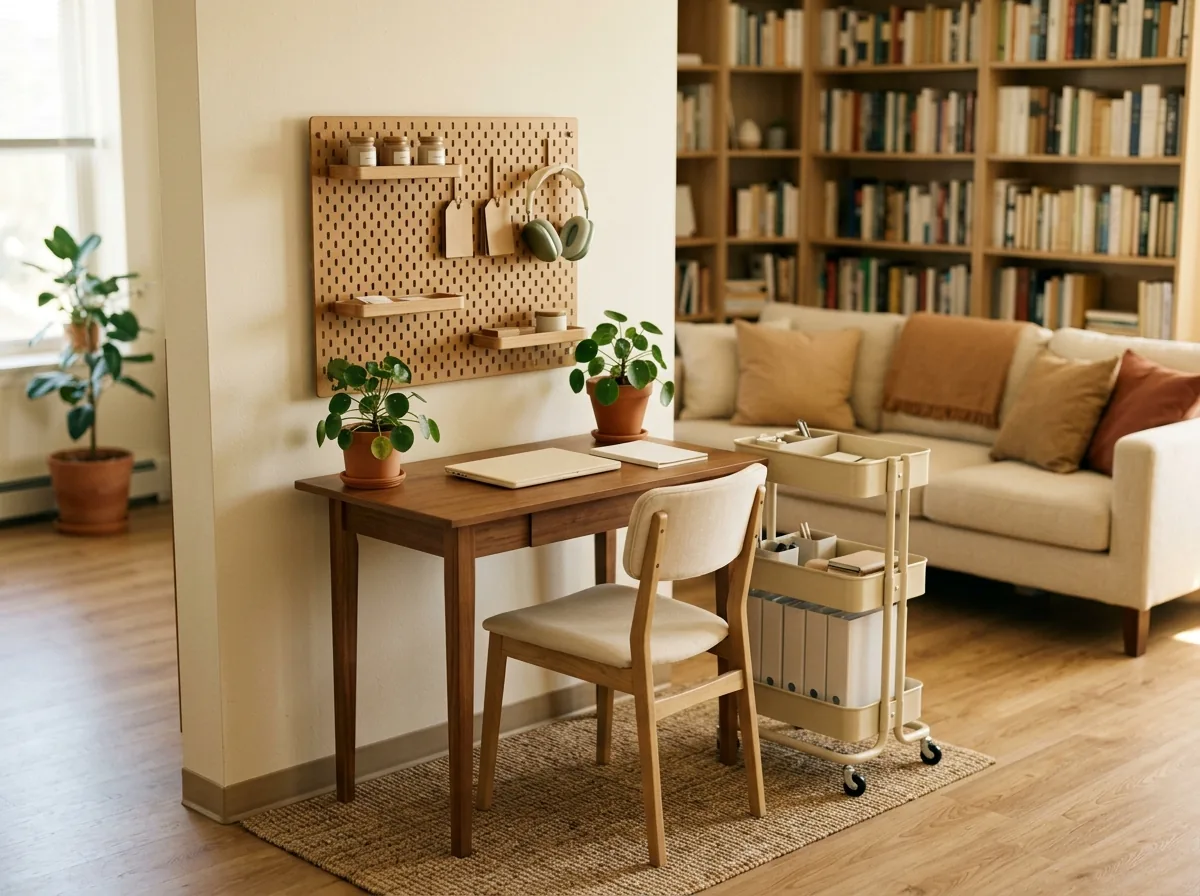
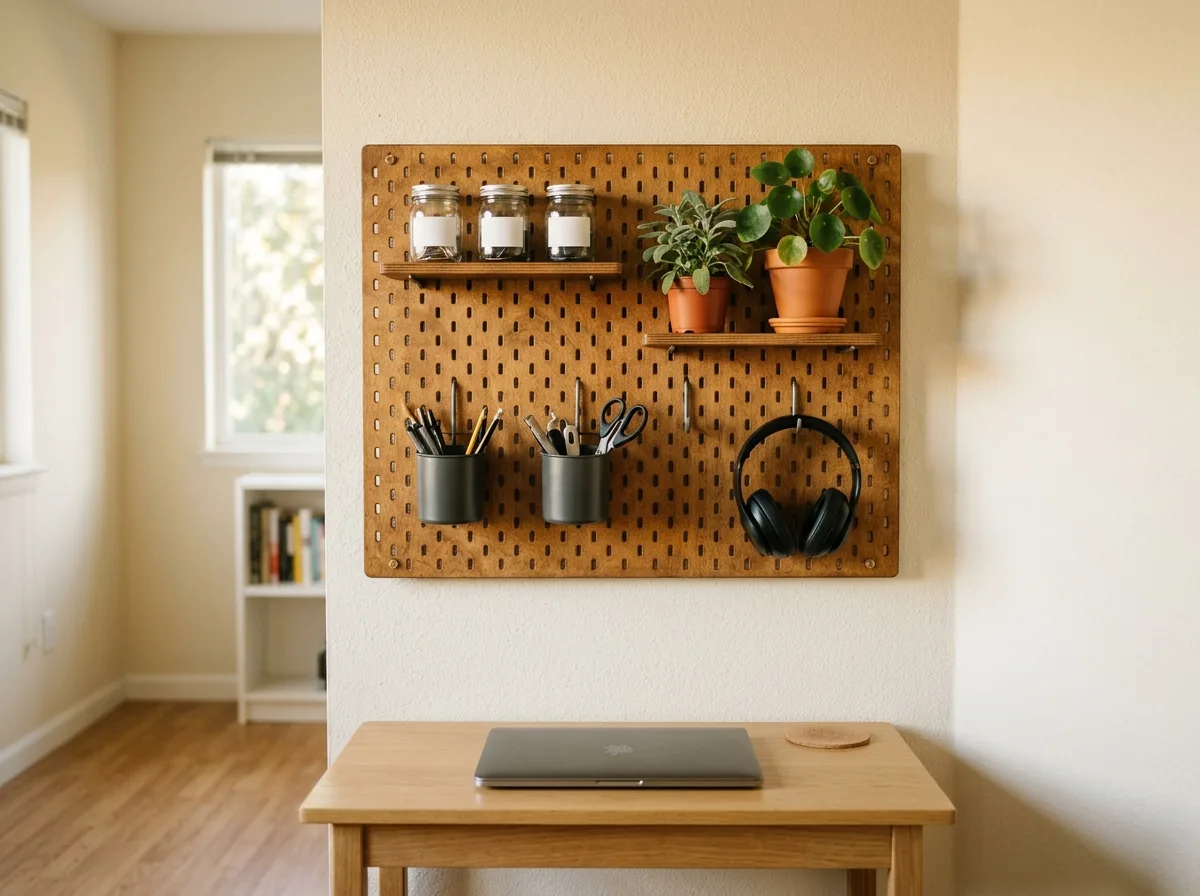
The wall above the desk is your filing cabinet, and a pegboard is its hardest-working form: small shelves, pots for pens, hooks for headphones and scissors, everything visible and nothing on the desk. A rail with S-hooks and hanging cups does it cheaper. Keep the layout loose — a pegboard you can rearrange beats a drawer you have to excavate.
11. Float Two Shelves Over the Workspace
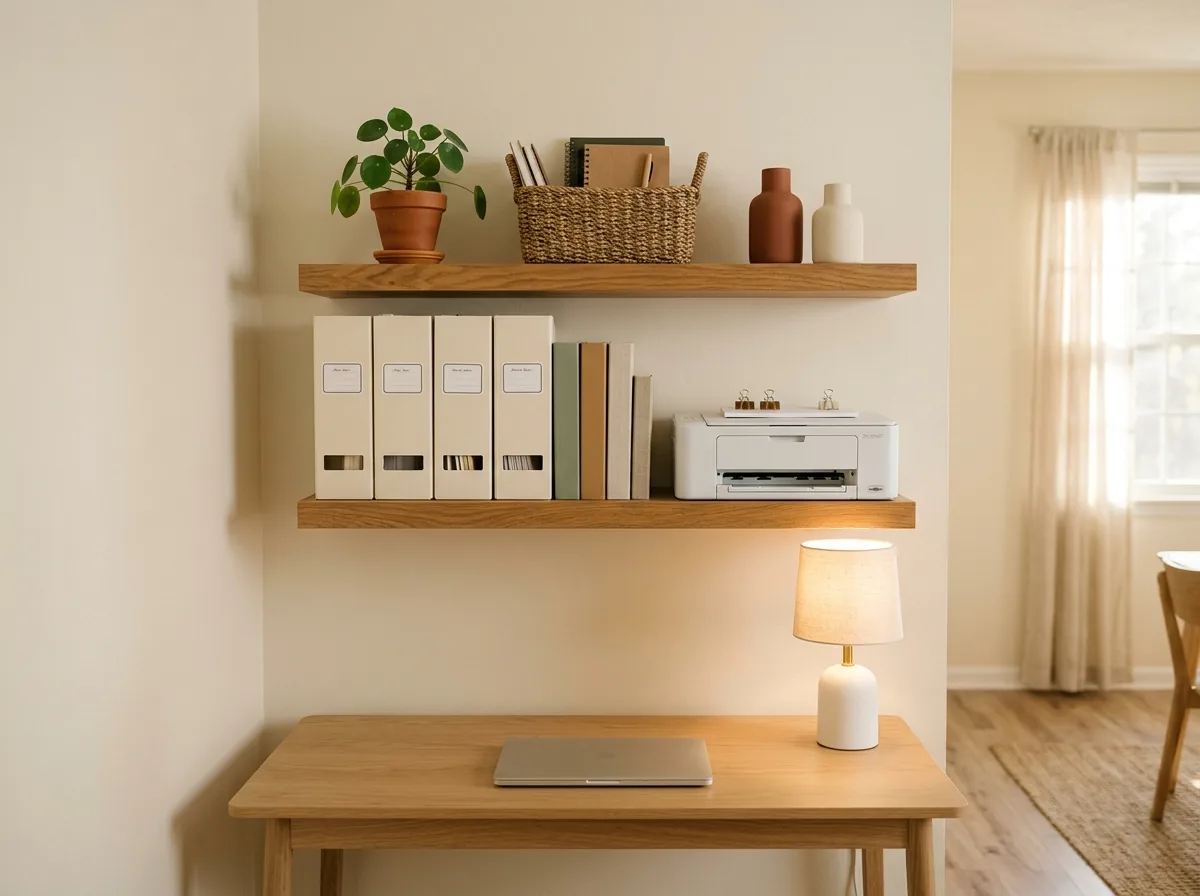
Two floating shelves above the desk hold the heavy, boring layer of office life: box files, the printer, books, a supply box. The rule keeps them calm — work storage on the lower shelf where your hands reach, one plant and something pretty on the upper shelf where the eye lands. The desk stays a work surface; the wall does the storing.
12. Park a Rolling Cart Beside the Desk
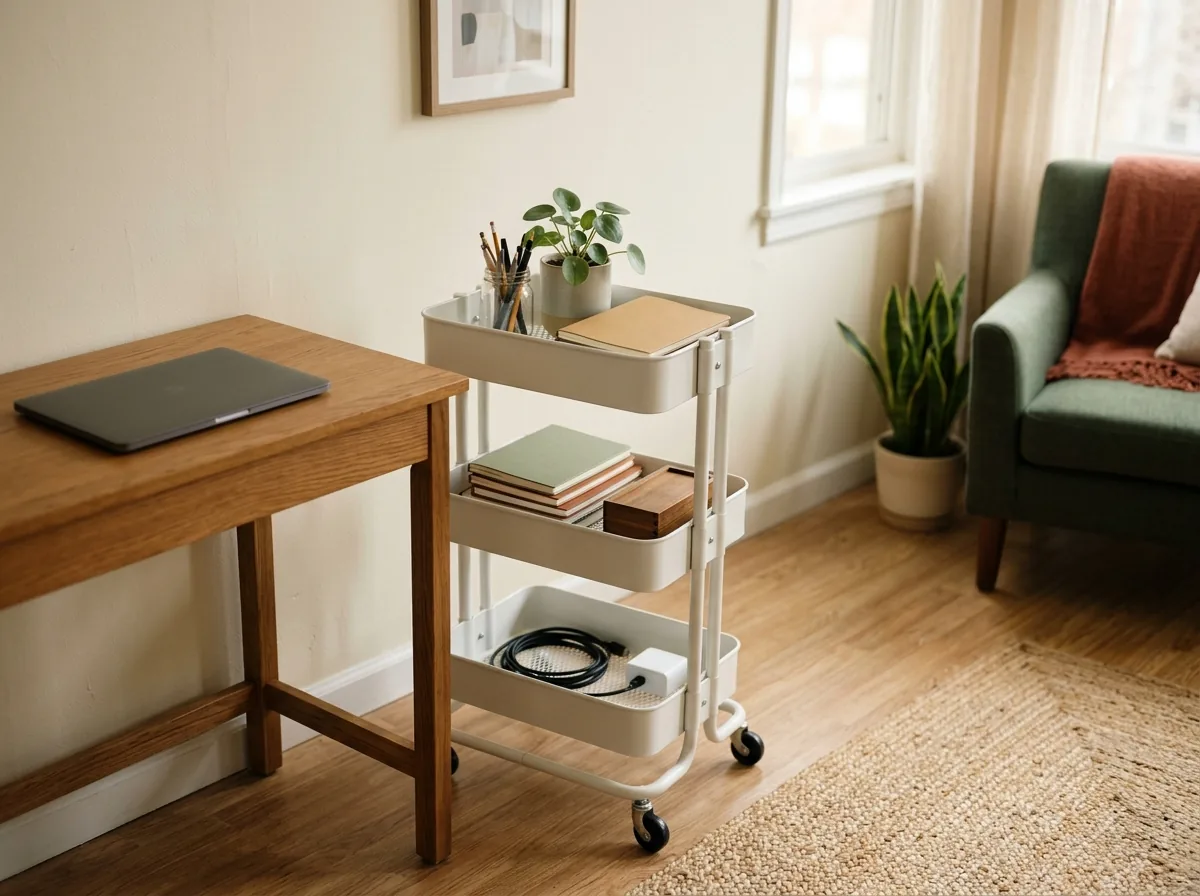
The slim three-tier cart is the office sidecar: supplies, chargers and the current project ride beside the desk in it. Its party trick is the wheels. Guests coming? The office supply department rolls into a closet in twenty seconds. Study shift over? It rolls to the next user. One cart, moved on purpose, beats a desk drawer you do not have.
13. Box Every Cable Under the Desk
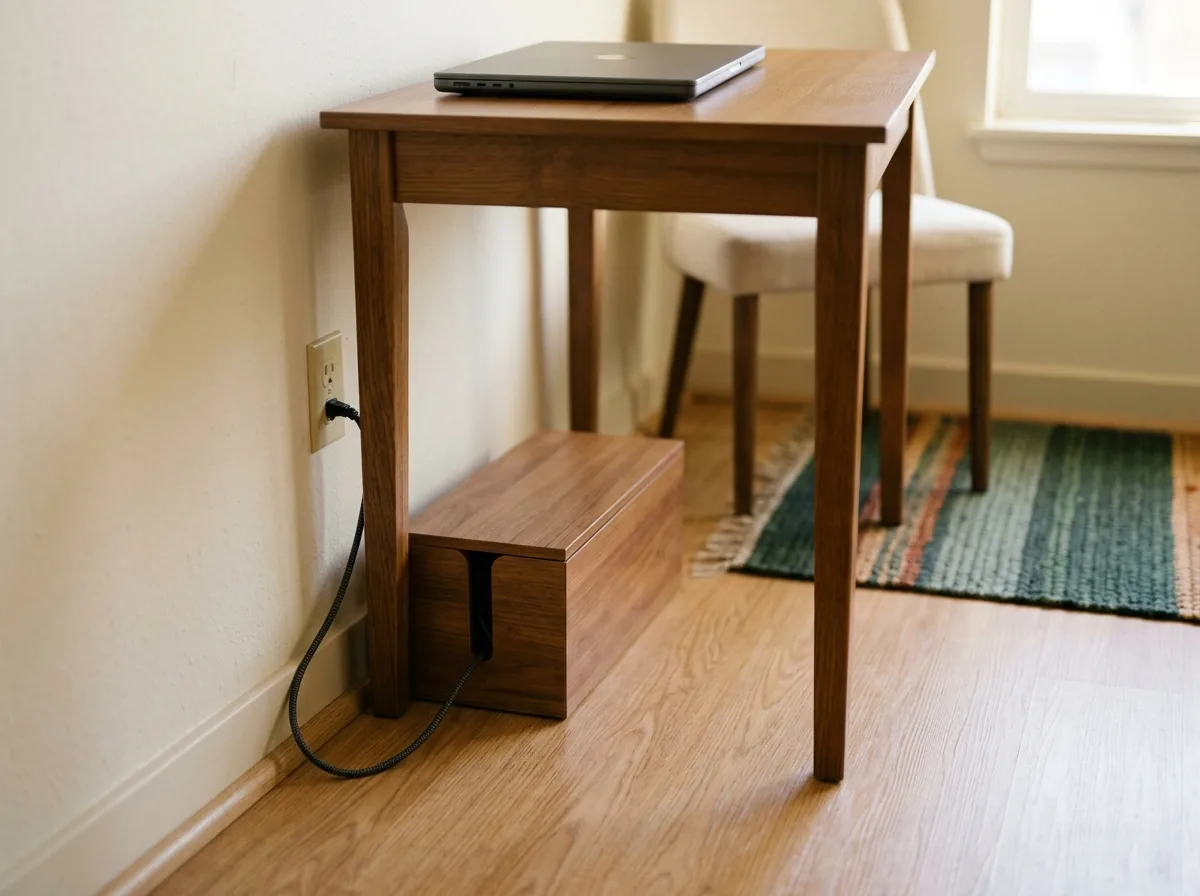
Cables are where small desks go to die. Run the #14 cable rule at desk scale: the power strip and the knot live inside a lidded box under the desk, one lead runs from the box to the wall socket, and chargers stay plugged in inside the box. Desk surface: clear. Floor: clear — your feet have somewhere to be. It is the cheapest calm an office can buy.
Light It, Then Frame It
A corner office lives or dies by two things the desk catalogue never mentions: whether you can see at 6pm, and what your video calls can see all day.
14. Clip On a Battery LED Task Light
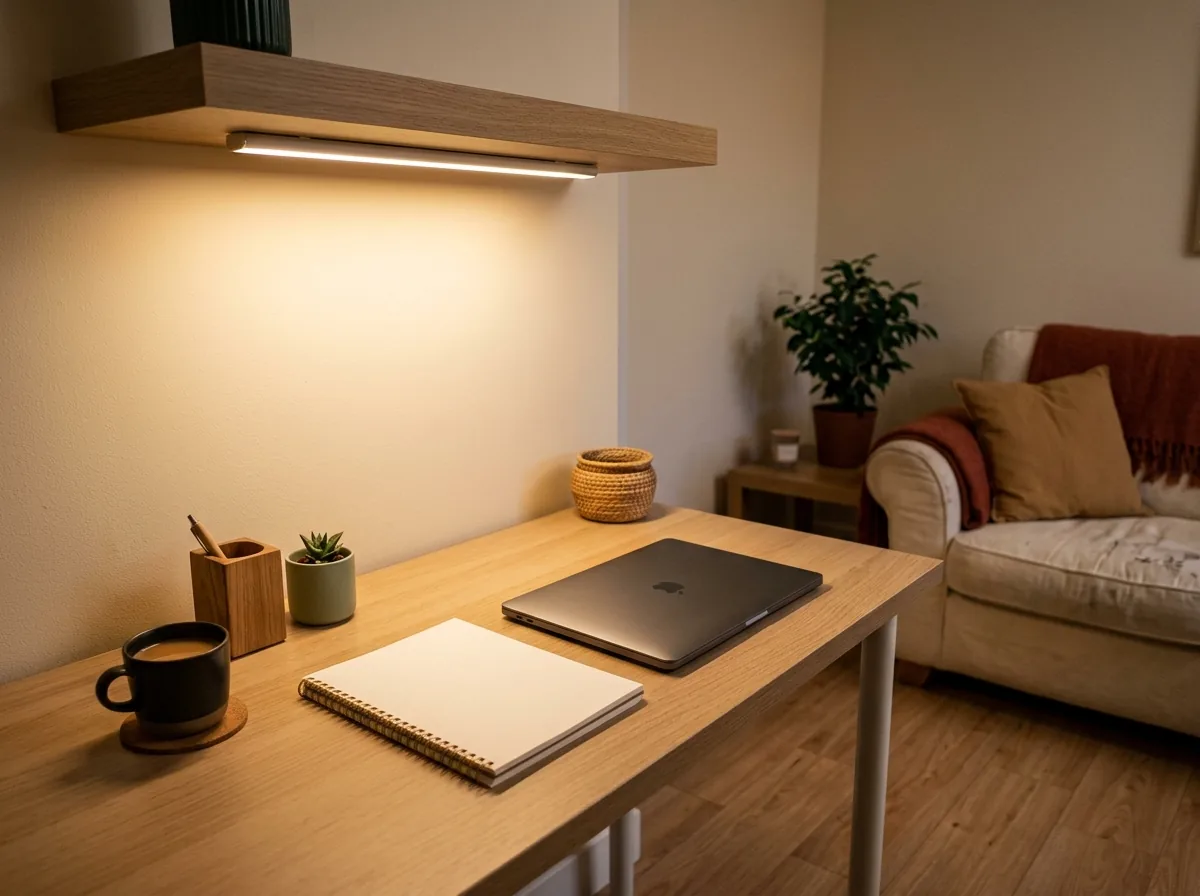
Corners are rarely blessed with a nearby socket, so do not let wiring choose your office. A USB-rechargeable LED task light — a clamp lamp or a slim bar that sticks on a shelf edge — gives warm, focused light: no electrician, no trailing lead. One charge runs for days; when the desk moves, the light moves too. Renters and corner-dwellers: this is your ceiling light.
15. Build a Backdrop Worth Calling In Front Of
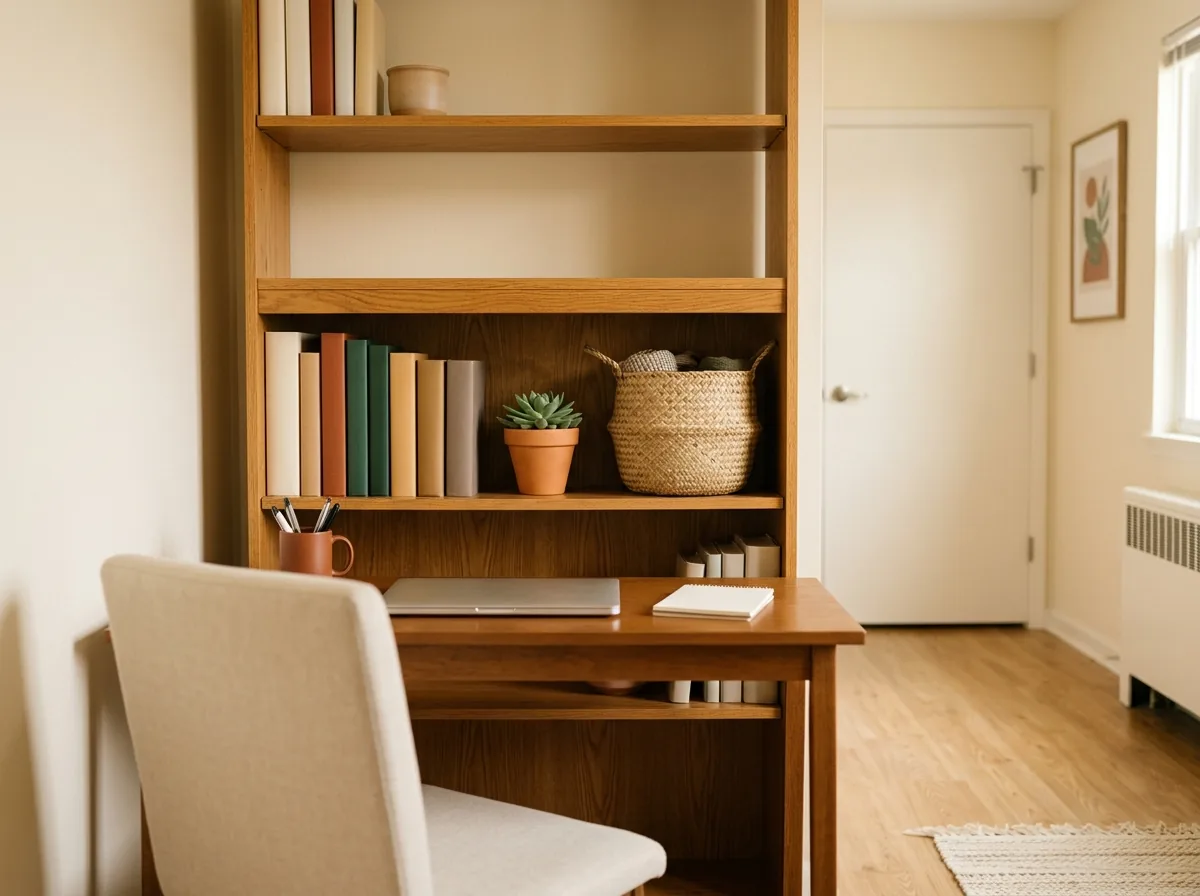
Turn your chair around and look at what your calls see. If it is a drying rack, that is your professional background now. Instead, aim the desk so the background is one tidy bookcase angle: books upright, one plant, one basket, nothing chaotic in frame. Style that single shelf like it is the whole room — because on screen, it is. Add a tray and a plant on the desk, and the corner reads as decor the moment the laptop closes.
Share the Corner Without Losing It
A small home’s office is rarely a solo office. It is homework at four, your calls at nine, a partner’s emails at seven — one corner, several lives, kept kind by rules.
16. Run the Five-Minute Shutdown Ritual
Non-negotiable in a shared home: when work ends, the office closes. Laptop shut and in its box or bag, supplies back in the cart, chair pushed in, desk surface clear — five minutes, every day. It is the landing-strip logic from our 30-Day Declutter Challenge for Small Homes applied to work: a surface that starts empty stays easy to empty. The ritual is what lets a living room be a living room by 5.05pm.
17. Share the Corner in Shifts, One Box Each
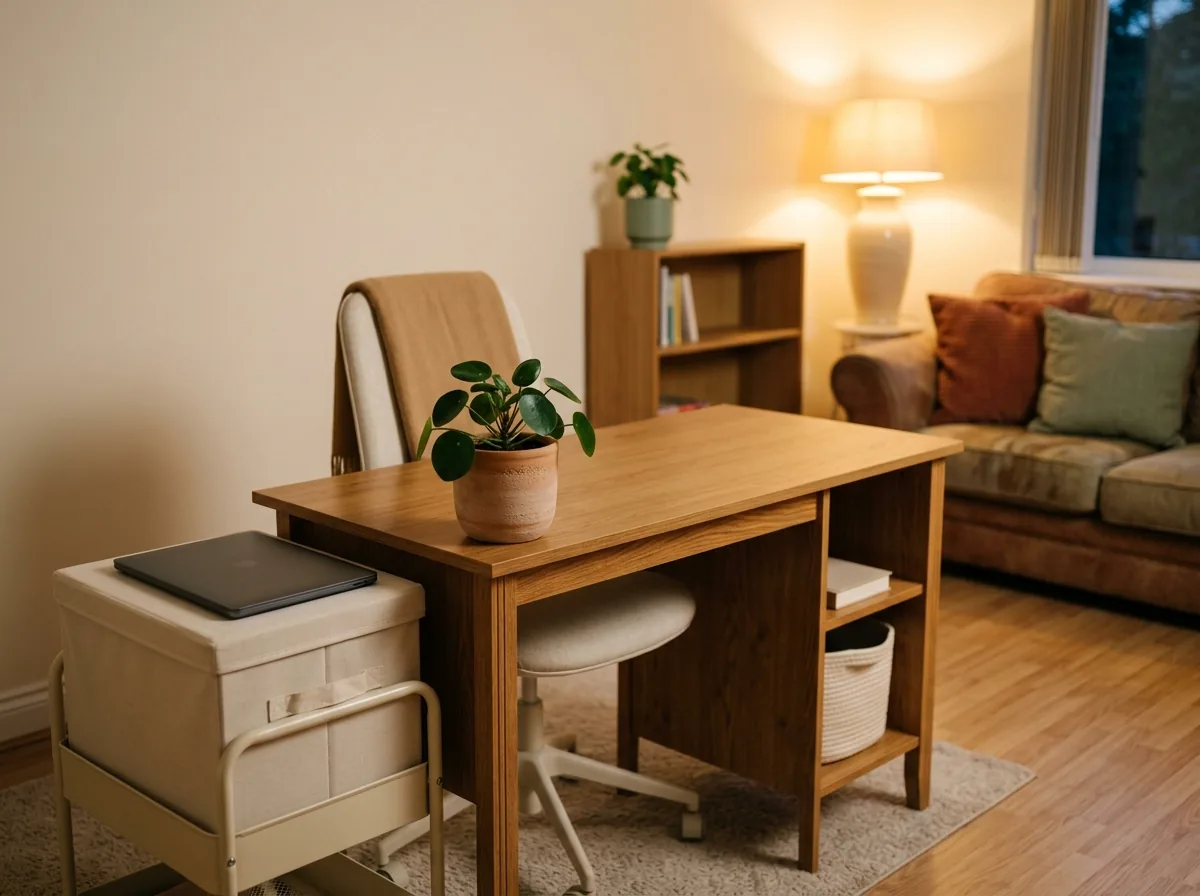
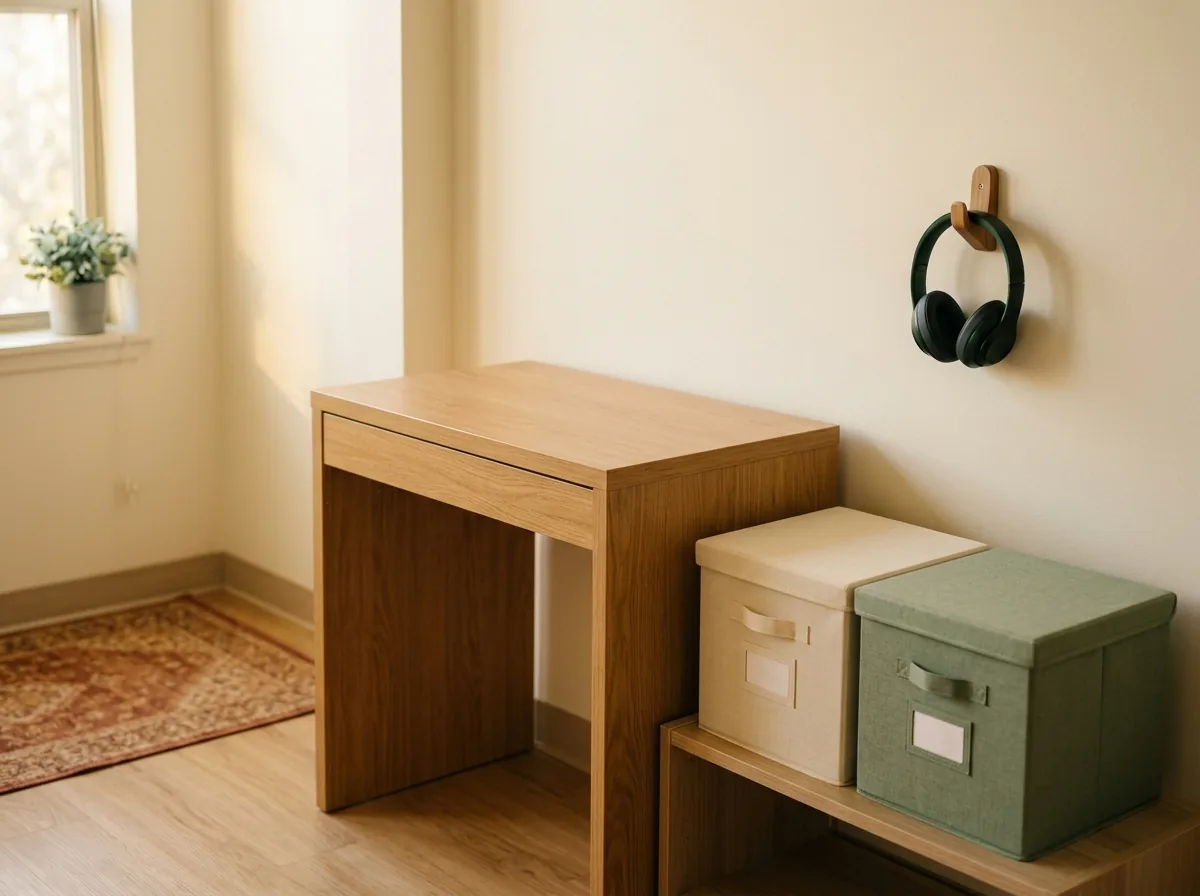
When two people share one corner, the desk surface belongs to nobody — and every person’s work lives in their own box, basket or cart tier. Your shift ends, your box closes, the desk is empty for the next user: partner, flatmate, or a kid’s homework hour. Make the headphone hook by the desk the house rule: headphones on the hook means the corner is free; headphones on a head means do not disturb. Small signal, zero arguments.
The Corner Office Checklist
Pin it above the desk — the wall is yours now:
- Spot claimed: corner, closet, stairs, landing or curtained bedroom corner — walkway still clear
- Desk chosen for its exit: it folds, closes, rolls or styles away at 5pm
- Storage sent vertical: pegboard or rail plus two shelves fitted and loaded
- Rolling cart parked as the supply sidecar
- Cables boxed under the desk — one lead to the wall, chargers inside
- Task light sorted: battery LED if the corner has no socket
- Backdrop shelf styled for calls; desk styled as decor when closed
- Shutdown ritual running, and one box per person for shared shifts
Frequently Asked Questions
How much space do you actually need for a home office corner?
Less than you think: about a metre of wall and 60cm of floor depth covers the desk and the chair pulled out. A cloffice needs a closet roughly 120cm wide, enough for a chair to slide in. The real test is not size but exit — measure the chair, the walkway past it, and where the desk goes at 5pm, and the corner tells you if it works.
What is a cloffice, and can you really work full-time in one?
A cloffice is a closet converted into an office: desk at sitting height, shelves up the back wall, chair inside. Full-time, yes — with three upgrades: a proper chair, light (a battery LED bar under the first shelf), and air — work with the doors open, or swap them for a curtain. Its superpower is the close: doors shut, workday over, office gone.
I rent — can I build a corner office without drilling?
Almost all of it. Ladder desks stand on their own feet, consoles and secretary desks are furniture, carts roll, curtains hang on tension rods and LED lights stick or clamp on. The one exception is the fold-down desk, which needs fixings — ask the landlord, or choose the secretary desk and keep your deposit out of it. Ideas 2, 5, 7, 8, 9, 12, 14 and 17 need no fixings at all.
How do I stop work taking over a shared living room?
Give work three limits: a place (one claimed corner, never the sofa), a container (one box or cart), and a closing time (the five-minute shutdown ritual). A desk that folds, closes or styles away does the rest. Work that can disappear will; work that is spread across three rooms has already moved in.
Can the same corner work as a kids’ study space?
It is built for it. Run the corner in shifts: homework hour gets the desk, each child keeps school things in a box, and the headphone hook becomes the focus signal everyone respects. A rolling cart makes the changeover a one-minute job — school supplies on, work supplies off — and the shutdown ritual returns the corner to the family.
Conclusion
A spare room was never the requirement. A claimed corner, a desk with an exit, storage that climbs the wall, light that does not need a socket, and five minutes at the end of the day — that is a home office, hiding inside the home you already have.
Build the system around it: the pillar guide 31 Small Space Organization Ideas That Make Every Room Feel Bigger, the disappearing act in 19 Hidden Storage Ideas: Under-Bed, Behind-Door & Dead-Space Storage, the no-drill rules in 25 Rental-Friendly Organization Ideas That Need No Drilling (Deposit-Safe), and the daily reset in The 30-Day Declutter Challenge for Small Homes (Free Printable Checklist).
Save this on Pinterest — your corner is about to get a promotion. Follow HomiBloom for simple ideas to make your home bloom.