
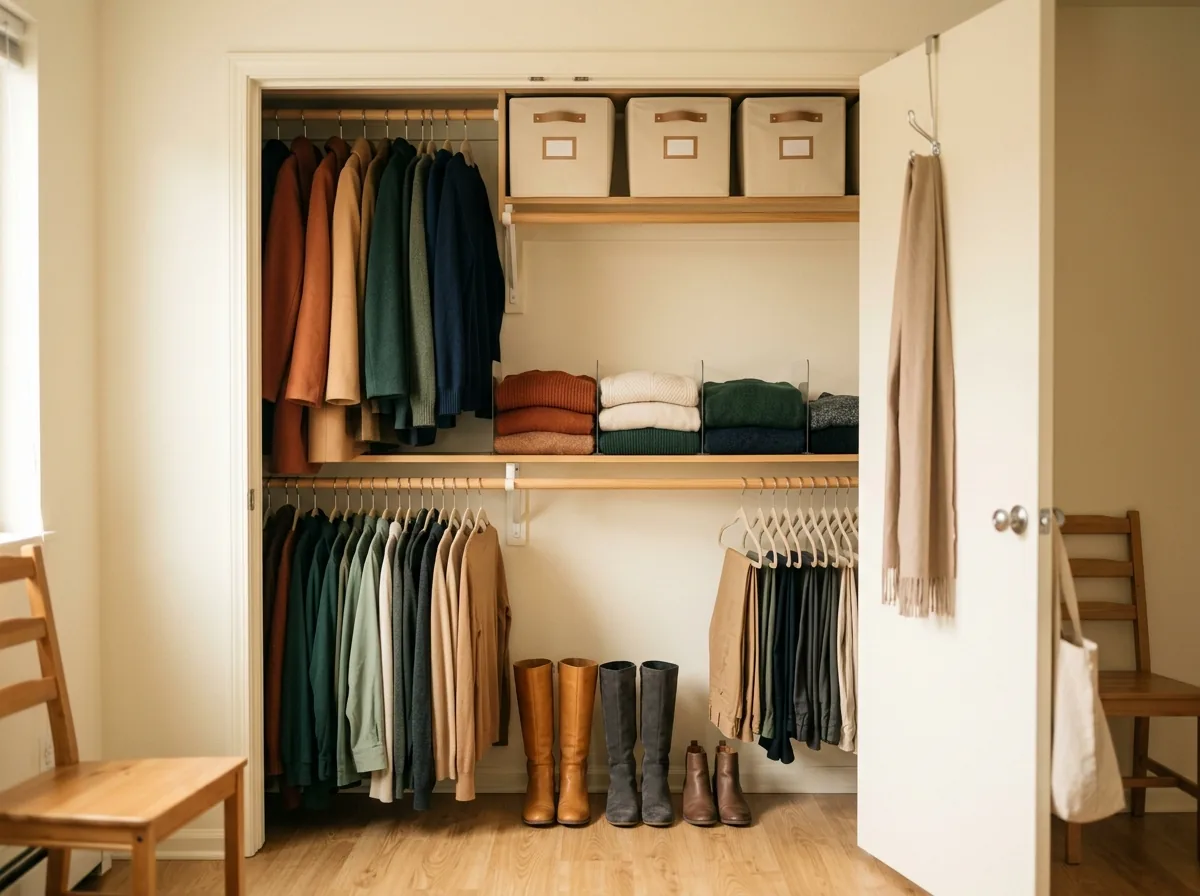
19 Small Closet Organization Ideas for a Seasonal Wardrobe Swap
Introduction
Twice a year, a small closet hits the same wall: winter sweaters need the space summer dresses are sitting in, boots need the floor the sandals own, and there is exactly one rail for two seasons of clothes. Cram both in and everything wrinkles, nothing is findable, and getting dressed becomes archaeology.
These 19 small closet organization ideas turn the seasonal swap into a system: empty, sort, edit, zone, then store the off-season half so well you forget it exists until spring. One closet, one season, held beautifully. Renter-friendly, no drilling, most fixes under $15.
The Swap System, Step by Step
1. Empty the Whole Closet First
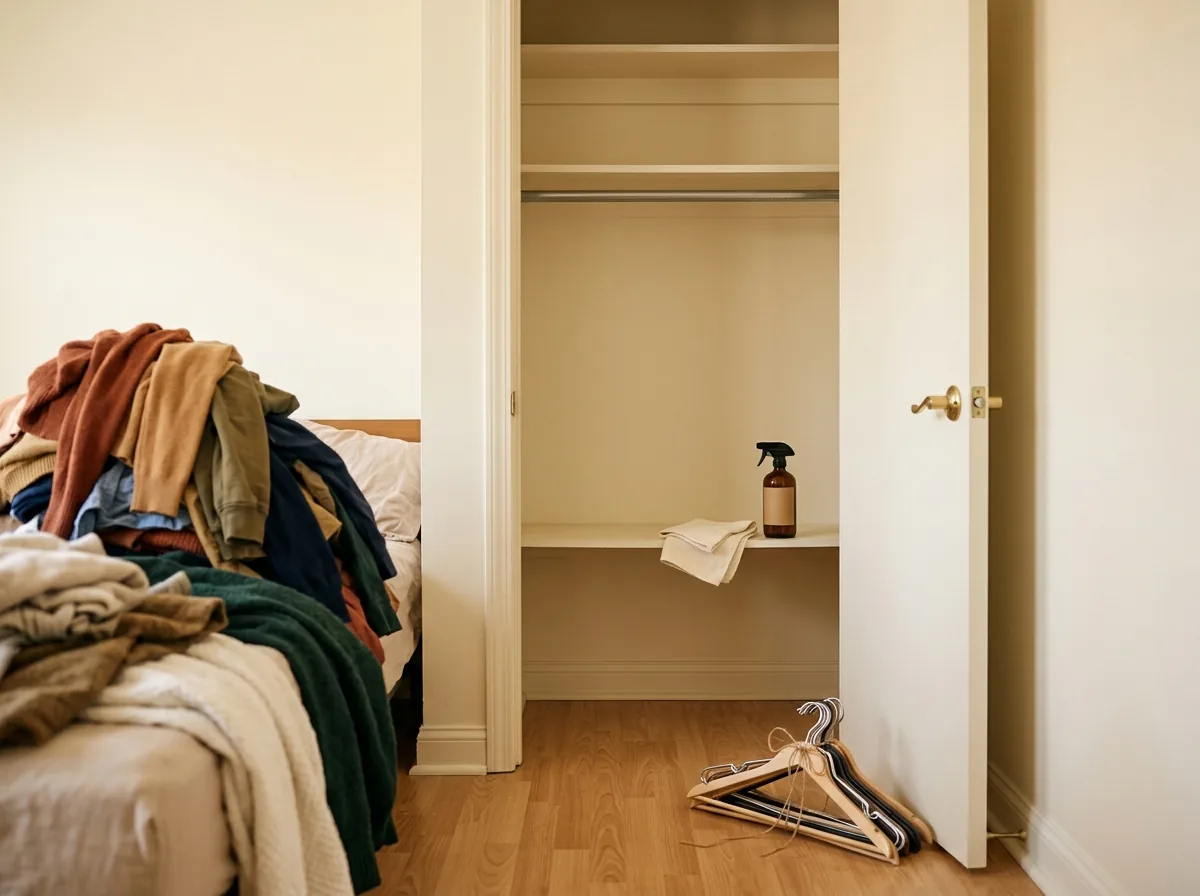
A real swap starts at zero. Take everything out — rail, shelves, floor — and lay it on the bed. Yes, it looks worse for an hour; that is the point. An empty closet shows you the space you actually own, and nothing drifts back in by inertia. While it stands empty, wipe the shelves and vacuum the floor. Clean shell first, system second.
2. Sort Into Three Piles: Keep, Store, Donate
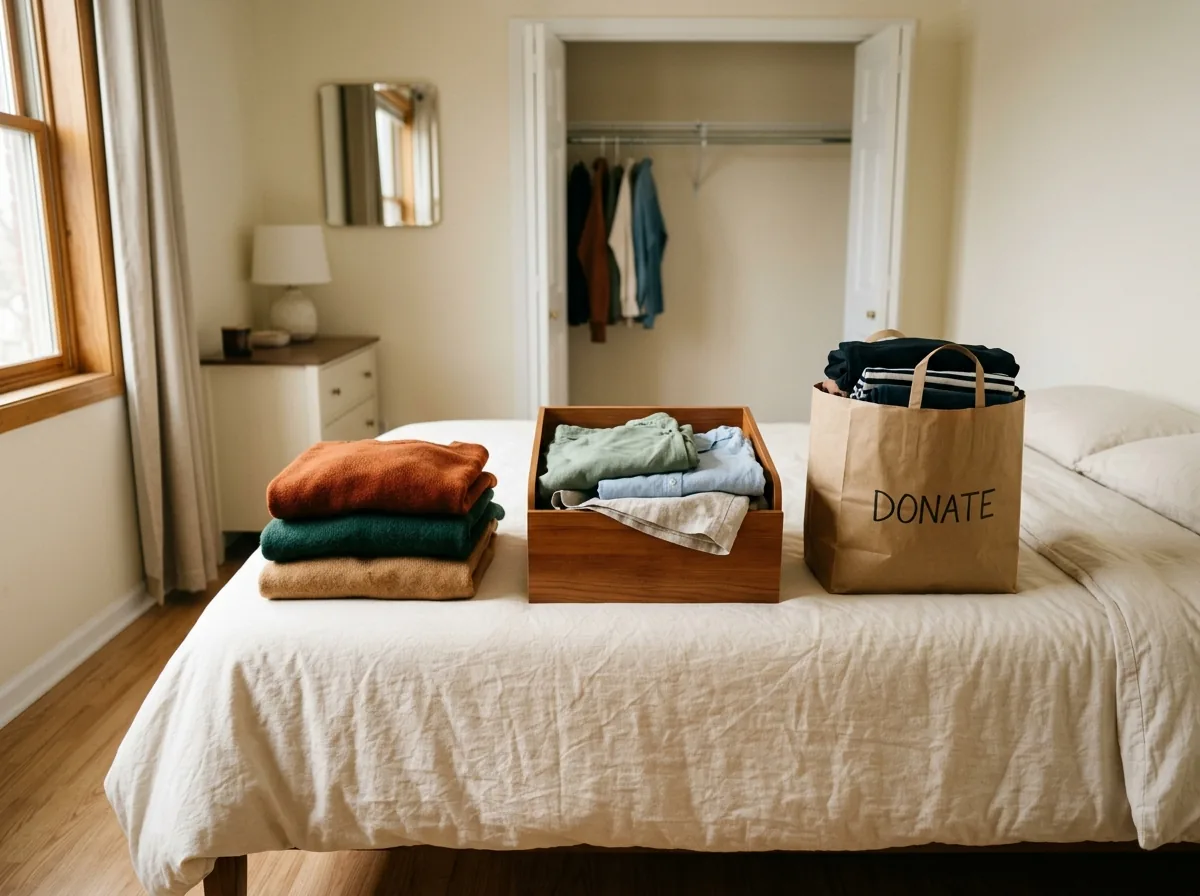
Work garment by garment. Keep: fits, flatters, and belongs to the season you are dressing for now. Store: good clothes, wrong season — these leave the closet but stay in your life. Donate (or sell): anything that fails the tests in the next idea. No “maybe” pile — maybe is how clothes creep back unsorted. The store pile should end at one season’s worth, not a landslide.
3. Declutter Before You Swap: What Goes First
Storing clothes you will never wear again is paying closet rent for ghosts. Let go of: year-unworn pieces, clothes that no longer fit, the damaged pile you keep meaning to repair, duplicates (the third grey sweater), and aspirational buys for a life you do not live. Budget tip: This edit is free — and most swaps free a quarter of the closet here, before a single product is bought.
4. Edit Down to a Capsule Before Anything Goes Back
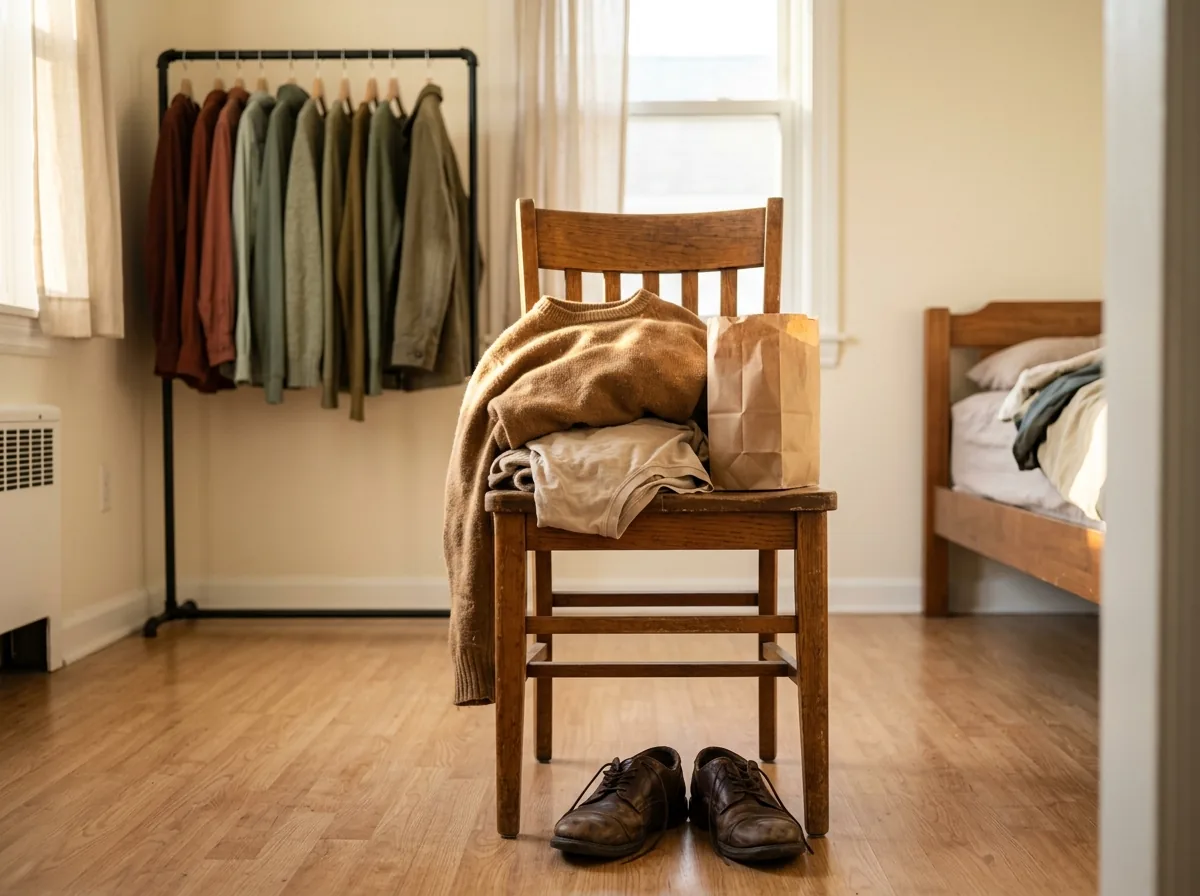
Now shrink what returns. A working capsule for one season — roughly 30 to 40 pieces that mix and match — is all a small closet can hold well. Build it around your real week — work pieces, off-duty pieces, two or three dressier options — in colours that pair with themselves; a cream, rust, camel and deep green palette mixes almost endlessly. What passes goes back in with air around it; the rest is stored or donated.

5. Clean and Zone the Empty Closet
Before a single hanger returns, assign the zones. Daily clothes get the rail’s best stretch at eye level, weekly pieces sit behind or above, shoes go low, off-season overflow goes high or out. It is the same heavy-low, first-out-in-front zoning we use for Christmas decor storage in one closet — a closet only works when every category has an address. One last wipe, a cedar block if it runs damp — done.

Double the Hanging Space
6. Switch Every Hanger to Slim Velvet Hangers
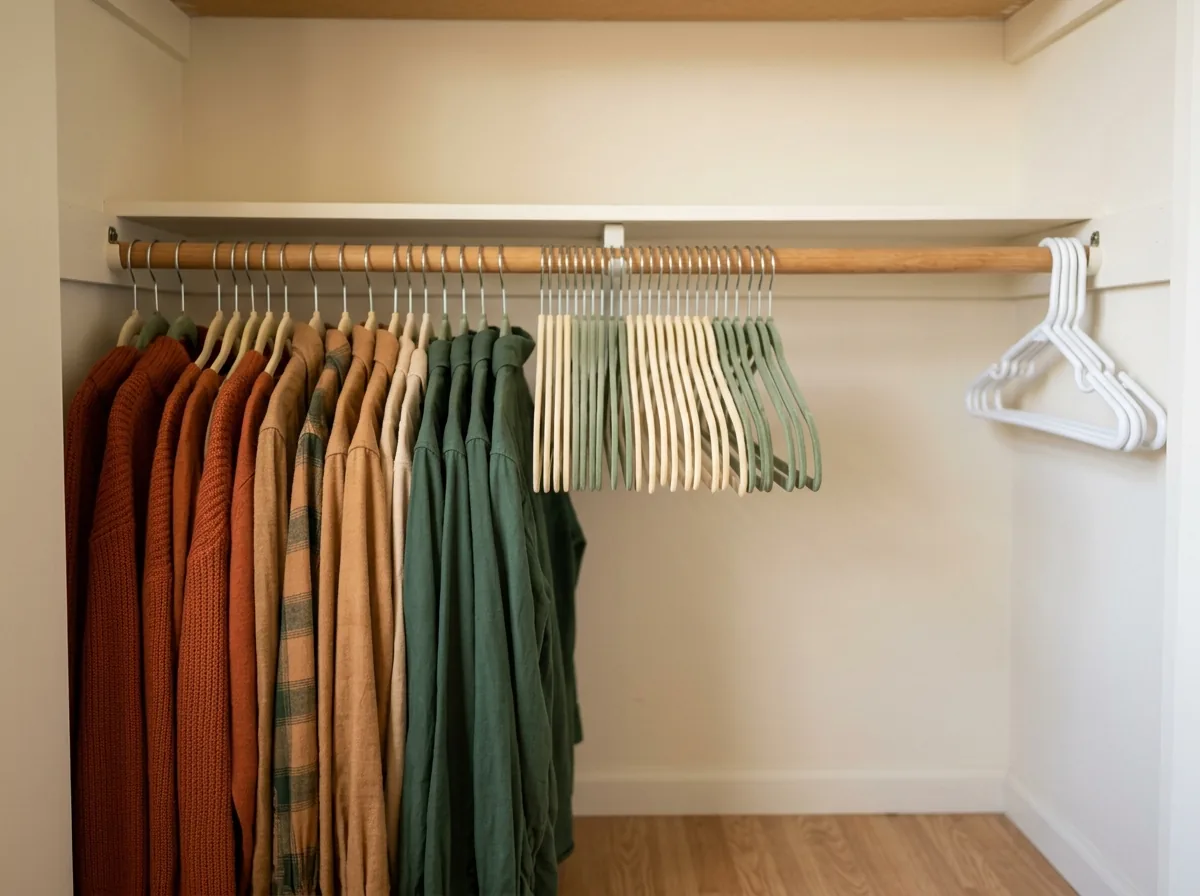
Wire and chunky plastic hangers are silent space thieves: each eats extra width, and a rail full of them can cost a third of your hanging room. Slim velvet hangers sit almost flat, grip shoulders so knits stop sliding to the floor, and make the rail look instantly uniform. Budget tip: Velvet hangers run about $12–$15 for 30; buy the lot once — the rail gains room the same afternoon.
7. Add a Second Rod Below the First (the Tension-Rod Trick)
Most small closets waste the whole lower half beneath one rail. If your rail holds mostly shirts and trousers, add a second rod beneath it: a spring tension rod or a spare shower-curtain rod fitted inside the closet frame. No screws, no drilling, fully renter-safe — and hanging capacity genuinely doubles, short items stacked in two rows. Top row: most-reached pieces. Lower row: second rotation.

8. Cascade With Hooks to Hang Vertically
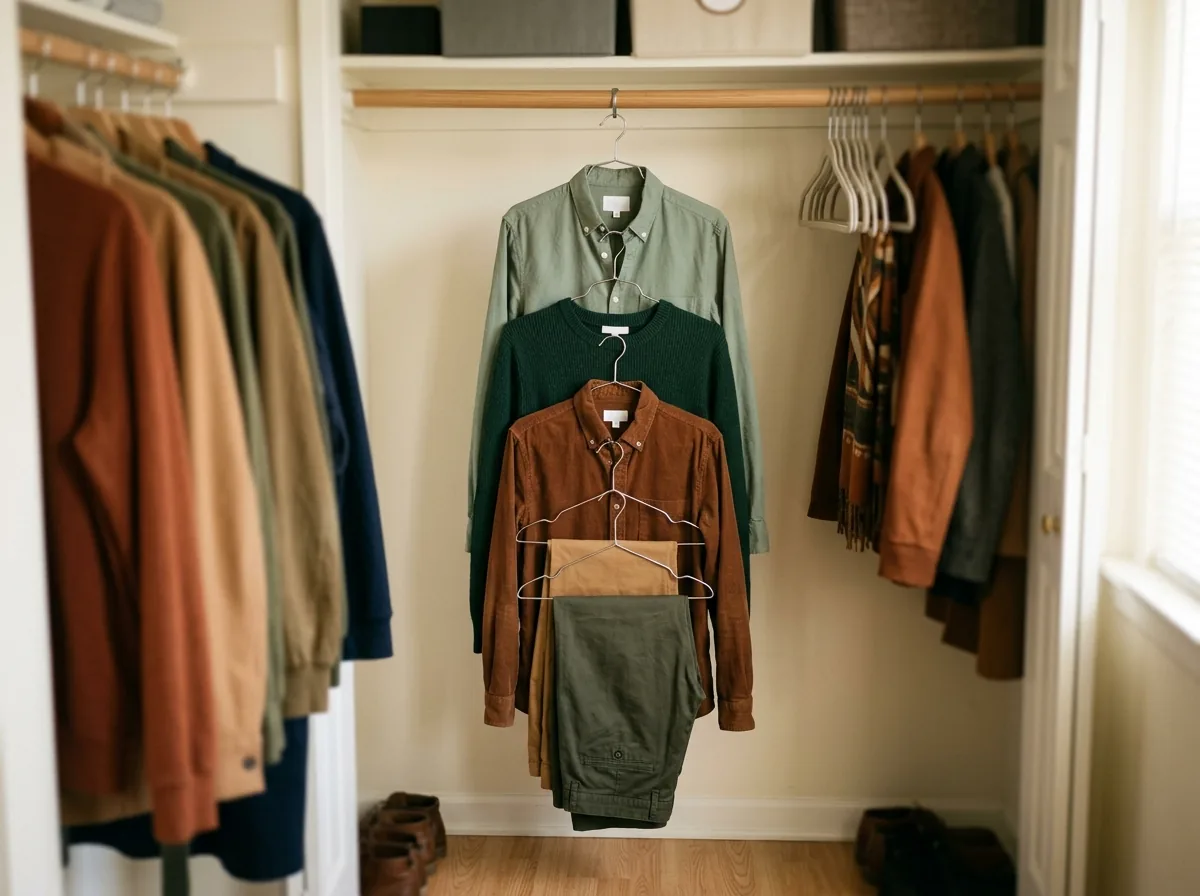
When horizontal space runs out, go vertical. Cascading hooks — S-hooks, purpose-made cascade hangers, or a short length of light chain on one hook — let five or six garments hang from a single rail slot. Trousers cascade especially well on multi-clip hangers. One warning: cascades are heavy, so hang them from the rod’s sturdiest stretch, and keep them to sturdy fabrics — a cascade of knitwear stretches shoulders.
9. Keep Daily Essentials at Eye Level
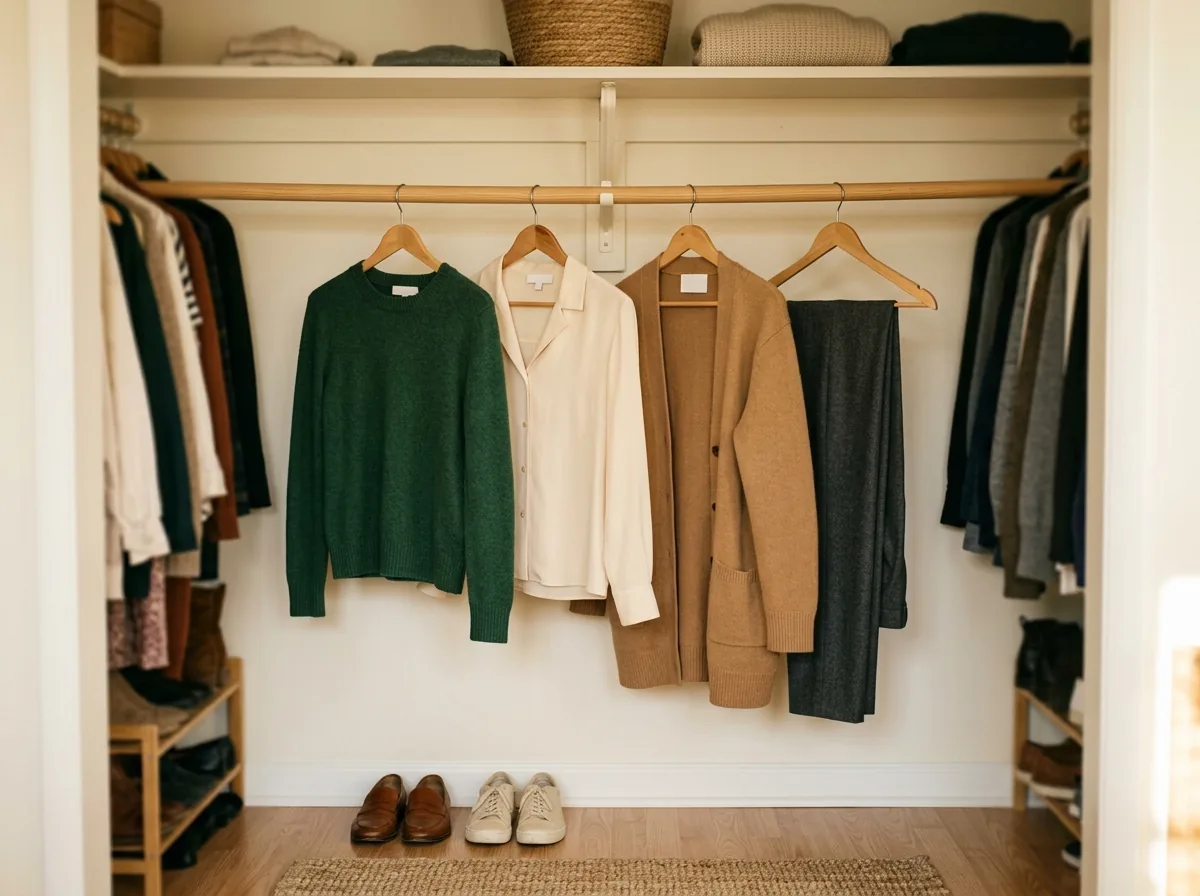
Not all rail space is equal. The stretch right in front of you, between shoulder and waist height, is prime real estate — that is where this week’s actual clothes belong: work staples and the coat you grab daily. Occasion pieces and spare layers migrate to the rail’s far ends and the high shelf. Getting dressed gets faster: what you see at eye level is what this season is for.
Shelves, Doors and the Dead Space
10. Divide the Shelves So Folded Stacks Stop Toppling
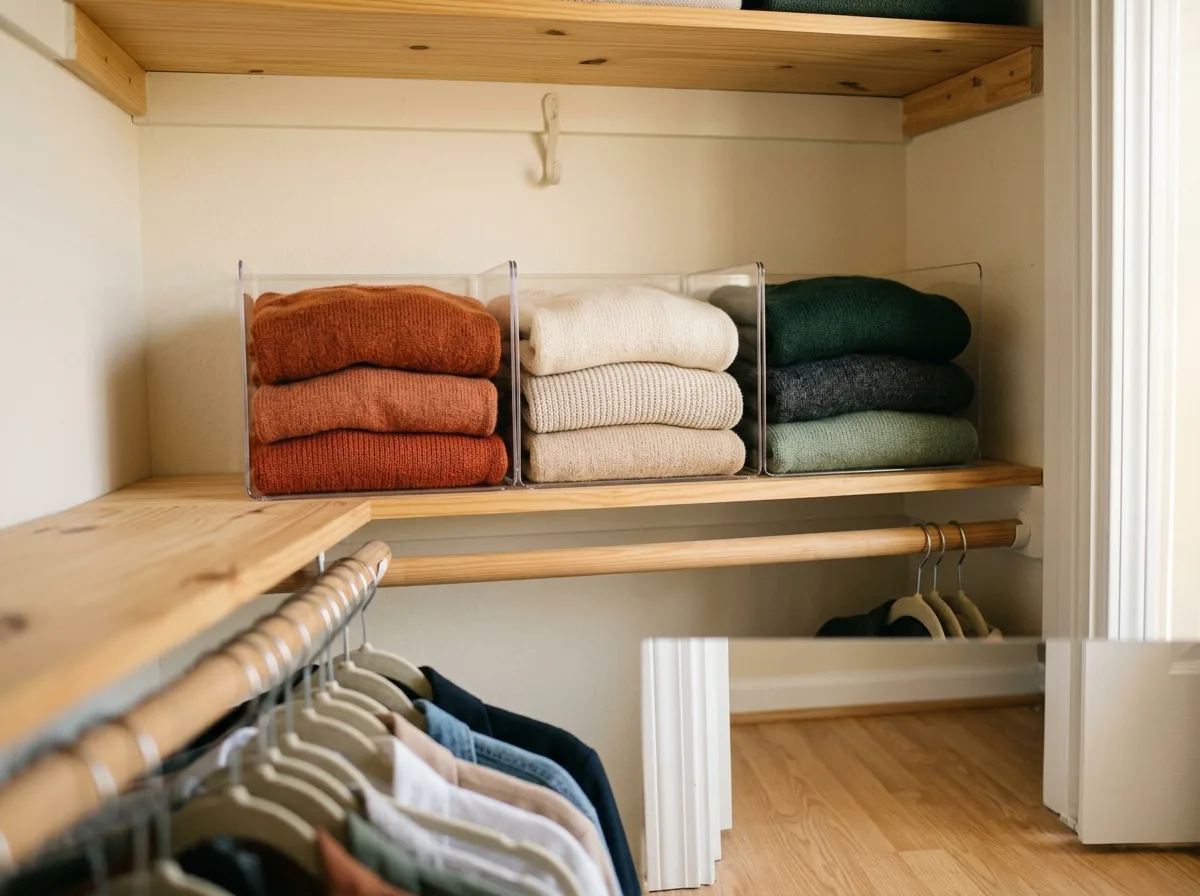
Shelf dividers — acrylic or wire, clipping on or standing between stacks — turn one long shelf into tidy bays: sweaters here, tees there, jeans in the third. Keep each stack short — five or six pieces — so it survives a pull from the middle. Budget tip: Dividers run $8–$12 a set; upright magazine files or small bins you already own do the same job for $0.
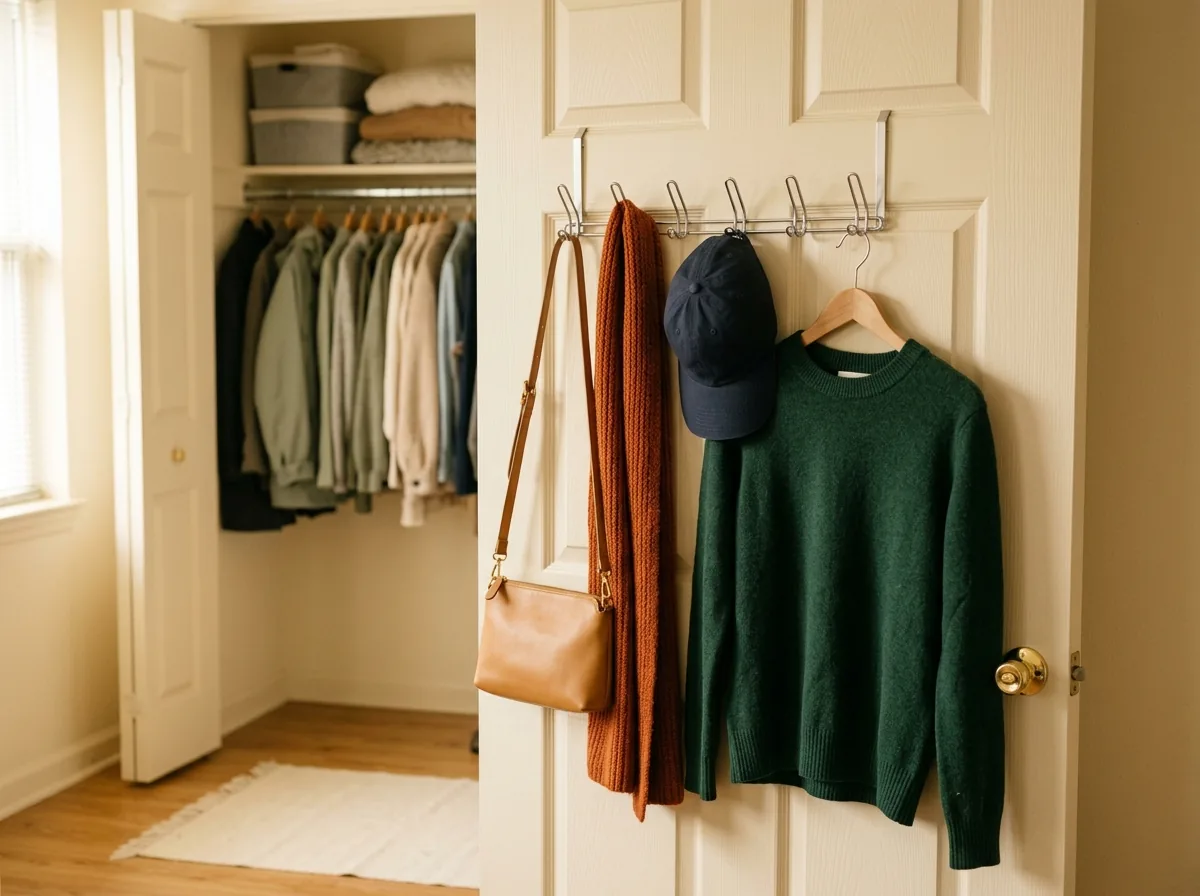
11. Use the Inside of the Closet Door
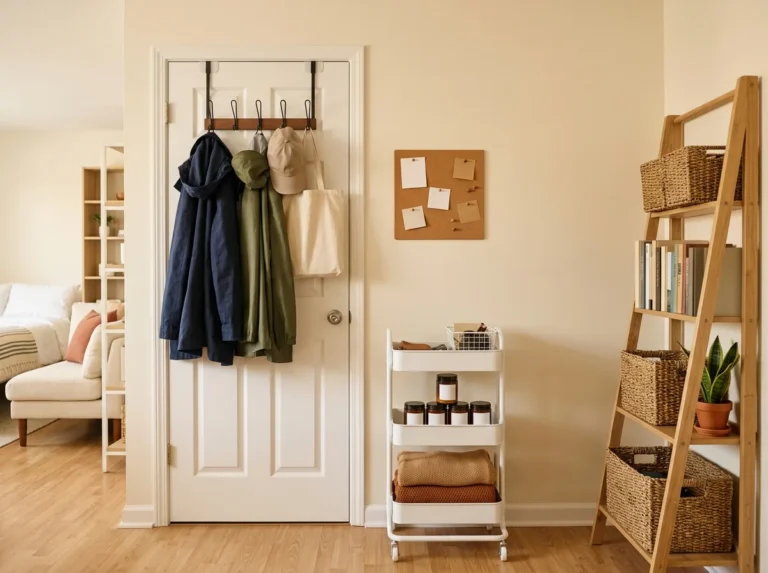
The inside face of the closet door is storage wall you already own. Slim hooks there — adhesive or over-door — hold tomorrow’s outfit, the bags in rotation, hats, and the scarf overflow. Keep it flat and light, and measure the door’s gap once so storage never fights the rail. Doors are the small home’s spare walls, inches from the clothes they serve.
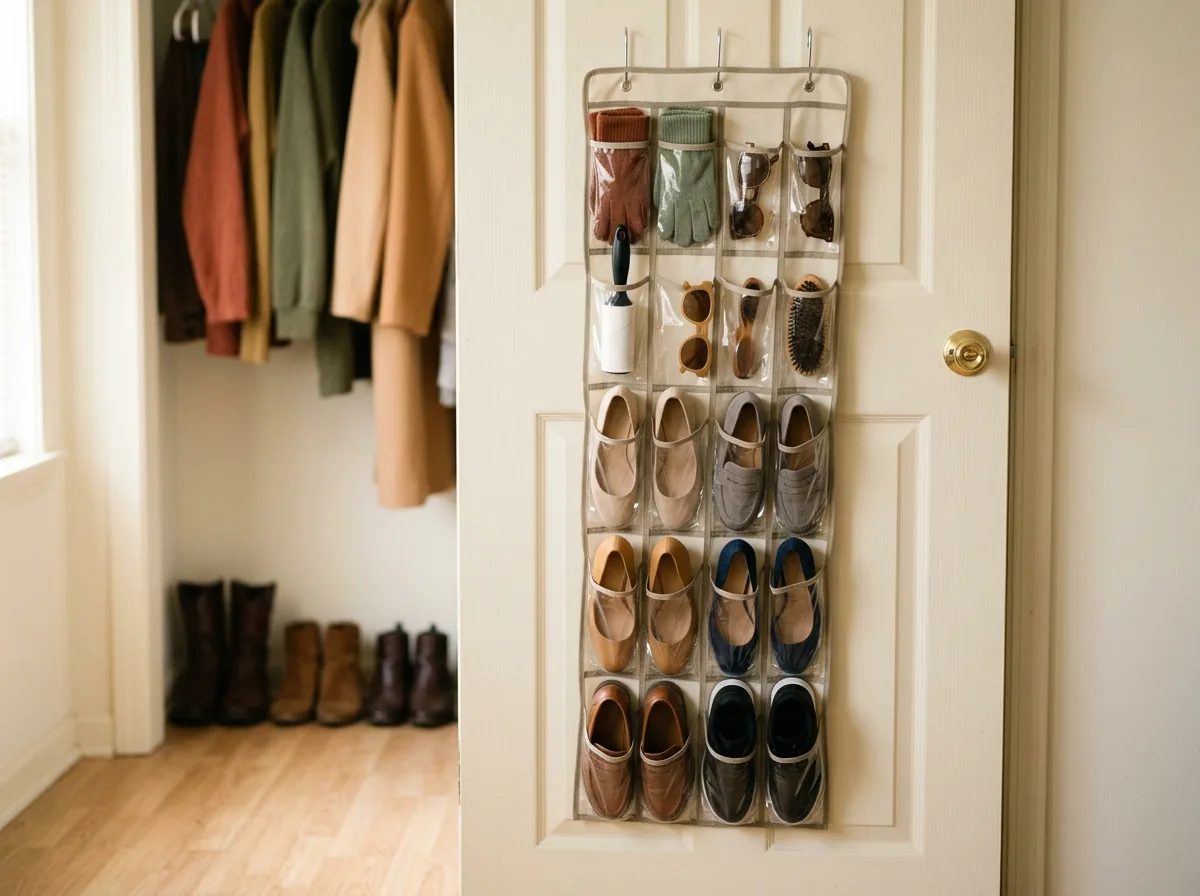
12. Hang an Over-Door Organizer for Shoes and Accessories
If the door is busy, a hanging pocket organizer takes the small stuff in one panel: shoes in the deep lower pockets, gloves, sunglasses and accessories in the small ones. It hangs with zero installation and frees the closet floor for the boot row in Idea 14. Renters: felt pads on the hooks stop door-frame scuffs.
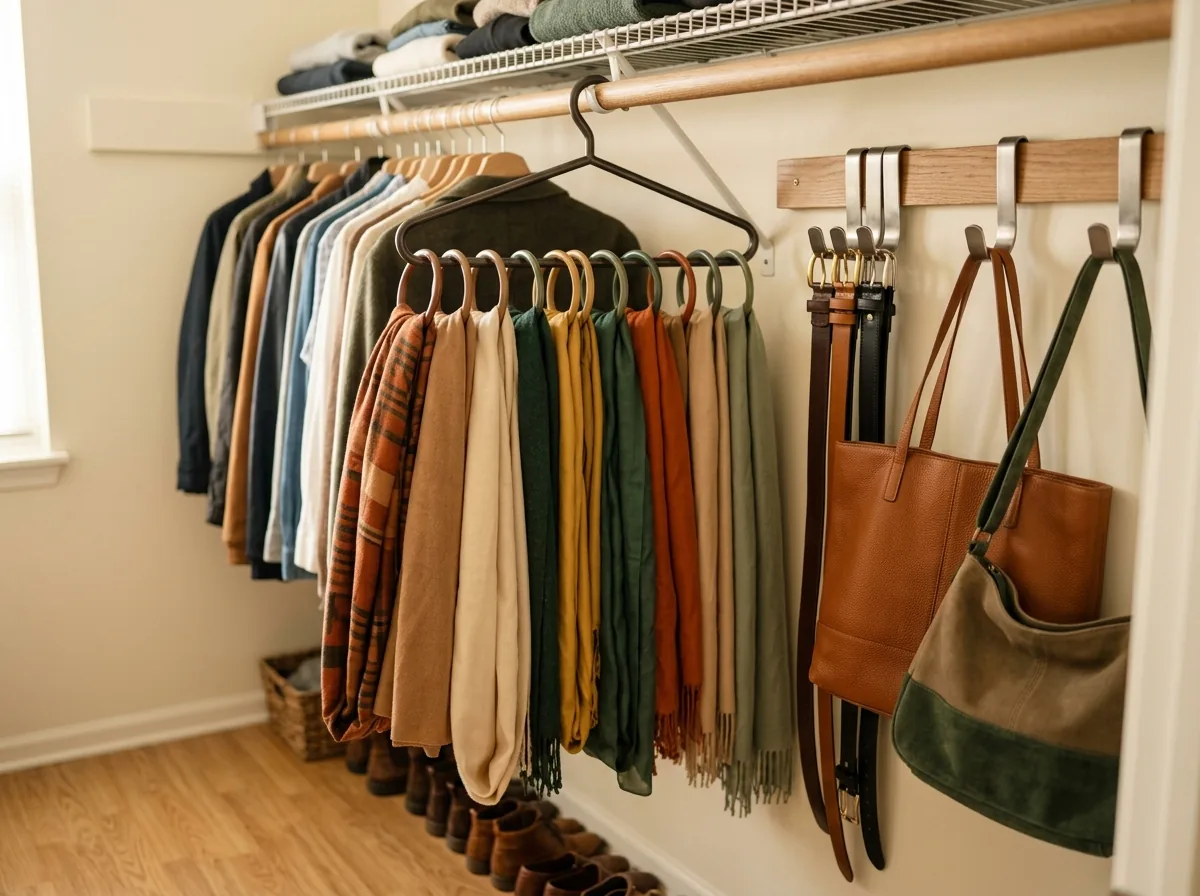
13. Give Scarves, Belts and Bags One Hook Rail
Accessories die in drawers and multiply on the floor. Give them one shared home: a sturdy hanger threaded with shower-curtain rings holds every scarf, each ring opening in a second; belts hang by their buckles on one wide hook beside it; bags in daily rotation sit on two large hooks by the door. One glance shows every option, one motion puts each piece back.
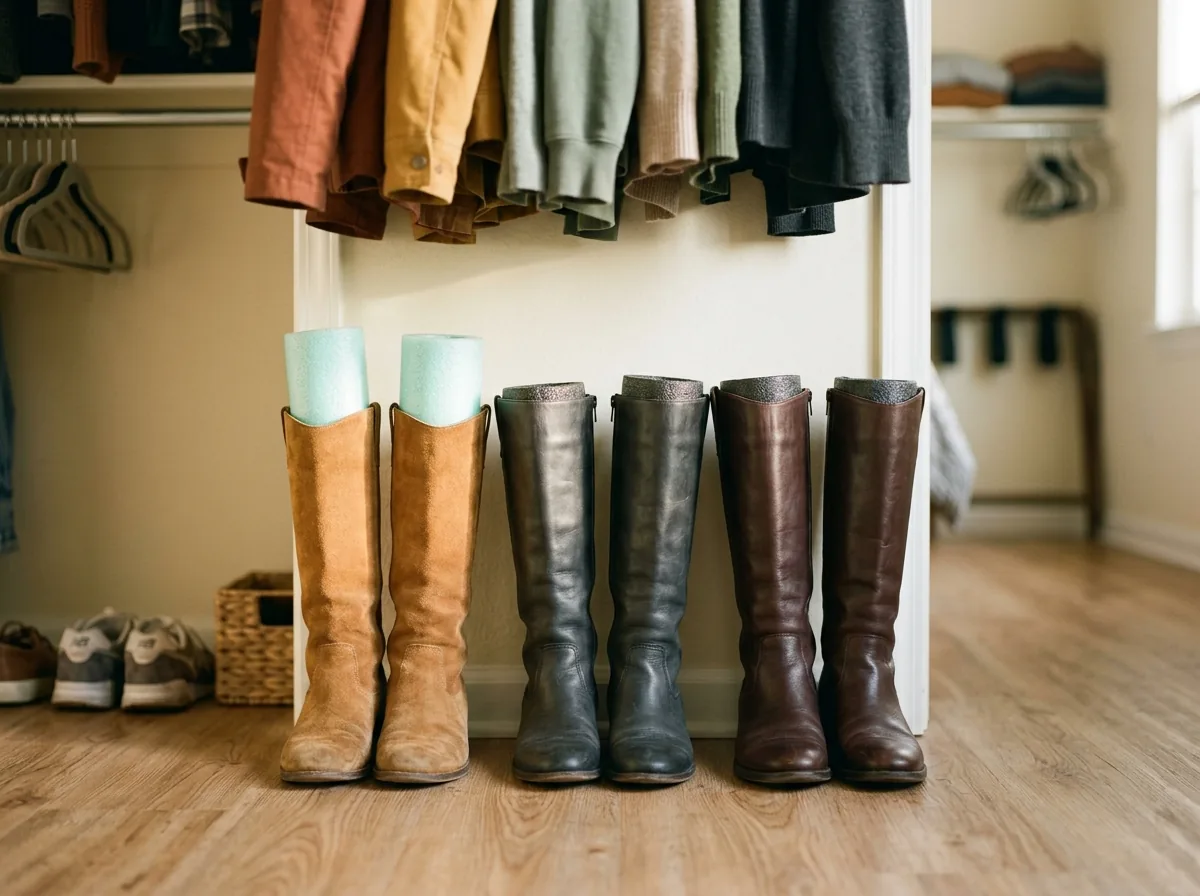
14. Stand Boots Upright and Off the Floor Pile
Boots stored flopped over crack at the ankle and eat floor space two at a time. Stand every pair upright with something inside the shaft: purpose-made boot shapers, a rolled magazine, or a length of pool noodle — the noodle trick costs pennies and trims to any height. Line the row along the side wall, or under the short-hang section where floor space is dead anyway. Upright boots hold their shape for years.
Store the Off-Season Half Properly
15. Vacuum-Bag the Bulky Pieces — With One Warning
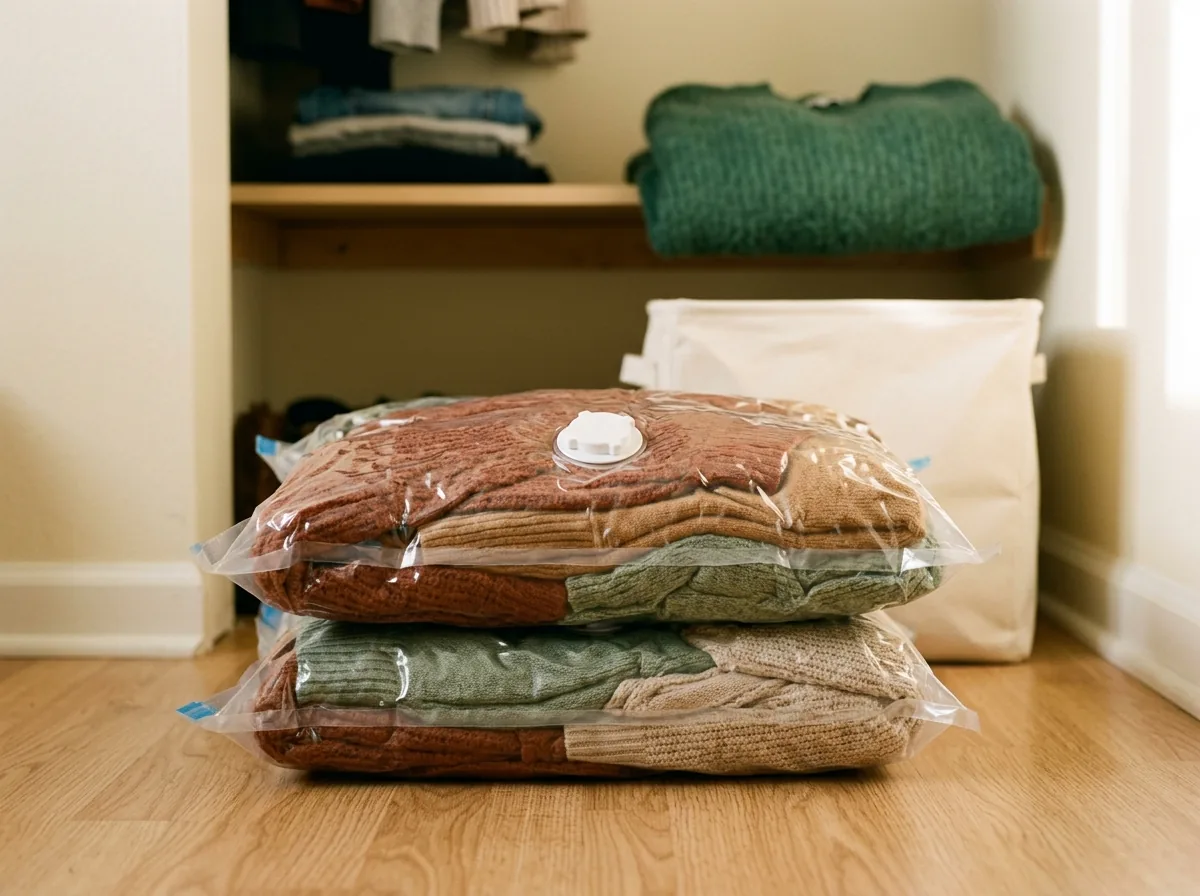
Vacuum bags are the swap’s heavy artillery: bulky sweaters, coats and spare layers shrink to a flat third of their size. Sturdy synthetics, cotton and everyday coats can all go in. The warning: never vacuum natural loft. Down, feather, wool and leather need their air — months compressed can crush down’s loft for good, crease leather, and leave wool lifeless. Those pieces store loosely in a breathable cotton bag instead. Budget tip: A $10–$14 multi-pack covers a whole season, and hand-roll versions need no vacuum.
16. Slide the Off-Season Stores Under the Bed
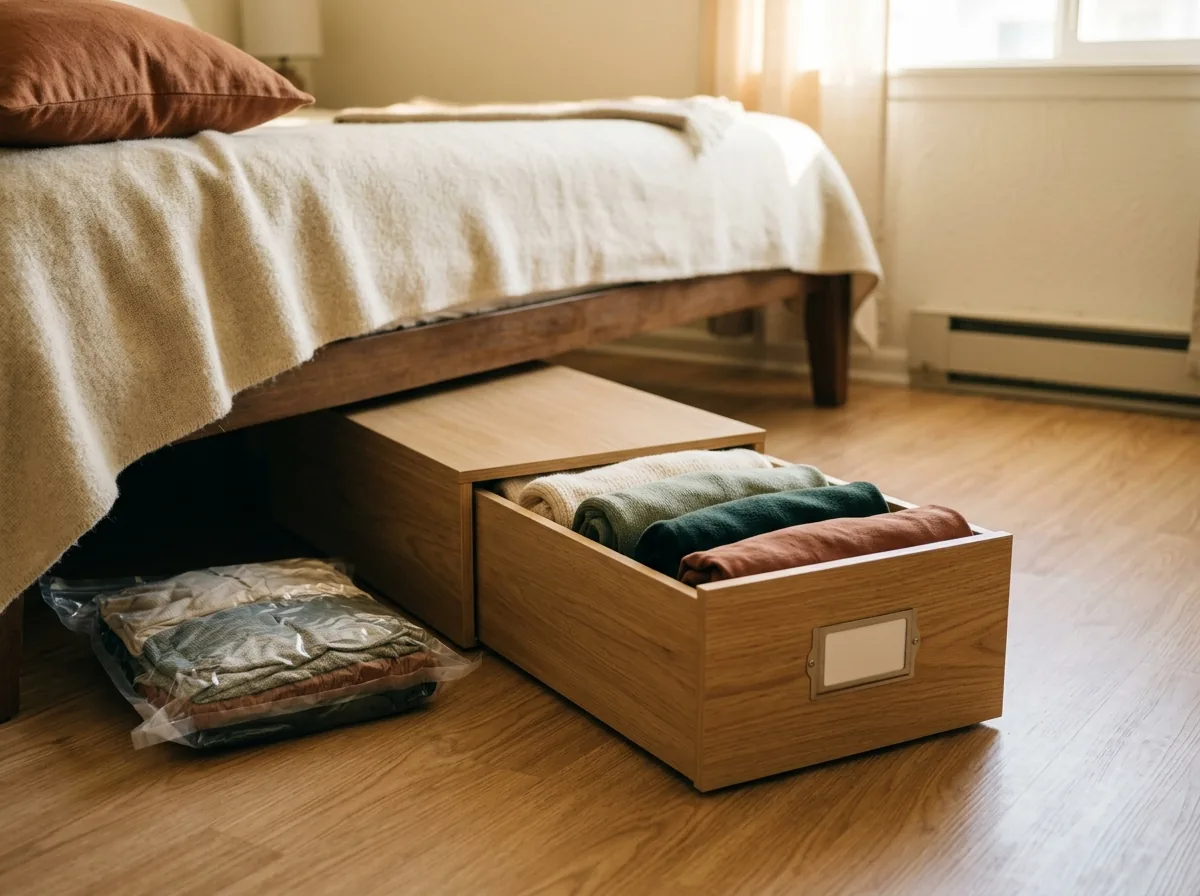
Move the packed off-season half out of the closet entirely: under the bed. Low lidded boxes and flattened vacuum bags slide into that flat, dust-free space and disappear for six months — the same overflow logic that parks flat decor boxes there in winter. Label the ends that face out (Idea 17) so spring-you finds summer without excavation.
17. Label Every Bin With the Season and Its Return Date
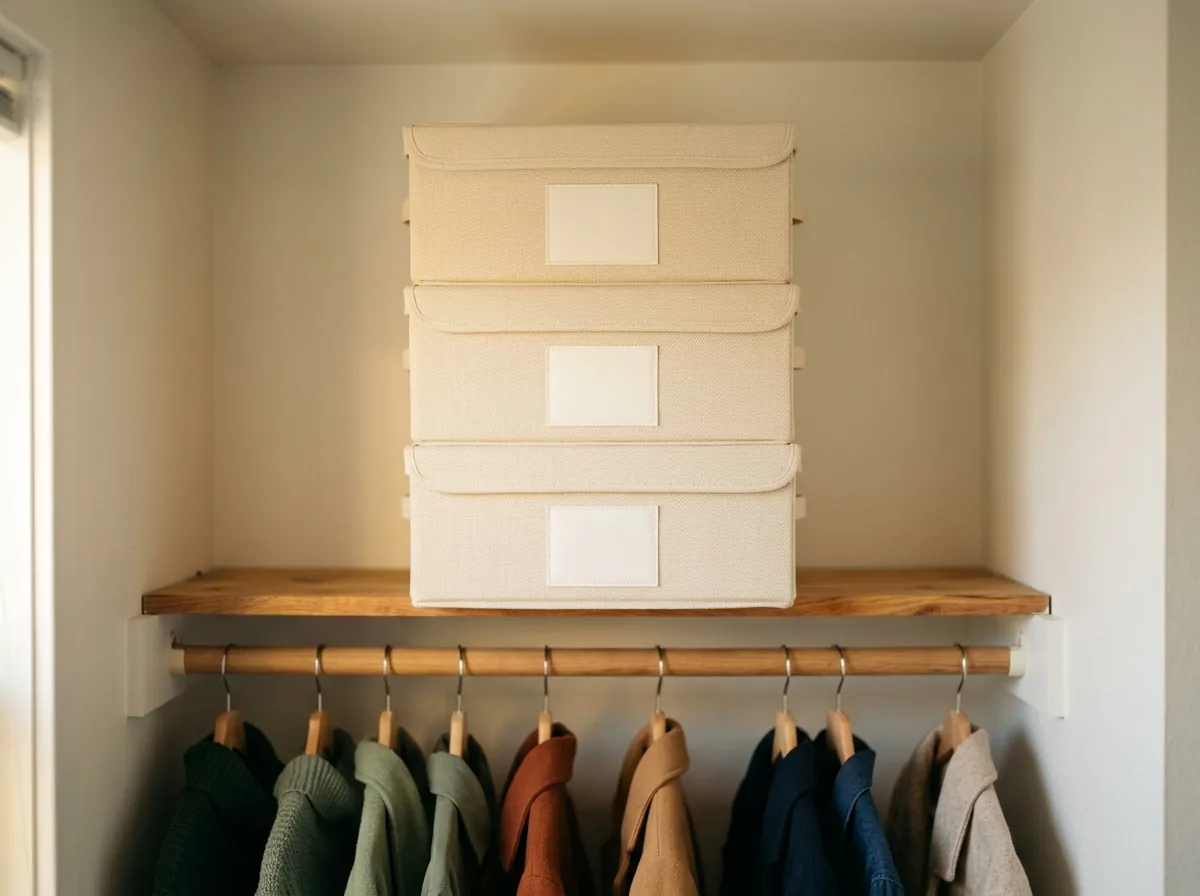
Future you — in March, in a hurry — cannot see through a lid. As each off-season bin is packed, label it plainly with contents and season (“summer dresses + sandals — back in April”), and snap a phone photo of the contents laid out before the lid closes. A minute per bin removes both classic swap pains: re-buying something you own, and unpacking three bins hunting swimwear. Tape and a marker beat a label maker here.
18. Light the Dark Corners With a Battery LED Strip
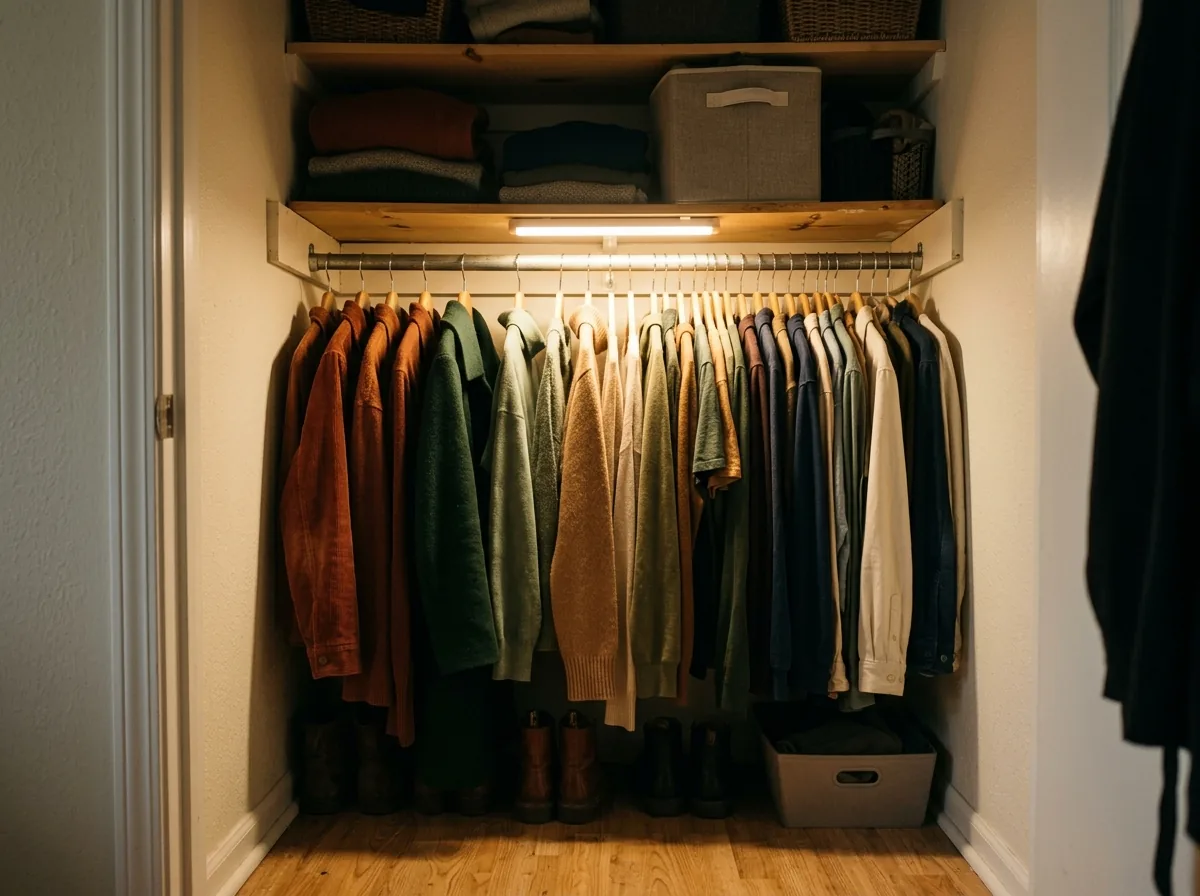
Half of “I have nothing to wear” is “I cannot see what I own.” Small closets are caves — one bulb, blocked by the rail. A battery-powered LED strip or motion-sensor bar under the shelf fixes it in minutes — adhesive-backed, no wiring, nothing a landlord could object to. Suddenly the shelf backs and lower rail are visible, usable storage instead of a shadow zone. Budget tip: Rechargeable USB sensor bars run $8–$12, and one charge lasts a season of mornings.
Keep It Swapped All Season
19. Run One-In, One-Out Until the Next Swap
A swapped closet re-clutters one “harmless” purchase at a time. Borrow the rule from our small kitchen counter system: one in, one out. A new sweater joins the rail only when an equal piece leaves — to the store bin, the donation bag now living permanently on the closet floor, or a friend. Defend the space one decision at a time, and next spring’s swap back takes an afternoon, not a weekend.

Seasonal Closet Swap Checklist
Run it twice a year — once into winter, once back into spring:
- Closet fully emptied, shelves wiped, floor vacuumed
- Three piles sorted: keep, store, donate — and the donate bag actually gone
- Capsule edited: only this season’s mix-and-match pieces return
- Slim hangers throughout; second rod and cascades in place
- Off-season clothes vacuum-bagged or binned, labelled, stored under the bed
- Daily essentials at eye level; a donation bag parked on the closet floor
Frequently Asked Questions
How do I organize a small closet with too many clothes for it?
You cannot organize your way out of a volume problem — edit first. Declutter honestly (Idea 3), then swap seasonally so only one season lives in the closet at a time. Slim hangers, a second tension rod and shelf dividers then double what the edited wardrobe can do. If it still does not fit, the capsule is still too big — edit again rather than buying more storage.
How do I do a seasonal wardrobe swap in a tiny closet?
Empty the closet completely, sort into keep, store and donate, edit the keepers down to a one-season capsule, clean and zone the shell, then pack the off-season pile into vacuum bags and labelled bins under the bed. Hang the new season back with daily pieces at eye level. Ideas 1–5 walk through it step by step; the whole swap takes one afternoon.
Are vacuum bags bad for clothes?
For most everyday clothes — cotton, synthetics, sturdy knits — no; they are the best space-saver in a small home. The exception is natural loft: down, feathers, wool and leather can lose loft or crease compressed for months, so store those loosely in breathable bags instead. And never store anything damp, vacuum bag or not.
How can renters add closet storage without drilling?
Everything on this list installs by hand: tension rods grip by spring pressure, over-door organizers and hooks simply hang, shelf dividers stand or clip, LED strips stick on and peel off, and slim hangers just replace fat ones. Nothing is screwed, nailed or permanent, everything removes in minutes, and the deposit stays intact. Worried about a hook? A felt pad protects the door frame.
Where should off-season clothes go in a small apartment?
Flat and forgotten is the goal: vacuum bags and low lidded bins under the bed first, then the closet’s highest shelf, then inside rarely opened suitcases. Label each by season with a return month, and keep natural-loft pieces — down, wool, leather — in breathable bags rather than vacuum compression. One spot, one system: scattered storage is how a season gets lost.
Conclusion
A small closet does not need to be bigger — it needs to hold one season at a time, beautifully. Empty it, edit honestly, zone it, double the hanging, and send the off-season half away flat, labelled and forgotten until spring. Twice a year, one afternoon: the whole price of a closet that always has something to wear in it.
Then finish the rest of the seasonal reset the same way: set up the station with 13 Gift Wrap Station Ideas for Small Spaces (That Disappear After Christmas), keep the counters defended with 29 Small Kitchen Counter Organization Ideas Before Holiday Cooking Starts, and start the whole-home plan here: 31 Small Space Organization Ideas That Make Every Room Feel Bigger.
Save this on Pinterest — so the next swap takes an afternoon instead of a lost weekend. Follow HomiBloom for simple ideas to make your home bloom.





2 Comments